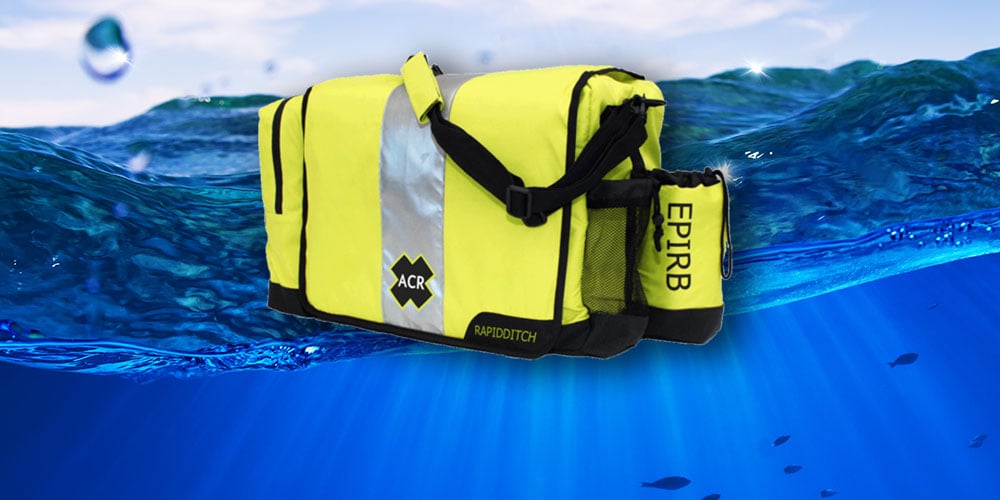
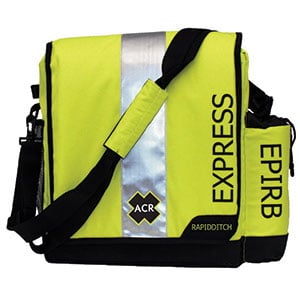
Ditch bags like this one by ACR are specifically designed for abandon ship situations.
Boats seldom sink. When they do—whether due to collision, fire, flooding or another emergency—events can move quickly. A properly prepared ditch bag gives you one grab-and-go source for signaling, communication, medical and survival supplies if you must abandon ship.
A ditch bag is not a replacement for a life raft, life jackets or good seamanship. It is a backup survival system that should be easy to reach, easy to carry and stocked for the way you boat.
- What Is a Ditch Bag?
- Who Needs a Ditch Bag?
- What to Look for in a Ditch Bag
- What to Put in a Ditch Bag
- Signaling and Communication Gear
- Survival Supplies
- Ditch Bag Checklist
- Storage and Crew Briefing
- Ditch Bag FAQ
What Is a Ditch Bag?
A ditch bag, also called an abandon ship bag, contains key items needed to summon help and survive in a life raft, dinghy or the water while waiting for rescue. It should contain your most important rescue tools, basic medical supplies, water, signaling devices and essential personal items.
The bag must be kept in an accessible location onboard, ready for immediate removal. In a real emergency, you may not have time to gather supplies from lockers, cabins or electronics stations.
Who Needs a Ditch Bag?
Ditch bags are not just for offshore cruisers. Coastal cruisers, anglers, sailors and powerboaters can all benefit from one. Even near shore, wind, current, weather or injury can delay rescue.
The contents should match your risk level. A day boater near shore may need a compact bag with a handheld VHF, signaling gear, water and first aid supplies. Offshore crews should carry a more complete abandon ship kit with an EPIRB or PLB, extra water, food, medical supplies and multiple signaling options.
What to Look for in a Ditch Bag
Instead of adapting a duffel bag or standard dry bag, consider a commercially available ditch bag specifically designed for abandon ship use.
Positive flotation: Your loaded ditch bag must float. Look for foam buoyancy panels sewn into the bag. If the bag lands in the water before it reaches the raft, it should remain visible and recoverable.
Water resistance: The bag does not necessarily need to be fully waterproof, but it should resist water entry. Place sensitive electronics, documents, medications and non-waterproof supplies in smaller waterproof pouches or dry bags inside the main bag.
Visibility: Choose a bright color such as yellow or orange. Reflective tape improves visibility at night and can be added if the bag does not include it.
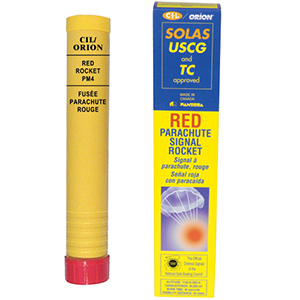
SOLAS-grade flares are preferred because they can be seen for the greatest distance.
Inner pockets and dividers: Rescue and survival items must be organized and easy to find. Look for pockets, dividers and interior lanyards that help separate flares, medical items, batteries, food and survival supplies.
Carry straps and tethers: Every ditch bag should include a tether with a clip so the bag can be secured to a person, life raft or dinghy. In rough water, unsecured gear can float away quickly.
Adequate size: The bag must be large enough to carry rescue gear, survival gear, food, water and crew-specific personal items without becoming too heavy to move quickly.
What to Put in a Ditch Bag
Your ditch bag should include two broad categories of gear: items that help summon rescue and items that help you survive until rescue arrives. Prioritize communication first, then signaling, hydration, medical care and exposure protection.
The best ditch bag contents depend on how far offshore you travel, how many people are aboard, whether you carry a life raft and how quickly help is likely to arrive.
Signaling and Communication Gear
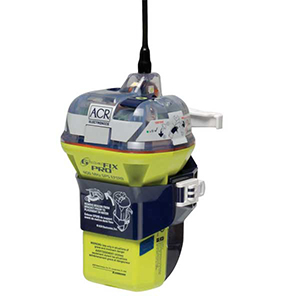
To improve the odds of quick rescue, your ditch bag should include an EPIRB or PLB. These devices can turn a prolonged survival situation into a much shorter wait by transmitting distress and location information to search and rescue authorities.
Visual signals should include a selection of flares, smoke signals, emergency lights, strobes, a signal mirror and other daytime and nighttime signaling devices. SOLAS-grade flares are preferred because they can be seen from greater distances.
A waterproof handheld VHF radio and handheld GPS are also valuable. Together, they allow you to determine and communicate your position to nearby marine traffic or shore-based help within VHF range.
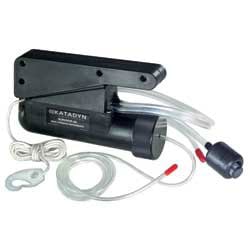
A reverse osmosis watermaker, like this one from Katadyn, can produce up to six gallons of water per day—enough to hydrate up to 24 people indefinitely.
Survival Supplies
The survival supplies in your ditch bag should supplement the gear in your life raft’s equipment pack. Life raft packs are often limited by space, weight and cost, so they may only include basic supplies.
Hydration is a top priority. For coastal cruising where rescue is likely to be relatively quick, emergency water pouches can supplement the life raft’s water supply. For offshore cruising, a hand-operated reverse osmosis watermaker is highly recommended.
Food should be compact, calorie-dense and low in salt. Emergency food bars, low-sodium trail mix and similar supplies are better than foods that increase thirst.
Also include basic medical supplies, seasickness tablets, space blankets, light sticks, a knife, cordage, waterproof notebook, pencils and personal items such as prescriptions, spare glasses and identification documents.
Ditch Bag Checklist
Electronic Signaling and Communications
- 406 MHz EPIRB
- PLB
- Handheld DSC waterproof VHF with built-in GPS
- Handheld waterproof VHF radio
- Handheld GPS
- Extra batteries for handheld electronics
- Satellite phone or satellite communicator
- Cell phone in waterproof pouch for near-shore situations
Other Signaling Devices
- SOLAS-grade flares
- Electronic distress light
- Orange smoke day signals
- Signal mirror
- Radar reflector
- Rescue laser flare
- Flashlight
- Strobes
- Whistle or sound signaling device
Medical
- First aid kit
- Anti-bacterial skin ointment
- Seasickness tablets
- Prescription medications
- Basic pain reliever
- Gloves and wound dressings
Survival Gear
- Knife
- Knife sharpener
- Light sticks
- Rescue quoit
- Space blankets
- Fishing gear
- Waterproof matches
- Cordage
- Waterproof charts
- Waterproof notebook and pencils
Food and Water
- Watermaker for offshore use
- Packaged emergency water
- Food bars
- Low-sodium nuts or trail mix
Personal Items
- Prescriptions
- Spare reading glasses
- Credit cards
- Passports
- Currency
- Copies of key documents in a waterproof pouch
Morale Boosters
- Shortwave radio
- Small books
- Compact games
Storage and Crew Briefing
Your ditch bag should be kept in an easy-to-access location, preferably near the companionway, cockpit or other exit point. It should not be buried below heavy gear or locked away in a compartment that may become inaccessible during flooding or fire.
Brief the crew on the ditch bag’s location and purpose. Assign someone to grab it during an abandon ship scenario if time allows. Inspect the bag before long trips and at least once per season. Replace expired flares, batteries, medications, food and water.
A ditch bag is like an insurance policy that you hope never to use. Nobody plans on hitting debris, losing a boat to fire or being forced into a life raft. But if it happens, a well-prepared ditch bag can make rescue faster and survival more manageable.
Ditch Bag FAQ
What is the most important item in a ditch bag?
An EPIRB or PLB is often the most important item because it can transmit your distress signal and location to search and rescue authorities.
Should every boat have a ditch bag?
Any boat that operates beyond immediate help should carry a ditch bag. Offshore boats need a more complete bag, but coastal boats can also benefit from a compact emergency grab bag.
Where should a ditch bag be stored?
Store it in an accessible location near the cockpit, companionway or primary exit point. Everyone aboard should know where it is.
Does a ditch bag need to be waterproof?
It should be water-resistant and buoyant at minimum. Sensitive items such as electronics, documents and medications should be stored inside waterproof pouches within the bag.
How often should I inspect a ditch bag?
Inspect it before major trips and at least once each season. Replace expired flares, batteries, food, water and medications immediately.