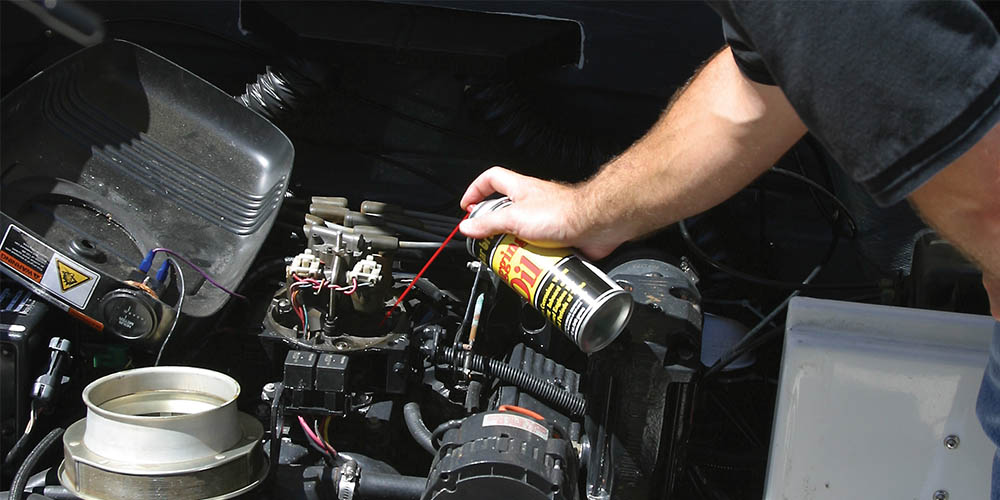
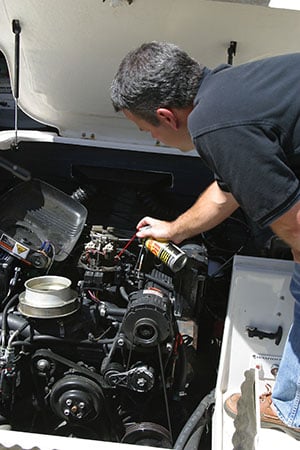
Kevin is spraying Star Brite Fogging Oil into the carburetor of this Volvo Penta engine.
Winterizing a Gas Inboard or Sterndrive Engine
Freeze damage is one of the most expensive and preventable failures a boat owner can experience. A single crack in an engine block, exhaust manifold, heat exchanger, or cooling hose can result in repairs costing thousands of dollars. Proper winterization protects the engine, fuel system, cooling system, lubrication system, and drivetrain while also reducing spring commissioning problems.
While many boaters think winterization is simply pouring antifreeze through the engine, a complete winterization process includes fuel stabilization, cooling system protection, fogging internal engine components, changing lubricants, inspecting wear items, protecting electrical systems, and preparing the engine for several months of inactivity.
The procedures below focus on gasoline-powered inboard and sterndrive engines equipped with raw-water or freshwater cooling systems.
- Fuel Stabilization and Filters
- Understanding Marine Cooling Systems
- Choosing the Right Antifreeze
- Winterizing a Sterndrive
- Winterizing an Inboard Engine
- Fogging Oil Explained
- Engine and Drive Lubricants
- Off-Season Inspection Checklist
- Winterization Glossary
- FAQs
Fuel Stabilization and Filter Maintenance
Today's ethanol-blended gasoline creates unique storage challenges. Ethanol attracts moisture from the atmosphere, which can lead to water contamination, phase separation, varnish formation, corrosion, and difficult spring startups.
Before storage:
- Fill the fuel tank to approximately 95% capacity.
- Add a marine fuel stabilizer according to manufacturer recommendations.
- Run the engine long enough to circulate treated fuel through the entire fuel system.
- Replace the fuel-water separator element.
- Inspect fuel lines for cracking, swelling, or ethanol-related deterioration.
A full tank minimizes condensation while stabilized fuel helps prevent oxidation and varnish deposits that can clog injectors and carburetors during storage.
Fuel System Components Worth Inspecting
- Fuel-water separators
- Primary fuel filters
- Fuel pumps
- Anti-siphon valves
- Fuel hoses
- Tank vents
- Fuel senders
Winterization provides an ideal opportunity to identify fuel system issues before they become spring commissioning problems.
Understanding Marine Cooling Systems
Not all marine engines use the same cooling design.
Raw Water Cooling Systems
Raw water cooled engines pull lake, river, or seawater directly through the engine block and exhaust system before discharging it overboard.
Because water remains throughout the cooling passages, these systems are highly vulnerable to freeze damage if not properly winterized.
Closed Cooling Systems
Closed cooling systems use automotive-style coolant circulating through the engine while raw water removes heat through a heat exchanger.
Even though the engine block contains coolant, the raw water side of the system must still be winterized.
Why Freeze Damage Occurs
Water expands approximately nine percent when frozen. Because engine castings cannot expand, trapped water exerts tremendous pressure on the surrounding metal. The result may be:
- Cracked engine blocks
- Cracked cylinder heads
- Split exhaust manifolds
- Damaged heat exchangers
- Burst hoses
- Broken pumps
Many freeze-related failures are not discovered until spring startup.
Choosing the Right Antifreeze
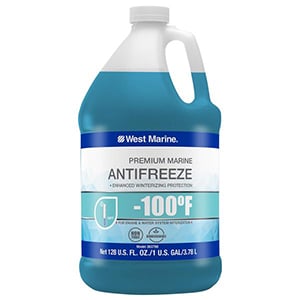
Non-toxic West Marine propylene glycol antifreeze provides freeze protection and corrosion protection for marine cooling systems.
Marine winterization antifreeze and automotive antifreeze are not interchangeable.
Propylene Glycol Marine Antifreeze
Marine winterization antifreeze uses non-toxic propylene glycol. It protects against freeze damage while minimizing environmental impact when discharged from the cooling system.
Ethylene Glycol Automotive Coolant
Automotive coolant is designed for closed cooling systems and contains toxic ethylene glycol. It should not be used for flushing raw water cooled engines.
Why -100°F Antifreeze Is Recommended
Residual water remains inside every cooling system. That water dilutes the antifreeze as it circulates through the engine.
Using -100°F propylene glycol provides additional protection after dilution and is generally considered the safest choice for engine winterization.
Winterizing a Sterndrive Engine
Sterndrives can often be winterized using a flushing device and winterization kit.
Step 1: Warm the Engine
Run the engine until normal operating temperature is reached. This ensures the thermostat opens and treated fuel circulates throughout the system.
Step 2: Introduce Antifreeze
Connect the winterization kit and begin feeding undiluted marine antifreeze through the cooling system.
Continue until antifreeze is visibly exiting through the exhaust outlet.
Step 3: Fog the Engine
Once antifreeze is circulating, apply fogging oil through the carburetor or intake system while the engine continues running.
Heavy white smoke is normal during this process.
Step 4: Shut Down and Inspect
After antifreeze and fogging oil have fully circulated, shut down the engine and continue with oil changes and inspections.
Winterizing an Inboard Engine
Inboard engines require a slightly different process because the raw water intake is connected through a seacock.
- Close the seacock.
- Disconnect the raw water intake hose.
- Insert the hose into a bucket filled with marine antifreeze.
- Start the engine.
- Continue running until antifreeze exits the exhaust.
- Fog the engine.
- Reconnect the intake hose.
- Reopen the seacock.
Always verify that sufficient antifreeze has circulated through all cooling passages before shutting down.
Fogging Oil Explained
Fogging oil protects internal engine components from corrosion during long storage periods.
Without fogging oil, moisture can condense on cylinder walls, piston rings, valve stems, and combustion chamber surfaces.
Over several months, this moisture may cause:
- Cylinder wall rust
- Valve corrosion
- Ring sticking
- Compression loss
- Difficult spring starting
Fogging oil leaves behind a protective film that remains in place throughout storage.
Two Fogging Methods
- Spraying through the intake while running.
- Spraying directly into each cylinder through the spark plug holes.
Both methods provide excellent corrosion protection when performed correctly.
Engine and Drive Lubricants
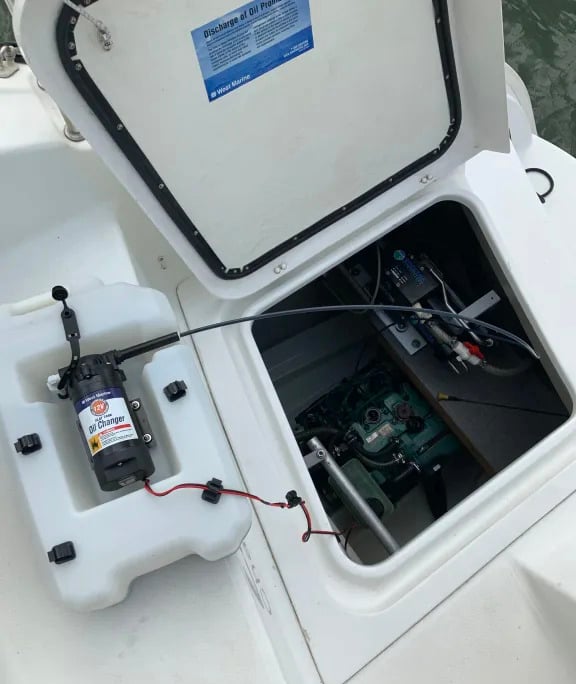
Oil extraction pumps simplify winter oil changes in confined engine spaces.
Changing lubricants before storage is one of the most important winterization tasks.
Engine Oil
Used oil contains moisture, acids, fuel dilution, and combustion byproducts that can attack internal engine surfaces during storage.
Transmission Fluid
Transmission fluid should also be changed according to manufacturer recommendations.
Sterndrive Gear Lube
Inspect drained gear lube carefully.
Milky oil indicates water intrusion through a failed seal and should be investigated before spring launch.
Off-Season Inspection Checklist
Winterization is the ideal time to inspect the entire propulsion system.
- Inspect exhaust manifolds and risers.
- Inspect raw water pumps.
- Check impellers.
- Inspect motor mounts.
- Inspect belts.
- Inspect hoses and clamps.
- Lubricate grease fittings.
- Inspect electrical connections.
- Inspect battery cables.
- Check bonding systems.
- Inspect stuffing boxes and shaft seals.
- Inspect steering components.
Identifying issues during winter storage allows repairs to be completed before spring demand creates scheduling delays.
Winterization Glossary
Fogging Oil: Protective oil sprayed into the intake or cylinders to prevent internal corrosion during storage.
Raw Water Cooling: Cooling system that circulates lake, river, or seawater through engine components.
Closed Cooling System: Cooling system using coolant and a heat exchanger.
Heat Exchanger: Component that transfers heat between engine coolant and raw water.
Fuel Stabilizer: Additive that slows fuel degradation during storage.
Fuel-Water Separator: Filter designed to remove water contamination from fuel.
Phase Separation: Ethanol fuel condition where water separates from gasoline.
Seacock: Valve controlling water entering or leaving the boat through the hull.
Gear Lube: Specialized lubricant used in sterndrive lower units.
Lay-Up: Extended storage period when the boat is not in service.
Frequently Asked Questions
Can I simply drain the water instead of using antifreeze?
Draining alone can leave pockets of water trapped inside engine passages, manifolds, pumps, and hoses. Antifreeze provides a greater margin of protection and helps prevent corrosion during storage.
Do fuel injected engines need fogging oil?
Yes. While the procedure may differ from carbureted engines, internal engine components still benefit from corrosion protection during long-term storage.
How much antifreeze does a marine engine require?
The amount varies by engine size and cooling system design. Most gasoline engines require multiple gallons to ensure complete circulation throughout the cooling system.
Should I remove my batteries during winter storage?
In colder climates many boaters remove batteries and store them indoors. Regardless of location, batteries should remain fully charged and connected to a quality maintenance charger when appropriate.
What causes the most expensive winterization mistakes?
The most common costly failures involve inadequate freeze protection, skipped oil changes, missed water intrusion in sterndrive gear cases, neglected fuel systems, and batteries left discharged throughout the winter.