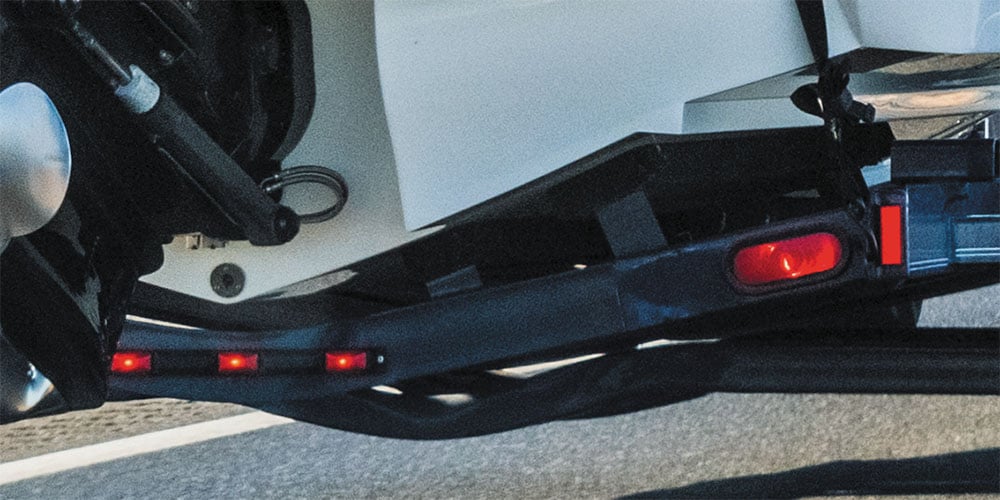
Trailer lights are one of the most important safety systems on any boat trailer. They keep your trailer compliant with state towing laws, but more importantly, they communicate your position, braking and turning intentions to every driver around you. In darkness, rain, fog and highway traffic, properly functioning trailer lights dramatically reduce the risk of rear-end collisions and dangerous lane-change accidents.
Unlike many automotive lighting systems, trailer lights operate in an unusually harsh environment. They experience repeated submersion in water, road vibration, salt exposure, UV damage and constant trailer flexing. Over time, corrosion, wiring damage and failed grounds can quickly create intermittent lighting problems that become frustrating to diagnose.
The good news is that most trailer light and wiring issues are very manageable for DIY boat owners. Understanding how trailer lighting systems work — and how modern LED systems improve reliability — makes troubleshooting and upgrading much easier.
This guide explains trailer lighting requirements, wiring harness types, LED advantages, waterproof lighting systems, troubleshooting strategies and how to properly replace trailer wiring harnesses for long-term towing reliability. :contentReference[oaicite:0]{index=0}
- How Your Trailer Lights Work
- Why Trailer Lights Fail
- Trailer Width Lighting Requirements
- Troubleshooting Existing Lights
- Split Y Wiring Harnesses
- Crossover Wiring Harnesses
- Replacing Your Trailer Wiring Harness
- Advantages of LED Trailer Lights
- Waterproof vs. Submersible Trailer Lights
- Trailer Wiring Color Codes and Adapters
- Inspecting Trailer Lights and Wiring
- Trailer Light FAQs
- We’re Here to Help
- Related Articles
How Your Trailer Lights Work
Trailer electrical wiring connects the lighting system of your tow vehicle to the trailer through a plug-and-harness system.
The system normally includes:
- A trailer plug connected to the tow vehicle
- A matching trailer connector
- A wiring harness running along the trailer frame
- Brake lights
- Turn signals
- Tail lights
- Side marker lights
- Reflectors and clearance lights
Modern multi-function trailer lights often combine several functions into a single compact fixture. Many LED assemblies integrate brake lights, turn signals, running lights and reflectors into one sealed housing.
Why Trailer Grounds Matter So Much
Many trailer lighting systems use the trailer frame itself as the electrical ground path. Corrosion, rust, oxidation or loose mounting hardware can interrupt grounding and create intermittent lighting failures.
Poor grounds are one of the most common causes of trailer light problems.
Why Trailer Lights Fail in Marine Environments
Boat trailer lights operate in one of the harshest environments possible. Repeated launching and retrieval cycles expose them to sudden temperature changes, water intrusion and corrosion that automotive lights rarely experience.
Trailer lights commonly fail because of:
- Thermal shock from cold-water immersion
- Saltwater corrosion
- Road grime contamination
- Highway vibration
- Voltage drop across long wire runs
- Damaged lenses and housings
- Broken incandescent filaments
- Bad grounding connections
Why Saltwater Accelerates Corrosion
Saltwater dramatically speeds up corrosion inside connectors, bulb sockets and exposed wiring.
Even small amounts of trapped saltwater can quickly create oxidation that increases electrical resistance and causes unreliable operation.
How Vibration Damages Trailer Lights
Boat trailers experience constant highway vibration, especially on rough roads and long-distance towing trips.
Incandescent bulbs are particularly vulnerable because their thin internal filaments can break under repeated vibration cycles.
Trailer Width Lighting Requirements
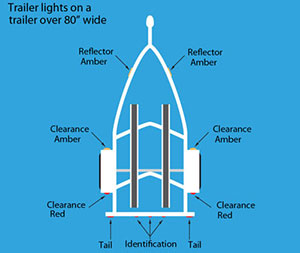
Trailer lighting requirements depend heavily on trailer width.
Trailers Under 80 Inches Wide
Trailers under 80 inches wide generally require:
- Tail lights
- Brake lights
- Turn signals
- Side marker lights
- Rear reflectors
- License plate light
Longer trailers may also require additional side marker lights and reflectors.
Trailers Over 80 Inches Wide
Trailers wider than 80 inches require additional lighting to help define the trailer’s full width and perimeter visibility.
Additional requirements often include:
- Three rear identification lights
- Front clearance lights
- Rear clearance lights
- Additional side markers
These lights help surrounding drivers better judge trailer width and positioning at night.
Why Clearance Lights Matter
Clearance lights become especially important on wider boat trailers, enclosed trailers and tandem-axle setups where width visibility is reduced in darkness or poor weather.
Troubleshooting Existing Trailer Lights
Before replacing your entire trailer lighting system, start with basic troubleshooting.
Many trailer light problems are caused by corrosion or grounding issues rather than failed lights themselves.
Start with the Ground Connection
Clean mounting bolts and grounding points using a wire brush.
Since many lights ground directly through mounting hardware, even light corrosion can interrupt electrical continuity.
Inspect the Trailer Plug
Trailer plugs frequently collect moisture, oxidation and road debris.
Inspect for:
- Green corrosion
- Bent pins
- Loose terminals
- Broken insulation
- Water intrusion
Clean contacts with fine sandpaper and apply dielectric grease afterward.
When Replacing Everything Makes Sense
If your trailer wiring is old, brittle or heavily corroded, replacing the entire harness and light set is often faster and more reliable than repeatedly chasing individual failures.
Modern LED kits are affordable and significantly improve long-term reliability.
Split Y Wiring Harnesses
Most modern trailers use a “Split Y” or “wishbone” wiring harness.
This design splits near the trailer tongue and routes wiring down both sides of the frame separately.
Advantages include:
- Cleaner routing
- Easier troubleshooting
- Better wire protection
- Simpler light connections
Most modern trailer light kits include Split Y harnesses.
Why Split Y Harnesses Are Popular
Because each side of the trailer has its own wire path, troubleshooting and replacing damaged sections becomes much easier than older crossover-style systems.
Crossover Wiring Harnesses
Crossover harnesses route wiring down one side of the trailer before crossing over between the taillights at the rear.
These systems were common on older trailers and are still found on many existing setups.
If replacement becomes necessary, a modern 4-Pin Crossover Trailer Wiring Harness can simplify installation.
Pros and Cons of Crossover Harnesses
- Pros: Simpler original routing
- Cons: Harder troubleshooting and longer exposed wire runs
Replacing Your Trailer Wiring Harness
Replacing a trailer harness depends heavily on trailer construction type.
Trailers with I-Beam Construction
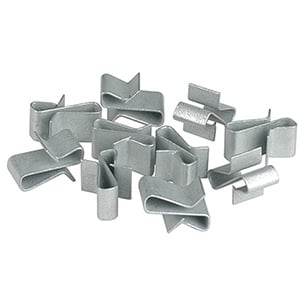
Open-frame channel or I-beam trailers are generally easier to rewire because the harness can be clipped directly to the frame.
Using Trailer Frame Wire Clips helps secure the harness neatly while protecting it from abrasion and sagging.
Trailers with Box Tubing Construction
Trailers using enclosed steel or aluminum box tubing require a different strategy because the harness runs internally through the frame.
Messenger lines or pull cords are commonly used to route the new harness through the tubing.
Using Messenger Lines
Attach messenger cords to the old harness before pulling it out. The cords can then pull the replacement harness back through the frame tubing.
This dramatically simplifies installation on enclosed-frame trailers.
Protecting Wiring During Installation
Always avoid sharp bends, exposed abrasion points and loose unsupported wiring sections.
Use cable clamps, wire ties and protective routing wherever possible.
Advantages of LED Trailer Lights
LED trailer lights solve many long-standing problems associated with incandescent lighting systems.
Advantages include:
- Long lifespan: Up to 100,000 hours
- Shock resistance: No fragile filaments
- Water resistance: Permanently sealed housings
- Minimal heat: Reduced thermal shock
- Lower current draw: Reduced voltage drop
- Compact low-profile design: Reduced impact damage
- Instant illumination: Faster brake light response
Why LED Lights Improve Safety
LED brake lights illuminate instantly, giving drivers behind you additional reaction time during sudden braking situations.
This small timing difference can significantly improve highway safety.
Lower Power Draw Benefits
LEDs use a fraction of the electrical current required by incandescent bulbs.
This reduces voltage drop over long trailer harnesses and improves overall lighting consistency.
Waterproof vs. Submersible Trailer Lights
Many boat owners mistakenly assume all trailer lights are fully waterproof. In reality, there is a major difference between “submersible” and truly waterproof lighting systems.
Submersible Trailer Lights
Submersible lights allow limited water entry but protect the bulb through sealed air pockets or waterproof bulb capsules.
They are designed to tolerate brief immersion during launching and retrieval.
Waterproof Trailer Lights
Fully waterproof systems are completely sealed to prevent water intrusion entirely.
Most modern LED systems fall into this category.
Why Sealed LED Lights Last Longer
Because sealed LEDs eliminate exposed bulb sockets and internal air spaces, they resist corrosion much more effectively than older incandescent systems.
Trailer Wiring Color Codes and Plug Adapters
Trailer wiring color codes are generally standardized:
- White: Ground
- Brown: Tail lights and clearance lights
- Green: Right turn and brake
- Yellow: Left turn and brake
- Blue: Electric trailer brakes
- Black: Auxiliary power
Use Waterproof Connectors Only
Never use household wire nuts on a boat trailer.
Marine-grade waterproof butt connectors protect wiring from corrosion and vibration-related failures.
When You Need a Plug Adapter
Some vehicles separate brake and turn signal circuits differently than standard trailer systems.
In these cases, a plug adapter may be required.
Inspect Your Trailer Lights Regularly
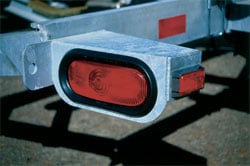
Trailer light inspections should happen before every towing trip.
Perform a complete walk-around inspection checking:
- Brake lights
- Turn signals
- Tail lights
- Side markers
- License plate light
Seasonal Inspection Checklist
- Inspect all harness routing
- Secure loose wiring
- Check for insulation damage
- Clean trailer plug contacts
- Apply dielectric grease
- Inspect light housings for cracks
Why Preventive Inspection Matters
Most trailer light failures develop gradually through corrosion and vibration damage.
Routine inspection helps catch small problems before they create complete lighting failure during travel.
Trailer Light FAQs
Why are trailer lights important?
Trailer lights help prevent collisions by communicating braking, turning and trailer position to surrounding drivers.
Why do trailer lights stop working?
Corrosion, bad grounds, damaged wiring, water intrusion and failed bulbs are the most common causes.
What’s the difference between LED and incandescent trailer lights?
LED lights last longer, use less power, resist vibration and remain sealed against water intrusion.
Can trailer lights be submerged?
Submersible and waterproof trailer lights are specifically designed for repeated launching and retrieval.
How often should trailer wiring be inspected?
Trailer wiring should be inspected before every trip and more thoroughly several times per season.
We’re Here to Help!
At West Marine, we understand how important safe trailering is for protecting your boat and everyone sharing the road with you. Explore our complete selection of trailer lights, trailer wiring, connectors, adapters and trailering accessories online or in stores nationwide.
Need help selecting the right lighting system? Our experienced crew can help you choose LED upgrades, waterproof light kits and replacement wiring harnesses for nearly any trailer setup.
Find your nearest West Marine store.
Related Articles
- Choosing a Trailer Jack
- Safe and Trouble-Free Trailering
- Selecting Trailer Brakes
- Selecting a Trailer Winch
- Sizing Up Trailer Hitches and Couplers
- Trailer Tire Basics


