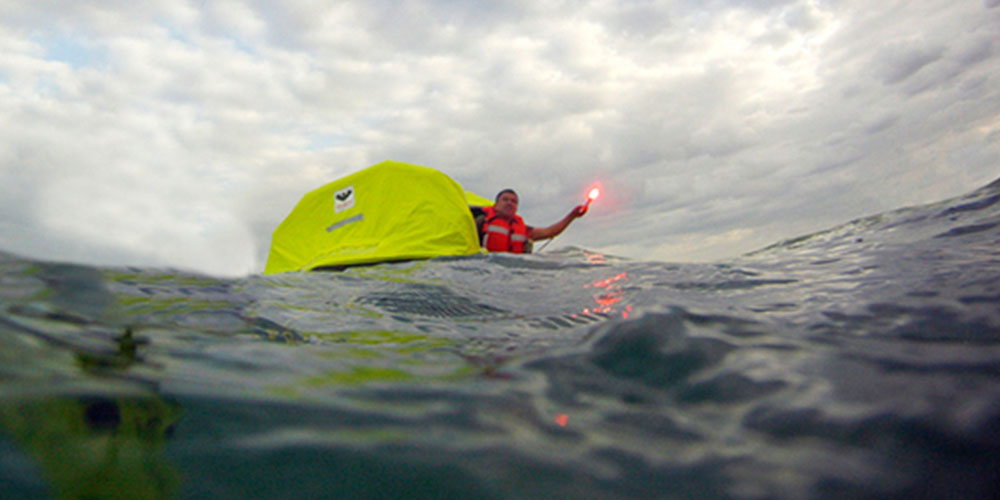
Federal law requires every recreational boat to carry specific safety equipment — and what you need depends on the size of your vessel. This guide breaks down the exact USCG requirements by boat length, plus the additional gear West Marine recommends for genuine on-water safety. Use it before the season starts or any time you want to make sure you're fully covered.
Article Contents
- Life Jackets Save Lives
- Safety Gear Requirements by Vessel Size
- Other Important Safety-Related Gear
- Equip for the Conditions
- Glossary of Safety Equipment Terms
- Safety Equipment FAQs
- Resources
Life Jackets Save Lives
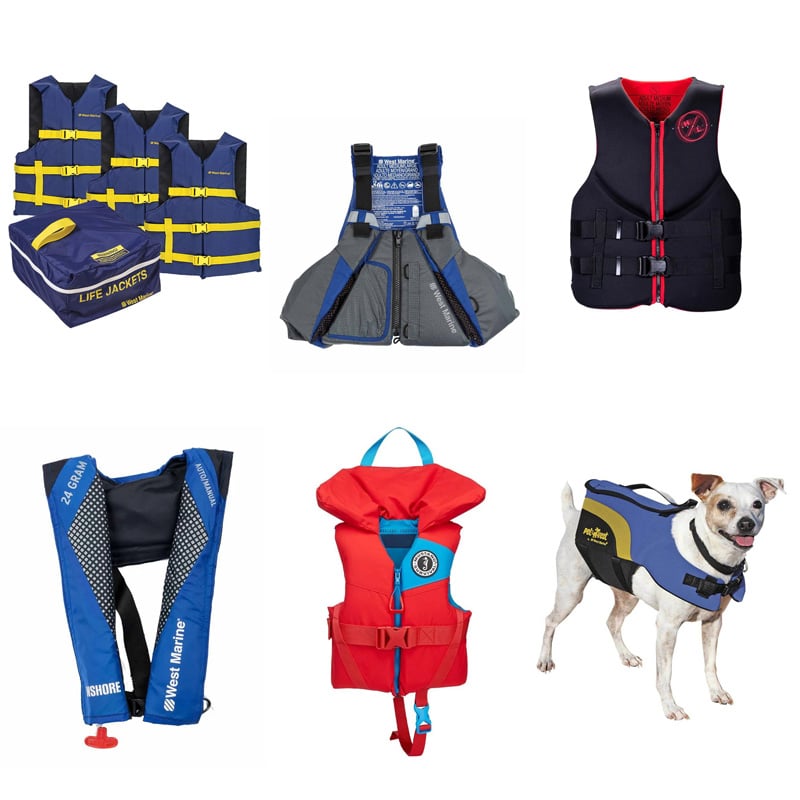 Life jackets are offered for all types of boaters—even pets!
We're kicking off the discussion by first touching on life jackets, because they are the most critical safety equipment for preventing drowning, the primary cause of death in recreational boating incidents. The 2023 USCG Recreational Boating Statistics reveal that 85% of drowning victims were not wearing life jackets, underscoring their importance. Federal law requires children under 13 to wear PFDs on vessels underway unless below deck, in an enclosed cabin, or on a vessel not underway (e.g., at anchor or moored), and state laws may impose additional requirements, such as different age limits or conditions; check your state’s boating regulations for specifics. Adults often opt out, increasing their risk if thrown overboard.
At West Marine, boaters find life jackets for most every type of boating activity. With a large selection of comfortable life jackets that includes models designed for paddling, fishing, high-speed watersports, and general recreation, plus a variety of inflatable PFDs designed for inshore and offshore use, you'd be hard pressed not to find exactly what you need. To learn more about life jackets and for help in selecting one for you, see our guides: How to Select a Life Vest, Life Jacket Types Explained, and Life Jacket Sizing Charts.
USCG Old "Type" versus New "Level" Life Jacket Labeling
In 2014, the U.S. Coast Guard announced a transition from 'Type' ratings (I, II, III, IV, V) to 'Level' ratings (50, 70, 100, 275) to align with international standards. As of now, both Type-rated and Level-rated life jackets in serviceable condition are compliant. Check with the U.S. Coast Guard or manufacturers for the latest updates on labeling transitions. For more details, see the Harmonized Life Jacket Approvals PDF kindly supplied to us by Kent Sporting Goods Company or our guide Life Jacket Types Explained: Type I, II, III, IV & V.
Where Do the Regulations Apply?
The following U.S. Coast Guard safety equipment requirements apply to recreational vessels operating on navigable waters of the United States, which include coastal waters, the Great Lakes, territorial seas, and connected waterways (such as bays, rivers, and harbors) used or capable of being used for interstate or foreign commerce. Boaters must comply with these federal regulations in addition to any applicable state or local laws. In non-navigable state waters (e.g., lakes or rivers entirely within a single state with no interstate commerce use), federal requirements like visual distress signals may not apply unless mandated by state or local authorities. Always check state and local regulations for additional requirements. For a state-by-state breakdown of life jacket laws, see Life Jacket Laws by State.
Canoes, Kayaks and Open Sailboats Less than 16' (4.9m)
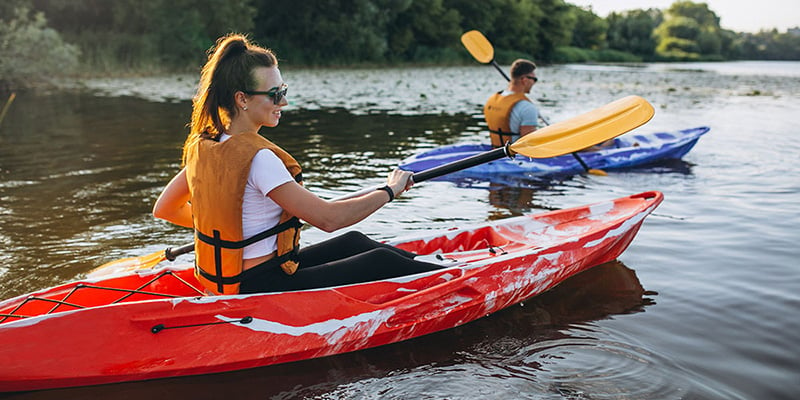
- Personal Flotation Devices: One USCG-approved wearable PFD (Level 70 or higher or legacy Type I, II, III, or V) per person is required on canoes, kayaks, and sailboats. Type V PFDs must be worn and used per their labeling. A Type IV throwable device is not required for vessels under 16 feet. See Kayak Safety Gear Essentials for paddle-sports specific requirements.
- Visual Distress Signals (VDS): Not required to carry visual distress signals for daytime operation, but when operated between sunset and sunrise must carry at least three night-use or three combination day/night use visual distress signals (e.g., pyrotechnic flares) or, in lieu of flares, one electric SOS distress light. Pyrotechnic signals must have a date of manufacture within the past 42 months. Vessels participating in organized events such as races or regattas are exempt. Check state and local regulations for additional requirements.
- Sound-Producing Devices: Must carry a sound-producing device capable of making an efficient signal, such as a handheld whistle or horn. No minimum audibility is required, but devices audible at a distance (e.g., one-half mile) are recommended.
Vessels Less than 16' (4.9m)
Personal Flotation Devices
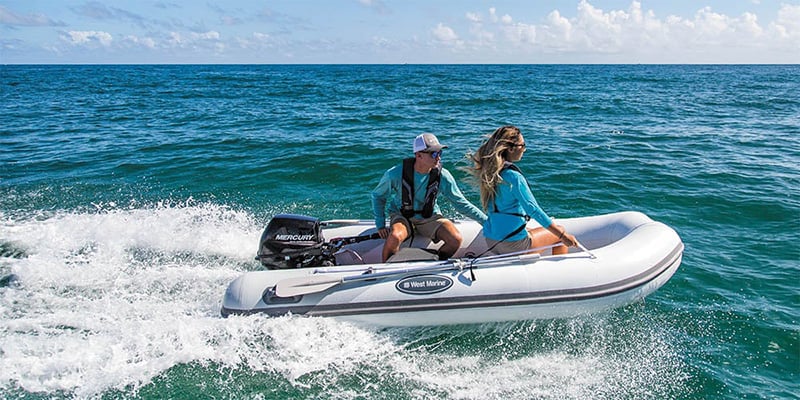
One USCG-approved wearable PFD (Level 70 or higher or legacy Type I, II, III, or V) per person is required on all vessels. Type V PFDs must be worn and used per their labeling. A Type IV throwable device is not required for vessels under 16 feet.
Shop Personal Flotation Devices ≫
Visual Distress Signals
Recreational boats under 16′ are not required to carry VDS for daytime use. However, when operated at night (between sunset and sunrise) they must carry USCG-approved VDS for night use. This requirement may be met with either three night-use or three combination day/night pyrotechnic signals (e.g., flares dated within the past 42 months), or one USCG-approved electric SOS distress light. Open sailboats under 16′ and vessels in organized events such as regattas and marine parades are exempt from carrying VDS at any time. Check state and local regulations for any additional requirements.
Shop Visual Distress Signals (VDS) ≫
Fire Extinguishers
One 5-B required for boats with an inboard engine, enclosed engine compartment, or permanently installed fuel tanks. No extinguisher required if a fixed-mount fire extinguishing system is installed.
Sound-Producing Devices
Must carry a sound-producing device, such as a handheld whistle or horn. No minimum audibility is required, but devices audible at a distance (e.g., one-half mile) are recommended.
Shop Sound-Producing Devices ≫
Marine Sanitation Devices
Vessels with installed toilet facilities must have an operable, USCG-certified Type I, II, or III MSD, subject to local laws (rare for vessels under 16 feet).
Shop Marine Sanitation Devices ≫
Pollution Regulation Placards
Not required for vessels under 16 feet.
Shop Pollution Regulation Placards ≫
Backflame Arrestor
One USCG-approved device on each gasoline-powered engine (except outboards) built after April 25, 1940.
Ventilation
Gasoline-powered vessels with enclosed engine or fuel tank compartments built after August 1, 1980 must have a powered ventilation system meeting USCG specifications to remove gasoline vapors. Vessels built before this date may meet requirements with natural ventilation. This is uncommon for boats in this size range.
Emergency Cutoff Switch (ECOS)
Operators of recreational powerboats under 26 feet with an installed ECOS must wear the ECOS link (lanyard or wireless) when on plane or above displacement speed, except during docking, idling, or in an enclosed cabin.
Shop Emergency Cutoff Switches ≫
Vessels 16' to Less than 26' (4.9m to 7.9m)
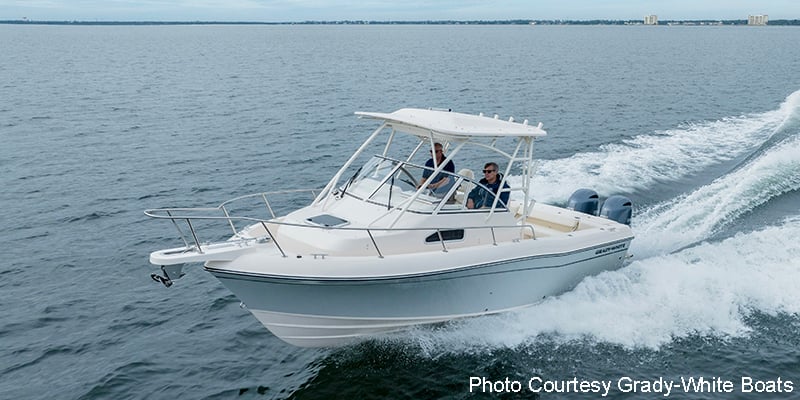
Personal Flotation Devices
One USCG-approved wearable PFD (Level 70 or higher or legacy Type I, II, III, or V) per person is required on all vessels. Type V PFDs must be worn and used per their labeling. One USCG-approved Type IV throwable device is required, except for canoes and kayaks.
Shop Personal Flotation Devices ≫
Visual Distress Signals
Three day-use and three night-use VDS, or three combination day/night signals (e.g., USCG-approved flares dated within the past 42 months). Non-pyrotechnic alternatives include one orange distress flag for daytime and one electric SOS distress light for nighttime. Open sailboats not equipped with propulsion machinery and less than 26 feet in length and vessels in organized events such as regattas and marine parades are exempt from carrying VDS at any time. Check state and local regulations for any additional requirements.
Shop Visual Distress Signals (VDS) ≫
Fire Extinguishers
One 5-B required for boats with an inboard engine, enclosed engine compartment, or permanent fuel tanks. No extinguisher required if a fixed-mount fire extinguishing system is installed.
Sound-Producing Devices
Must carry a sound-producing device, such as a whistle or horn. No minimum audibility is required; devices audible at a distance are recommended.
Shop Sound-Producing Devices ≫
Marine Sanitation Devices
Vessels with installed toilet facilities must have an operable, Coast Guard-certified Type I, II, or III MSD, subject to local laws.
Shop Marine Sanitation Devices ≫
Pollution Regulation Placards
Not required for vessels under 26 feet.
Shop Pollution Regulation Placards ≫
Backflame Arrestor
One USCG-approved device on each gasoline-powered engine (except outboards) built after April 25, 1940.
Ventilation
Gasoline-powered vessels with enclosed engine or fuel tank compartments built after August 1, 1980 must have a powered ventilation system meeting USCG specifications to remove gasoline vapors. Vessels built before this date may meet requirements with natural ventilation.
Emergency Cutoff Switch (ECOS)
Operators of recreational powerboats under 26 feet with an installed ECOS must wear the ECOS link (lanyard or wireless) when on plane or above displacement speed, except during docking, idling, or in an enclosed cabin.
Shop Emergency Cutoff Switches ≫
Vessels 26' to Less than 40' (7.9m to 12.2m)
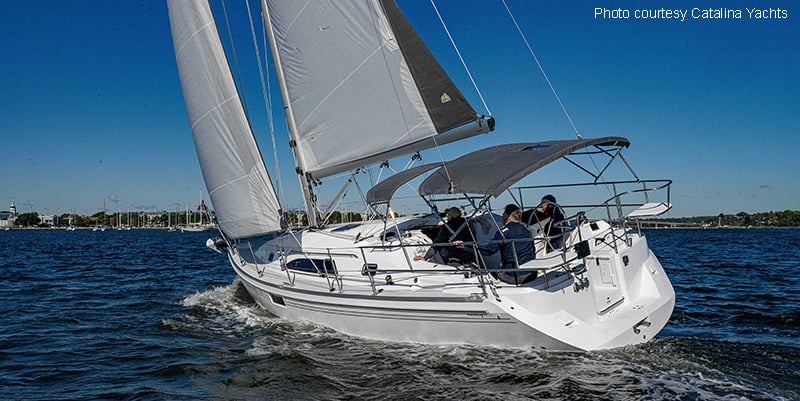
Personal Flotation Devices
One wearable PFD (Level 70 or higher or legacy Type I, II, III or V) per person. Type V PFDs are only acceptable if they are worn and used according to their labeling. One Type IV throwable is also required.
Shop Personal Flotation Devices ≫
Visual Distress Signals
Three day-use and three night-use VDS, or three combination day/night signals (e.g., USCG-approved flares ≤42 months old). Non-pyrotechnic alternatives include one orange distress flag (day) and one electric SOS distress light (night). Check state and local regulations for any additional requirements.
Shop Visual Distress Signals (VDS) ≫
Fire Extinguishers
Two 5-B or one 20-B. One 5-B if the boat has an approved, fixed-mount fire extinguishing system.
Sound-Producing Devices
Must carry a sound-producing device, such as a whistle or horn.
- Vessels under 12 m (39.4′): No minimum audibility is required; devices audible at a distance are recommended.
- Vessels 12 m (≈39.4′) and longer: Must carry a whistle or horn audible at least 1 mile, and a bell audible at least 1/2 mile.
Shop Sound-Producing Devices ≫
Marine Sanitation Devices
Vessels with installed toilet facilities must have an operable, Coast Guard-certified Type I, II, or III MSD, subject to local laws.
Shop Marine Sanitation Devices ≫
Pollution Regulation Placards
A 5" x 8" Oil Discharge placard (permanently affixed in the engine compartment or near fuel tanks) and a MARPOL Garbage Discharge placard (minimum 4" x 9", permanently affixed in the galley or waste disposal area) are required.
Shop Pollution Regulation Placards ≫
Backflame Arrestor
One USCG-approved device on each gasoline-powered engine (except outboards) built after April 25, 1940.
Ventilation
Gasoline-powered vessels with enclosed engine or fuel tank compartments built after August 1, 1980 must have a powered ventilation system meeting USCG specifications to remove gasoline vapors. Vessels built before this date may meet requirements with natural ventilation.
Navigation Rules
Vessels must carry a copy of the Inland Navigation Rules for U.S. inland waters and the International Regulations for Preventing Collisions at Sea for international waters. For a practical guide to right-of-way rules, see Boating Right of Way Rules: Give-Way & Stand-On Vessels.
Vessels 40' to Less than 65' (12.2m to 19.8m)
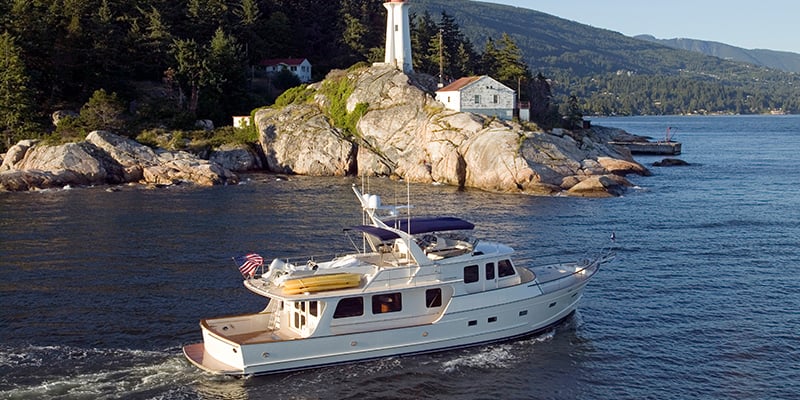
Personal Flotation Devices
One wearable PFD (Level 70 or higher or legacy Type I, II, III or V) per person. Type V PFDs are only acceptable if they are worn and used according to their labeling. One Type IV throwable is also required.
Shop Personal Flotation Devices ≫
Visual Distress Signals
Three day-use and three night-use VDS, or three combination day/night signals (e.g., USCG-approved flares ≤42 months old). Non-pyrotechnic alternatives include one orange distress flag (day) and one electric SOS distress light (night). Check state and local regulations for any additional requirements.
Shop Visual Distress Signals (VDS) ≫
Fire Extinguishers
Three 5-B or one 20-B and one 5-B. Two 5-B or one 20-B if the boat has an approved, fixed-mount fire extinguishing system.
Sound-Producing Devices
Must carry a whistle or horn audible at least 1 mile, and a bell audible at least 1/2 mile.
Shop Sound-Producing Devices ≫
Marine Sanitation Devices
Vessels with installed toilet facilities must have an operable, USCG-certified Type I, II, or III MSD, subject to local laws.
Shop Marine Sanitation Devices ≫
Pollution Regulation Placards
A 5" x 8" Oil Discharge placard (permanently affixed in the engine compartment or near fuel tanks) and a MARPOL Garbage Discharge placard (minimum 4" x 9", permanently affixed in the galley or waste disposal area) are required. Vessels 40 feet or longer with a galley or berthing facilities must have a written Waste Management Plan detailing garbage handling and disposal.
Shop Pollution Regulation Placards ≫
Backflame Arrestor
One USCG-approved device on each gasoline-powered engine (except outboards) built after April 25, 1940.
Ventilation
Gasoline-powered vessels with enclosed engine or fuel tank compartments built after August 1, 1980 must have a powered ventilation system meeting USCG specifications to remove gasoline vapors. Vessels built before this date may meet requirements with natural ventilation.
Navigation Rules
Vessels must carry a copy of the Inland Navigation Rules for U.S. inland waters and the International Regulations for Preventing Collisions at Sea for international waters. For a practical guide to right-of-way rules, see Boating Right of Way Rules: Give-Way & Stand-On Vessels.
Vessels 65' to 165' (19.8m to 50.3m)
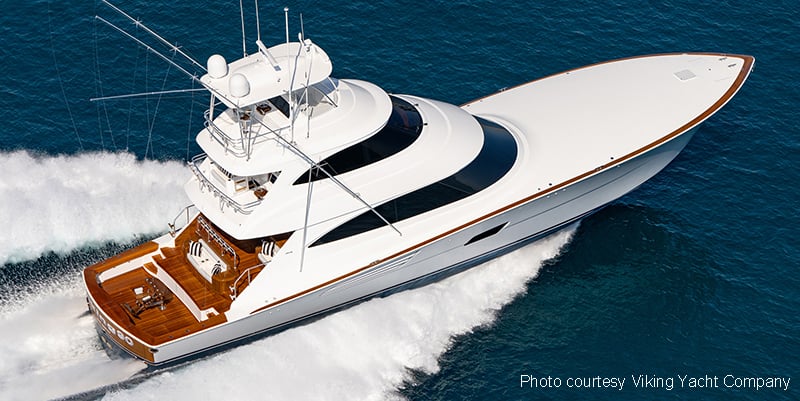
Personal Flotation Devices
One wearable PFD (Level 70 or higher or legacy Type I, II, III or V) per person. Type V PFDs are only acceptable if they are worn and used according to their labeling. One Type IV throwable is also required.
Shop Personal Flotation Devices ≫
Visual Distress Signals
Three day-use and three night-use VDS, or three combination day/night signals (e.g., USCG-approved flares ≤42 months old). Non-pyrotechnic alternatives include one orange distress flag (day) and one electric SOS distress light (night). Check state and local regulations for any additional requirements.
Shop Visual Distress Signals (VDS) ≫
Fire Extinguishers
Requirements vary with length and gross tonnage of vessel. Check Coast Guard regulations for specific details.
Sound-Producing Devices
Must carry a whistle or horn audible at least 1 mile, and a bell audible at least 1/2 mile.
Shop Sound-Producing Devices ≫
Marine Sanitation Devices
Vessels with installed toilet facilities must have an operable, Coast Guard-certified Type I, II, or III MSD, subject to local laws.
Shop Marine Sanitation Devices ≫
Pollution Regulation Placards
A 5" x 8" Oil Discharge placard and a MARPOL (Garbage Discharge) placard (minimum 4" x 9") are required. Vessels 40 feet or longer with a galley or berthing facilities must have a written Waste Management Plan, detailing how garbage is handled and disposed of in compliance with 33 CFR 151.57, regardless of operating distance from shore.
Shop Pollution Regulation Placards ≫
Backflame Arrestor
One USCG-approved device on each gasoline-powered engine (except outboards) built after April 25, 1940.
Ventilation
Gasoline-powered vessels with enclosed engine or fuel tank compartments built after August 1, 1980 must have a powered ventilation system meeting USCG specifications to remove gasoline vapors. Vessels built before this date may meet requirements with natural ventilation.
Navigation Rules
Vessels must carry a copy of the Inland Navigation Rules for U.S. inland waters and the International Regulations for Preventing Collisions at Sea for international waters.
Other Important Safety-Related Gear
Most boats come equipped with much of the gear needed to meet minimum U.S. Coast Guard requirements, including safety equipment, sanitation devices, and required waste, oil, and garbage placards. Whether you’re commissioning a new boat or updating an older one, it’s a good idea to review your gear before you cast off. Meeting the minimum requirements ensures compliance, but adding extra safety products can enhance your protection on the water. At West Marine, we’re committed to helping you make life on the water as safe and enjoyable as possible.
Navigation Lights
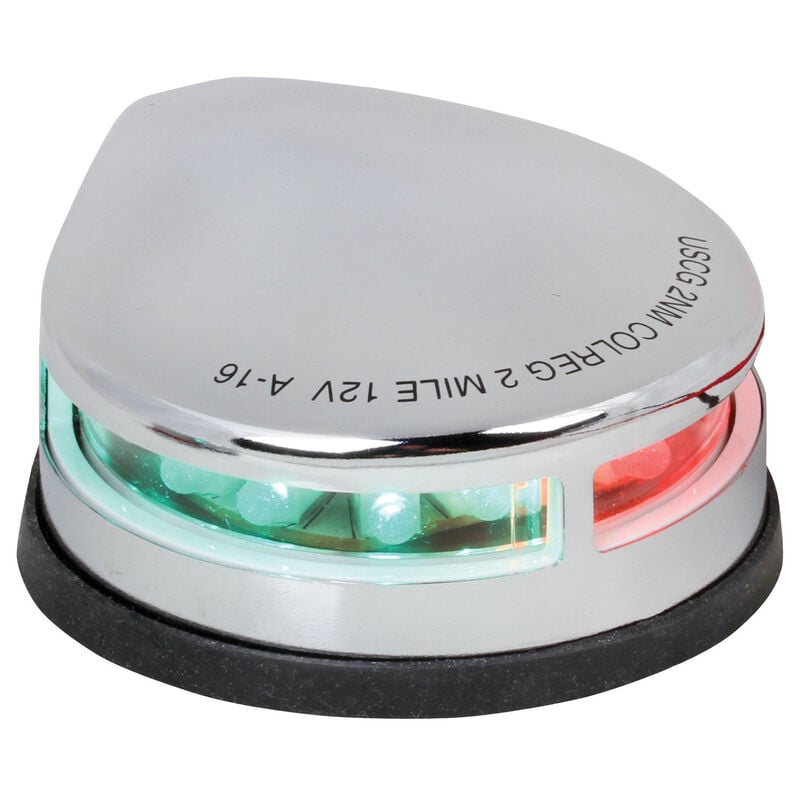 Vessels operating on the water after sunset are required to display navigation lights to avoid collisions with other boats.
All vessels must display appropriate navigation lights from sunset to sunrise or in restricted visibility to prevent collisions, with requirements varying by vessel size, type (power-driven, sailing, or manually propelled), and operating waters (inland or international). For example, smaller vessels may need only a white light, while larger vessels require sidelights, masthead lights, and sternlights with specific visibility ranges. For complete details, including anchoring lights and day shapes, see our West Marine Navigation Light Rules article.
Rescue Slings
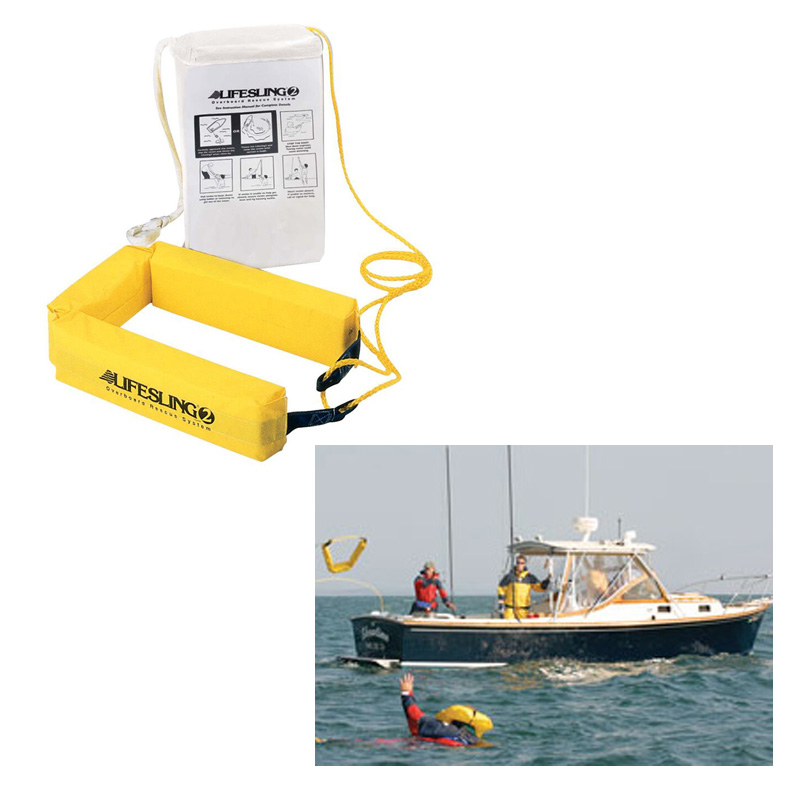 Lifesling2 Overboard Rescue System is the most widely-accepted method to get an overboard crew member back aboard your boat.
The Coast Guard–approved Lifesling2 enables faster, safer overboard crew recovery compared to traditional ring or horseshoe buoys. Designed to be towed directly to a person overboard—keeping them clear of the hull and propeller—it doubles as a flotation collar and lifting sling to hoist them back onboard. For more on responding to a man-overboard or capsize emergency, see What to Do If Your Boat Capsizes.
VHF Radios
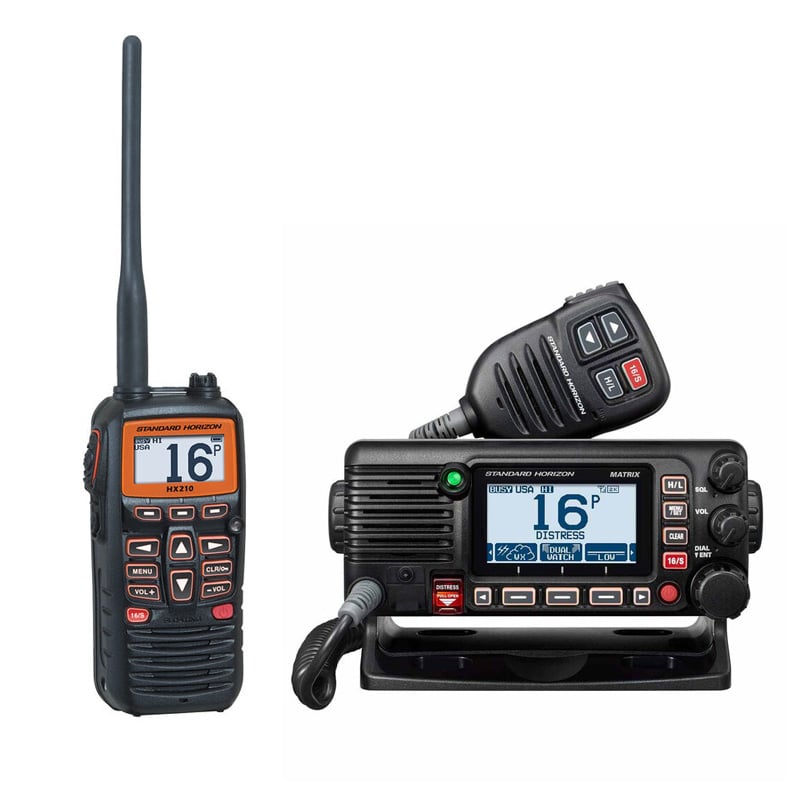 West Marine offers a wide selection of handheld and fixed-mount VHF radios from leading brands like Standard Horizon, ICOM, Simrad, B&G, Lowrance, Uniden and Raymarine.
A surprising number of boats are not equipped with a VHF radio. A handheld or fixed-mount VHF radio with Digital Selective Calling (DSC), GPS connection, and a registered MMSI number enables emergency distress calls with your location. For more, see our West Advisor article Making a Mayday Call on Your VHF Radio.
EPIRBs and PLBs
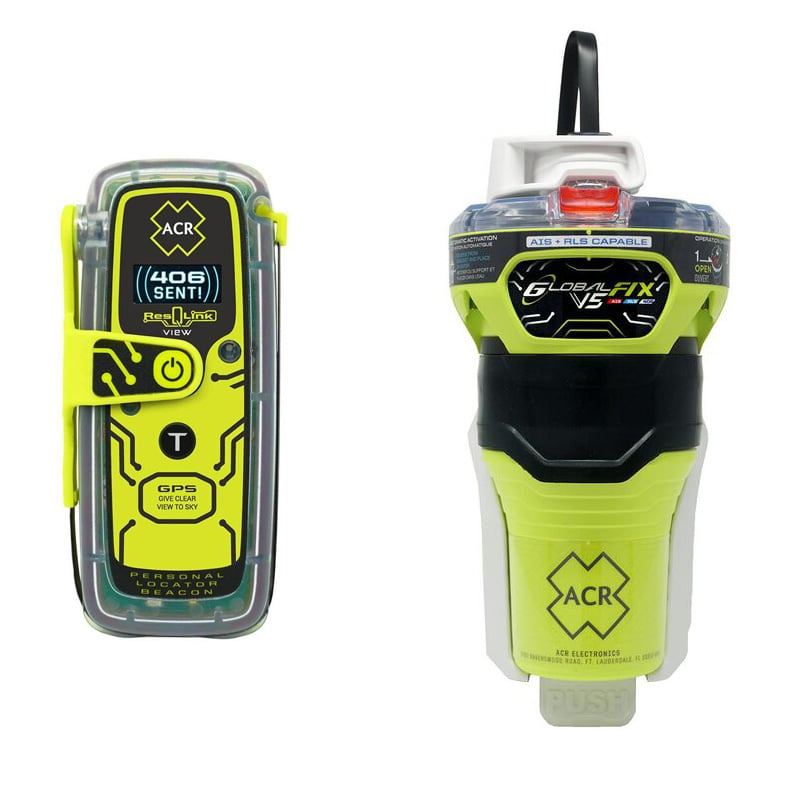 ACR ResQLink View Personal Locator Beacon (left) and the ACR GlobalFix V5 Category II Manual EPIRB (right)
In the event of an emergency, a PLB (Personal Locator Beacon) or EPIRB (Emergency Position Indicating Radio Beacon) can alert rescuers to your position almost anywhere in the world. For a full comparison of EPIRBs and PLBs including registration requirements and which is right for your vessel, see EPIRB vs. PLB: Which Emergency Beacon Do You Need? and our West Advisor article Selecting an Emergency Beacon.
Do You Need a Liferaft?
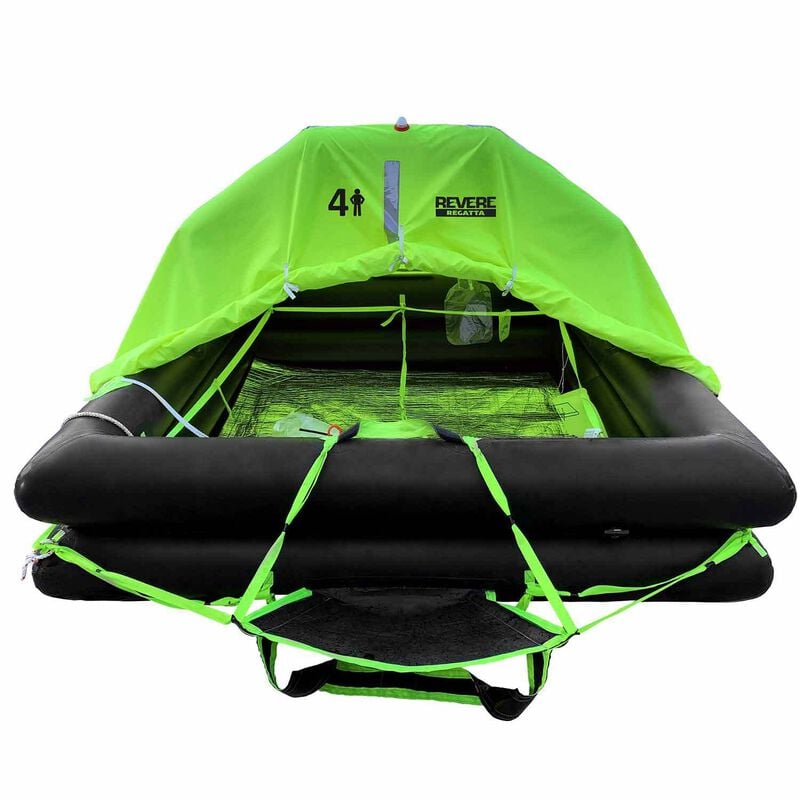 Revere Survival Regatta 4-Person Life Raft
While the USCG does not require liferafts on recreational boats (regardless of size or operating area), if you operate far offshore, in cold waters, or on extended passages, the Coast Guard strongly recommends carrying one suited to your voyage and likely rescue time. Some ocean races, cruising rallies, and certain commercial operations do mandate liferafts under their own rules, but those are separate from USCG recreational boating requirements.
Equip for the Conditions
You can never be too prepared for an emergency and you should consider the specific conditions you may encounter before you head out on your voyage including:
- Water Temperature: In cold-water regions like the Pacific Northwest or Great Lakes, bring gear to protect against hypothermia.
- Poor Visibility: High-quality navigation lights, sound signals, and radar units reduce risks in fog or rain.
- Distance from Help: For offshore trips, carry gear for self-sufficiency, as Coast Guard assistance may be limited.
- Rapidly Changing Weather: Equip boats for squalls with larger anchors, lightning detectors, mainsail reefing equipment, drogues, and sea anchors.
- Rough Seas: Areas with strong winds and chop, like San Francisco Bay, require robust equipment for sailboats and powerboats.
Before every departure, review our Float Plan guide and leave a completed plan with a responsible contact ashore. For a full pre-departure safety review, see the Safe Boating Checklist.
Glossary of Safety Equipment Terms
Backfire Flame Arrestor: A safety device fitted to the carburetor or fuel injection system of a gasoline-powered inboard or inboard-outdrive engine that prevents a backfire from igniting fuel vapors in the engine compartment. Required on covered engines built after April 25, 1940.
DSC (Digital Selective Calling): A feature built into modern VHF radios that allows a user to send an automated distress call at the push of a dedicated button, transmitting the vessel's identity and, when connected to GPS, its exact position to the Coast Guard and nearby vessels.
ECOS (Emergency Cutoff Switch): Also called a kill switch, a safety device that automatically shuts off a boat's engine if the operator is separated from the helm, such as in a fall overboard. Operators of covered powerboats under 26 feet must wear the ECOS link when underway above displacement speed.
EPIRB (Emergency Position Indicating Radio Beacon): A distress beacon registered to a specific vessel that transmits a signal on the 406 MHz frequency to the international satellite search and rescue network, providing the vessel's GPS position to rescue authorities once activated.
Float Plan: A written record of a vessel's intended trip details, including departure point, destination, route, expected return time, and the number of people aboard, left with a person ashore who can alert authorities if the boat fails to return as scheduled.
MMSI (Maritime Mobile Service Identity): A unique nine-digit number assigned to a vessel's VHF radio and registered with the Coast Guard, used to identify the vessel automatically during DSC distress calls and routine radio communications.
MSD (Marine Sanitation Device): A USCG-certified system installed on any vessel with a toilet that treats or holds sewage to prevent overboard discharge of untreated waste, particularly required in No Discharge Zones.
No Discharge Zone: A body of water designated by the EPA or a state where the discharge of any sewage, treated or untreated, from a vessel is prohibited, requiring boaters to use a holding tank or pump-out facility instead.
PFD (Personal Flotation Device): The official term for what is commonly called a life jacket or life vest, classified by Type (I through V) under the legacy labeling system or by Level (50 through 275) under the newer international labeling system.
PLB (Personal Locator Beacon): A portable distress beacon registered to an individual rather than a vessel, functioning similarly to an EPIRB but designed to be carried on a person, such as clipped to a PFD, rather than mounted to a boat.
USCG-Approved: A designation indicating that a piece of safety equipment has met the U.S. Coast Guard's testing and construction standards for its category, evidenced by an approval number printed on the equipment's label.
VDS (Visual Distress Signal): Any device used to visually signal distress to other vessels or rescuers, including pyrotechnic flares, electric SOS lights, and distress flags, with specific quantity and type requirements varying by vessel length and operating hours.
Waste Management Plan: A written document required on vessels 40 feet or longer with a galley or berthing facilities, detailing the procedures for collecting, processing, storing, and disposing of garbage generated aboard in compliance with MARPOL and 33 CFR 151.57.
Safety Equipment FAQs
Requirements include PFDs, VDS, sound-producing devices, and fire extinguishers, varying by vessel size. Some vessels require additional equipment based on facilities or engine type.
Refer to the section matching your vessel’s size range for minimum requirements and recommended items.
Operators of recreational vessels less than 26' with a functioning ECOS installed must use it when the vessel is on plane or above displacement speed, unless conducting specific activities like docking or idling.
Navigation lights are required during periods of restricted visibility (e.g., fog, heavy rain) regardless of time of day, and from sunset to sunrise when underway or at anchor. For manually propelled vessels, only a white light is required to be displayed in time to prevent collisions during restricted visibility or at night, not full navigation lights. Functioning lights are recommended for unexpected low-visibility conditions.
Type ratings (I, II, III, IV, V) are transitioning to Level ratings (50, 70, 100, 150) for international alignment. Level 70 jackets have replaced Type II and III for certain users, but serviceable Type-rated jackets remain compliant. See Life Jacket Types Explained for a full breakdown.
While not required, a VHF radio with DSC and GPS is highly recommended for emergency communication, enabling distress calls with your location.
Consider an EPIRB or PLB, extra PFDs, a first aid kit, and a Lifesling for man-overboard recovery. See What to Do If Your Boat Capsizes for survival gear recommendations.
Yes, all gasoline-powered inboard or inboard–outdrive engines (built after April 25, 1940) must be equipped with a USCG–approved backfire flame arrestor. The device must be in good condition and installed per the manufacturer’s instructions.
Gasoline-powered vessels built after August 1, 1980, must have a powered or natural ventilation system for each compartment containing a gasoline engine or fuel tank (except open boats). Boats built before that date must comply with the ventilation requirements in effect when they were built.
Recreational boats 26 feet or longer with a permanently installed machinery space must display an oil discharge placard. Vessels 40 feet or longer with a galley or head must also display a garbage discharge placard.
Any vessel with an installed toilet must have a USCG–certified marine sanitation device. Overboard discharge is prohibited in No Discharge Zones, and the MSD must be secured to prevent accidental release.
A copy of the Inland Navigation Rules is required on recreational vessels 12 meters (39.4 feet) or longer when operating inside U.S. inland waters. This may be in book or electronic form, but it must be accessible to the operator.
Resources
- A Boater's Guide to the Federal Requirements for Recreational Boats
- Navigation Light Rules
- Selecting the Right Anchor
- Get Connected—It's the Law!
- Selecting a VHF Fixed Mount Radio
- Selecting a VHF Handheld Radio
- Safe Boating Checklist
- How to Select a Life Vest
- Selecting Fire Extinguishers
- Selecting an Emergency Beacon—EPIRBs and PLBs
- Selecting a Boating Medical Kit
- Selecting Crew Overboard Equipment
- Selecting Visual Distress Signals
- Selecting a Radar Reflector for Boats
- Life Jacket Types Explained: Type I, II, III, IV & V
- Life Jacket Sizing Charts
- Life Jacket Laws by State
- EPIRB vs. PLB: Which Emergency Beacon Do You Need?
- What to Do If Your Boat Capsizes
- Float Plan: What to Include and Who to Leave It With
- Boating Right of Way Rules


