

Top Winterizing Picks




Boat Winterization




Boat Winterization Kits & Supplies — Protect Your Boat During Off-Season Storage
Boat winterization products are designed to prevent freeze damage, corrosion, fuel degradation, and system failures during periods of non-use. Proper winterization protects engines, plumbing systems, fuel components, batteries, and onboard equipment from temperature extremes and moisture exposure.
Using marine-specific winterization supplies helps ensure reliable spring startup while reducing the risk of costly repairs caused by cracked components, contaminated fuel, or internal corrosion.
Is Your Boat Ready for Winter?
As summer turns to fall and the air takes on a chill, boaters in northern states breathe a collective sigh of resignation, knowing that the time to layup their boats has arrived. If you keep your boat in a place like Kalamazoo, Kankakee, Minneapolis or Chicago—where the ice can get up to three feet thick, you probably don’t need convincing of this; and are aware that failing to protect engines, air conditioners, potable water or other systems against freeze damage can result in an expensive loss.
Boaters located in more moderate climates, such as Florida, Texas, Louisiana, Alabama, Georgia or “sunny California” don't get a pass either. According to the marine insurers at BoatUS, states like these generate the highest number of freeze related insurance claims. That's because boaters in more temperate locations sometimes choose to roll the dice and bet on skating through the occasional cold snap—which can cost a pretty penny when they lose. If you happen to keep your boat where freezing weather is the exception, and want some suggestions on how to protect your boat from a cracked engine block or other damage and still go boating when the weather warms up, see Extending the Boating Season.
Regardless of whether you keep your boat in the frigid north, or in a more temperate region, we are ready to help you prepare your boat for winter and enjoy a hassle-free splash in the spring.
How to Winterize Different Boat Engines
Remember, if you are “on the fence” regarding the need to winterize your boat, changing the oil, fogging the engine or filling the engine block with antifreeze is cheap insurance against allowing corrosion to run wild or an expensive repair in the event that you get “stung” by a cold snap. For help with winterizing a gasoline inboard or sterndrive, see Winterizing Your Gas Inboard or Sterndrive. Diesel engine and genset owners see Winterizing Your Marine Diesel or Genset. Outboard motor owners see Winterizing Your Outboard Motor. Here are some winterization tasks common to all types of engines.
Fog the engine. Fogging oil prevents corrosion of inboard or outboard engines that are stored for an extended period of time. See our selection of fogging oil.
Change the oil. We offer a complete selection of synthetic and mineral-based engine oil. Old oil in the crankcase of a stored boat can form acids, which can corrode engine components and shorten engine life.
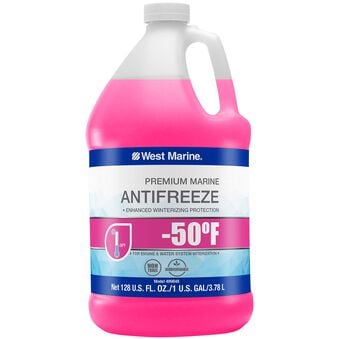
Fill the engine block with antifreeze. This will prevent residual water from freezing and cracking the block. Non-toxic propylene glycol antifreeze is best. Choose a strength that is adequate for your area. For helpful advice, see Choosing Antifreeze.
Top off the fuel tank and stabilize the fuel. Fuel stabilizers help to prevent phase separation and the formation of gum and varnish in gasoline. Diesel fuel stabilizers help to prevent the growth of injector-clogging bacteria. Topping off the tank eliminates condensation that would otherwise settle as water at the bottom of the tank.
How to Winterize Potable Water Systems, Sanitation Systems and Air Conditioners
Just like your boat’s engine, freshwater systems, sanitation systems and, if present, air conditioners must be protected against freeze damage.
Drain the freshwater tank and water lines and protect them with antifreeze. Replacing burst water lines, or worse tearing out cabinetry to get at a cracked water tank is no fun. A few ounces of antifreeze is worth a pound of cure! For advice, see Winterizing Potable Water Systems.
Sanitation Systems. Residual water in your boat’s sanitation system could turn to ice and cause expensive damage. Protecting marine sanitation systems against freeze damage is actually quite easy. For how to get the job done, see Winterizing Marine Sanitation Systems.
How to Prevent Mold and Mildew Buildup on a Boat During winter storage, the enclosed, humid space of a boat’s cabin can give rise to mold and mildew. In addition to the obnoxious odor, mold and mildew can permanently damage upholstery and can lead to respiratory illness in sensitive individuals—so it is imperative to keep this scourge under control. Here are some measures to consider:
Keep the boat ventilated. Ventilation can be active or passive. Active ventilation includes cowl ventilators, clamshell ventilators and louvered ventilators. Active ventilation incudes Nicro’s Day/Night Solar Ventilators and other devices. If you plan on shrink wrapping your boat, passive shrink wrap ventilators are available for these installations as well.
Consider adding an engine room or other low-temperature heater. In addition to ventilators, if you have a power source, you can install an engine room heater, Golden Rod Dehumidifier or Turbo Dryer.
Reduce humidity with moisture absorbing crystals. This is a proven way to reduce cabin humidity. Special crystals are available from Star brite, Mary Kate and other manufacturers.
Treat the cabin with chlorine dioxide technology. Systems that employ this technology can be used to treat a boat’s cabin during storage or when recommissioning in the spring.
Wet vs. Dry Boat Storage
Wintering your boat “wet” vs. “on the hard” has its advantages and trade-offs. On the one hand, dry-stored boats can’t sink but, according to BoatUS, are more susceptible to freeze damage. Wet stored boats on the other hand (in a worst case scenario) can sink and are (if made of fiberglass) susceptible to osmotic blistering. If you plan on keeping your boat in the water, here are some suggestions:
Inspect your dock lines. Wind, waves and surge put a constant strain on dock lines. Prepare for winter storms by replacing dock lines if worn and add chafing gear if necessary.
Consider installation of a de-icer. Installing a de-icer in your boat’s slip will help to prevent ice from forming, which can lead to dreaded “ice jacking”, which can severely damage a boat.
For a more detailed discussion of wet vs. dry boat storage, see our informative Advisor Winter Boat Storage.
Winter is fast approaching, is your boat ready?
As northern temperatures dip, it is obvious that Jack Frost has begun his trek south. Many northern boaters have already begun to protect their boats against a possible deep freeze. If you happen to keep your boat in a more temperate zone, remember that an ounce of protection is worth a pound of cure.
Complete Boat Winterization Systems
Winterizing a boat typically involves treating multiple onboard systems with compatible products.
Engine Protection Supplies
Protect internal engine components from freezing and corrosion.
-
Marine antifreeze for cooling systems
-
Fogging oil to coat internal engine surfaces
-
Stabilizers to preserve fuel quality
-
Lubricants for moving parts
These treatments help prevent internal rust and mechanical damage during storage.
Fuel System Treatment
Fuel can degrade over time, leading to poor performance or starting issues.
-
Fuel stabilizers to prevent oxidation
-
Moisture control additives
-
Tank corrosion protection
-
Cleaning treatments for injectors or carburetors
Stabilized fuel reduces varnish buildup and helps maintain engine readiness.
Plumbing & Water System Protection
Freshwater systems are vulnerable to freeze damage.
-
Non-toxic antifreeze for potable systems
-
Pump protection solutions
-
Treatments for livewells and washdown systems
-
Hose and fitting safeguards
Proper treatment prevents cracked pipes, pumps, and tanks.
Winterization Kits vs Individual Supplies
Complete Kits
Provide a coordinated set of products for common winterization tasks.
-
Convenient all-in-one solutions
-
Suitable for routine seasonal storage
-
Simplifies product selection
Individual Components
Allow customization based on boat type and systems.
-
Ideal for complex vessels
-
Supports targeted maintenance
-
Useful for topping off existing supplies
Selecting the appropriate approach depends on the size and complexity of the vessel.
Boat Type Recommendations
Different boats require different winterization strategies.
Outboard Boats
-
Engine fogging and cooling system protection
-
Fuel stabilization
-
Lower unit maintenance
Sterndrive & Inboard Boats
-
Raw water system antifreeze treatment
-
Engine block protection
-
Exhaust system drainage
Personal Watercraft
-
Compact cooling system protection
-
Fuel stabilization
-
Internal corrosion prevention
Cruisers & Larger Vessels
-
Multiple engines and generators
-
Freshwater and sanitation systems
-
Climate control equipment
Batteries & Electrical Systems
Cold weather affects battery performance and lifespan.
Recommended steps include:
-
Charging batteries fully before storage
-
Disconnecting or removing batteries if required
-
Using maintainers for long-term storage
-
Cleaning terminals to prevent corrosion
Maintained batteries are more likely to perform reliably at launch.
Lubrication & Mechanical Protection
Moving components benefit from protective lubrication during storage.
Key areas include:
-
Steering systems
-
Control cables
-
Hinges and hardware
-
Drive components
Lubrication prevents seizure and corrosion.
Preventing Mold & Moisture Damage
Closed boats can trap humidity during winter months.
Preventive measures may include:
-
Moisture absorbers
-
Ventilation systems
-
Protective cleaners
-
Interior drying before storage
Managing humidity helps protect upholstery, electronics, and finishes.
How Much Winterization Product You Need
Material requirements depend on:
-
Engine size and type
-
Capacity of water systems
-
Fuel tank volume
-
Number of onboard systems
Larger vessels typically require multiple containers of antifreeze and treatment products.
Signs Proper Winterization Is Complete
Before storage, confirm that:
-
Engines are protected against freezing
-
Fuel systems are stabilized
-
Water systems contain antifreeze or are drained
-
Batteries are secured
-
Interior moisture control is in place
Thorough preparation reduces the likelihood of spring repairs.
Start the Season Strong with Proper Off-Season Protection
Boat winterization supplies help safeguard critical systems during periods of inactivity, ensuring that engines, plumbing, fuel systems, and onboard equipment remain protected from cold weather and environmental damage. Using appropriate products for your vessel type and storage conditions supports long-term reliability, performance, and peace of mind when boating season returns.
Trending Now


