Get the Right Battery

Starting
This battery is for boaters who only need a quick burst of power to crank the engine with minimal electronics use, or for those with a two-battery setup where one is dedicated strictly to starting.
Starting Performance: Better
Cycling Performance: *
Repeated Deep Discharges: *
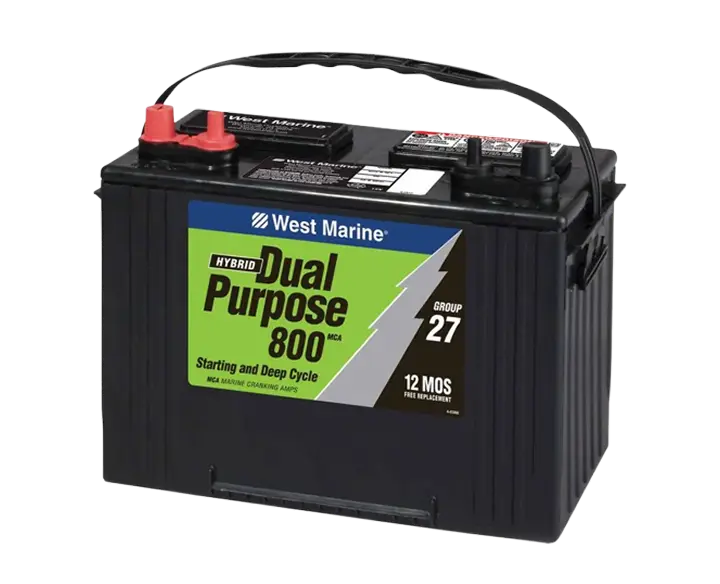
Dual Purpose
This is a hybrid designed for boaters who need one battery to do two jobs: provide enough power to crank the engine while also having the stamina to run electronics like fish finders, lights, and stereos when the motor is off.
Starting Performance: Good
Cycling Performance: Good
Repeated Deep Discharges: Good
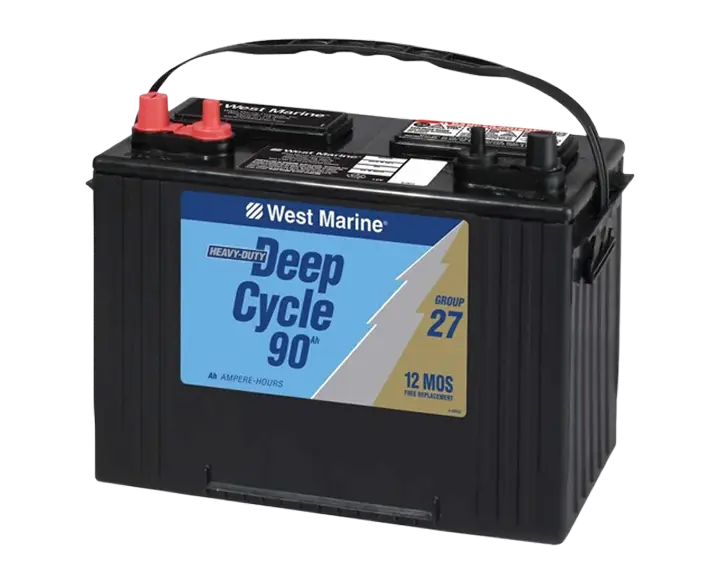
Heavy-Duty Deep Cycle
As a ”marathon runner,“ this battery provides steady, long-term power for electronics and trolling motors that stay on for hours. It is built to be repeatedly drained and recharged, making it a workhorse for everything except high-speed engine starting.
Starting Performance: Good
Cycling Performance: Better
Repeated Deep Discharges: Better

AGM
This elite all-rounder combines high-performance engine starting with massive energy storage for electronics. Its advanced AGM design makes it essentially maintenance-free and up to 20 times more resistant to the vibration of wave-pounding than standard batteries.
Starting Performance: Best
Cycling Performance: Best
Repeated Deep Discharges: Best
* Not recommended
Marine Batteries & Boat Batteries




Marine Batteries & Boat Batteries
Keep your boat powered with marine batteries from West Marine. Whether you need a reliable starting battery for your outboard motor, a deep-cycle battery for your trolling motor, or a house battery to run onboard electronics, choosing the right battery helps support dependable performance on the water.
Shop marine starting batteries, deep-cycle batteries, dual-purpose batteries, AGM batteries, flooded lead-acid batteries, and lithium marine batteries for fishing boats, center consoles, pontoons, sailboats, cruisers, and other recreational vessels. Compare battery capacity, cranking power, group size, and charging requirements to find the right option for your boat.
Types of Marine Batteries
Marine Starting Batteries
Marine starting batteries, also called cranking batteries, are designed to deliver a high burst of electrical power to start an inboard or outboard engine. These batteries are commonly rated using Marine Cranking Amps (MCA) or Cold Cranking Amps (CCA).
When replacing a boat starting battery, check your engine manufacturer's minimum cranking requirements, battery group size, terminal configuration, and charging system compatibility.
Deep-Cycle Marine Batteries
Deep-cycle marine batteries are designed to provide sustained electrical power over longer periods and withstand repeated discharge and recharge cycles. They are commonly used for trolling motors, fishfinders, marine electronics, lighting, and other onboard accessories.
Choose a deep-cycle battery based on your electrical demands, desired runtime, battery chemistry, and available charging capacity.
Dual-Purpose Marine Batteries
Dual-purpose marine batteries combine engine-starting capability with moderate deep-cycle performance. They can be useful for smaller boats with limited battery space that need one battery to start the engine and operate accessories.
For boats with significant electrical loads, separate starting and house battery banks may provide a better solution.
AGM vs. Flooded vs. Lithium Marine Batteries
AGM Marine Batteries
AGM marine batteries use Absorbed Glass Mat technology to hold the electrolyte within the battery. These sealed lead-acid batteries are popular for their vibration resistance, low maintenance requirements, and suitability for many recreational boating applications.
AGM batteries are available in starting, deep-cycle, and dual-purpose configurations. Confirm that your charging system supports the battery manufacturer's required charging profile.
Flooded Lead-Acid Marine Batteries
Flooded marine batteries are a traditional and often economical option for boaters. Available in starting and deep-cycle designs, these batteries can provide dependable performance when properly maintained.
Serviceable flooded batteries may require periodic electrolyte inspection and maintenance. Follow the manufacturer's instructions for installation, ventilation, charging, and safe handling.
Lithium Marine Batteries
Lithium marine batteries, particularly lithium iron phosphate (LiFePO4) models, offer reduced weight, consistent power delivery, and long cycle life for compatible marine electrical systems.
Lithium deep-cycle batteries are popular for trolling motors, electronics, and house battery applications. Some lithium models are also designed for engine starting, but not all lithium batteries are suitable for cranking.
Before upgrading to lithium, verify compatibility with your engine, alternator, onboard charger, battery management system, and other charging equipment.
How to Choose the Right Marine Battery
Understand Marine Battery Group Sizes
Marine battery group sizes identify standardized physical dimensions and terminal configurations. Common boat battery sizes include Group 24, Group 27, Group 31, 4D, and 8D.
A larger group size does not automatically mean a battery is suitable for your application. Always compare the battery's dimensions, capacity, weight, and electrical specifications with your boat's requirements.
Compare MCA and CCA Ratings
Marine Cranking Amps (MCA) and Cold Cranking Amps (CCA) measure a battery's ability to deliver starting power under different temperature conditions. These ratings are particularly important when selecting a starting battery for an inboard or outboard engine.
Follow your engine manufacturer's minimum starting battery specifications rather than selecting a battery based only on physical size.
Understand Amp-Hour Capacity
Amp-hours (Ah) describe battery capacity and help boaters estimate how long a battery can power electronics and other electrical equipment. Higher amp-hour capacity can provide longer runtime, but actual performance depends on electrical load, battery chemistry, temperature, and usable depth of discharge.
For house batteries, calculate your expected electrical consumption and choose a battery bank that provides sufficient usable capacity.
Choose the Right Battery Voltage
Many recreational boats use 12-volt battery systems, while some trolling motors and larger electrical installations operate at 24 or 36 volts.
Match your battery voltage and configuration to the requirements of your motor, electronics, and charging system. Multiple batteries may be connected in series or parallel only when permitted by the manufacturer and installed correctly.
Match the Battery to Your Charging System
Different battery chemistries require different charging profiles. Choose a marine battery charger compatible with your battery type, voltage, capacity, and number of battery banks.
Learn more in our West Advisor guide to choosing a marine battery charger.
Marine Batteries for Different Boating Applications
Trolling Motor Batteries
Marine trolling motor batteries provide sustained power for electric trolling motors used on bass boats, fishing boats, and other recreational vessels. Deep-cycle AGM and compatible lithium batteries are common choices.
Check your trolling motor's voltage, current draw, and recommended battery capacity to estimate the runtime needed for a day of fishing.
Outboard Motor Starting Batteries
Outboard starting batteries provide the electrical power required to start compatible engines and support their electrical systems. Select a battery that meets the engine manufacturer's cranking specifications and charging requirements.
For lithium starting batteries, confirm explicit approval from the engine and battery manufacturers.
House Batteries for Sailboats and Cruisers
Marine house batteries power onboard electrical loads such as cabin lighting, navigation equipment, refrigeration, communications, and other accessories.
Boaters with substantial electrical demands may benefit from a dedicated deep-cycle house bank separate from the engine starting battery.
Read our Sizing Your House Battery Bank guide for help estimating capacity requirements.
Marine Battery Maintenance & Safety
Proper maintenance and charging help extend battery service life and support safe operation. Keep battery terminals clean, inspect connections regularly, and ensure batteries are securely mounted in appropriate marine battery boxes or trays.
Follow the manufacturer's instructions for ventilation, charging, temperature limits, and seasonal storage. Never mix incompatible battery chemistries or batteries with different electrical characteristics within the same battery bank unless the system is specifically designed to support them.
If you're installing additional batteries or upgrading from lead-acid to lithium, have the complete charging and electrical system evaluated for compatibility.
Frequently Asked Questions About Marine Batteries
Starting batteries deliver a high burst of power to crank an engine, while deep-cycle batteries are designed to provide sustained power for electronics, trolling motors, and other accessories. Dual-purpose batteries combine some characteristics of both.
AGM batteries offer reliable performance, vibration resistance, and low maintenance requirements at a generally lower upfront cost. Lithium batteries can provide lower weight, longer cycle life, and greater usable capacity, but require compatible charging equipment. The best choice depends on your boat's electrical system, budget, and power needs.
Choose a battery based on its intended use, physical group size, voltage, cranking requirements, and amp-hour capacity. Starting batteries must meet the engine manufacturer's specifications, while deep-cycle batteries should provide enough usable capacity for your electrical loads.
Some lithium marine batteries are specifically designed and approved for engine starting, but many are intended only for deep-cycle applications. Verify compatibility with your engine manufacturer, battery specifications, alternator, and charging system before using a lithium starting battery.
Marine battery lifespan varies based on chemistry, usage, charging habits, temperature, and maintenance. AGM, flooded lead-acid, and lithium batteries have different expected cycle lives. Following the manufacturer's charging and storage instructions can help maximize battery performance.
Marine batteries should be charged using equipment compatible with their chemistry, voltage, and charging requirements. AGM, flooded, gel, and lithium batteries may require different charging profiles. Always follow the battery and charger manufacturers' specifications.
West Marine Battery Buying & Charging Guides
Explore West Marine's battery buying guides for additional help selecting, sizing, and charging your boat's batteries.
- What Type of Marine Battery Do You Actually Need? - Compare starting, deep-cycle, and dual-purpose marine batteries.
- How to Read a Marine Battery Label - Understand group sizes, MCA, CCA, amp-hours, and battery chemistry.
- How to Choose a Marine Battery Charger - Learn how to match charging equipment to your batteries.
- Sizing Your House Battery Bank - Estimate electrical demands and house battery capacity.
Shop Marine Batteries at West Marine
Shop marine batteries and boat batteries at West Marine for fishing boats, pontoons, center consoles, sailboats, and cruisers. Compare AGM, flooded lead-acid, lithium, starting, deep-cycle, and dual-purpose batteries to find the right power solution for your boat's engine, trolling motor, and onboard electronics.