
Shop By Category


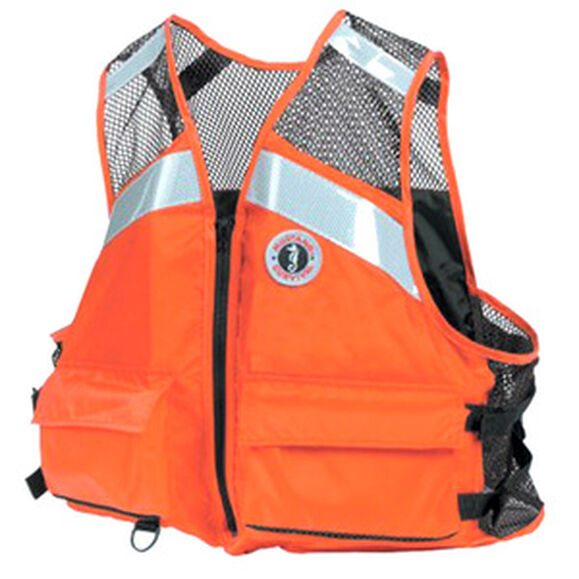


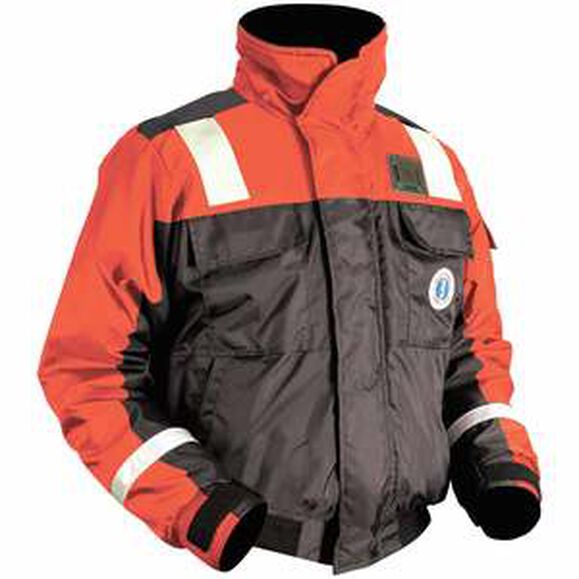




Shop adult life jackets at West Marine.
West Marine offers a complete selection of life jackets for adults. Also referred to as PFDs, adult life vests provide buoyancy to persons in the water so that they can survive long enough to be rescued or swim to safety. They have widely varying capabilities, and must be purchased with the intended use in mind.
What does the USCG require?
The US Coast Guard requires that all boats have a wearable PFD for every person on board. Boats over 16 feet also must carry a throwable Type IV PFD. Following is a brief discussion of the approved types of life jackets.
Life Jacket Classifications
Type I: Often referred to as “offshore life jackets”, these are the most buoyant, and have the highest performance of any approved PFDs. They have the greatest tendency to turn a limp body face up, and hold it in the proper inclination. They are also somewhat uncomfortable and distinguished by utilitarian designs, which while unattractive makes them a good choice for industrial applications.
Type II: We refer to these as “near shore buoyant vests”. They are the cheapest, and while OK for occasional use in protected waters, no boater would want to wear one. This is because they are uncomfortable, restrict movement, and have mediocre performance. Boaters often purchase these life vests to augment their boat's normal complement of life vests to ensure that they are "Coast Guard legal" in the event that unexpected guests come onboard.
Type III (Certification Level 70): Under a new system of lifejacket labeling, Type III life jackets are now designated as “Certification Level 70” devices. These life jackets are designed with user comfort in mind — but at the expense of righting force and total flotation. As the most popular type of life jacket that West Marine sells, they are offered in a variety of designs which in addition to comfort accommodate various boating activities, such as fishing, paddle sports, general recreation and high speed water sports.
Type IV: Referred to as "throwable flotation," these buoyant devices are not designed to be worn, but rather to be thrown to someone in the water. They are not to be used as a primary device for anyone, especially non-swimmers.
Type V: This Type designates a special use device or a device that requires special care or knowledge of its specific features. It is a catchall for PFDs that don't fit in the other categories but are still approved by the USCG. For example, automatic inflatable life jackets with a built-in harness are assigned to this category. In order to provide specific information about what each Type V PFD is useful for, they will often be listed as Type V with Type I, II or III Performance.
Adult Life Jackets & PFDs FAQ
Replace your life jacket if you notice any of the following signs:
- Physical Damage: Tears, rips, or damaged seams.
- Compressed or Crushed Foam: Indicates a loss of buoyancy, which is common in older jackets.
- Faded or Brittle Material: UV exposure can weaken the material over time, making it less effective.
- Worn Straps and Buckles: Damaged fasteners compromise the life jacket’s ability to stay secure.
- Inflation Mechanism: Check the expiration date on inflatable life jackets and ensure the CO2 cylinders are in good condition and properly installed.
- Replacement: If you’re unsure about the condition of your jacket, consider replacing it for safety reasons.
To check the inflation mechanism on an inflatable life jacket, look for signs like:
- Corroded or Rusty CO2 Cylinder: If the cylinder is corroded, it may not inflate properly.
- Missing or Expired Indicator: Many inflatable jackets have a green indicator that turns red when the mechanism is compromised.
- Leaks or Hissing Sounds: After manually inflating the jacket (using the oral tube), listen for hissing, which could indicate a leak.
- If any of these issues are present, you should rearm or replace the jacket immediately. Check the manufacturer's guidelines for maintenance or consult a professional to ensure your life jacket is in working condition.
Related Articles: