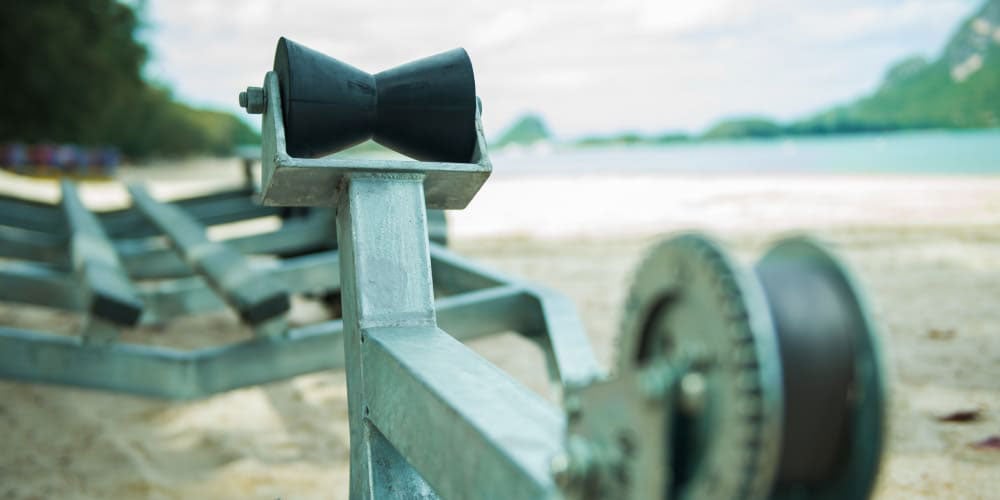
Your boat trailer is part of the safety system that gets your boat to the ramp, into the water, back onto the trailer and home again. Before the boating season begins, inspect the trailer as carefully as you inspect the boat. Tires, bearings, lights, brakes, winch straps, safety chains, bunks and guide-ons all take abuse from road miles, saltwater, ramp dunking and long periods of storage.
This spring prep checklist focuses on the trailer failures most likely to interrupt a trip: overheated bearings, underinflated tires, corroded wiring, weak brakes, damaged winch straps and worn support hardware. Work through the list before your first launch, then repeat the quick checks before longer highway trips.
- Trailer Prep Checklist
- Wheel Bearings
- Trailer Tires
- Trailer Lights
- Trailer Brakes
- Additional Maintenance
- Trailer Spring Prep FAQ
Trailer Prep Checklist
- Inspect and if necessary, repack wheel bearings with marine grease.
- Inspect tire condition. Look for cracks in the sidewalls and ensure that the tires have adequate tread and are inflated to the correct pressure. Replace trailer tires as necessary.
- Test brake lights and turn signal lights. Replace if not functioning. Secure all trailer light wires against abrasion and rewire if exposed and damaged.
- Check your trailer fenders and steps for damage. Replace if needed.
- Examine winch straps and cables along their entire length for fraying or corrosion. Replace if necessary.
- Replace any damaged wheel chocks.
- Replace any corroded or weakened safety chains.
- Inspect the brake pads and shoes for wear, adjust drum brakes, lubricate caliper pins and brake coupler moving parts.
Do not treat this list as a once-a-year formality. Boat trailers often sit unused for months, then immediately carry a heavy load at highway speed before being submerged at the ramp. A small issue in the driveway can become a roadside failure once heat, load and vibration are added.
Keep your bearings packed with bearing grease, which will prevent corrosion.
Wheel Bearings
Your trailer’s wheel bearings support the full trailer load while spinning at highway speed. They also get dunked at the launch ramp, where warm hubs can draw in water as they cool. Without clean marine grease, water intrusion can lead to corrosion, pitting, heat buildup and eventual bearing failure.
Inspect the hubs before the season starts. Look for grease thrown around the inside of the wheel, a missing dust cap, a damaged seal or any sign that water has entered the hub. Jack up each wheel and spin it by hand. A healthy bearing should rotate smoothly and quietly. Grinding, roughness, wobble or excessive play means the hub needs service before the trailer goes back on the road.
Marine grease is necessary, but more grease is not always better. Overpacking bearings or bearing protectors can damage seals and create a path for water intrusion. To learn more about how bearings work, how they can become damaged and how to repack them, see our article Safe and Trouble-Free Trailering.
Trailer Tires
Flat tires and bearing problems are two of the most common causes of trailering trouble, so tire inspection deserves more than a quick glance. Inspect tread depth, sidewalls, valve stems and the tire date code. Replace the trailer tires if the wear bars are visible, if the sidewalls show spiderweb cracks, if the tire has bulges or if the tire shows age-related deterioration even when the tread still looks acceptable.
Use the inflation pressure stamped on the trailer tire sidewall, not the pressure used for your tow vehicle. Trailer tires are built differently than passenger car tires and commonly require higher pressure, often around 50 to 65psi depending on the tire. Also check the Maximum Load Rating stamped on the sidewall. The combined tire capacity must be high enough for the boat, trailer, fuel, batteries, gear and any added equipment carried on the trailer.
Use an accurate pressure gauge and inflate the tires when they are cold. A few minutes of driving can raise tire temperature and produce an inaccurate reading. Do not rely on visual inspection. Trailer tires have stiffer sidewalls than automotive tires and can be significantly underinflated without looking flat. Underinflation creates heat, and heat can cause internal tire damage, ply separation and blowouts.
Make sure your spare tire is usable, properly inflated and mounted securely with a spare tire carrier. Do not mix radial and bias ply tires on the same trailer, and do not use a passenger car tire as a spare. Trailer tires are built to carry trailer loads and resist sidewall stress in ways car tires are not.
The Safe and Trouble-free Trailering article also provides advice on checking your tires, which are different from car tires and may show damage differently. Trailer Tire Basics provides more information on what those differences are.
Trailer Lights
Trailer lights fail most often because of corrosion, water intrusion, damaged grounds or wiring abrasion. Before the first trip of the season, connect the trailer to the tow vehicle and test running lights, brake lights, turn signals and hazard lights. A helper makes this faster, but you can also check reflections against a garage door or wall.
If one light is dim, intermittent or not working, check the ground connection before replacing parts. Poor grounds are a common cause of trailer light problems, especially on trailers exposed to saltwater. Inspect wiring where it passes through the frame, around sharp edges and near moving suspension parts. Secure loose wiring so it cannot chafe while towing.
If you are unfamiliar with your trailer light system, or if anything appears damaged in your checkup, our article Your Trailer's Light System explains trailer lights in detail, as well as trailer light wiring so you can perform safe repairs and maintenance.
Trailer Brakes
When inspecting your brakes, first identify whether the trailer has disc brakes or drum brakes and what type of actuator or braking system is installed. Boat trailer brakes work in a harsh environment because they are exposed to road grime, heat, saltwater and repeated immersion at the ramp.
Inspect brake pads or shoes for wear, check rotors or drums for corrosion, confirm that calipers move freely and lubricate caliper pins and brake coupler moving parts where appropriate. Drum brakes may require adjustment. Surge brake actuators should move smoothly and return properly. If the trailer pulls to one side, brakes lock unexpectedly, braking feels weak or the coupler does not move correctly, service the system before towing.
If you want to learn more about trailer brakes, or if you’re interested in upgrading or replacing yours, our article Selecting Trailer Brakes covers everything you need to know.
If you’re entirely new to trailering, or if you have purchased a used trailer, we also have a Trailering Checklist that walks you through everyday use and maintenance to help you avoid bigger issues caused by neglect.
Additional Maintenance
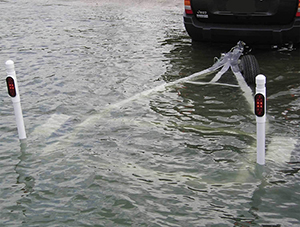
Guide-on posts make retrailering your boat much easier. Illuminated models make retrailering your boat much easier at night.
If your trailer has been idle for an extended period, inspect the entire frame before towing. Look closely at welds, crossmembers, spring hangers, axle mounts and bunk brackets. Surface rust can often be cleaned and protected, but deep corrosion, cracked welds or weakened structural parts need repair before the trailer is loaded.
Check your bunk carpet and supports for mold, tears, loose fasteners and exposed wood or metal that could damage the hull. Rollers and bow stops should be free of cracks and should rotate easily. Inspect the winch stand, coupler, jack, safety chains, tie-down points and transom straps. A trailer can have good tires and bearings and still be unsafe if the boat is not supported and secured properly.
If your trailer doesn’t already have them, consider installing guide-ons to make it easier to get your boat back on the trailer at the end of the day. Guide-ons are especially helpful at steep ramps, windy ramps, current-swept ramps and low-light launches. If you’re looking to upgrade your trailer, now is the time. For more ideas, read Upgrading Your Boat's Trailer for ideas to get you started. Find replacement and upgrade parts online or in stores to get your trailer up to speed.
Trailer Spring Prep FAQ
How often should boat trailer wheel bearings be repacked?
Inspect trailer bearings before the season starts and before long trips. Repack them when the grease is contaminated, when water has entered the hub, when the wheel feels rough or loose, or when service history is unknown. Trailers that are dunked frequently, especially in saltwater, need more frequent bearing attention than trailers used only occasionally in freshwater.
What tire pressure should I use for boat trailer tires?
Use the inflation pressure stamped on the trailer tire sidewall unless the tire or trailer manufacturer provides a different instruction. Check pressure when the tires are cold. Do not use the tow vehicle’s tire pressure as a guide because trailer tires are built differently and often require higher pressure.
Can I tow with a trailer tire that has good tread but cracked sidewalls?
No. Cracked sidewalls indicate age, UV damage or structural deterioration. Trailer tires can fail from age and heat even when tread depth looks acceptable. Replace tires with cracking, bulges, exposed cords or other sidewall damage before towing.
Why do trailer lights work intermittently?
Intermittent trailer lights are often caused by a poor ground, corrosion in connectors, water intrusion, loose wiring or chafed insulation. Start by checking the ground connection and plug, then inspect wiring runs and light housings for corrosion or damage.
What should I check before towing to the ramp?
Before each trip, check tire pressure, lug nuts, lights, safety chains, coupler lock, winch strap, transom tie-downs, jack position and the spare tire. After a short distance, stop and feel near the hubs carefully for unusual heat, which can indicate bearing or brake trouble.