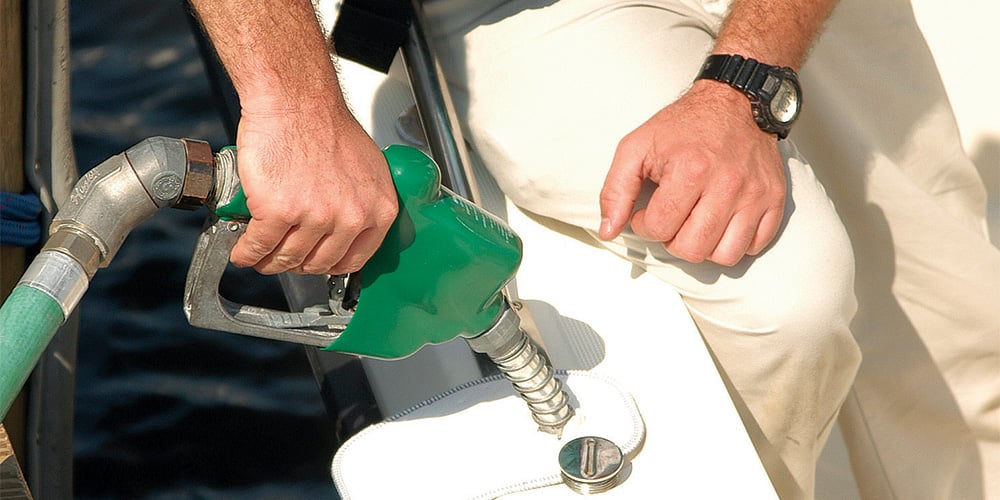
10 ways to prevent boat fuel spills: fueling safety, bilge pollution, and what to do if it happens
It's easier than you think to accidentally turn what should be a routine stop at the fuel dock into a first-class mess. Part of being a sensible, responsible boater is ensuring that fuel tanks are filled correctly and that no fuel escapes into the water — which can have significant consequences for aquatic life and carry legal penalties. Here are 10 proven ways to prevent boat fuel spills at the dock and onboard.
10 ways to prevent fuel spills
1. Make sure you're putting fuel into the correct tank
GEICO | BoatU.S. receives claims every year from boaters who accidentally pumped fuel into a rod holder or water fill. Before inserting the nozzle, positively identify the fuel fill — confirm the label and confirm the cap smells like fuel before opening it.
2. Fill tanks only to about 95% capacity
Leaving headspace in the tank allows for fuel expansion from heat and for sloshing as the boat moves. A full tank with no room to expand is a spill waiting to happen.
3. Do not top off the tank
Overfilling the tank can cause fuel to leak from the tank vent as the boat moves or as the fuel warms and expands. Even a small amount of fuel creating a sheen on the water is a legal violation and an environmental hazard.
4. Use absorbent sheets or pads
Place oil-absorbent pads or sheets around the fuel pump nozzle while transferring it from the dock to the boat, and keep them in place while fueling. They catch splashes before they reach the deck or the water.
5. Listen carefully while fueling
It is often possible to hear when fuel is getting close to the top of the tank — the gurgling sound changes noticeably as the tank fills. Stay attentive and be ready to stop the flow the moment you hear the change.
6. Hold an absorbent rag or pad at the fuel tank's air vent
Holding a highly absorbent rag or fuel absorbent pad at the tank's overboard vent outlet will absorb any fuel that escapes during filling. Alternatively, a fuel-vent collection device that attaches near the vent — typically with suction cups — can capture escaping fuel before it reaches the water. If there is any question about a suction-cup device adhering to the hull, have someone hold it in place throughout the fill.
7. Consider installing a whistle in the fuel-vent line
Fuel-vent whistles are designed to make an audible sound as long as air is flowing out of the vent during filling. When the tank reaches capacity, the sound stops — giving you a clear, passive signal that the tank is full without any guesswork.
8. Don't let the higher pump speed catch you off guard
Fuel dock pumps fill at a much faster rate than gas station pumps — by design, to handle the large tanks common on boats. Even if the fuel nozzle has a lock-off device, do not use it. By the time the nozzle catch trips and stops fuel flow, a significant amount of fuel may already be on the deck and in the water. Hold the nozzle manually and maintain control of the flow rate at all times.
9. Regularly check your fuel system for leaks
Fuel leaks in the bilge area are both a fire and explosion hazard and a pollution risk — if fuel accumulates in the bilge, it may be pumped overboard by the bilge pump. At least once a year, inspect all fuel hoses for cracks and loose connections and replace any that are suspect. ABYC standards stipulate that all fuel fill hoses should be double-clamped — verify that all hose clamps are in place and properly tightened.
10. Replace the gas cap after fueling
This seems obvious, but it is easy to forget in the routine of post-fueling activity. Check that the cap is fully seated and that the gasket around it is in good condition and sealing properly. A damaged or missing gasket is a common cause of minor fuel weeping at the fill.
Anti-spill devices and techniques for the fuel fill
Even careful boaters experience fuel burping — a phenomenon where air trapped in the tank or fill hose escapes through the fuel fill, carrying fuel with it. This is the most common cause of unexpected fuel on the deck during filling, and it happens even when the nozzle is held manually.

The Clean Way Fuel Fill is a purpose-built device that helps avoid this problem. In the event of fuel burping back through the filler, excess fuel is directed upward into the device where downward-sloping baffles lead overflowing fuel back into the tank. It is a clean, passive solution that requires no action from the operator.
Another effective method is to wrap an oil-absorbent pad or heavy absorbent sock around the fuel fill nozzle to catch any blowback or errant splashes. Always keep ample absorbent pads within quick reach should something go wrong. When evaluating any anti-spill product, look for verified testing reviews and test it in your own situation before relying on it.
Managing fuel in the bilge
Not all marine fuel pollution occurs at the fuel dock. Bilge water on many vessels contains oil, grease, and fuel. To prevent this oily bilge water from being pumped overboard, consider placing oil-absorbent sheets under inboard engines. Placing oil-absorbent bilge socks or sausages in the lowest part of the bilge — near the bilge pump pickup but not interfering with it or its float switch — will go a long way toward preventing contaminated bilge water from reaching the waterway.
At least once a year, check all fuel hoses for cracks and loose connections, replacing any that appear suspect. ABYC standards require double-clamped fuel fill hoses — verify that all clamps are in place and fully tightened.
What to do if a fuel spill happens
By federal law, any oil or fuel spill that creates a visible sheen on the water must be reported to the U.S. Coast Guard National Response Center by calling (800) 424-8802.
If a spill occurs, do not attempt to use detergents or soap of any kind to disperse the fuel. This is counterproductive: detergents break the fuel into smaller particles, making it significantly harder to clean up and more toxic to marine life. According to the U.S. Environmental Protection Agency, one pint of fuel spilled into the sea or a lake creates a toxic oil slick that can cover more than one acre of water surface — larger than a football field.
Pro tip: always run the blower after fueling a gasoline inboard
If your boat has a gasoline inboard engine, run the engine compartment blower for at least four minutes after fueling — and longer is safer — before attempting to start the engine. Gasoline vapors are heavier than air and can accumulate in the engine compartment during fueling, creating an explosion risk at ignition. The blower and its switch must be ignition-protected and rated for marine use in a potentially explosive atmosphere.
In sum, preventing fuel spills is a shared responsibility. Using common sense and basic preventive measures keeps our waterways clean for all — boaters and marine life alike. With fuel, oil, or grease, it doesn’t take much on a boat to create a sheen on the surface, so caution at the fuel dock is always in order.
About BoatU.S. Foundation for Safety & Clean Water
The BoatU.S. Foundation for Safety & Clean Water is a 501(c)(3) nonprofit dedicated to keeping boating safe and clean. It is independently funded by donations from BoatU.S. members and grants.
This article was reprinted with permission from BoatU.S. Magazine, flagship publication of the Boat Owners Association of The United States (BoatU.S.). For more expert articles and videos, visit BoatUS.com.
Related safety and environmental guides:
- USCG safety equipment requirements for recreational boats
- EPA-compliant portable marine fuel tanks and fuel lines: what boaters need to know
- Marine diesel fuel filter compliance: ABYC heat standards
- How to winterize your boat: engine, fuel system, and systems checklist
- EPIRB survival story: why every offshore boater needs a distress beacon
Shop oil-absorbent pads, bilge socks, and spill prevention products at West Marine →
Preventing fuel spills FAQ
Topping off leaves no headspace for fuel expansion from heat or boat motion. Fuel escaping through the tank vent creates a sheen on the water, which is both a legal violation and harmful to aquatic life. Fill to approximately 95% and stop.
Fill to approximately 95% capacity. This leaves headspace for fuel to expand from temperature increases and for sloshing during boat movement, reducing the risk of fuel escaping through the tank vent.
Use fuel-absorbent pads around the nozzle during fueling. Listen for the sound of fuel rising near the top of the tank. Hold an absorbent rag at the tank vent. Do not use the lock-off device on the nozzle. Consider installing a vent whistle so you know exactly when the tank is full.
Fuel dock pumps fill much faster than gas station pumps, and automatic shutoffs react too slowly on marine fills. Additionally, “burping” — where air trapped in the tank or fill hose escapes through the fill carrying fuel with it — can cause spills before the shutoff trips. Never use the lock-off device on a marine fuel nozzle.
A fuel vent collection device attaches near the overboard vent outlet and captures any fuel that escapes during filling before it reaches the water. Suction-cup mounted versions should be held in place by hand if there is any uncertainty about adhesion on the hull surface.
The Clean Way Fuel Fill mounts at the fuel fill opening. If fuel burps back through the filler, internal downward-sloping baffles redirect the overflow back into the tank rather than onto the deck or into the water — a passive solution requiring no operator action.
Treat fuel in the bilge as a fire and explosion hazard. Do not operate the bilge pump electrically until the source is identified and secured. Use oil-absorbent socks or pads to remove contaminated bilge water. Identify and repair the source — commonly cracked fuel hoses or loose hose clamps.
Any spill that creates a visible sheen on the water must be reported by law to the U.S. Coast Guard National Response Center at (800) 424-8802. Do not use detergents or soap to disperse the spill — this makes the fuel more toxic and harder to clean up.
Detergents break spilled fuel into smaller droplets rather than removing it from the water. According to the EPA, one pint of spilled fuel can create a toxic sheen covering over one acre of water. Dispersing it with detergent makes it more toxic to marine life and harder to clean up.
Always run the engine compartment blower for at least four minutes after fueling — and longer is safer — before attempting to start the engine. This disperses potentially explosive gasoline vapors from the compartment. The blower and its switch must be ignition-protected and rated for marine use.