If your boat has a diesel fuel filter with a transparent plastic bowl installed inside the engine compartment, there is a compliance issue you need to be aware of — one that can affect your marine insurance coverage and that many boaters have never heard of. This guide explains the ABYC and ANSI/UL 1105 heat requirements for engine compartment fuel filter installations, which filters comply, and what to do if yours does not.
The ABYC heat requirement for marine fuel filters
Several years ago, a reference in the ABYC (American Boat and Yacht Council) Standards came to wider attention among marine professionals. It mandates that fuel filters installed in the engine compartment of a diesel or gasoline-powered vessel must meet the applicable fire-resistance requirement referenced by the ABYC standards.
The specific requirement is defined by ANSI/UL 1105, which subjects the filter to a two-and-one-half minute heat test. The standard was developed because a fire in or near the engine compartment can expose fuel system components to intense heat. — and a fuel filter that fails under heat can allow fuel to escape from the filter assembly, intensifying a fire.
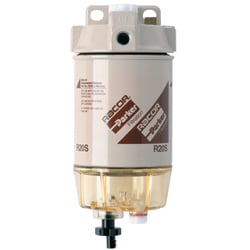
Fuel filters that meet this requirement without modification are generally equipped with an all-metal bowl. Filters with transparent plastic sight bowl assemblies — like the popular Dahl and Racor units — do not pass the heat test on their own. To comply, the assembly must include a metal heat shield that is rated to meet the ANSI/UL 1105 test.
Insurance implications of non-compliant fuel filters
The real-world impact of this standard became clear when one of our technical writers, who lives aboard his Catalina 30 sailboat, received a package from his marine insurer. The package contained a survey asking specifically about Dahl and Racor filters with plastic bowls — and included a disposable camera requesting photos of the filter installation.
This is not an isolated incident. As it turns out, some marine insurance companies now specifically ask about fuel filter installations as part of their policy underwriting or renewal process. A non-compliant installation — a plastic-bowl filter in the engine compartment without a heat shield — can result in:
- A requirement to provide photographic documentation of the installation
- A policy condition requiring replacement or modification before coverage continues
- Exclusion of fuel system fire damage from an existing policy
Replacing or upgrading a non-compliant filter with a compliant unit is typically a straightforward fix and eliminates this insurance exposure entirely.
Which marine fuel filters meet ABYC and ANSI/UL 1105 standards
After consulting with both ABYC and Racor, we found two types of fuel filter assemblies that meet the ANSI/UL 1105 engine compartment heat requirement:
- All-metal bowl filters — spin-on fuel filters with a fully metal bowl pass the heat test without modification. These are available for both gasoline and diesel installations.
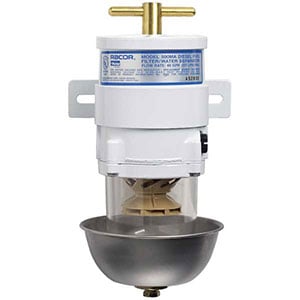
- Plastic-bowl filters with an approved metal heat shield — when the plastic bowl assembly includes a factory-fitted or approved aftermarket metal heat shield that has been tested as part of the complete assembly, the unit meets the ANSI/UL 1105 requirement. Certain models of Racor's Turbine Series diesel filters include this heat shield and are a widely used transparent-bowl option that meets the ANSI/UL 1105 requirement.
Both types are available in our marine fuel filter selection. When browsing, look for product listings that specify ANSI/UL 1105 compliance or confirm with the manufacturer if documentation is not listed.
The case for see-through filter bowls
The appeal of a transparent filter bowl is straightforward: it allows you to visually check for water accumulation, sediment buildup, and fuel discoloration at a glance, without removing the filter element. This is particularly valuable on diesel engines, where water contamination is a common cause of injector damage and fuel system problems.
Boaters with diesel engines who want to retain this inspection benefit should select a Racor Turbine Series filter with the factory heat shield — the heat shield does not obstruct the view into the bowl. This gives you the best of both worlds: visual inspection capability and full compliance with ABYC installation standards.
Fuel filter installation and maintenance tips
Beyond compliance, proper marine fuel filter installation and regular maintenance are the most effective steps you can take to protect your engine and prevent fuel system problems offshore:
- Install a primary and secondary filter. Most diesel installations benefit from a primary filter (typically a Racor-style water-separating unit) mounted before the fuel lift pump, and a secondary filter mounted on the engine. The primary catches bulk water and sediment; the secondary provides a final polish before fuel reaches the injectors.
- Check the bowl before every trip. On any filter with a transparent bowl, visually confirm there is no water layer at the bottom of the bowl before starting the engine. Water separates as a distinct layer below the fuel and is immediately visible.
- Replace filter elements on schedule. Many manufacturers recommend replacing the primary filter element annually or every 100 to 200 engine hours, whichever comes first. If uncertain, check the fuel filter's owner's manual.
- Label your filters clearly. In the event of a fuel issue underway, a clearly labeled filter location saves valuable time. Mark the location on your vessel schematic and include filter details in your engine logbook.
- Verify the heat shield is in place after every filter service. If you remove the heat shield during a filter element change, confirm it is properly reinstalled and secured before returning the vessel to service.
Upgrade your fuel filter installation today
If your engine compartment currently has a plastic-bowl fuel filter without a heat shield, upgrading to a compliant unit is a straightforward fix that helps meet ABYC recommendations and may satisfy insurer or surveyor requirements. West Marine stocks a full selection of marine fuel filters — including Racor Turbine Series assemblies with heat shields and all-metal spin-on filters for both gasoline and diesel installations.
Shop all marine fuel filters at West Marine>>
Diesel fuel filter installation FAQ
Plastic fuel filter bowls can soften, deform, or fail under extreme heat in an engine compartment — creating a fuel leak and fire hazard. ABYC standards require any fuel filter installed in the engine space to withstand a standardized heat test. Filters with plastic sight bowls must include an approved metal heat shield to comply.
The applicable standard is ANSI/UL 1105, which requires fuel filters installed in the engine compartment to withstand a two-and-one-half minute heat test. This requirement is incorporated into ABYC marine vessel standards and applies to both gasoline and diesel fuel systems.
Some marine insurers may require that fuel system components in engine compartments meet ABYC standards as a condition of coverage. If your diesel fuel filter has an unshielded plastic bowl, your insurer may request photos, require replacement, or exclude fuel system fire damage from your policy.
Two types comply: all-metal bowl filters, and plastic-bowl filters enclosed in an approved metal heat shield. The Racor Turbine Series with a factory-fitted heat shield is a widely used compliant transparent-bowl option for diesel engine installations.
Yes. Transparent filter bowls allow quick visual inspection for water, sediment, and fuel discoloration without removing the element — particularly valuable for diesel engines where water contamination causes injector damage. When installed in an engine compartment, the bowl must be enclosed by a compliant metal heat shield.
Yes. The ANSI/UL 1105 heat test requirement applies to fuel filters in engine compartments for both gasoline and diesel engines. All filters in the engine space must either pass the heat test on their own or carry an appropriate metal heat shield, regardless of fuel type.
In some cases, a compatible approved metal heat shield can be added to a plastic-bowl filter. However, the safest approach is to verify compliance with the manufacturer and consider upgrading to a factory-compliant unit like the Racor Turbine Series, which includes the heat shield as standard equipment.
Check the manufacturer's documentation or product markings for explicit ANSI/UL 1105 compliance. Certain Racor Turbine Series models equipped with approved heat shields meet the applicable UL 1105 requirement. If documentation is unavailable, contact the filter manufacturer directly or consult a certified ABYC marine technician.
Most manufacturers recommend replacing the primary fuel filter element annually or every 100 to 200 engine hours, whichever comes first. If the transparent bowl shows water accumulation or dark sediment at any point, drain and service the filter immediately regardless of the interval.
Compliant marine fuel filters — including Racor Turbine Series units with heat shields and all-metal spin-on filters for gasoline and diesel — are available at West Marine stores and at WestMarine.com.