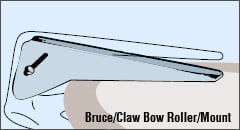
- What Anchor Rollers Do
- How Anchor Rollers Work
- Choosing the Right Anchor Roller
- Installation Considerations
- Securing the Anchor to the Bow Roller
What Anchor Rollers Do
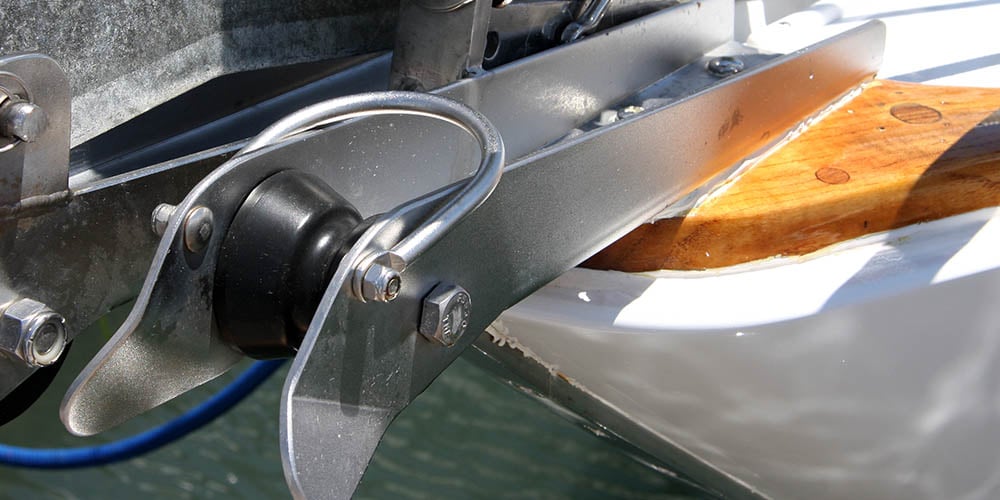
Anchor rollers provide a rolling surface that makes it easier to drop and weigh anchors without banging up your topsides. Anchor roller/mounts allow you to stow your anchor conveniently after you weigh it. Beyond basic convenience, a properly installed bow roller is one of the most important pieces of hardware on any boat that anchors regularly — it protects your hull, protects your windlass, protects your rode, and puts your anchor in the same ready position every single time you return to the dock.
Without a bow roller, hauling an anchor over the rail means the shank, flukes, or chain dragging across gelcoat with every retrieval. A single anchor haul may not leave a mark. Hundreds of them over a season will. For boats equipped with a windlass, a bow roller is not optional — it is the component that makes the entire anchoring system function as designed.
Written by Brian Gordon, West Marine
How Anchor Rollers Work
Anchor rollers make it easier for you to weigh anchor by hand since you can place your body where you can pull most efficiently. They also create a fair lead for the anchor rode so it doesn't chafe against your stem fitting or chocks. The rolling action reduces chafe as the nylon line stretches.
This matters more than most boaters realize. A nylon anchor rode under load can stretch 15–25% of its length. Every time it stretches and relaxes against a sharp stem fitting or chock, it loses fiber integrity at that contact point. An unfair lead left unaddressed over a season of regular anchoring can wear through nylon rode at the contact point well before the rest of the line shows any wear. A bow roller eliminates this problem entirely by giving the rode a smooth, rolling contact surface aligned with the direction of load.
Anchor mounts cradle the anchor on the bow of the boat so that it's always ready for deployment (a basic tenet of good seamanship). They are practically required when your boat is equipped with a windlass, since they guide the anchor rode to the windlass gypsy, and keep chain from gouging your hull and deck. When a chain anchor rode feeds from the roller directly to the windlass gypsy in a straight line, the gypsy grips and releases each link cleanly. When the lead is off-angle, chain tends to pile up on one side of the gypsy, jump off under load, or feed unevenly — all of which put stress on the windlass motor and can cause premature failure.
Powerboats commonly place anchor mounts on their centerline, since they have no head-stays. Sailboats, with stem fittings, head stays, furling drums, bow pulpits, etc. should have mounts placed 4"-8" to the right (or left) of the head-stay. Wooden blocks may be required to raise the mount above the toe rail. It should be parallel to the centerline of the boat, however, and aligned with the windlass gypsy.
Choosing the Right Anchor Roller
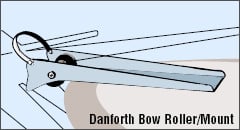
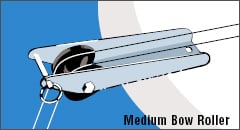
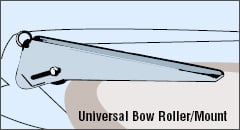
Your anchor roller must be compatible with your style and size of anchor to accommodate the shank of the anchor and to keep the anchor far enough away from the bow so the plow or claw of the anchor does not damage the bow when the anchor is fully retrieved and stored. Check with the manufacturer of the bow roller to see what anchors are compatible with the model you are interested in. If you frequently switch between different types of anchors due to different bottom types, then a universal anchor roller is a good option. While a universal roller will not fit all anchors, they still offer some versatility.
Here is how the most common anchor styles match to roller types:
- Plow anchors (CQR, Delta): Require a roller with a deep, wide channel to accommodate the pivoting shank. The roller must hold the shank securely while allowing the plow head to hang clear of the hull. These are among the most common anchors on cruising boats and most dedicated plow rollers are designed around this profile.
- Danforth / fluke anchors: Have a flat, wide fluke profile that sits differently than a plow. They require a roller designed to cradle the shank flat and keep the flukes from pivoting and slapping the hull underway. Not all rollers accommodate Danforth anchors — always verify compatibility before purchasing.
- Bruce / claw anchors: The three-claw design is bulkier than a plow and requires a roller with enough clearance for the claw to sit without contacting the bow. Claw-specific or universal rollers are the correct choice here.
- Newer generation anchors (Rocna, Mantus, Spade, Sarca): These high-holding-power anchors have become increasingly popular on cruising boats and have unique shank and head geometries that do not always fit traditional rollers. If you are running a newer generation anchor, confirm roller compatibility directly with the roller manufacturer before purchasing — many boaters have found that a universal roller does not properly seat these designs.
When evaluating any roller, also consider shank support length. A roller that supports the shank along at least two-thirds of its length when the anchor is fully seated will prevent the anchor from pivoting and banging against the hull underway. If you are unsure whether a roller is the right fit for your anchor, bring the anchor to a West Marine store and test the fit before purchasing.
Installation Considerations
A bow roller is only as effective as its installation. A roller that is correctly sized for your anchor but poorly mounted will still allow the anchor to shift underway, create an unfair lead to the windlass, and potentially work loose over time from the repeated shock loads anchoring imposes on bow hardware.
Before drilling, consider the following:
- Backing plates are not optional: Bow rollers experience significant upward and forward load when the anchor is retrieved under tension, and downward shock load when the anchor drops. Without a backing plate distributing that load across a larger area of the deck, the mounting bolts will eventually pull through the deck core. Use a stainless steel or aluminum backing plate sized to at least twice the footprint of the roller base.
- Core sealing matters: If your deck has a balsa or foam core, drilling through it without sealing the core around the holes will allow water intrusion that degrades the core over time. Always use epoxy or polyurethane sealant to seal the core before installing fasteners.
- Alignment with the windlass gypsy: Mount the roller so the rode exits in a straight line to the windlass gypsy. Even a few degrees of offset will cause chain to feed unevenly and accelerate windlass wear. If necessary, use a wedge-shaped riser block to correct the angle.
- Height above the stem: The roller should be mounted high enough that the anchor's plow, claw, or flukes hang completely clear of the hull when the anchor is fully seated in the roller. An anchor that contacts the hull at any point during retrieval or while underway will damage the gelcoat over time regardless of how securely it is fastened.
Securing the Anchor to the Bow Roller
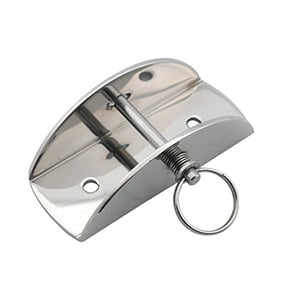
Lewmar's anchor chain lock is a great way to secure your anchor when underway.
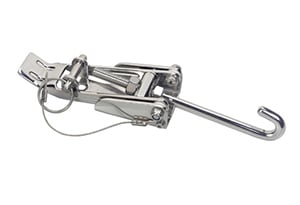
An anchor chain tensioner, like this model from Lewmar, takes the slack out of the chain and snugs the anchor up against the bow roller.
Your windlass should not be used to hold the weight of your stored anchor because it can cause unnecessary strain on the windlass and could cause your windlass to slip, suddenly releasing your anchor in the process. The windlass motor and gypsy are engineered for the dynamic work of raising and lowering the rode — not for holding static weight at speed over hours of running. Using the windlass as a tie-down is one of the most common causes of premature windlass failure we see. Always make sure that your anchor is properly secured when underway using one of these methods.
- Install an anchor lock: Anchor locks consist of a bracket and a pin. The bracket is mounted to the deck behind the anchor roller and the pin slides through a link in the chain to take strain off the windlass and avoid accidental deployment. An anchor lock is the most secure option for offshore passages or any conditions where the bow will be taking repeated wave impact. It removes all load from the windlass entirely and holds the anchor positively regardless of what happens to the rest of the deck hardware.
- Secure the anchor rode to a cleat on deck: Quick, simple and effective, securing your anchor rode to a cleat on deck is a good way to avoid sudden anchor deployment. Use a proper cleat hitch — not a half-hitch or a simple wrap — to ensure the load is distributed evenly across the cleat horns and the line can be released quickly in an emergency. This method works well for day trips and protected water but is less reliable in rough offshore conditions where repeated shock loading can loosen even a well-tied cleat hitch over time.
- Install a chain tensioner: Chain tensioners consist of a hook that connects to a link in the anchor chain and a lever that when locked down pulls on the chain to take out slack and snug the anchor up against the bow roller. Beyond securing the anchor underway, chain tensioners solve a problem that anchor locks and cleats do not: they eliminate the rattle and movement that occurs when the anchor is not pulled firmly against the roller. An anchor that is allowed to shift even slightly in the roller will wear the roller surface, bang against the bow, and make noise at anchor in any kind of chop.
Whatever method you choose, always make sure that the anchor is secure before you start moving. The few seconds it takes to secure the anchor is well worth the peace of mind that your anchor will not damage the windlass or drop suddenly.
Anchor Roller FAQ
An anchor roller allows for smooth deployment and retrieval of your anchor, minimizing damage to the boat's topsides. It also serves as a convenient cradle to store the anchor securely at the bow when not in use.
The roller guides the anchor rode along a smooth, fair lead, preventing contact with sharp deck fittings or the stem. This reduces friction, especially when the rode stretches, minimizing wear on the line or chain.
Most powerboats and sailboats can accommodate anchor rollers, but placement differs. Powerboats typically mount them on the centerline, while sailboats may need to offset the roller and use risers to clear bow fittings or pulpits.
Anchor rollers must be matched to your anchor's style and size. Make sure the shank fits the roller's channel and that the roller keeps the anchor's flukes or claw away from the hull. Always consult the roller manufacturer for compatibility guidance.
Universal anchor rollers are designed to work with a variety of anchor types. While they may not fit every design perfectly, they offer flexibility for boaters who use different anchors depending on bottom conditions or cruising needs.
No. Your windlass should not bear the weight of the stored anchor while underway. This can stress the mechanism and cause unintentional anchor deployment. Always secure the anchor with a chain lock, cleat, or chain tensioner.
An anchor lock uses a pin and bracket to secure a link in the chain, holding the anchor in place. A chain tensioner hooks onto the chain and uses lever action to tighten and snug the anchor against the roller, eliminating slack.
Yes. Tying off the anchor rode to a cleat is a simple and effective method of securing the anchor. It prevents movement and protects your windlass and bow from sudden deployment or shock loads in rough conditions.
Yes. Even without a windlass, a bow roller makes it much easier and safer to handle your anchor. It provides a stable, aligned pulling point, reduces strain on your body, and prevents deck damage during anchor retrieval and storage.
The roller must be aligned with the centerline of the boat and the windlass gypsy to prevent the anchor rode from chafing or binding. Poor alignment can lead to inefficient anchoring and damage to the roller or hull over time.