Learn From Our Experience

West Marine has been testing anchors for over 20 years, usually by joining forces with anchor manufacturers, boating magazines or non-profit boating groups. We even have done a number of tests on our own using Showtime—our Fortier 26' lobster-style boat—as the pulling vessel. However, due to Showtime's modest size, bollard pull has been limited to approximately 1000 pounds force (lbf), limiting the size of the anchors that can be tested effectively. That limitation matters: anchors that perform reliably at 1,000 lbf can behave very differently at 3,000 or 5,000 lbf. The loads a 40-foot cruising boat imposes on its anchor in a 35-knot squall are not the loads a 26-foot test vessel can replicate, which is exactly why we jumped at the opportunity to scale up.
So, when we received a call from Bill Springer, Editor of SAIL Magazine, asking us to participate in an anchor test, we jumped at the opportunity. Our goal was to test anchors that might be used by 35' to 45' cruising sail and powerboats, and we decided to charter a larger vessel that could produce more pull. We could therefore explore anchor holding power up to 5000 lbf. Bill was joined by editors of other yachting magazines including Toby Hodges of Yachting Monthly, and Jeff Moser, of Power and Motoryacht. Having independent editorial observers from multiple major publications on board ensured the methodology and results were documented from multiple perspectives and could not be attributed to any single manufacturer's interest — important context given that anchor testing has historically been a contentious area where manufacturer-funded tests and independent tests have produced starkly different conclusions.
We selected 13 anchors representing a wide variety of the anchors available to boaters. Some were well established, like the CQR and the Delta, while others were relatively unknown in the US market, either due to their relative "newness" or their popularity in Europe but not in the US. The anchors were not chosen to weigh the same amount, but rather chosen based on what a boater might select based on manufacturer recommendations. This is a critical methodological distinction: a weight-normalized test tells you which anchor design is most efficient pound for pound, but it does not reflect how real boaters make purchasing decisions. Most boaters choose an anchor based on what the manufacturer recommends for their boat length and type, then buy it in that recommended size. That is the basis we used, and we believe it produces results that are more directly applicable to real purchasing decisions.
Written by Brian Gordon, West Marine
2006 Tests
- 2006 Anchor Tests (Sail Magazine)

- Manson Pull 1 - 3/22/2006 - Terminated
- Rocna Pull 2 - 3/22/2006 - Released
What We Learned
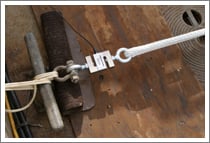
After dozens of anchor tests in the past, this was by far our best documented and instrumented test. We used a 10,000lb. load cell, which read in 2lb. increments, linked to a computer running Excel. We had cameras, GPS receivers, lots of observers, a powerful boat with a very capable captain—and we still got very confusing results. The confusion itself was one of the most important findings: even with instrumentation that would satisfy a research institution, bottom conditions and boat mass introduced variability that no amount of careful methodology could eliminate. Here are some of our conclusions:
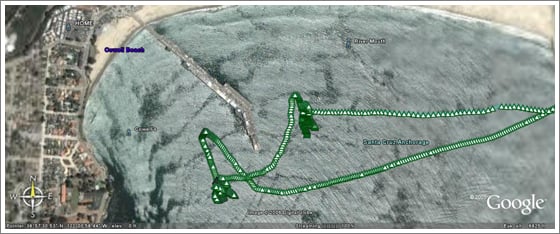
- The local bottom conditions made an incredible difference. We got dramatically different results testing on one side of Santa Cruz wharf compared to the other. We believe that many of the pulls were in a location with extremely compacted sand that did not allow some of the anchors to get an initial "bite". The anchors, many of them with great reputations, simply skidded along the bottom. An anchor that failed to set in our hard-packed compacted sand location would almost certainly have performed very differently in the loose sand, soft mud, or mixed bottom that makes up the majority of recreational anchoring grounds on the US East Coast, Gulf Coast, and Pacific Northwest. This variability is not a flaw in anchor design — it is the fundamental challenge of anchor selection. No anchor sets optimally in all bottoms.
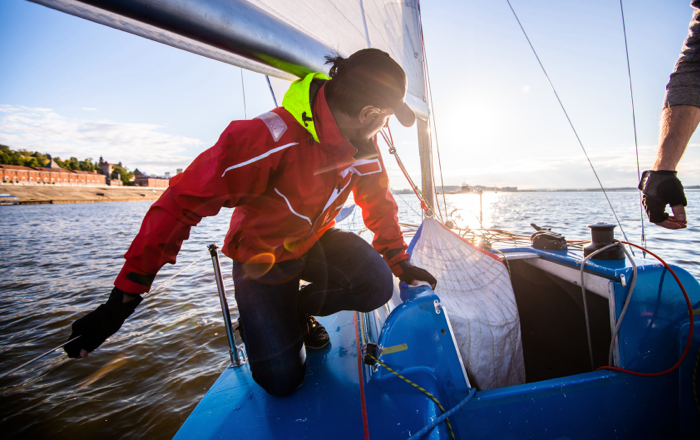
- The mass of the boat changed how the anchors performed. We were as gentle and realistic as possible when performing each pull, but we still got much different results from Shana Ray compared to Showtime. Shana Ray weighs about ten times as much, but we were extremely careful to set the anchors at very low speeds. Still, the results were confounding. A heavier vessel sets an anchor with more force during the initial reverse, which benefits designs that require substantial initial penetration to set — like the Spade and other concave designs. A lighter vessel may not deliver enough initial force for certain anchor designs to bury properly, producing a result in testing that does not reflect how that anchor would actually perform when set properly from a vessel of appropriate size. This is one reason we caution against over-interpreting any single test result.
- Many newer designs worked better than the old familiar anchors. In particular, we were very impressed by the "roll bar" anchors like the Rocna and Wasi. The roll bar is a simple but effective engineering solution to one of the most common causes of anchor failure: the anchor landing upside down and dragging along the bottom without ever setting. A roll bar forces the anchor to rotate onto its side and then onto its point regardless of how it lands, which means a dramatically higher proportion of first-drop sets compared to traditional designs that depend on the anchor landing in exactly the right orientation. And the Spade, one of our favorites, continued to perform well. The two anchors with some aluminum in them, the Hydrobubble and the Fortress, also produced impressive holding power, especially considering their dramatically lighter weight. The Fortress in particular has a design advantage in sand and mud that its weight alone does not explain: its large pivoting fluke area generates resistance across a wider cross-section of bottom than a plow or claw of the same weight, which is why Fortress has outperformed much heavier steel anchors in independent tests going back to U.S. Navy testing in the late 1980s.
- It is important to know how an anchor can fail. Typical failure scenarios include an anchor setting and then dragging under tension—or once set, it suddenly releases without warning. Anchors can also bend or break or release when the boat suddenly veers. Given enough force, even a well set anchor can dislodge. In testing, many of our favorite anchors set as soon as they hit the bottom, and held to a consistently high tension before releasing quickly. There is no such thing as a fail-proof anchor. Understanding your anchor's failure mode matters as much as its peak holding power: an anchor that drags slowly and progressively gives you time to react and re-anchor before the situation becomes dangerous, while one that holds at maximum tension and then releases suddenly without warning gives you almost none. This is one reason we believe the shape of the load curve — not just the peak number — is critical information for evaluating anchor performance.
How Our Results Compare to Independent Testing
Since our 2006 Santa Cruz tests, several other serious independent testing programs have examined many of the same anchor designs under different conditions. Rather than treating our own results as the final word, we believe boaters are better served by understanding how multiple test programs collectively point toward consistent conclusions — and where they diverge.
Sand bottom testing — consistent with our findings
The patterns we observed in our Santa Cruz sand tests have been broadly replicated by independent testing in similar bottoms. New-generation anchors including the Rocna, Spade, Manson Supreme, and Mantus consistently outperform traditional plow designs like the CQR and Delta, and claw designs like the Bruce, in firm to moderately loose sand. The roll bar self-righting mechanism that impressed us with the Rocna and Wasi has been identified by multiple independent analysts as a genuine mechanical advantage in sand, where the bar has a firm substrate to roll against. The practical result is a meaningfully higher percentage of first-drop sets — critically important in crowded anchorages, deteriorating conditions, or when short-handing a boat without the luxury of multiple setting attempts.
Soft mud testing — where the rankings reverse
In 2014, Fortress Anchors conducted an extensive anchor test in Chesapeake Bay in deep, sticky mud, using the 82-foot research vessel Rachel Carson equipped with a dynamic positioning system, twin swiveling jet drives, and a 50HP bow thruster. The test was observed by the Cruising Club of America and included 12 common designs in the 40-pound range — including the Spade, Mantus, Manson Supreme, Rocna, and Ultra alongside the CQR, Delta, Claw, Fortress, and Danforth Hi Tensile. The results in soft mud diverged dramatically from sand test rankings:
- Danforth-style pivoting fluke anchors dominated. Their large fluke area generates far more resistance in low-shear-strength bottoms like mud than penetrating designs can achieve. The Fortress FX-37 tested in its mud-optimized configuration — flukes set at the wider 32-degree angle rather than the standard 45 degrees — produced the best holding numbers in the test by a significant margin. This is consistent with physics: in a bottom that resists penetration rather than allowing deep burial, a large surface area anchor wins.
- Roll bar designs struggled. The Rocna, which performed well in our sand testing, failed to set reliably in the Chesapeake mud. The roll bar that forces self-righting in firm sand found nothing solid to roll against in soft silt. The anchor landed, the bar sank into the mud, and the design's self-righting mechanism was defeated by the very softness of the bottom. The Mantus, which has a roll bar but also benefits from a hydrodynamic self-righting effect as water flows past its flukes during the set, fared somewhat better, but still did not approach the holding numbers that Danforth-style designs achieved.
- Inconsistency was extreme. Despite a highly controlled methodology using a research vessel with dynamic positioning, most anchors showed radically different results from pull to pull. Some anchors that enjoy excellent reputations among cruisers worldwide failed to hold more than a few hundred pounds — a load that could be generated by a 15 to 20 knot wind against a 40-foot boat. The Cruising Club of America observer noted that many anchors showed a bell-shaped tension curve, rising to a peak and then dropping suddenly, leaving the boater unable to determine whether the anchor is getting stronger or about to let go. In soft mud specifically, the honest answer is that no anchor design has demonstrated the kind of consistent, predictable behavior that inspires confidence across all conditions.
The resetting question
One area where independent testing has produced findings that our own static pull tests could not capture is anchor resetting behavior — what happens when the boat swings 180 degrees at a tide change or a wind shift reversal, pulling the anchor from the opposite direction. Practical Sailor's resetting tests identified that some anchors which hold impressively during a straight pull have a tendency to break out and skate along the bottom rather than resetting when the direction of pull reverses. For anchors aboard a boat that swings with tide or wind, resetting behavior can be as important as peak holding power. Newer generation anchors with concave fluke designs generally showed better resetting characteristics than traditional plow designs in Practical Sailor's testing, though there was variation within each category that cautions against broad generalizations.
What Collective Testing Tells Us About Choosing an Anchor
No single test — including ours — should be treated as the definitive answer to which anchor you should buy. Bottom composition, boat displacement, rode composition, scope, and setting technique all interact in ways that make real-world anchoring performance more complex than any controlled test can fully capture. That said, the body of evidence accumulated across our tests and independent programs does support several practical conclusions that hold up consistently:
- Scope is the most powerful single variable under your control. Across every test program that has examined scope as a variable, the difference between 5:1 and 7:1 scope has a larger impact on holding power than the difference between most anchor designs at the same scope. Deploy adequate scope before worrying about which anchor design you are running. In calm conditions at a protected anchorage, 5:1 is generally adequate. In deteriorating conditions, open anchorages, or overnight stays where wind shifts are possible, 7:1 or more is the standard used by experienced cruisers.
- New-generation anchors outperform traditional designs in sand, the most common recreational anchoring bottom. If you currently anchor with a CQR, Delta, or Bruce/Claw and your primary anchoring grounds have sand or firm mixed bottoms, upgrading to a Rocna, Spade, Mantus, or Manson Supreme is well supported by multiple independent tests. The improvement in first-set reliability alone is significant enough to justify the upgrade for any boater who anchors regularly.
- Danforth-style fluke anchors are the best choice for soft mud, not new-generation designs. If you cruise the Chesapeake Bay, the Gulf Coast, river anchorages, or any area characterized by soft or deep mud, a Fortress in its mud-optimized fluke angle configuration has outperformed every other design in the most controlled testing conducted in those conditions. This does not make the Fortress the best all-around anchor — it is less effective in hard sand — but as a dedicated mud anchor or secondary anchor, the evidence for it is compelling.
- Carrying two anchors of different designs is more reliable than any single anchor. The experienced cruisers who participate in serious anchor testing programs arrive at the same conclusion almost universally: a primary anchor optimized for your most common bottom type, plus a secondary anchor of a different design for challenging conditions, outperforms any single anchor across the full range of situations you will encounter. A new-generation design as your primary in sand and a Fortress as your secondary in mud covers the two most common bottoms where anchors are most likely to fail.
- Setting technique determines whether anchor design matters at all. Multiple independent test programs have confirmed that an improperly set anchor is the most common cause of dragging, regardless of the design. Always set your anchor under power at moderate reverse RPM. Hold reverse long enough that you are confident the anchor has buried and is not simply lying on the bottom with the chain piled on top of it. If you detect any movement during the set, re-anchor immediately. An anchor that never fully sets will drag at loads far below its rated holding capacity, making the difference between anchor designs irrelevant.
- Go big. The oldest piece of anchoring advice still holds up across every test program ever conducted. Within the constraints of your bow roller, windlass capacity, and budget, a larger anchor of a given design will outperform a smaller one of the same design. The performance gap between anchor designs narrows significantly when you go up one size from the manufacturer's minimum recommendation. If you are on the fence between anchor designs, going up one size in your current anchor is likely to produce more holding power improvement than switching to a different design in the same size.
How We Tested
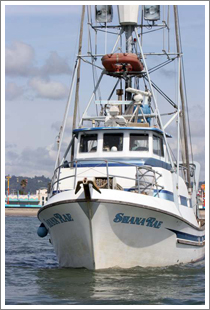
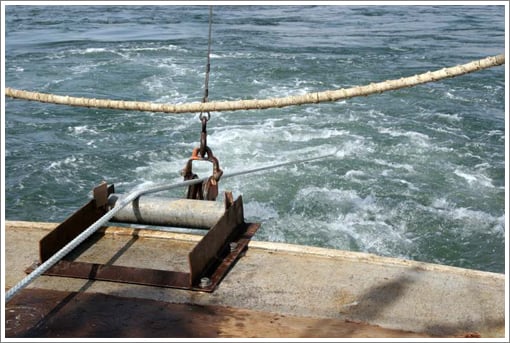
Our 50' research boat was equipped with a 275HP diesel engine and a 34" propeller, and was able to achieve tensions approaching 10,000 lbf. For safety reasons, and because we didn't think that we could gain much additional knowledge exceeding a particular tension, we selected a maximum tension of 5,000 lbf. We did all our pulls off the stern of the vessel, with the engine in forward.
Each anchor was deployed from a separate tender and allowed to settle on the bottom before the research vessel came up on the rode and began applying tension. Tension was increased gradually and continuously, with the load cell feeding real-time data to a laptop running Excel. This protocol allowed us to capture not just the peak holding force before release or drag, but the complete load curve for each pull — showing how quickly the anchor set, how the holding force built over the course of the pull, how consistently it held at peak tension, and what the failure event looked like. An anchor that sets in the first two feet of movement and holds a steady 4,200 lbf before releasing cleanly is a very different product from one that skids for twenty feet, holds intermittently at 1,500 to 2,800 lbf, and releases unpredictably. Both might be described as having "held to 4,200 lbs" in a headline, but they are not equivalent anchors. The load curve tells the real story.
We conducted all pulls at three scope ratios — 3:1, 5:1, and 7:1 — at each of three different underwater locations near Santa Cruz. The scope variable produced some of the most striking differences we measured. In the most consistent bottom conditions, the difference in average holding power between 5:1 and 7:1 scope exceeded the difference between the best and worst-performing anchor designs at the same scope. That single finding has more practical value for most boaters than any specific anchor ranking.
Anchor Rode
We used an anchor rode that was a compromise of realism and safety. Ideally, we would have tested the anchors using a rode that was typical of the vessels in the 35' to 45' range, but that would have put too high a load on the rode for safety. If the line were to have parted above the surface, the snap back under high loads could have been extremely hazardous. The solution was to use oversized 1" 12-strand nylon line (New England's Megabraid) at the vessel end, and 25' of 3/8" high test Acco chain at the anchor end. In all cases, we used a 3/8" galvanized shackle between the anchor and the chain as a "weak link" so that if the rode were to part, it would do so underwater.
The choice of a galvanized shackle as the intentional weak link is worth explaining for any boater who wonders why we did not use a stainless shackle or a proper swivel. At 5,000 lbf of load, a line parting at the surface would snap back across the deck with enough force to cause serious injury to anyone in its path. A shackle failing at the anchor end means the energy in the stretched rode dissipates into the water column rather than snapping back toward the crew. The underwater failure point is a deliberate and important safety feature of the test design, not a limitation of it — and it is a principle worth applying to your own ground tackle. Many experienced cruisers use a section of lighter chain or a weaker shackle as a sacrificial link in their ground tackle specifically so that if something has to give under extreme load, it gives in a predictable location and in a way that does not endanger the crew.
The choice of chain length at the anchor end also merits discussion. Our 25 feet of 3/8" chain is shorter than what most cruisers carry. A longer chain leader — 50 to 100 feet is common on cruising boats — adds significant catenary, which absorbs shock loads from wave action and sudden gusts before they reach the anchor. In our test setup, the short chain leader meant the anchor was working under conditions of less catenary than it would experience in typical cruising use, which may have disadvantaged anchors that rely on a more horizontal pull for optimal performance. All-chain rodes, which have become increasingly common on cruising boats, produce more catenary and a more consistently horizontal pull angle than mixed rode at equivalent scope, and tend to favor anchors with designs that set and hold best under near-horizontal load.