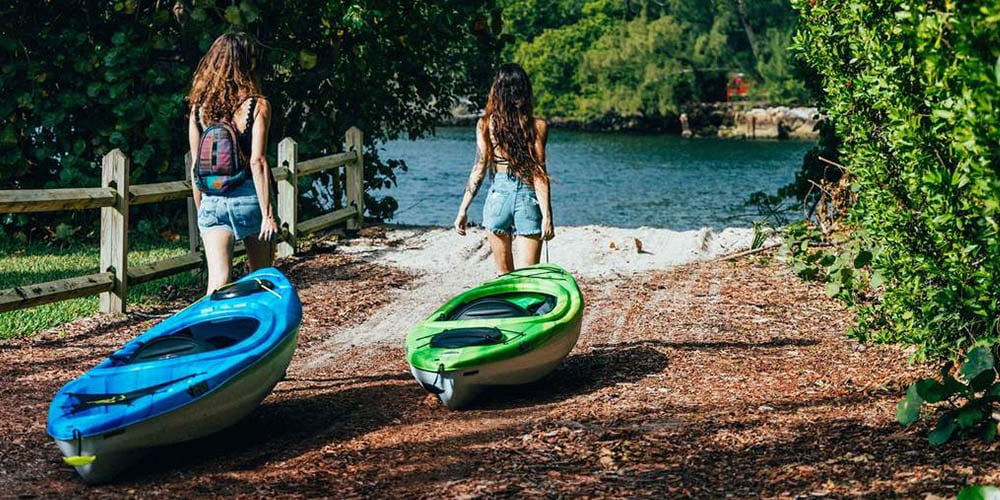
Kayaking is one of the easiest ways to get on the water and explore oceans, harbors, lakes, rivers and protected waterways. You do not need a boat ramp, motor or certification to get started, and most beginners can learn the basics quickly with the right kayak, paddle, safety gear and trip plan.
Whether you want to paddle for fitness, fish quiet coves, explore narrow waterways or spend more time outside, kayaking offers an accessible way to enjoy the water with minimal equipment.
- Benefits of Kayaking
- Types of Kayaking
- Basic Kayaking Skills Needed
- How to Launch a Kayak
- Basic Paddling Technique
- Kayaking Equipment
- What to Wear Kayaking
- Kayaking Safety Tips
- Kayaking FAQ
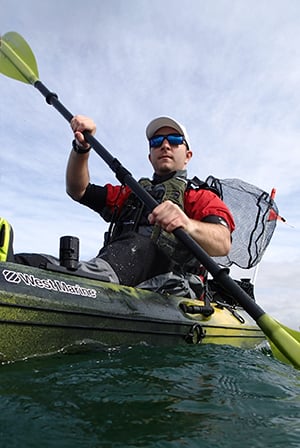
Benefits of Kayaking
Kayaks are narrow, lightweight and easy to maneuver, which allows paddlers to explore areas that larger boats cannot reach. Narrow rivers, sloughs, mangrove tunnels, shallow flats, protected bays and quiet coves are all ideal places to paddle.
Kayaking is also a great way to get closer to wildlife and fish-holding structure without the noise of a motor. Anglers can reach shallow shorelines, grass beds, docks, mangroves and backwaters where fish often feed or hide.
Although kayaking does not require exceptional strength or athletic ability, paddling is still a low-impact aerobic activity. Regular paddling can support cardiovascular health, core strength and endurance. Time outside on calm water can also provide a mental reset, especially when paddling in quiet, scenic areas.
Types of Kayaking
Beginners should choose a paddling style that matches their local water conditions and comfort level.
- Recreational kayaking: Best for calm lakes, ponds, slow rivers and protected bays.
- Touring kayaking: Designed for longer distances, coastal paddling and improved tracking.
- Fishing kayaking: Built with rod holders, storage, stability and fishing accessories.
- Inflatable kayaking: A portable option for paddlers with limited storage or vehicle space.
- Whitewater kayaking: Requires specialized boats, skills and safety training.
Most beginners should start on calm, protected water with a recreational or sit-on-top kayak before moving into more challenging conditions.
Basic Kayaking Skills Needed
On a basic level, kayakers should be comfortable being on the water and confident in their ability to paddle, steer, stop and return safely. Beginners should also understand how to reenter a kayak if they fall out or capsize.
Reentering a sit-on-top kayak is generally easier than getting back into a sit-inside kayak. Sit-inside kayaks may require more practice, especially if you need to empty water from the cockpit before reentry.
Important beginner skills include:
- Entering and exiting the kayak safely
- Launching from a shoreline or dock
- Holding and using the paddle correctly
- Turning, stopping and backing up
- Maintaining balance in small waves or boat wakes
- Reentering the kayak after a capsize
- Reading weather, wind and current conditions
How to Launch a Kayak
Launching from shore is one of the first skills new paddlers should learn. Pick a calm, shallow launch area without heavy boat traffic, breaking waves or strong current.
Step 1. Pull your kayak to water deep enough for it to float.
Step 2. Hold it steady while you enter.
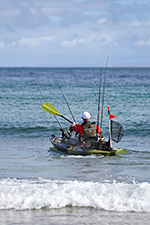
Step 3. Paddle away from shore and clear any small waves or surf.
- Place the kayak in shallow water with the bow pointed away from shore.
- Keep the kayak steady with your paddle or one hand on the cockpit.
- Sit down slowly and keep your weight centered.
- Place your feet inside and adjust your seating position.
- Paddle forward with short, controlled strokes until you are clear of shore.
If you are launching through small surf, time your launch between waves and paddle straight out. Beginners should avoid launching through rough surf until they have more experience.
Basic Paddling Technique
Efficient paddling helps reduce fatigue and gives you better control. Hold the paddle with a relaxed grip and keep your hands slightly wider than shoulder width. Use your torso and core to power the stroke rather than relying only on your arms.
A basic forward stroke starts by placing one paddle blade in the water near your feet. Rotate your torso as you pull the blade back alongside the kayak, then lift the blade out near your hip. Repeat on the opposite side.
Keep strokes smooth and even. A low-angle stroke is easier and more relaxed for recreational paddling, while a more vertical high-angle stroke provides more power. If your paddle has adjustable feathering, angling the blades can help reduce wind resistance in breezy conditions.
Kayaking Equipment
Just a few basic pieces of equipment are needed to get started. After choosing a kayak, select the right paddle for your height, kayak width and paddling style. Read our article on Selecting the Right Kayak Paddle.
Basic Gear Needed
- Kayak
- Paddle
- Properly fitted life vest or personal flotation device
- Sun protective clothing and sunglasses
- Cold-weather or cold-water clothing when needed
- Whistle or sound signaling device
- Dry bag for phone, keys and essentials
- Water bottle
- Bilge pump or sponge for sit-inside kayaks
Preparation is key to a safe and enjoyable paddling session. Check your equipment before every trip and make sure your kayak, paddle and life vest are in good condition.
What to Wear Kayaking
What you wear should depend on the water temperature, not just the air temperature. Cold water can be dangerous even on warm days, so dress for immersion when paddling in cold conditions.
For warm-weather paddling, wear lightweight, quick-drying clothing, a hat, polarized sunglasses and sunscreen with at least SPF 30. Avoid cotton when possible because it holds water and dries slowly.
For cold-water paddling, wear insulating layers, paddling jackets, wetsuits or dry suits as conditions require. Cold-water exposure can lead to hypothermia quickly, so proper apparel is a safety decision, not just a comfort choice.
Read our article Understanding Sun Protection for more information on protecting yourself from UV exposure on the water.
Kayaking Safety Tips
Kayaking can be a solo or group activity, but beginners should paddle with a buddy whenever possible. If you go alone, tell someone where you are going and when you expect to return.
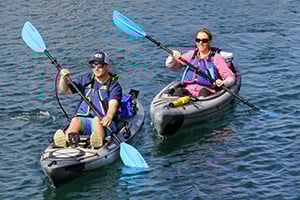
It is wise to paddle with a buddy, especially when you are new to kayaking.
Always wear a personal flotation device and inspect it for damage before each trip. Check weather, wind and surf reports before launching, and keep an eye on changing conditions while paddling. If storms approach, get off the water and seek shelter immediately.
If paddling in coastal areas, learn about tides, current and rip currents before leaving shore. Avoid heavy boat traffic, low-head dams, strong current, offshore winds and areas where you may be pushed farther from land than expected.
Respect wildlife and follow local rules for keeping distance from protected species. Stay alert for submerged objects, rocks, branches, docks and lines that could snag or flip your kayak.
Kayaking FAQ
Is kayaking hard for beginners?
Kayaking is relatively easy to learn on calm, protected water. Beginners should start with basic paddling, turning, stopping and reentry skills before paddling in wind, current, surf or open water.
What type of kayak is best for beginners?
A stable recreational sit-on-top or sit-inside kayak is usually best for beginners. Sit-on-top kayaks are often easier to enter, exit and reenter after a capsize.
Do I need to wear a life jacket while kayaking?
Yes. A properly fitted life jacket or personal flotation device should be worn whenever kayaking, regardless of swimming ability or water conditions.
What should I bring on my first kayaking trip?
Bring a kayak, paddle, life jacket, water, sun protection, weather-appropriate clothing, whistle, dry bag and any required safety gear for your area.
Can I kayak alone as a beginner?
Beginners should paddle with a buddy whenever possible. If you do paddle alone, stay close to shore, choose calm water and tell someone your route and return time.
Related