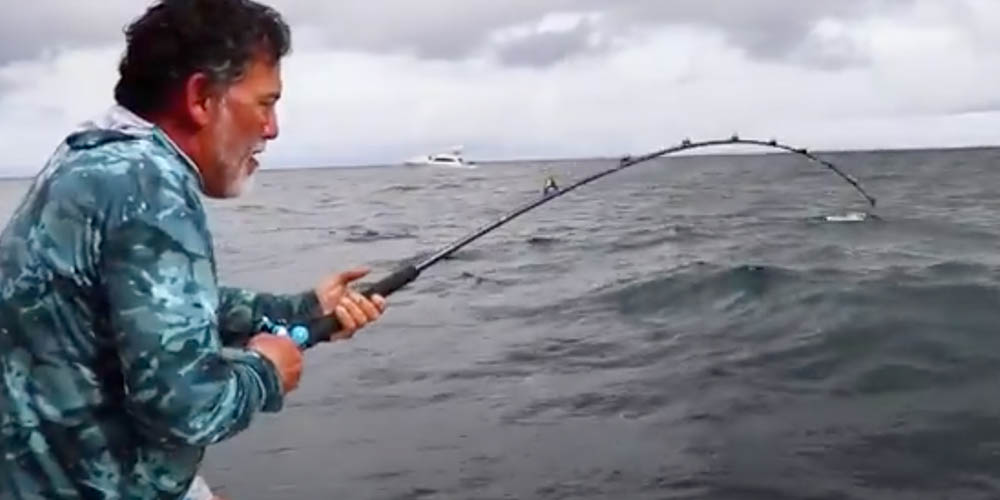
- Get a Fitness Mindset
- Improve Balance and Strengthen Core Muscles
- Increase Endurance and Stamina
- Stay Hydrated and Snack
- Stress Less
- Spend Time with Friends and Family
- Gear Requirements
- Know Your Limits
- FAQs
Get a Fitness Mindset
The physical benefits of big game fishing include balance, core muscle exercise, endurance, and stamina. Psychologically, big game fishing can boost self-esteem, improve teamwork and social skills, and is a great activity for making new friends and bonding with family.
Mindset can be the most powerful tool in your fitness toolbox. Mindset can turn mowing the yard, shopping, or walking your dog into a workout. Once you are thinking fitness, you can make minor changes to your activity to burn more calories and condition muscles you normally may not. Walking a bit faster, taking the stairs rather than elevators, and extending the activity are just some of the ways you can improve the fitness quality of everyday activities. The same holds true for big game fishing. Mindset during the activity can change the fitness benefit.
Improve Balance and Strengthen Core Muscles
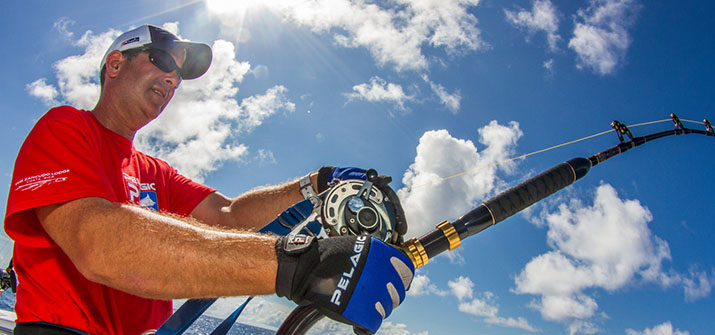
Anticipating a strike.
Balance requires hundreds of muscles working together. Being on a boat of most any size requires muscles to contract in ways they would not normally on land. Whether you are fighting a fish, in heavy seas, trolling, or drifting, choose to stand rather than sit. Stand safely but free of support when possible. This will increase your effort to stay balanced, burning more calories. Know your limits and always position yourself in a safe place close to fixed railings and objects to grab if you need to.
Increase Endurance and Stamina
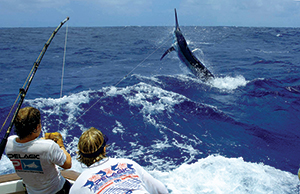
After battling a big black marlin toward the boat, the strenuous task of “leadering” it alongside remains.
Big game fishing is generally a multi-hour activity. There are times of high activity during a strike and times of waiting. For most, the times of waiting involve sitting and talking. Rather than sit, offer to help the crew. Cleaning up, setting lines, chopping bait, or chumming will all increase your activity level and calorie burn — and will put you in a position where you have to balance, using muscles you normally would not.
During the fight, pay attention to your core muscles. Sit or stand straight, using your shoulders and stomach muscles to apply leverage rather than your back. While cranking, maintain a steady pace and distribute the load between both arms and chest. Try to maintain the fight a set time beyond when you would normally stop and rest. Thinking fitness makes all the difference. Some extra sustained effort is healthy, but don’t overdo it.
Stay Hydrated and Snack
If you have ever spent time on the water, you feel it the next day — all the muscles you do not normally use get a workout. Just as with any exercise, it’s important to stay hydrated. Small meals through the trip are better than a single large meal to keep your metabolism running. Pack quick, easy-to-access healthy snacks, water, drinks high in electrolytes, and plenty of protein in the form of nuts, beans, and dried meats to keep your body ready for that next wave or strike.
Stress Less
The excitement of fighting a big fish — and even being a spectator — can be a genuine stress reliever. Activities like boating and fishing are great at getting your mind off day-to-day trials and helping you be in the moment. The ocean has a calming effect for most mariners, and the adventure of hunting big game can be an exhilarating release of stress and tension.
Spend Time with Friends and Family
The teamwork demonstrated on big game vessels has been compared to a NASCAR pit crew in action. Family and friends are encouraged to partake in the action. From rigging to adjusting lines, chumming, or baiting hooks, there is always something to be done as a group activity. Experiences like these bring families together and strengthen bonds between loved ones.
Gear Requirements
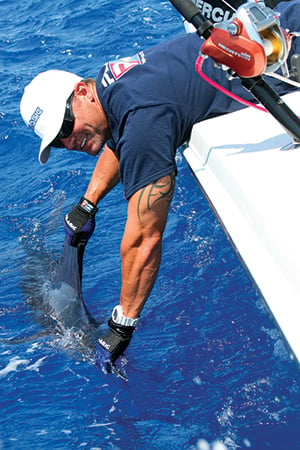
Dealing with big fish requires strength and endurance.
Most big game fishing is done from specialized boats with specialized crews. The technical gear you need will likely be provided — rod and reel combos, bait, fighting belt, fishing line and leaders, and fishing life jackets. If you are an experienced big game angler, you may want to bring your own fishing rods and reels along with a tackle bag or box with the terminal tackle you will need.
For a crewed or guided fishing trip, the personal items you will typically need to provide yourself:
- Sun-protective clothing (at least 50 UPF rated)
- Neck gaiter or bandana
- Sunscreen and lip balm
- Sturdy men’s or women’s boat shoes
- Healthy snacks, meals, and electrolyte drinks
Know Your Limits
If you are new to big game fishing, take it slow. Schedule a half-day trip rather than a full day on the water to start. Know the weather and sea conditions and how you react to motion sickness. Do not overdo it, especially when fighting a big fish — take time to rest and do not be afraid to hand the fight to another angler. It’s typical for several anglers to fight a large fish and all share in the excitement.
Keeping the fitness mindset, it’s a good idea to stretch before your trip. Keep the stretching within 30 minutes of your trip start time and focus on arms, legs, and back to minimize pulled or over-stressed muscles.
With a few simple considerations, big game fishing can give you a strenuous workout that puts many gym sessions to shame.
About the Author
West Marine District Manager Bobby Greenwell is an avid offshore, inshore, and freshwater angler. Bobby lives on the southwest coast of Florida and enjoys fishing the local waters. Bobby grew up in Miami and spent summers from the age of 2 to 15 in the Bahamas. Each year, he would make the trip across the Gulfstream with his grandfather on a 37’ Irwin. Now, Bobby enjoys taking his son, friends, and coworkers offshore fishing with a local Bahamian childhood friend.
Frequently Asked Questions
How physically demanding is big game fishing?
More than most people expect. Fighting a large billfish or tuna in a fighting chair involves sustained isometric contraction of the arms, shoulders, chest, and core for anywhere from minutes to hours depending on the species and tackle. Standing on a moving boat in open water engages stabilizer muscles continuously throughout the day. Studies on competitive sport fishing have measured calorie burns comparable to moderate gym sessions, and the combination of sun exposure, dehydration, and physical exertion means most first-timers feel it significantly the following day. A half-day charter gives a much better picture of the demands than a full day for someone new to the activity.
What muscles does fighting a big fish work?
The primary muscles engaged during a sustained rod fight are the biceps, forearms, and shoulders (from cranking and holding the rod up under load), the core muscles including abdominals and obliques (from applying leverage and maintaining posture in the chair or standing), and the legs and lower back (from bracing against the boat’s motion and the fish’s runs). The “leadering” phase — where a crew member hand-grabs the leader wire to bring a fish to the boat — is an extremely intense full-body effort that demands grip strength, shoulder strength, and core stability simultaneously.
How do I prevent seasickness on a big game charter?
Stay hydrated before and during the trip. Avoid heavy, greasy meals the night before and morning of. Take over-the-counter motion sickness medication (meclizine or dimenhydrinate) at least 30–60 minutes before departure if you are prone to motion sickness — both are available without prescription. Scopolamine patches require a prescription but are highly effective for extended trips. On the boat: stay on deck rather than below, keep your eyes on the horizon, and avoid reading or looking down at your phone. If symptoms begin, fresh air and a fixed horizon are your best tools.
What should I eat and drink during a big game fishing trip?
Small, frequent snacks throughout the day outperform large meals, which can contribute to seasickness and energy crashes. Prioritize protein (nuts, jerky, hard-boiled eggs, cheese) and complex carbohydrates (whole grain crackers, fruit). Avoid alcohol until after fishing — dehydration is a real risk in full sun on open water, and alcohol compounds it significantly. Drink water and electrolyte drinks throughout the day. Sports drinks or electrolyte packets are useful if you are sweating heavily in hot conditions or have experienced any vomiting from motion sickness, which depletes electrolytes rapidly.