
Keeping water out of the fuel system may prevent a call to TowBoatUS for a tow.
What are ethanol and ethanol-blended fuels?
Ethanol is used as an “oxygenate” and is added to fuel to help reduce hydrocarbon emissions that cause air pollution. It is highly refined beverage (grain) alcohol, approximately 200-proof, that can be produced from natural products such as corn, sugar cane and wheat.
New technology allows ethanol to be made from cellulose-rich feedstocks including corn stalks, grain straw, paper, pulp, wood chips, municipal waste, switchgrass and other sources. Ethanol used for fuel has been denatured or rendered unsafe to drink by the addition of a hydrocarbon (usually gasoline). The critical thing for boaters to understand is that ethanol behaves very differently in a marine fuel system than it does in an automobile fuel system — and the differences almost always work against the boat owner.
The term “ethanol-blended fuel,” or E10, refers to fuel that contains 10 percent ethanol and 90 percent gasoline. Similary, E85 refers to fuel that contains 85 percent ethanol and 15 percent gasoline. E85 is intended only for engines specially designed to accept high-ethanol content fuel blends, such as the Flexible Fuel Vehicles (FFV) made by some car companies. Not all states require gas pumps to be labeled to indicate the presence of ethanol in the fuel, so you may be currently using E10 fuel and not be aware of it. There have been efforts in Washington D.C. to introduce gas with 15 percent ethanol (E15). More on E15 and the potential dangers it poses for marine engines later in this Advisor.
Written by Brian Gordon, West Marine
How is ethanol made?
In the U.S., ethanol is typically produced by removing the starch or sugar portion of corn and fermenting it. The fermented starch is then distilled into alcohol. Excess water is removed, resulting in very pure, 200-proof, ethyl alcohol (ethanol). In some parts of the world, ethanol is made from a variety of raw materials. For example, sugar cane is used to produce ethanol in Brazil, while sugar beets and wheat straw are commonly used in Europe.
Why marine engines are more vulnerable to ethanol than car engines
Your car's fuel system is designed to be used constantly and turned over rapidly. A car that sits for two weeks is unusual. A boat that sits for two months between uses is completely normal — and that extended sit time is exactly the condition under which ethanol-blended fuel causes the most damage. Marine engines also operate in an environment saturated with moisture, unlike automobiles. Bilge humidity, condensation on tank walls, and spray all contribute water to a marine fuel system in quantities that a car fuel system almost never sees. Ethanol is hygroscopic — it actively attracts and absorbs water — which means a marine fuel system running E10 is in a constant battle against water intrusion that the fuel itself is partly responsible for drawing in.
Additionally, many older boats have fuel system components — tanks, lines, fittings, carburetors, and gaskets — that were manufactured before ethanol-blended fuels became common. These materials were not designed for contact with ethanol and can be damaged, softened, or dissolved by prolonged exposure. Fiberglass fuel tanks in particular are known to be incompatible with high-ethanol blends, as ethanol can attack the resin matrix and introduce tank material into the fuel system. If your boat was built before the mid-1990s, it is worth confirming that all fuel system components are ethanol-compatible before assuming E10 is safe for your specific installation.
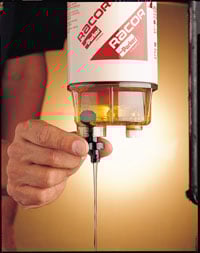
If you change over to E10 from non-ethanol gas, you should check for water in the water separating fuel filter. Carry spare filter elements, as ethanol is a solvent that loosens gunk in the fuel system.
Problems with the transition to E10 fuel
The most likely time for fuel problems occurs when you first begin using ethanol-blended fuel. When E10 is added to a fuel system that has been using non-ethanol gasoline, ethanol, as a new solvent, will tend to dissolve and loosen deposits that are present in the tank and fuel system. Phase separation may occur, resulting in an approximately 50/50 ethanol and water layer at the bottom of the fuel tank. This layer is not simply water — it is a corrosive, high-ethanol mixture that can damage fuel system components, clog filters, and if drawn into the engine, cause misfires, rough running, and in severe cases, engine damage. To limit problems with a changeover to E10:
- Check for the presence of water in the fuel tank. Inspect the water-separating fuel filter on larger engines. If water is found, pump the tank dry from the fuel line or siphon the tank dry. Examine the fuel in a clear container. If the fuel is not clear or has a sour odor, the tank should be cleaned.
- Add a quality cleaner to help clean deposits in engine
- Completely fill the tank with E10 fuel to maximize the amount of ethanol in the tank to absorb any water present
- Monitor filters and carry extra fuel filters due to filter-clogging concerns. During the transition period, a filter that normally lasts a full season may clog within a single outing as loosened deposits accumulate. Carry at least two spare elements any time you are running a fuel system through its first season on E10.
Phase separation with E10 fuel
When E10 gasoline comes into contact with water, ethanol will allow fuel to absorb some or all of that water. This is actually somewhat beneficial, but fuel can reach a saturation point and water can phase separate to form a distinct layer in the bottom of the tank. The upper “gasoline” layer will be depleted of ethanol and have a reduced octane level. The lower “phase separation” layer will be a corrosive mix of water and ethanol. No chemical agent or fuel additive can be added to E10 gasoline, in a reasonable quantity, that will fully prevent phase separation or recombine a phase-separated layer.
Phase separation is not a gradual, manageable process. It happens at a threshold: the fuel absorbs water up to its capacity, and then the ethanol and water drop out together, suddenly, forming a distinct bottom layer. There is no warning that this is about to happen, and there is no way to reverse it once it does. The only solution is to remove the contaminated fuel entirely and start with fresh fuel in a clean tank. This is why prevention — keeping water out of the tank in the first place — is so much more important than any treatment or additive approach.
The conditions most likely to trigger phase separation in a marine fuel system are:
- A partially full tank left for extended periods. Air space above the fuel allows humid marine air to exchange in and out of the tank with temperature changes, introducing water vapor that condenses on the tank walls and drops into the fuel. A full tank minimizes this air exchange and is the single most effective preventive measure.
- Cold temperatures. E10's water-holding capacity drops significantly as temperature falls. Fuel that is holding water safely at summer temperatures may phase separate when the same tank cools down in the fall — one reason spring commissioning so frequently reveals fuel problems that were not present when the boat was stored.
- Contaminated fuel at the pump. Not all fuel at marina pumps is equally fresh or equally protected from water intrusion. Underground storage tanks at marinas are exposed to the same phase separation risks as your own tank. Buying fuel from high-volume, well-maintained suppliers and avoiding fuel that has been sitting in marina tanks all winter reduces the risk of starting with already-compromised fuel.
Winter storage of ethanol-blended gas
Seasonal storage with E10 fuel is another likely time for problems. During storage, fuel will tend to oxidize; it will become “sour”, and may absorb water from condensation. Water-holding capacity of E10 fuel is reduced with lower temperatures, so phase separation is more likely with winter temperatures. E10 can hold approximately 0.5% water at 60°F (.64 ounces in a gallon, or 12 ounces of water in a 20-gallon gas tank), but can only hold about 0.35% water at 20°F (.45 ounces in a gallon).
If possible, store your boat for the winter with a full fuel tank. Add a fuel stabilizer to the fuel at the recommended dosage. Run the engine for 10 minutes to distribute stabilized fuel into the engine and fuel lines. Top off the tank to reduce the amount of exchange with the air that may bring in condensation. Note: Some storage facilities require that fuel tanks be empty for storage.
If you must store with an empty tank, the risk of corrosion on tank walls and fuel system components increases significantly during the off-season. In this case, fogging the engine with a manufacturer-recommended fogging oil before storage is especially important, as it protects cylinder walls, carburetor internals, and injector components from corrosion during the months when no fuel is flowing through the system to provide lubrication and protection.
When commissioning in spring, do not simply top off a tank that has been sitting all winter with old fuel. If the stored fuel has a sour smell, appears cloudy, or shows any sign of separation, pump it out completely before adding fresh fuel. Starting the season with bad fuel is the single most common cause of the fuel-related engine problems we see at West Marine stores in spring. Fresh fuel at the start of each season is cheap insurance compared to the cost of a carburetor rebuild or fuel injector cleaning.
How to keep water out of your marine fuel system
Prevention is the only reliable strategy for managing water in an E10 fuel system. Here are the practices that consistently make the difference between a fuel system that runs cleanly all season and one that causes problems:
- Install a water-separating fuel filter between the tank and the engine if your boat does not already have one. A quality water-separating fuel filter with a clear bowl allows you to visually inspect for water and sediment at any time without tools. Check it at the start of every outing and drain it any time you see water or discoloration in the bowl. West Marine carries a full range of fuel filters sized for everything from small outboards to large inboard diesel installations.
- Keep the tank as full as practical when the boat will not be used for more than a week. A full tank minimizes the air space available for moisture exchange and is the simplest and most effective preventive measure against phase separation.
- Use a quality fuel stabilizer any time the boat will sit for more than three to four weeks. Modern fuel stabilizers do more than slow oxidation — quality formulations also contain corrosion inhibitors and demulsifiers that help the fuel system shed small amounts of water before they accumulate to the phase separation threshold. West Marine carries a full range of fuel additives formulated specifically for marine E10 applications.
- Buy fuel from high-volume suppliers. Marina fuel that turns over quickly is fresher and less likely to have been sitting long enough to accumulate water in the underground storage tank. If you have the option of fueling at a busy marina versus a quiet one, the fuel quality at the busy marina is almost always better.
- Inspect your fuel tank periodically for corrosion, sediment, or discoloration. Aluminum tanks are vulnerable to corrosion accelerated by the water and ethanol mixture in a phase-separated tank. Fiberglass tanks on older boats may show blistering or softening if exposed to high-ethanol blends over extended periods. Any sign of tank deterioration should be addressed before it introduces tank material into the fuel system and engine.
Ethanol myths
MYTH: Fuel additives can cure or prevent all issues from ethanol-blended fuel.
TRUTH: There is no practical additive that can prevent phase separation from occurring. The only practical solution is to keep water from accumulating in the tank in the first place. In addition to using high-quality fuel additives, you should purchase quality fuel from trusted sources, check fuel filters and fuel tanks periodically for sediment and water, and keep up with manufacturer-recommended preventative maintenance schedules.
MYTH: Fuel additives can make phase-separated fuel (that has separated into layers of water and low-octane gas) usable.
TRUTH: “Bad” fuel should be completely removed and replaced with fresh fuel. Nothing can rejuvenate old fuel. To prevent fuel from going bad, most manufacturers recommend high-quality fuel additives to prevent sediment, gum and varnish buildup that forms when fuel goes bad, control moisture, help prevent phase separation and prevent fuel system corrosion.
MYTH: Ethanol-blended fuels are bad and should be avoided.
TRUTH: Ethanol blended fuels (E10) are common throughout much of the United States. After the transition period from non-ethanol fuel, E10 may actually be a superior marine fuel, as it tends to keep low levels of water moving through the fuel system, keeping the system “dry”. For over a decade, marine engines have been engineered to handle E10 gasoline. However, all types of fuels should be treated if they won’t be used in a few weeks.
MYTH: If the engine runs fine, the fuel must be fine.
TRUTH: A fuel system can be accumulating water, developing phase separation in the bottom of the tank, and building corrosion on tank walls and fuel lines for months before any symptom shows up at the engine. By the time you notice a rough idle, hard starting, or a loss of power, the damage to the fuel system may already be significant. Regular visual inspection of the water-separating fuel filter bowl and periodic tank inspection are the only ways to catch fuel system problems before they become engine problems.
MYTH: Ethanol problems only affect older boats.
TRUTH: While older boats with pre-ethanol fuel system components are at higher risk, any gasoline-powered marine engine running E10 is subject to phase separation if water is allowed to accumulate in the tank. Modern engines and fuel systems are designed to tolerate E10, but that tolerance has limits. The design of a modern engine does not prevent phase separation from occurring in the tank — it only means that the engine can handle the small amounts of water that E10 absorbs before reaching the phase separation threshold. Once phase separation occurs, a modern engine is just as vulnerable as an old one to the corrosive water-ethanol layer that settles to the bottom of the tank.
E10 only, not E15, for your boat!
We still don’t know how and when E15 will be offered for sale, or if it will ever be sold in your local marina. We do know that you don’t want it in your marine engine, as the experts are unanimous on the subject. According to Mercury Marine: “Fuel containing higher proportions of ethanol is not compatible with many fuel system and engine components and, if mistakenly used, will cause irreversible damage to these components that will lead to engine failure and potential safety risks.” This is not a minor compatibility concern — it is a warranty-voiding, engine-destroying mistake that no amount of fuel additive can undo after the fact. At this time, we can only warn you about the possibility of confusion and the risk of accidentally filling your boat’s gas tank with E15.
The risk of accidentally fueling with E15 is higher than most boaters realize. As E15 becomes more widely available at roadside gas stations, blender pumps that dispense multiple ethanol levels from a single pump handle are increasingly common. A boater who fills a portable tank at a roadside station while focused on also fueling the tow vehicle may not notice that the selected blend is E15 rather than E10 — particularly if the labeling is small or the pump is unfamiliar. The price difference between E15 and E10 makes E15 the cheaper option at many stations, which adds an additional incentive for an inattentive fill-up to go wrong.
Keep your engine and fuel system safe
- Do not put any fuel containing more than 10% ethanol (E10) in your boat’s fuel tank or outboard motor (EPA’s decision only applies to 2007 and newer highway vehicles), unless your owner’s manual specifically states otherwise.
- Check the pump to be sure that it is dispensing E10. Some gas pumps at local gas stations may offer both E10 and E15, or have blender pumps that dispense mid-level ethanol fuels for Flex-Fuel automobiles. Higher ethanol fuel (E15) may be less expensive than regular (E10) fuel, but putting E15 into an E10 approved vessel could cause engine and fuel system damage.
- Many boaters who trailer their boats (about 90% of recreational boat owners in the U.S.) fill their boat’s gas tank and/or gasoline can when they fill up their tow vehicle. Be sure that the gas can is filled only with E10 fuel. This will require a change of procedure when you fill up the new Silverado or Tundra truck, and then automatically top-up the tank for the wakeboard boat or fill the gas can for the Evinrude.
- When in doubt, use ethanol-free fuel. Non-ethanol gasoline is available at many marinas and is the safest option for boats that sit for extended periods, older vessels with pre-ethanol fuel system components, or any application where phase separation risk is a concern. The price premium for non-ethanol marine fuel is modest compared to the cost of a fuel system service call or engine repair caused by contaminated fuel.
Thanks to the experts at Mercury Marine for technical help for this article concerning fuel system maintenance and issues surrounding ethanol-blended fuels.