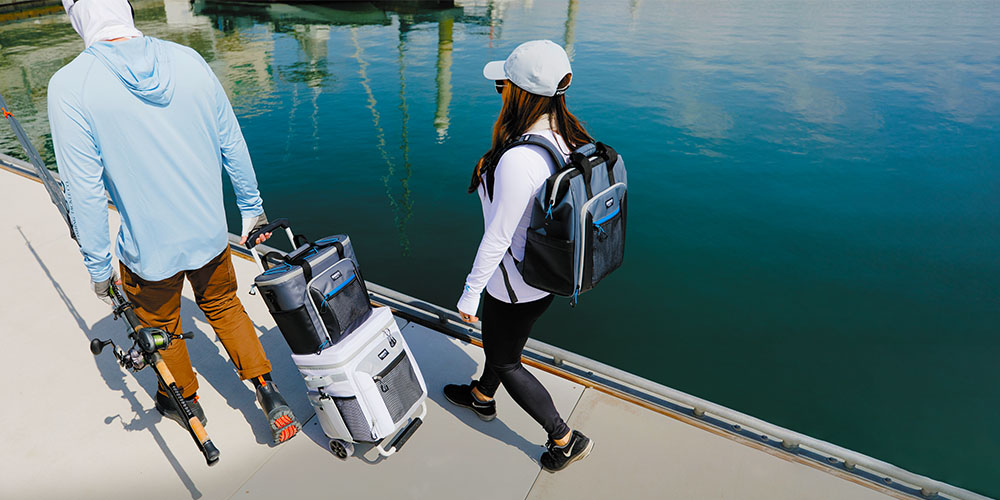
Coolers provide an easy way to keep food, beverages, bait or your day’s catch fresh during transport on land or water. Your choice of a cooler (or coolers) should depend on the size of your crew, the duration of the outing or cruise and of course, your budget.
Modern coolers vary widely in size, insulation, durability and features. Some are designed to carry lunch and drinks for a day trip, while others are built to hold ice for multiple days offshore or during extended camping trips. When comparing coolers, consider capacity, portability, ice retention, weight, durability and how the cooler will be used. A cooler that works perfectly on a center console may be too large for a kayak, while a compact soft-sided cooler may be ideal for a day on the water but inadequate for a week-long adventure.
Coolers vary in size, type of construction, durability, impact resistance, ice keeping ability and in other respects, including handles, hinges, latches and in some cases, wheels for portability. There are three basic types of coolers: soft-sided, hard-shell and electric coolers, which do not require ice.
- Soft-sided Coolers
- Hardshell Roto-molded Coolers
- Wheels and Accessories
- What Size Cooler Do You Need?
- Two Coolers Can be Better Than One
- Electric Coolers
- How to Maximize Ice Retention
- Cooler Buying Guide FAQ
Soft-sided Coolers
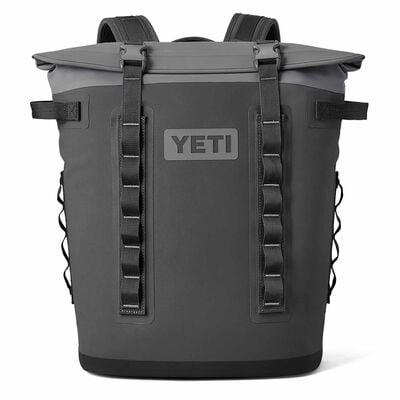
Yeti's Hopper® M20 Backpack Cooler is a soft-sided cooler that holds up to 36 cans or up to 26 pounds of ice.
Soft-sided coolers are good for keeping food and beverages for one or perhaps two days. Designs vary: some consist of a hard inner liner with an insulated fabric shell, sort of a hard/soft cooler; many are flexible inside and out, which enables them to be compressed for compact storage; most offer features that hard-shell coolers don’t, such as padded carry straps and exterior pockets for car keys, cell phones or a GPS.
They fit nicely into the crowded environment of small boats, with soft exteriors that enable them to squeeze into odd nooks and crannies along with other gear aboard. Soft-sided cooler capacity varies, from small models that only hold a couple six packs up to much larger sizes.
Soft-sided coolers are often the best choice when portability matters more than maximum ice retention. Backpack coolers, tote-style coolers and shoulder-carry models are easier to transport over docks, beaches and campgrounds. While they generally do not match the multi-day ice retention of premium roto-molded coolers, many high-end soft coolers can keep contents cold for several days when packed properly.
Hardshell Roto-molded Coolers
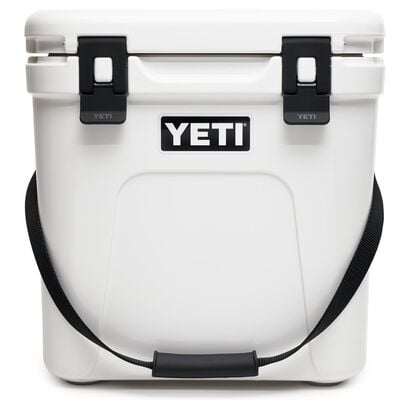
Yeti’s Roadie® 24 is an easy-to-carry, roto-molded cooler, making it the perfect companion for your kayak, canoe, ATV or golf cart.
Looking for a hardshell cooler with ultimate durability that can take a pounding on a heaving deck? Then consider a roto-molded cooler. These coolers can take almost any amount of abuse. The impact resistance of these coolers is excellent and the hardware is outstanding. All boast strong, rubber T-latches and robust, self-stopping lid hinges. Most include recessed grab points, non-skid feet and handles that store out of the way.
Roto-molded construction allows manufacturers to create thick insulated walls and robust one-piece bodies that resist cracking and impact damage. Many premium coolers in this category are designed to hold ice for multiple days when used correctly, making them popular with offshore anglers, hunters, overlanders and extended camping enthusiasts.
Ultimate durability costs, but if you want one of the most “bullet proof” coolers that money can buy, one of these might be for you.
Wheels and Accessories
Our Igloo and Yeti selection includes coolers with wheels and telescoping handles, which make it easy to cover long schleps from your car to your boat or camping spot. For many coolers, optional cushions are available to convert your cooler into a comfortable seat. Check to see if the cooler you want comes with a food storage rack. If not, check to see if one is available. If you will be keeping your cooler on deck, consider a tie-down kit and/or a set of corner chocks.
Other useful accessories include dividers, baskets, cutting boards, lock brackets, drink holders and fishing rod holders. These accessories can help organize food, separate bait from drinks or convert a cooler into a more functional part of your boat or campsite.
What Size Cooler Do You Need?
The size you select should depend upon the intended use, the number in your party and how long you will need to keep items cool. A small soft-sided or hard shell cooler is fine for a day trip but longer outings need something bigger.
Cooler capacity is generally stated in quarts or capacity in 12-ounce cans. One quart equals about 0.75 cans, so a 24-quart cooler will hold about three six packs or 18 cans.
Another way to gauge capacity is to divide the capacity in quarts by 30, so a 60-quart cooler equals two cubic feet. When selecting a cooler, remember that about 30-50 percent of its capacity will be taken up with ice. For three people on a day trip, a 40-quart cooler is generally fine. For the same group on a weekend camping trip, a 50- to 60-quart cooler is good.
Try not to buy a cooler that is too large, as tightly packed coolers keep food colder and longer. Purchasing a jumbo sized cooler and filling the excess space with ice might seem OK, except for the expense and extra weight you will have to carry.
Conversely, an excess of air or open space inside an overly large cooler makes the ice melt faster. An exception to this conservative approach is offshore fishing coolers. How big are the fish you plan to catch? We can’t answer that, but we can say that most anglers would be loath to cut their trophy sized catch in half in order to bring it home. Examples of coolers commonly used for offshore fishing excursions include coolers by Igloo, Engel and YETI in the 150-250 quart class.
Two Coolers Can be Better Than One
Let’s say you and your spouse are planning a five day camping trip and are ready to pull out the stops and purchase a 100-quart cooler. But consider this: a 100 quart cooler fully loaded with food, drinks and ice can weigh up to 200 pounds—so unless you are bulking up for a body building event, purchase two smaller coolers—one for drinks and one for food.
You will be opening the drink cooler a lot more often than the food cooler which means that the ice in the food cooler will melt slower and that the food will keep longer.
This strategy is popular with anglers as well. One cooler can be dedicated to drinks and food while another is reserved for bait or fish. Separating contents reduces contamination concerns and prevents constantly opening the cooler holding temperature-sensitive items.
Electric Coolers
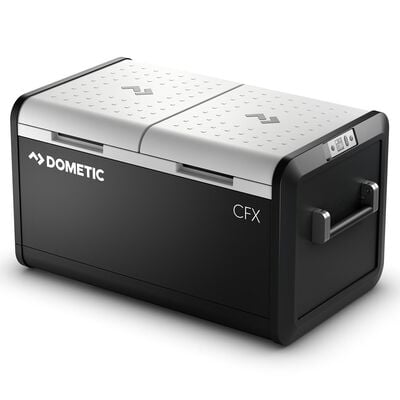
Dometic's CFX3 75DZ Dual Zone Portable Refrigerator/Freezer boasts 75 liter capacity and convenient smartphone control.
There are two main types of electric coolers, which operate on 12V DC current supplied by your boat or vehicle’s cigarette lighter: compressor driven and thermoelectric.
Thermoelectric coolers rely upon an electronic phenomenon known as the “Peltier effect” to either heat or cool their contents. In addition to not having to deal with slushy ice and wet food items, available space for food storage is increased due to the absence of ice. The disadvantage is that cooling capacity is limited by ambient temperature. A thermoelectric cooler rated to cool 40°F below ambient temperature will on a 90°F day only cool the contents down to about 50°F.
Compressor-driven coolers use a refrigerant along with a compressor and an evaporator—just like a household refrigerator—which gives them the ability to cool and/or freeze their contents. Unlike thermoelectric coolers, compressor-driven coolers can hold a steady temperature regardless of the temperature outside. If you are considering a compressor driven cooler, check out the models we offer by Norcold, Dometic and Engel USA.
Electric coolers are ideal for boaters, RV owners, overlanders and campers who want refrigeration without managing ice. They cost more initially but maximize storage space and provide consistent temperature control throughout a trip.
How to Maximize Ice Retention
Even the best cooler performs poorly if it is packed incorrectly. Pre-chill the cooler before loading food and beverages, use block ice whenever possible, minimize air space and avoid opening the lid unnecessarily. Keeping the cooler in the shade can dramatically improve performance during hot summer days.
Cold items help keep other items cold, so load beverages and food already chilled rather than relying on the cooler to lower their temperature. When practical, separate frequently accessed items from long-term storage items to reduce lid openings and preserve ice.
Cooler Buying Guide FAQ
What type of cooler holds ice the longest?
Premium roto-molded hard coolers generally provide the best ice retention because of their thick insulated walls, freezer-style gaskets and durable construction.
Are soft-sided coolers worth it?
Yes. Soft-sided coolers are lightweight, portable and easy to store. They are excellent for day trips, beach outings, kayaking and situations where flexibility matters more than maximum ice retention.
How much ice should I put in a cooler?
A good rule of thumb is to dedicate 30% to 50% of cooler capacity to ice, depending on trip length, outside temperature and how often the cooler will be opened.
Should I buy one large cooler or two smaller coolers?
Two smaller coolers are often easier to carry and can improve ice retention by separating frequently accessed drinks from food or bait. This reduces unnecessary lid openings.
Are electric coolers better than traditional coolers?
Electric coolers eliminate the need for ice and provide more usable storage space. Compressor-driven models can even freeze contents. Traditional coolers remain more affordable and do not require power.
Conclusion
Select a cooler according to how much food you need to store and the purpose of your trip. Soft-shell coolers are convenient for short outings, but don’t expect them to keep ice like a hard shell cooler can. Don’t buy a cooler that will be too heavy to carry and if you need the extra capacity, consider purchasing two—one for food and one for drinks. For ultimate durability and long ice retention, roto-molded coolers are hard to beat. Offshore anglers think big.