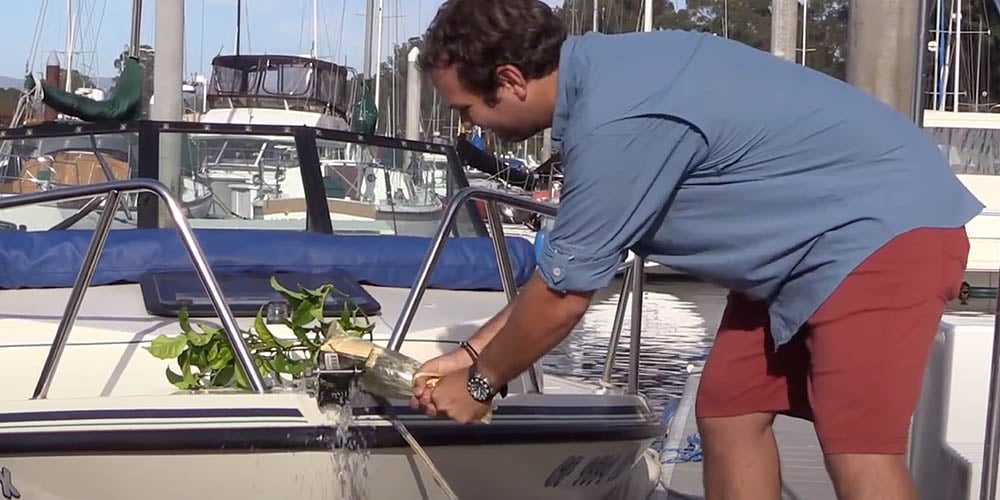
Whether you own a small fishing boat, sailboat, or a larger yacht, a boat christening ceremony is a fun way to welcome your boat to the world, celebrate with friends, and ensure safe passages for a lifetime of adventures on the water. Boat christening ceremonies date back thousands of years and vary slightly around the world.
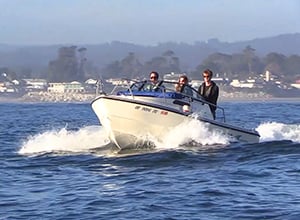
We christened the new boat and now we’re taking a little shakedown cruise.
What You Need to Christen Your Boat
- Some friends to join in the ceremony
- Your dock or harbor
- A branch of green leaves
- A pre-scored christening bottle with containment bag (to break on the boat)
- Red wine, champagne, or sparkling cider (to drink)
- A small poem or a few words about the boat
- A name for your boat
Boat Christening Ceremony Explained
A proper christening ceremony makes you and your boat part of a nautical tradition rooted in ancient times. The following steps can be modified to suit your personal preferences. Have fun!
Christening a boat is a social event best enjoyed among a close circle of friends. Since the ceremony is normally followed by a short maiden voyage, prelaunch your boat and have it ready at the dock. The traditional drink during a christening is red wine — captains historically used wine to toast the sea and celebrate the new vessel. Champagne became popular later. Cider works just as well if you prefer something non-alcoholic. A branch of green leaves symbolizes safe returns; it only needs to be on the boat for the christening and maiden voyage. Any leafy branch will do — lemon, olive, or whatever you have on hand.
Modern christening ceremonies consist of saying a few words about the boat, toasting to the honor of the new boat’s name, and then breaking a bottle of champagne against the bow — or pouring the contents onto the bow. The entire process usually takes less than five minutes. If you plan to break the bottle, we strongly suggest using a pre-scored christening bottle that is double-scored around the middle to break cleanly and safely, and that includes a containment bag to capture the broken glass. This avoids both environmental mess and the embarrassment of a bottle that bounces off the hull without breaking. Break the bottle over a cleat or bow roller rather than directly against the hull to protect your gelcoat.
Best Times to Christen a Boat
Saturday and Sunday are the most practical days for a christening — good weather, friends available, time to take a maiden voyage. Maritime folklore also holds that certain days are considered unlucky for setting sail or launching a new vessel. Whether you take these seriously is up to you, but they are part of the tradition:
- Friday has long been considered an unlucky day to begin a voyage in seafaring tradition. The U.S. Coast Guard, by custom, does not christen new vessels on a Friday.
- Thursday is considered by some to be Thor’s day in Norse tradition — the god associated with storms — and therefore a risky day to put a new boat in harm’s way.
- The first Monday in April and the second Monday in August are cited in various maritime superstition guides as unlucky days, though the origins are disputed.
Modern boaters mostly ignore these, and any day with fair weather, a clear forecast, and willing friends is a fine day to christen a boat.
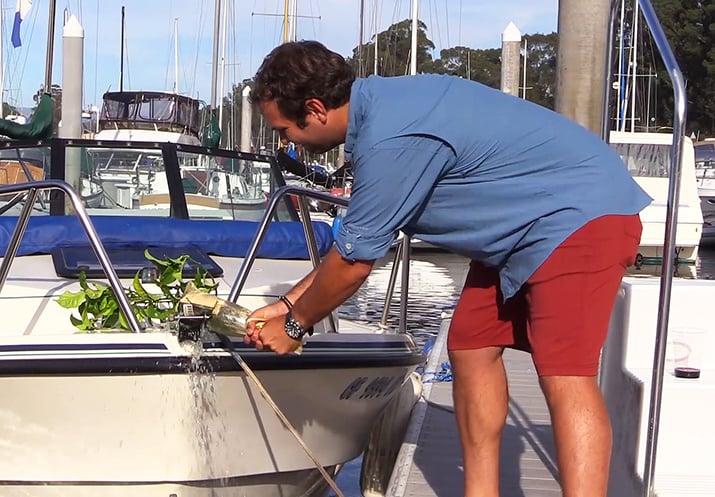
The big moment — breaking the christening bottle over a stainless steel anchor roller. No scratches in the gelcoat! Notice the leafy lemon tree branch on deck.
How to Rename a Boat
There is a lot of superstition around renaming a boat — and it has kept more than a few boats sailing under questionable names for years rather than risk the tradition. The established maritime custom holds that before you can give a boat a new name, every trace of the old name must be completely removed. Not covered, not painted over — removed. The old identity must be erased before the new one is spoken aloud or anything bearing the new name is brought aboard.
Work through the boat systematically:
- Hull lettering: Remove exterior lettering or painted name completely. If the boat has been painted over previously, you need to get down to wherever the old name exists and eliminate it — painting over is not sufficient.
- Interior: Remove or cover any badges, engravings, upholstery, or decorations bearing the old name.
- Accessories: Life rings, brass bells, clothing, mugs, key chains, dock plates — anything with the old name needs to go.
- Paperwork: Cruising logs, maintenance records, and receipts can be kept, but cover every instance of the old name with correction fluid wherever it appears.
- Digital: Archive or hide any social media posts showing the old name. Update your boat’s name in any online boating forums or communities where it appears in your profile or signature. You don’t need to delete old photos, but the name should not be visible.
Once every trace of the old name is gone, you can proceed with a christening ceremony using the new name. If you complete the process, christen the boat, and then find a missed instance of the old name — christen again to be safe.
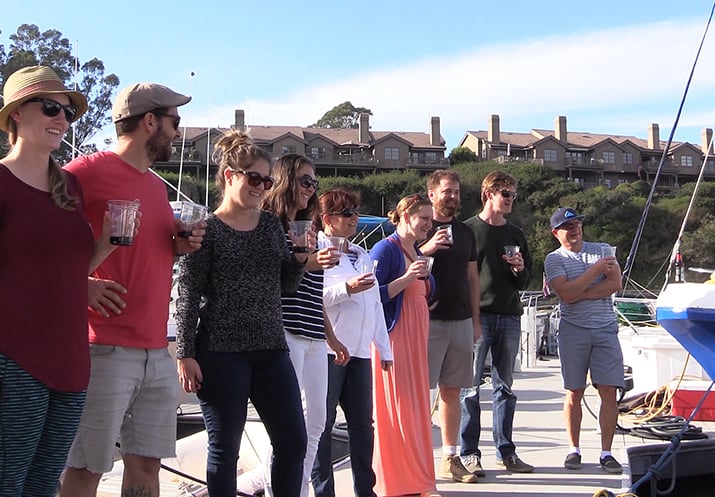
Friends enjoying the show from the dock.
Boat Christening FAQs
Do I have to break a bottle to christen a boat?
No. The bottle-breaking tradition is the most well-known part of the ceremony, but pouring champagne or wine over the bow is equally traditional and considerably less messy. Many modern christenings involve a toast and a pour rather than a smash. If you do want to break a bottle, use a pre-scored christening bottle with a containment bag — a standard champagne bottle is difficult to break cleanly and the glass shards are a hazard and an environmental problem.
Can I christen a boat without champagne?
Absolutely. Red wine is the older tradition — champagne became fashionable later. Sparkling cider, beer, or any drink meaningful to the boat owner works fine. The ceremony is about celebrating the boat and the people aboard it, not about the specific liquid. Some maritime cultures use olive oil, water, or even whisky.
Does a used boat need to be re-christened when I buy it?
There is no rule that requires it, but many boaters do christen a used boat when they take ownership — either keeping the existing name or renaming it through the full renaming process described above. If the boat already has a name and history you want to honor, a simple ceremony acknowledging the transition of ownership is a nice touch. If you’re renaming it, follow the renaming steps before the christening.
What should I say during the ceremony?
Whatever feels right. Most christenings include: the boat’s new name spoken aloud for the first time, a short toast to safe passages and good company, and the breaking or pouring of the ceremonial drink. Some people read a poem. Some say a few words about what the boat means to them. The length and formality are entirely up to you — most ceremonies run under five minutes.
Why do you put leaves on the boat?
A branch of green leaves is a traditional symbol of safe returns — a living thing that will wither and return to the earth, symbolizing the hope that the boat and crew will always come home. Any leafy branch works. It stays on the boat for the ceremony and the first voyage, then can be removed.
Conclusion
Congratulations on your new boat! A christening ceremony is one of those small traditions that connects you to centuries of sailors who did the same thing before the same water. Have fun with it, share it with people you care about, and enjoy the maiden voyage.
About Mike Montgomery: Growing up in Northern California, Mike traded in a life dedicated to snowboarding for new adventures on the coast of the Pacific Ocean. He joined the Marketing Team at West Marine and enjoys listening to a passionate set of customers, learning about unique products, and being an advocate for a life well lived on the water. Mike’s adventures on the Monterey Bay include sunrise paddleboarding alongside sea otters, learning how to sail on West Marine’s company sailboat, and most recently purchasing his first boat, a 17’ Arima Sea Ranger.