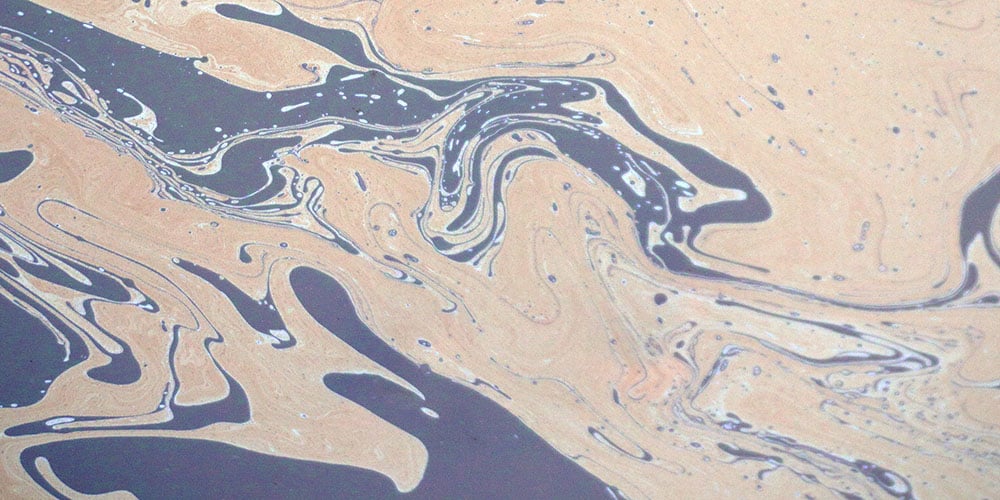
So you own a boat. Maybe you can save the world too!
“The Solution to Pollution is Dilution.” This outdated adage reflects the mistaken idea that the oceans can simply absorb and dilute pollution without consequence. Many pollutants persist in the environment, accumulate in sediments or organisms, and affect aquatic ecosystems. Copper from antifouling paints can build up in marina sediments, microplastics can move through food webs, and invasive species can threaten native wildlife. The choices we make as boaters, from the products we use to how we maintain our boats, can make a difference to the waters we enjoy.
Fortunately, keeping your boating routine cleaner doesn’t have to be difficult. Whether you’re washing down the boat, maintaining the bottom, storing chemicals or getting ready to head home after a day on the water, there are practical steps you can take to reduce your environmental impact.
In this guide, we’ll cover simple clean-boating practices you can work into your routine. You’ll find tips for choosing cleaning products and bottom paints, handling chemicals and sanding residue, preventing the spread of invasive species and more. A few thoughtful choices can help keep the water cleaner for boating, fishing, diving, paddling and the many other ways we enjoy being on the water.
- Cleaner Cleaning
- Copper-Free and Low-VOC Antifouling Paints
- Safer Sanding
- Proper Storage of Paints, Cleaners and Chemicals
- Marine Sanitation
- Invasive Species
- Clean Boating Checklist
- Clean Boating FAQs
Cleaner Cleaning
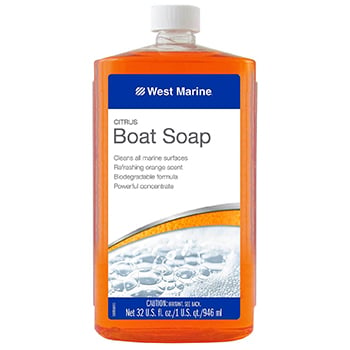
Choose an all-purpose cleaner that is eco-friendly like our West Marine brand boat soap.
One simple way you can reduce your environmental impact as a boater is to choose cleaning products with lower impacts on the aquatic environment. When shopping for cleaning products, look for formulas that effectively clean your boat while minimizing unnecessary chemical exposure and runoff. Rather than relying on claims such as “biodegradable” or “marine-safe” alone, look for products with credible environmental certifications or other specific information about their ingredients and aquatic toxicity. When you need a stronger cleaner for stubborn rust stains or heavy buildup, use it only as directed and in the smallest amount necessary. Regular cleaning can also help prevent stains and buildup from becoming difficult problems that require more aggressive products.
It’s also important to understand what terms such as “biodegradable” and “marine-safe” actually tell you. A biodegradable product is designed to break down through natural processes, but that doesn’t necessarily mean it breaks down immediately or that its ingredients and breakdown products have no effect on aquatic life. Likewise, “marine-safe” can mean different things depending on the product and manufacturer. When choosing a cleaner, consider the complete picture, including how the product is intended to be used, its ingredients, its aquatic toxicity and whether it carries a recognized environmental certification.
A few simple habits can help you use less cleaner and keep more of it out of the water:
- Rinse your boat with fresh water when practical after saltwater outings. Removing salt before it builds up can help reduce corrosion and staining and may lessen the need for stronger cleaners later. When rinsing at the dock, avoid unnecessary runoff directly into the water.
- Clean teak and non-skid surfaces regularly with mild soap. Light, routine cleaning can help prevent heavy soiling and reduce the need for more aggressive stain removers.
- Wash the boat away from the water when possible. Cleaning on the hard at a boatyard or other suitable location makes it easier to collect and properly manage wash water and cleaning residues rather than allowing them to flow directly into the marina.
- Use bleach and other strong cleaners thoughtfully. Bleach is not automatically prohibited in every boat-cleaning situation, but concentrated cleaners should not be allowed to enter the water. Follow the product label, use the minimum amount necessary and consider less aggressive alternatives when they will do the job.
Copper-Free and Low-VOC Antifouling Paints
Until recently, most bottom paints relied upon cuprous oxide to prevent marine growth. While cuprous oxide is highly effective against fouling organisms, it can concentrate to levels that are harmful to the marine environment. For this reason, boaters in increasing numbers are switching to copper-free bottom paints that contain alternate biocides such as ECONEA®. ECONEA is effective against barnacles and other hard marine growth, but unlike cuprous oxide, it dissipates quickly in the aquatic environment.
For your boat's prop and prop shaft, copper-free formulations such as Propspeed are a great choice. Because Propspeed does not contain any biocide, it is not technically an antifouling paint. Instead, it is a foul-release formulation that creates a slick surface to which marine organisms have difficulty adhering. For more about ECONEA, Propspeed and copper-free antifouling paints, read the West Advisor articles How to Bottom Paint Your Boat and Top Ten Antifouling Paint Buying Questions.
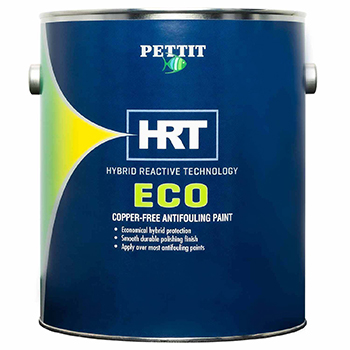
Bottom paint is available in varying amounts of copper, as a copper hybrid or without copper entirely.
The environmental case against high-copper bottom paint has strengthened significantly. Copper does not break down the way many organic compounds do. It can accumulate in marina sediment and affect bottom-dwelling organisms, fish and the larger food chain. Several regions have already moved to restrict or regulate high-copper antifouling paints in certain waters, making copper-free and low-copper formulations a practical long-term choice as well as an environmental one.
Breathing clean air is also important. That's why it is a good idea to choose a bottom paint that is low in VOCs, or volatile organic compounds. Bottom paints that contain VOCs release these compounds into the air during application, which can cause eye, nose and throat irritation, headaches, dizziness and nausea. For these reasons, selecting a water-based bottom paint or a solvent-based paint that is low in VOCs is a wise choice.
For boaters considering the switch to copper-free bottom paint, here is what to expect in practice:
- Performance has improved significantly. Current copper-free and copper-hybrid formulations can perform well in many temperate and subtropical waters.
- High-fouling tropical waters may require more careful paint selection. In extreme fouling environments, a copper-hybrid paint may be a reasonable intermediate step.
- Foul-release coatings work best on boats that move regularly. Slick coatings on running gear depend on water movement to help shed growth.
- Haul-out frequency still matters. Any antifouling system performs better with regular inspection and light cleaning between haul-outs.
Whatever antifouling paint you choose, when sanding your boat's hull or applying bottom paint, ensure your personal safety by donning protective gear such as nitrile or rubber gloves, Tyvek® coveralls, a head sock, shoe covers and an organic vapor mask or respirator.
Safer Sanding
At the time of this writing, not all marinas in the U.S. require a dust collection system, essentially a vacuum built into a sander, to remove dust during sanding before bottom painting, but it is always a good practice. The dust that comes off the bottom of your boat during sanding can be bad for the environment. For your safety, and to properly apply and remove bottom paint, you should always refer to the product's use guidelines. To protect yourself while you sand, use appropriate safety gear, ventilation and a dust collection system that will remove the majority of the sanded paint particulates.
This also allows the bottom paint dust to be disposed of in a safe manner. Electric sanders with a dust collection system can be purchased or are often available for rent at boatyards near marinas that enforce their use.
Bottom paint dust is a concentrated source of the same biocides and metals that make antifouling paint effective in the water. Dust that settles on the ground around the boat or blows into marina water can introduce contaminants into the environment in a highly concentrated form. Even copper-free bottom paint dust should be captured and disposed of properly.
Best practices for a safer sanding job:
- Always use a random-orbital sander with a dust bag or vacuum attachment. Captured dust can be bagged and disposed of through the proper marina or municipal hazardous waste channel.
- Wet sand only where wastewater can be collected. Wet sanding reduces airborne dust but creates contaminated wastewater that should not run into the marina.
- Work in calm conditions. Wind can carry fine particulate beyond the work area and toward the water.
- Dispose of sanding residue as hazardous waste. Used sandpaper, dust bags and contaminated drop cloths should not be treated like ordinary trash.
Proper Storage of Paints, Cleaners and Chemicals
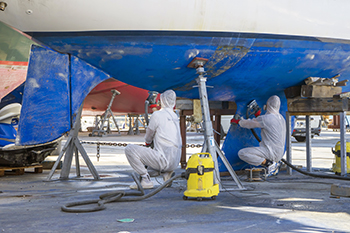
Having the proper equipment is necessary to safely sand the bottom of your boat.
How do you store paint between seasons? Cleaners? Anything that could evaporate into the air or spill into the water should be contained in a safe, dry storage space where bottles are unlikely to be overturned and lids are securely attached. We recommend dock boxes for safe and reliable storage of any cleaner or chemical you need near your boat.
These include cleaners, paint and bottom paint, varnish, head chemicals and anything you'd rather not have leaking or dumped into the water. When storing spray cleaners, be sure that the top is on tight and the nozzle is in the closed position. Make sure that the lids of paint and varnish cans are closed tightly so that they won't leak, even if tipped over. Resins, solvents, antifreeze and other chemicals with a twist-off lid should be checked for leakage before storage.
A few additional storage practices that protect both the environment and your own safety:
- Never store incompatible chemicals together. Solvents, oxidizers, acids, bases and head chemicals should be separated to reduce fire, reaction and spill risks.
- Do not store unnecessary chemicals aboard the boat. A chemical spill belowdecks is harder to contain than one in a dock box or controlled storage area.
- Dispose of old or partially used chemicals through proper channels. Leftover bottom paint, solvents and cleaning products should not go in the trash or down a drain.
- Label everything clearly, including the date opened. Old products can separate, degrade or become less predictable to use.
Marine Sanitation
Being able to meet the call of nature onboard is a great convenience, since the alternative would be a time-consuming trip back to the dock. For this reason, most boats with an enclosed cabin space have some kind of toilet. This can be a self-contained device, such as a portable toilet, or a toilet that is plumbed to a marine sanitation device (MSD).
There are three types of MSDs: Type I, Type II and Type III. For a definition of each type of MSD and for an overview of the laws that govern the use of your marine toilet, including the discharge of human waste, check what the United States EPA website has to say under Vessel Sewage Frequently Asked Questions. We suggest that new boat owners thoroughly familiarize themselves with the maintenance and operation of their boat's sanitary facilities. We also suggest that you become familiar with national, state and local laws that govern the use MSDs in your local area.
Beyond legal compliance, the environmental case for proper marine sanitation is straightforward. Raw sewage discharged into enclosed anchorages, tidal creeks and near-shore waters contributes pathogens, excess nitrogen and phosphorus that degrade water quality, close shellfish beds and trigger algal blooms that deplete oxygen and harm marine life. Pump-out stations are available at many marinas, and using them is both legally required in No-Discharge Zones and simply the right thing to do for the waters we use.
Practical sanitation habits that make a real difference:
- Know the No-Discharge Zones in your cruising area. Federal law prohibits discharge of treated or untreated sewage in designated No-Discharge Zones.
- Use pump-out stations before they become urgent. Regular pump-outs reduce odor, system stress and the chance of improper discharge.
- Choose environmentally appropriate head chemicals. Enzyme-based holding tank treatments are preferable to harsh, formaldehyde-based deodorants.
- Maintain hoses, valves and holding tanks. Leaks, stuck Y-valves and deteriorated hoses can create odor, discharge and compliance problems.
What You Need to Know About Invasive Species
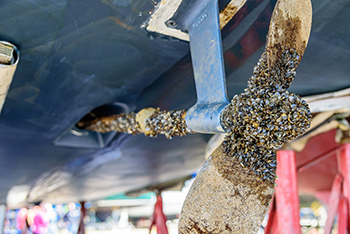
Some invasive species can attach themselves to your boat and survive for a period of time out of water.
Invasive species have been a hot topic among marine scientists for a long time. When organisms are introduced into a new location where their normal predators are missing, they can overpopulate and snuff out one or more species in the fight for resources. This may cause a chain reaction within the ecosystem that leads to other plant and animal species completely dying out, and if those species include your favorite catch, you're out of luck.
Invasive species can spread from one body of water to another when they hitch a ride on your boat. Preventing their spread can be difficult because they are hard to spot. Luckily, there are some simple actions you can take to help.
Zebra mussels, Asian carp, lionfish and other aquatic invasive species have shown how quickly a non-native organism can damage ecosystems, clog water intakes, alter food chains and affect recreational access. Boaters are one of the primary pathways for moving invasive species between water bodies, which means boaters are also one of the best lines of defense.
The most important thing to remember about invasive marine species is that they generally need water to survive. Letting your boat and its trailer dry completely before you travel and launch your boat into a different body of water can help. Water on your boat that can harbor invasive species includes water in your boat's bilge, livewell, baitwell and ballast tanks. Scrape any organisms off the hull before launching your boat.
The Clean, Drain, Dry protocol gives boaters a clear framework for reducing invasive species transport:
- Clean all visible aquatic plants, animals and mud from your boat, trailer and equipment before leaving any water body.
- Drain all water from the boat, motor, bilge, livewells, baitwells and water-carrying equipment before leaving the launch area.
- Dry your boat, trailer and equipment completely before launching in a new body of water.
- Never release bait into a water body where it was not collected.
Clean Boating Checklist
- Use biodegradable, non-toxic boat soaps and cleaners whenever possible.
- Rinse saltwater from the boat after every outing to reduce staining and corrosion.
- Avoid bleach, chlorine and strong acid cleaners near the water.
- Select copper-free, low-copper or low-VOC bottom paint where appropriate.
- Use a dust-collection sander when removing bottom paint.
- Wear gloves, coveralls, eye protection and an appropriate respirator when sanding or painting.
- Store paints, cleaners and solvents in sealed containers inside a secure dock box.
- Dispose of old chemicals, paint, solvent and sanding dust as hazardous waste.
- Use pump-out stations and know local No-Discharge Zones.
- Clean, drain and dry your boat before moving between waterways.
Clean Boating FAQs
What are clean boating practices?
Clean boating practices are habits that reduce pollution, chemical runoff, sewage discharge, invasive species transport and other environmental impacts from recreational boating. They include using safer cleaners, managing waste properly, choosing lower-impact bottom paints and cleaning, draining and drying boats before moving between waterways.
What boat cleaners are safest for the environment?
The safest boat cleaners are biodegradable, non-toxic and made without bleach, chlorine or strong acids. Products specifically formulated for marine use and supported by recognized environmental standards are preferable to harsh household cleaners.
Why are copper-free bottom paints better for clean boating?
Copper-free and low-copper bottom paints reduce the amount of copper released into marina sediment and surrounding waters. Copper can accumulate in sediments and affect aquatic organisms, especially in high-traffic marina basins.
How should I dispose of old bottom paint and sanding dust?
Old bottom paint, sanding dust, used sandpaper and contaminated drop cloths should be handled as hazardous waste. Use marina collection points or municipal hazardous waste disposal programs rather than placing these materials in regular trash.
What is the Clean, Drain, Dry method?
Clean, Drain, Dry is a simple method for preventing invasive species spread. Clean plants and organisms from the boat and trailer, drain all water from bilges and livewells, and allow the boat and equipment to dry before launching in a new waterway.
Can I discharge sewage from my boat?
Sewage discharge laws vary by waterway and vessel equipment, and discharge is prohibited in No-Discharge Zones. Boaters should use marina pump-out stations and understand federal, state and local marine sanitation rules before operating an onboard toilet system.
How can I reduce chemical runoff when washing my boat?
Use mild boat soap, wash away from the water when possible, rinse regularly with fresh water to prevent heavy buildup and avoid using harsh cleaners unless absolutely necessary.
What should I store in a dock box?
A dock box is a good place to store sealed cleaners, paint, varnish, head chemicals and maintenance products that should not be left loose aboard the boat. Keep incompatible chemicals separated and make sure all lids and nozzles are tightly closed.


