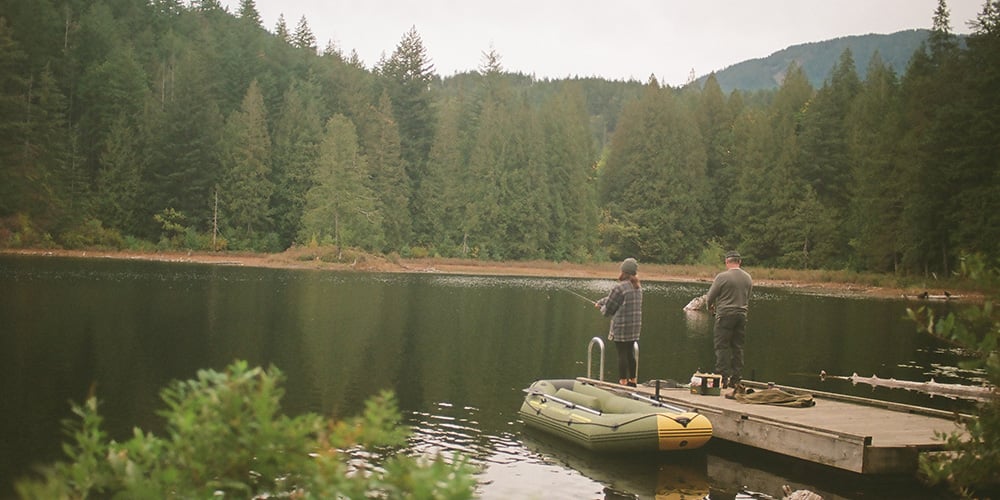
Whether you’re casting for cutthroat trout in Yellowstone, chasing largemouth bass in the Everglades, or surf fishing off the shore of the Channel Islands, America’s National Parks offer some of the most scenic and productive fishing anywhere in the country. With parks across every region, there’s a good chance your next great fishing spot is closer than you think. Here’s what you need to know before you go — plus how to access the parks for free or at a discount.
- Check Fishing Regulations Before You Go
- Do You Need a Fishing License in a National Park?
- Best National Parks for Fishing by Region
- Free Access for U.S. Veterans and Military
- Other Lifetime and Annual Park Passes
- Gearing Up for a National Park Fishing Trip
- FAQs
Check Fishing Regulations Before You Go
Fishing opportunities and regulations vary significantly from park to park — and sometimes from one area of a park to another. Some parks operate under state fishing regulations; others have additional or different park-specific rules for catch limits, gear restrictions, and seasonal closures. Check the NPS fishing page before any trip.
The NPS maintains an interactive map of National Parks with fishing opportunities that makes it easy to find a park near you and review the specific regulations and required licenses before you arrive. Find your park, click the pin, and start planning.
Do You Need a Fishing License in a National Park?
This is one of the most common questions about National Park fishing — and the answer is almost always yes, but it depends on the park. Most National Parks require a valid state fishing license for the state in which the park is located. Yellowstone is a notable exception, with its own park-specific fishing permit rather than a state license. Some parks (like Great Smoky Mountains) straddle state lines, and either a Tennessee or North Carolina license covers the entire park. A handful of parks have no fishing license requirement at all.
Check the specific park’s regulations page on nps.gov before your trip — this is the single most important step before fishing in any National Park. Fishing without the correct license in a park can result in a citation and fine.
Best National Parks for Fishing by Region
East and Southeast
Acadia National Park (Maine): Freshwater fishing for brook trout, landlocked salmon, largemouth and smallmouth bass, lake trout, and chain pickerel in Long Pond and other park lakes. Saltwater fishing from the park’s ocean-facing shores for striped bass, Atlantic mackerel, and bluefish. Summer and fall are the best seasons for native salmon and trout. A Maine fishing license is required.
Great Smoky Mountains National Park (Tennessee/North Carolina): More than 2,100 miles of streams supporting rainbow trout, brown trout, and native brook trout. Recent restoration work has made the park a true refuge for native brookies, particularly in higher-elevation streams. Daily bag limit is 5 fish (7-inch minimum for most trout species) plus up to 20 rock bass. Either a Tennessee or North Carolina license is valid throughout the park.
Biscayne National Park (Florida): Ninety-five percent water, making Biscayne one of the most fishing-centric parks in the system. Flats fishing for bonefish, tarpon, and permit. Backcountry fishing for snook and redfish. Offshore for mahi-mahi, wahoo, and sailfish beyond the reef. A Florida fishing license is required for anglers 16 and older.
Midwest and Mountain West
Yellowstone National Park (Wyoming/Montana/Idaho): World-famous wild trout fishery with cutthroat trout, rainbow trout, and brown trout in rivers and lakes throughout the park. The Lamar River, Firehole River, and Madison River are legendary for cutthroat and rainbow trout on the fly. Note: Yellowstone requires a park-specific fishing permit (available at visitor centers) rather than a state fishing license. Native fish conservation areas have additional restrictions — check current regulations carefully.
Rocky Mountain National Park (Colorado): Spring creeks and high-mountain lakes with cutthroat trout, rainbow trout, and brown trout. Some backcountry lakes accessible only by trail hold wild cutthroat in gin-clear water. A Colorado fishing license is required.
Glacier National Park (Montana): Over 20 species in gin-clear waters including bull trout, rainbow trout, cutthroat trout, brook trout, kokanee salmon, northern pike, and arctic grayling. Important regulation: catch-and-release only for cutthroat trout west of the Continental Divide. A Montana fishing license is required.
Voyageurs National Park (Minnesota): Over 50 freshwater species in interconnected lakes including walleye, smallmouth bass, lake trout, northern pike, musky, perch, and crappie. The three main lakes — Rainy, Namakan, and Kabetogama — are the primary fishing areas. A Minnesota fishing license is required.
West and Pacific
Olympic National Park (Washington): Salmon, steelhead, and sea-run cutthroat trout in the park’s rivers and streams. Six hundred lakes spread across a million acres. A Washington State fishing license is required for saltwater; no license is required for most freshwater fishing within the park except for salmon and steelhead (a free Washington catch record card is required for those species).
Yosemite National Park (California): Fifty-eight streams with approximately 770 miles of total length, plus lakes and reservoirs. Species include golden trout, brown trout, brook trout, and rainbow trout. Stream and river fishing is seasonal; lakes are open when the park is open. A California fishing license is required for anglers 16 and older. Yosemite follows California state regulations throughout.
Alaska
Katmai National Park and Preserve (Alaska): World-class salmon fishing at Brooks Camp on the Brooks River, which sees massive runs of sockeye salmon from July through September. Also rainbow trout, arctic char, Dolly Varden, arctic grayling, and lake trout. All five Pacific salmon species are present. The park is also famous for brown bear viewing at Brooks Falls, where bears gather in July to intercept salmon — anglers share the water with bears and should be prepared to give way immediately. An Alaska sport fishing license is required. Remote access is typically by floatplane, making this the most logistically demanding park on this list and one of the most rewarding.
Free National Park Access for U.S. Veterans and Military
The National Park Service offers two free military passes through the America the Beautiful Interagency Pass Program:
- Military Lifetime Pass — available to U.S. military veterans and Gold Star Families at no cost. Covers entrance fees at National Parks, National Wildlife Refuges, and standard amenity fees at National Forests, Bureau of Land Management, Bureau of Reclamation, and Army Corps of Engineers sites. Access to more than 2,000 federal recreation areas across 400 million acres of public land.
- Military Annual Pass — available to current active-duty U.S. service members and their dependents at no cost. Same coverage as the Lifetime Pass.
Veterans can present an acceptable form of ID (DoD ID card, Veteran Health ID card, Veteran ID Card, or a state-issued driver’s license with a veteran designation) at any participating site to receive free entry without obtaining a pass in advance. To get a physical or digital pass: visit Recreation.gov for a digital pass (free, immediate), or order a physical pass from the USGS Store for a $10 processing fee. Physical passes can also be picked up same-day at sites that issue passes — find locations at NPS.gov.
Other Lifetime and Annual Passes
Access Pass — free lifetime pass for U.S. citizens and permanent residents with a permanent disability as medically determined. Order online or pick up at a participating site. Access Pass information.
Senior Pass — U.S. citizens and permanent residents 62 and older are eligible for either a reduced-rate annual Senior Pass or a lifetime Senior Pass for a one-time fee. Both provide the same entrance coverage as other America the Beautiful passes.
Annual Pass — if you don’t qualify for a specialty pass, the standard America the Beautiful Annual Pass covers entrance to all National Parks and federal recreation areas. At $80 per year (current price), it pays for itself after two or three visits to parks with entrance fees.
Gearing Up for a National Park Fishing Trip
National Park fishing spans a wide range of environments — from high-altitude Sierra Nevada streams to Florida flats to Alaskan salmon rivers — so the right gear depends on where you’re going. A few general notes:
- Most trout park fishing: Light to medium-light spinning gear with 4–6 lb monofilament or fluorocarbon. A 5–7 foot rod handles creek fishing and open lake casting equally well. Fly fishing is extremely popular in parks like Yellowstone and Rocky Mountain and is often the most effective approach in clear, pressured water.
- Bass and walleye park fishing: Medium action spinning or baitcasting gear with 8–12 lb line. Soft plastics, crankbaits, and jigs cover most presentations.
- Saltwater park fishing (Biscayne, Acadia coast): Light to medium saltwater spinning gear with 10–17 lb monofilament or fluorocarbon leader. Popping corks, live shrimp, and cut bait for most inshore species; fly fishing for bonefish and permit on the Biscayne flats.
West Marine offers free line spooling and locally assorted tackle in most of our stores, matched to what’s biting in your area. We carry a wide range of fishing rods, reels, and combos to fit every park fishing scenario. Find your nearest West Marine store to see what fishing services they offer.
Frequently Asked Questions
Do I need a fishing license to fish in a National Park?
In most National Parks, yes — a valid state fishing license for the state where the park is located is required. Yellowstone is a significant exception, requiring a park-specific permit instead of a state license. Great Smoky Mountains accepts either a Tennessee or North Carolina license. A handful of parks have no license requirement. Always check the specific park’s regulations at nps.gov before fishing, as rules vary significantly between parks and sometimes between areas within the same park.
Which National Park has the best trout fishing?
Yellowstone, Great Smoky Mountains, and Glacier are consistently rated among the best National Parks for trout fishing in the continental US. Yellowstone’s wild cutthroat and rainbow trout fishery in the Lamar, Firehole, and Madison rivers is legendary for fly fishing. Great Smoky Mountains has undergone significant brook trout restoration and now offers exceptional native brookie fishing in higher-elevation streams. Glacier has gin-clear water and over 20 species including bull trout, rainbow, cutthroat, and kokanee salmon. For the ultimate trout fishing experience in the US, Katmai in Alaska is in a category by itself — trophy rainbow trout and five species of Pacific salmon in genuinely remote wilderness.
Is fishing free in National Parks?
Park entrance fees are separate from fishing fees. Entrance to the park may be free (no-fee parks) or require a fee that can be covered by an America the Beautiful pass. Fishing within the park still requires any applicable state fishing license (or park-specific permit in Yellowstone’s case) regardless of park entrance fee status. Some parks also have additional permit requirements for specific species or waters — check the park’s regulations page before assuming any particular water is open to fishing.
Can I keep fish I catch in National Parks?
It depends on the park and the species. Many parks allow keeping certain species within bag and size limits that generally follow state regulations. Some parks or specific areas within parks are catch-and-release only — Yellowstone has extensive catch-and-release requirements, and Glacier requires catch-and-release for cutthroat trout west of the Continental Divide. Native or wild fish (as opposed to stocked fish) often have additional protections. Read the specific park regulations carefully before keeping any fish.
Who qualifies for a free National Park Military Lifetime Pass?
U.S. military veterans (anyone who has served in the US Armed Forces including National Guard and Reserves) and Gold Star Families (next of kin of Armed Forces members who lost their life in a qualifying situation). Veterans can use an acceptable form of ID at any participating park entrance without obtaining the pass in advance. For a physical or digital pass, visit Recreation.gov or the USGS Store. Current active-duty service members and their dependents qualify for a free Military Annual Pass rather than the lifetime pass.