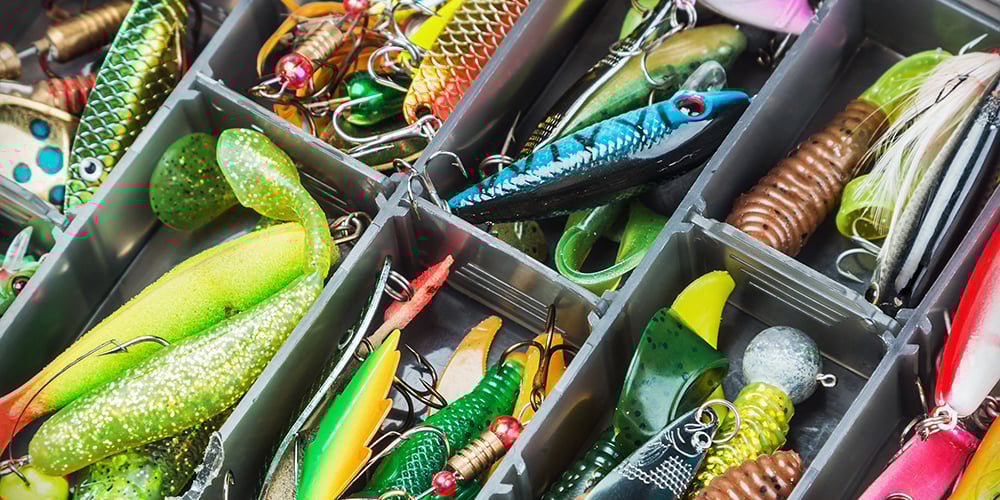
Choosing the right lure or bait for the conditions, species, and water you’re fishing is one of the most satisfying skills an angler can develop. This guide covers our full selection of freshwater and saltwater lures and baits — from the classics that have caught fish for generations to specialty offshore rigs for big-game trolling.
Hard Baits: The Classics
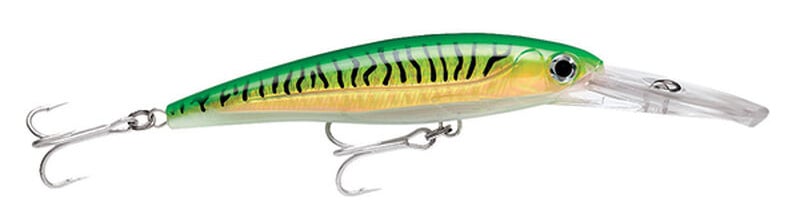
Rapala X-Rap Magnum crankbait.
Crankbaits: These versatile hard-bodied lures dive to a specific depth and wobble side to side on the retrieve, mimicking the swimming action of small baitfish. The lipped design determines running depth — a short lip runs shallow, a longer lip dives deeper. Popular for largemouth bass, walleye, redfish, and when trolled offshore, big pelagic fish. Retrieve speed controls the action: slow for cold water, faster as water temperatures rise.
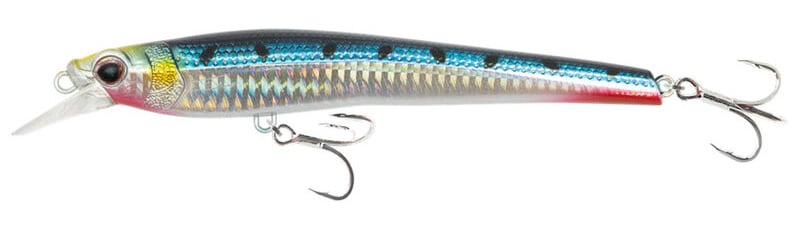
Nomad Design Shikari 145 Slow Float Diver.
Diving Crankbaits: Designed with longer, more aggressive bills that drive the lure deep on the retrieve. Effective for targeting fish holding on deeper structure and points. Common applications include walleye, largemouth bass, and lake trout in freshwater; in saltwater, tuna, kingfish, and mackerel on longer trolling passes. Count down after the cast to reach the right depth before beginning the retrieve.
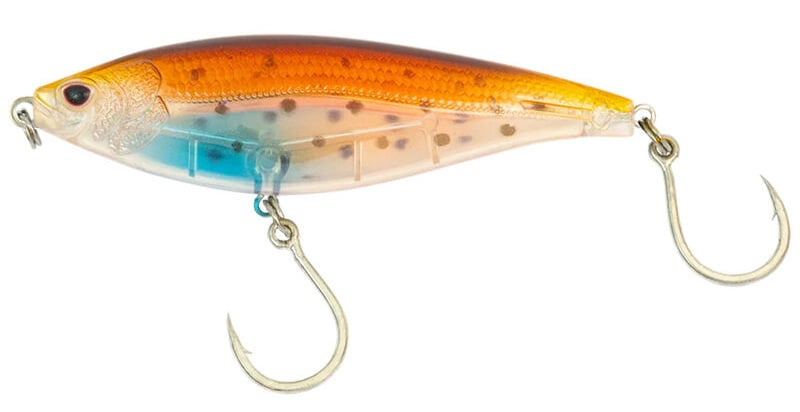
Nomad Design Madscad Autotune 90 Slow Sink Crankbait.
Lipless Crankbaits: No diving bill — these sink on a slack line and vibrate intensely on a straight retrieve. Ideal for covering large areas of water quickly, burning over grass flats, or yo-yoing through the water column. Excellent for largemouth bass, pike, and striped bass; inshore for redfish over shallow grass.
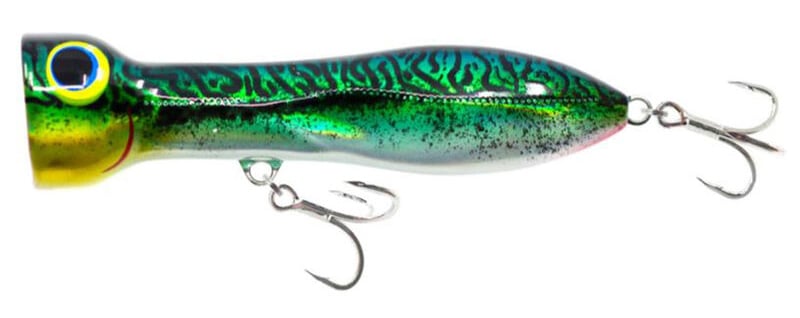
Nomad Design Chug Norris Popper.
Topwater Baits: These floating lures — poppers, walking baits, prop baits, and frogs — stay on the surface and generate strikes from fish attacking from below. One of the most exciting ways to fish: you see the strike. Best for largemouth bass, smallmouth bass, and pike in fresh water; inshore for trevally, snook, and barracuda in salt. Fish topwater in low light — dawn, dusk, and overcast days produce the best results.
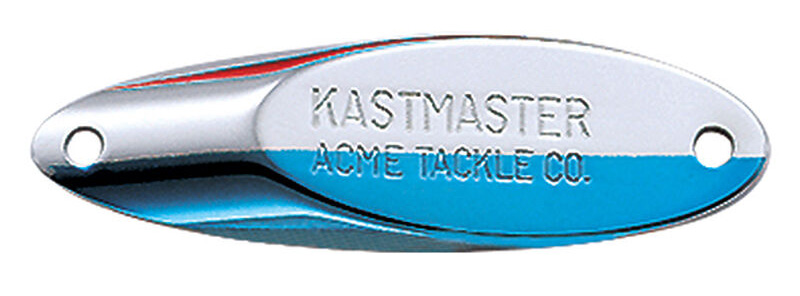
Kastmaster Spoon Bait.
Spoon Baits: Simple, effective metal lures that wobble and flash on the retrieve, mimicking a wounded baitfish. Can be cast and retrieved, jigged vertically, or trolled. Fantastic for salmon, trout, and pike in freshwater; in saltwater, larger variations are a proven choice for king mackerel, bluefish, barracuda, and yellowtail jack. Gold spoons work best in stained water; silver in clear water and bright conditions.
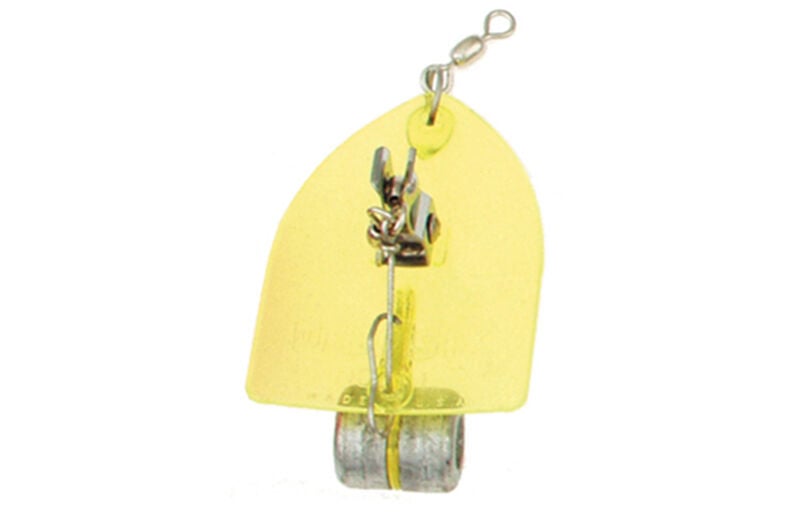
Luhr Jensen Planer.
Planer Kits: Diving planers attach to your line ahead of the lure and pull it to a controlled depth on the troll, then release to a neutral position when a fish strikes. Frequently used for salmon, lake trout, and walleye to run lures at precise depths without downriggers.
Soft Baits: Flexible Favorites
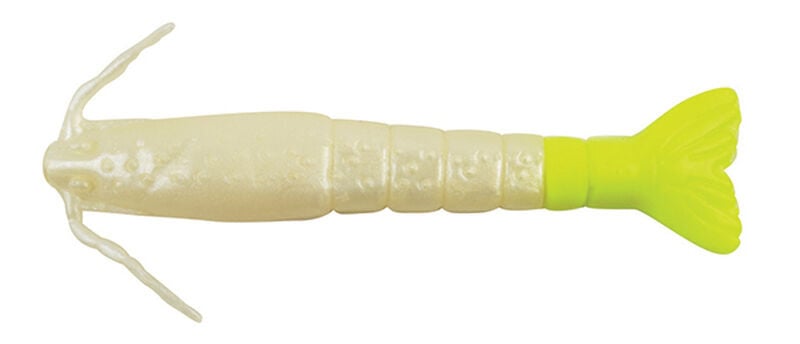
Berkley Gulp! Alive! Shrimp Fishing Bait.
Creature Baits: Soft plastics designed to imitate crawfish, amphibians, or insects with appendages that move and flap on the fall. Highly effective for largemouth bass and smallmouth bass when rigged Texas-style or Carolina-style and worked along the bottom near rocks, stumps, and brush piles.
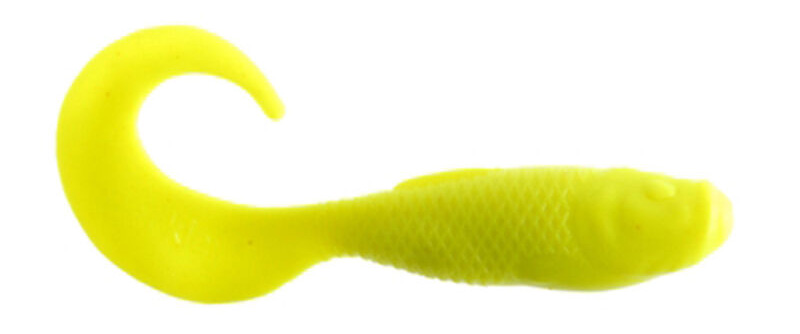
Berkley Gulp! Alive! Swimming Mullet Fishing Bait.
Grubs: Compact soft plastics with thick bodies and curly or paddle tails that generate action at very slow retrieve speeds. Fish them on a light jighead for finesse presentations. Attract bass, panfish, and walleye; also effective for inshore saltwater species on flats and in estuaries.
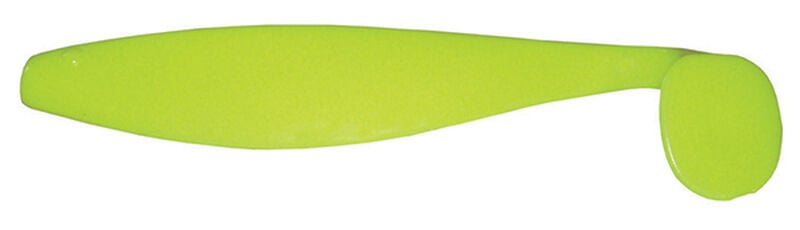
Blue Water Candy Shad Bait.
Soft Jerk Baits: Slender, fish-shaped soft plastics that dart and glide erratically when twitched on a slack line — mimicking a disoriented or injured baitfish. Fish them weightless or on a light hook near the surface for suspended fish. Great for largemouth and smallmouth bass, walleye, and other freshwater species that key on fleeing baitfish.
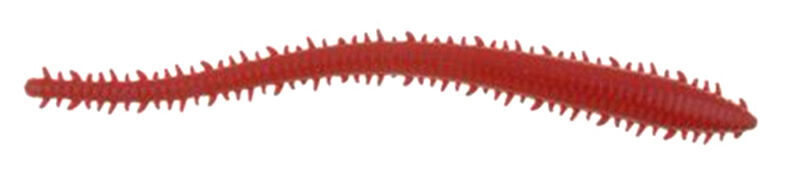
Berkley Gulp Sandworm Fishing Bait.
Worms: The most versatile soft plastic in freshwater fishing. Rigged weedless on a Texas rig for heavy cover, on a drop shot for deep suspended fish, or on a shaky head for finesse fishing. Effective for bass, trout, and panfish across virtually any water type. In the surf, soft plastic sandworms and bloodworm imitations catch perch, flounder, and a wide range of surf species.
Swim Baits: Realistic Action
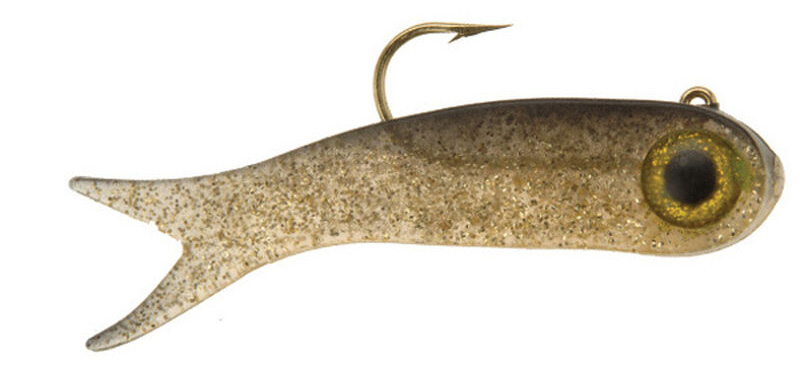
Berkley Gulp! Pogy Fishing Bait.
Swim Baits: Designed to realistically mimic the swimming motion of real baitfish with segmented bodies or paddle tails that generate natural undulation through the water. Best for targeting larger predatory fish that are keying on baitfish — bass, pike, muskie, and striper in freshwater; snook, redfish, and large inshore predators in saltwater. Match the size and color of the local baitfish for best results.
Jigs: The Bottom Dwellers
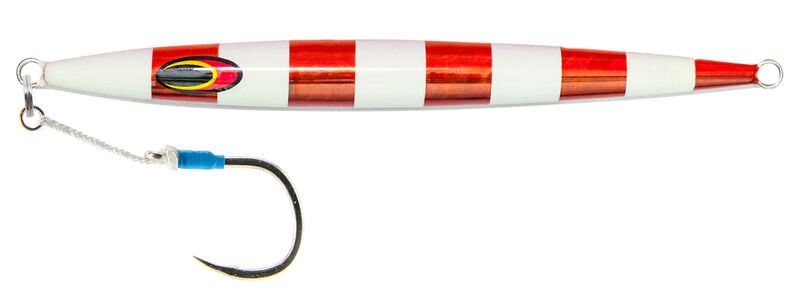
Nomad Design Streaker Bottom Jig.
Bottom Jigs: Heavy jigs designed to sink quickly and be bounced, hopped, or dragged along the bottom. The weight-forward design keeps the hook pointing up, reducing snags. Attract bottom-feeding species including walleye and bass in freshwater; flounder, grouper, and snapper in saltwater.
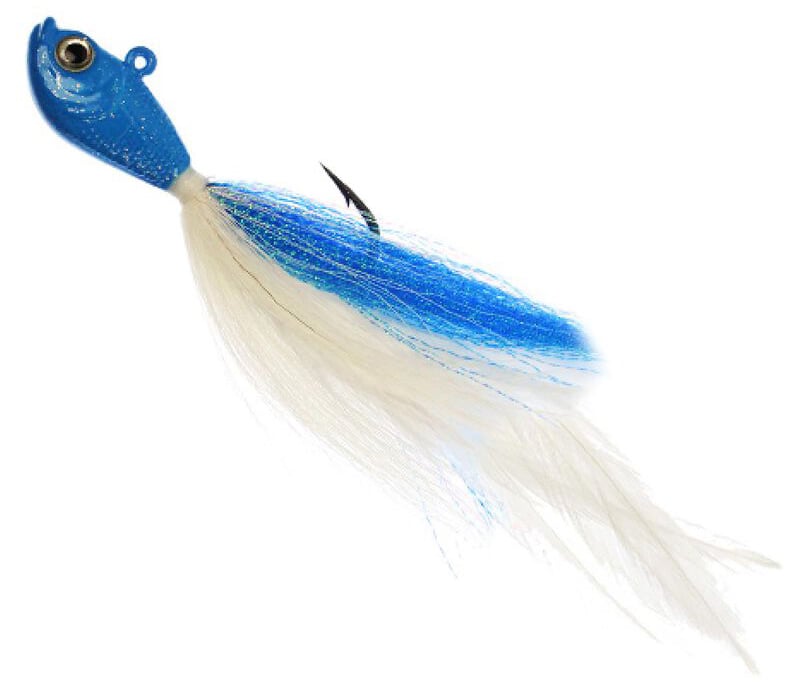
Pitbull Tackle UV Bucktail Jig.
Hair Jigs: Jigheads dressed with natural hair or synthetic fiber skirts that breathe and pulse with subtle water movement, creating lifelike action even on a slow presentation. Effective for bass, walleye, and crappie; larger bucktail jigs are a proven choice for striped bass, bluefish, and fluke in saltwater.
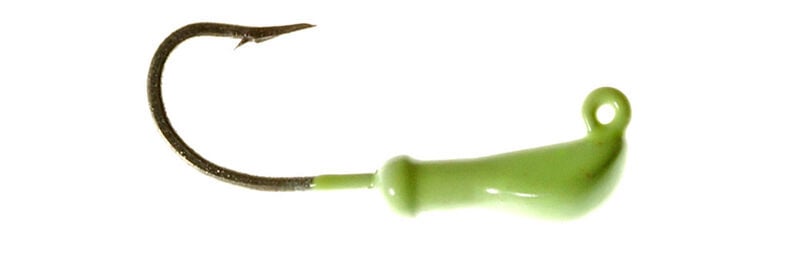
Hook Up Lures Light Tackle Series Jighead.
Jigheads: The weighted hook that pairs with soft plastic baits to create a complete jig. Jighead weight determines sink rate and depth — lighter heads (1/32–1/8 oz) for finesse fishing shallow water, heavier heads (1/4–1 oz) for deeper water and stronger current. Versatile for bass, crappie, panfish, and inshore saltwater species.
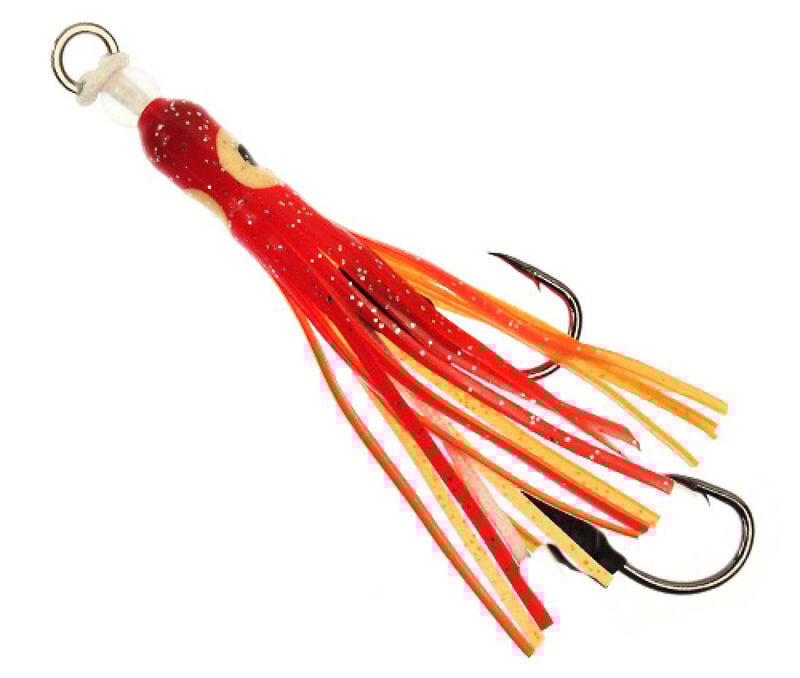
Pitbull Tackle Hot Drop Jig.
Skirted Jigs: Jigs with rubber or silicone skirts that flare and contract with each rod movement, creating a breathing action that triggers reaction strikes. The most widely used jig style for largemouth and smallmouth bass. Effective flipped into heavy cover, swam through grass edges, or dragged along rocky bottom structure. Often paired with a soft plastic trailer for additional action.
Offshore Trolling Lures: The Big Game
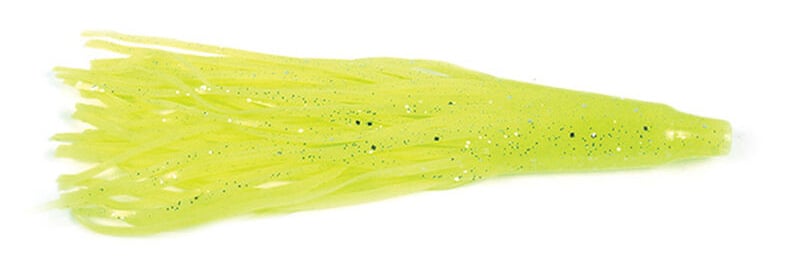
Billfisher Tuna Tail Skirt.
Bait Skirts: Colorful mylar and vinyl skirts placed over natural bait or lures to add visual appeal, color, and water action. A staple of offshore trolling spreads for tuna, marlin, and sailfish. Match skirt color to sea conditions — darker colors on overcast days, brighter colors in clear blue water.
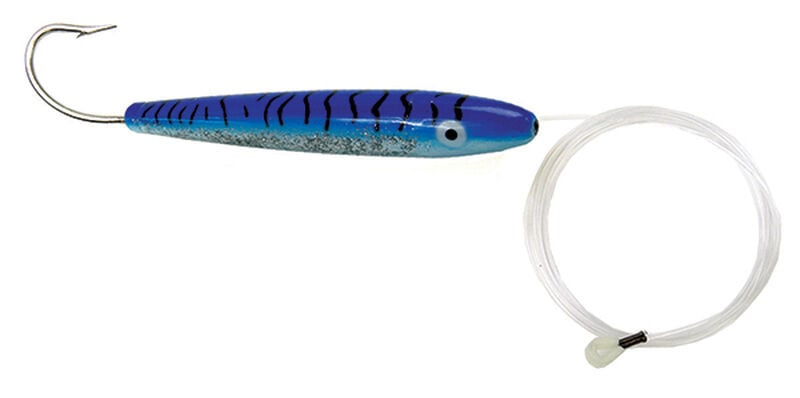
Sea Striker Rigged Cedar Plug.
Cedar Plugs: One of the oldest and most effective offshore trolling lures. Simple tapered wooden cylinders that skip and dart erratically on the surface when trolled at speed. Proven producers for tuna, wahoo, and marlin. Fished on the flat line or short rigger close to the transom wash.
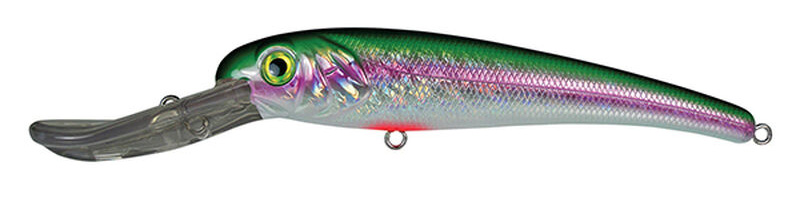
Mann’s Textured Stretch™ 30+ Fishing Lure.
Trolling Hardbaits: Durable hard-bodied lures designed for sustained trolling at various speeds and depths. Long-billed designs reach significant depth on the troll and are effective for a wide range of offshore species including tuna, marlin, and mahi-mahi. The rigid construction withstands repeated strikes from large, toothy fish.
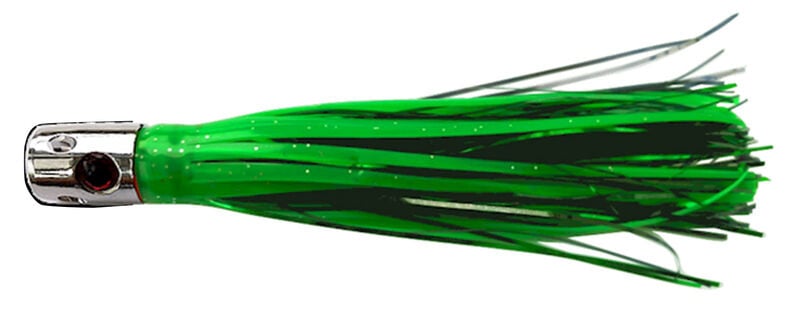
Tormenter Tackle Mahi/Tuna Jet Chain Trolling Rig.
Trolling Jigs: Heavy weighted lures designed for deep-water trolling below the thermocline, targeting bottom-oriented species. Effective for grouper, snapper, and kingfish when trolled slowly near deep structure and reef edges.
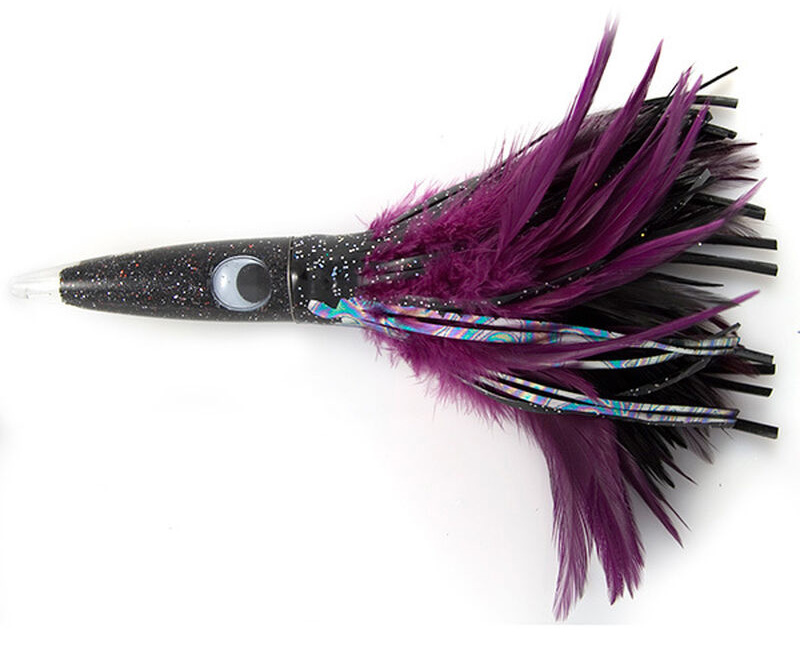
C&H Lures Wahoo Whacker Feather Fishing Lure.
Trolling Lures: The broad category of offshore lures designed specifically for trolling, spanning soft-head lures, feathers, and combination designs. Different head shapes — cup-faced, bullet, and pusher styles — create different surface action from running flat on the surface to skipping to diving below the prop wash. Effective for tuna, marlin, and mahi-mahi.
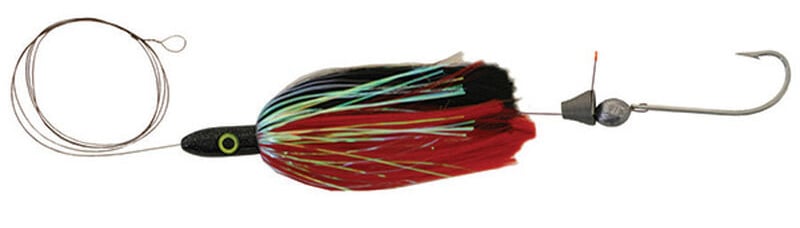
Blue Water Candy Rigged Jag.
Trolling Rigs: Pre-rigged multi-lure or multi-bait setups ready to clip onto your leader and deploy. Saves rigging time offshore and ensures correct leader length and hook placement. Used for marlin, tuna, and wahoo. Especially valuable when multiple lines need to be set quickly after a school is sighted.
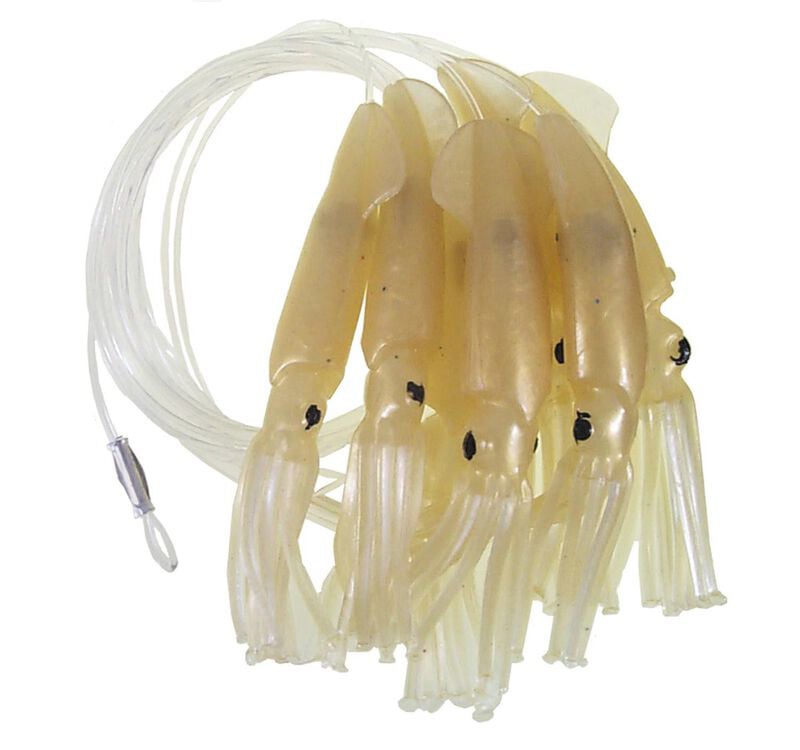
Mold Craft Squid Daisy Chain.
Trolling Squid Teasers: Chains of squid-shaped lures trolled as attractors rather than hook-baits, simulating a school of fleeing squid on the surface. The visual commotion draws pelagic fish into the spread from distance. Used for tuna, marlin, and mahi-mahi — often fished as a teaser ahead of a pitched live bait or rigged ballyhoo.
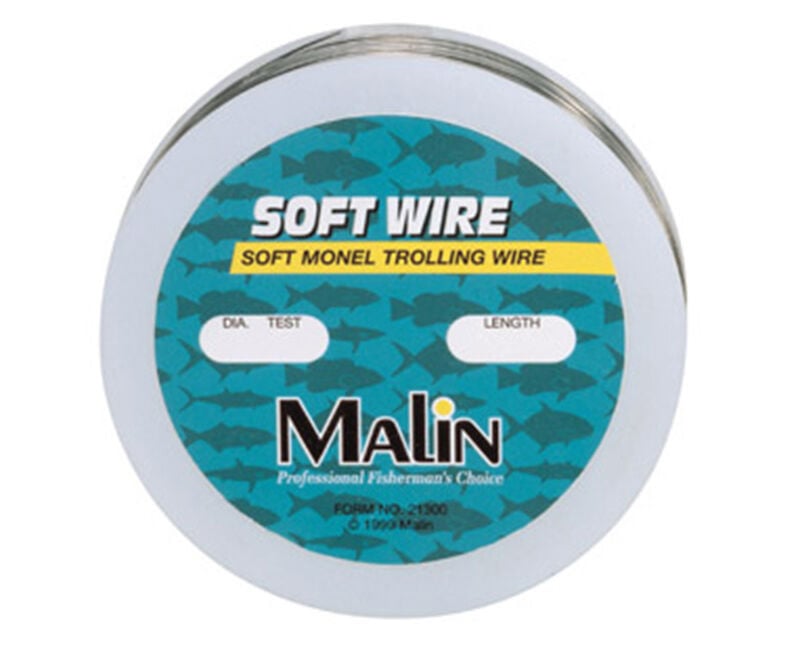
Malin Soft Monel Trolling Wire Roll.
Trolling Wire: Stainless or monel wire used for deep trolling applications or as bite-resistant leader material for sharp-toothed species. Monel is more flexible and kink-resistant than stainless. Used primarily for targeting tuna, wahoo, and mackerel at depth or preventing bite-offs on high-speed trolling presentations.
Dodgers and Flashers: Attention Getters
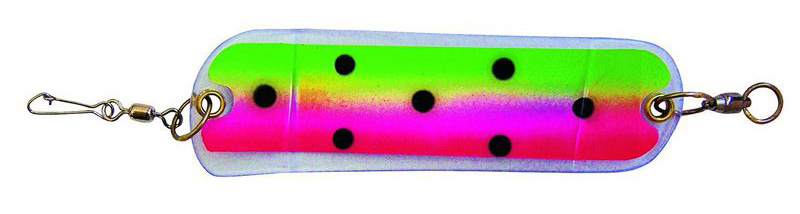
Hot Spot Lures Great Lakes Series A Original Flasher.
Flashers: Large reflective attractors trolled ahead of a lure or fly to mimic a school of baitfish through flash and vibration. The lure or hoochie fly follows behind the flasher on a short leader — typically 18–24 inches — and the flasher’s rotation imparts additional action to the trailing lure. Essential for Great Lakes salmon trolling, Pacific salmon, and lake trout. Dodgers are similar but have a side-to-side swing action rather than a full rotation.
Fish Attractants: The Extras
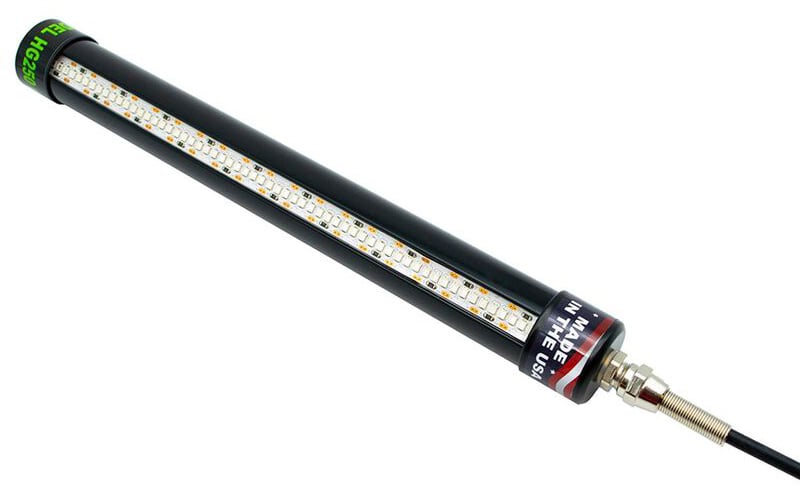
Hydro Glow 10” LED Fishing Light.
Bait Lights: Submersible LED lights that attract plankton, which draws baitfish, which in turn draws larger predatory fish to the boat. Highly effective for night fishing from a dock, pier, or anchored vessel. Particularly productive for squid, swordfish, and tuna at night in offshore waters.
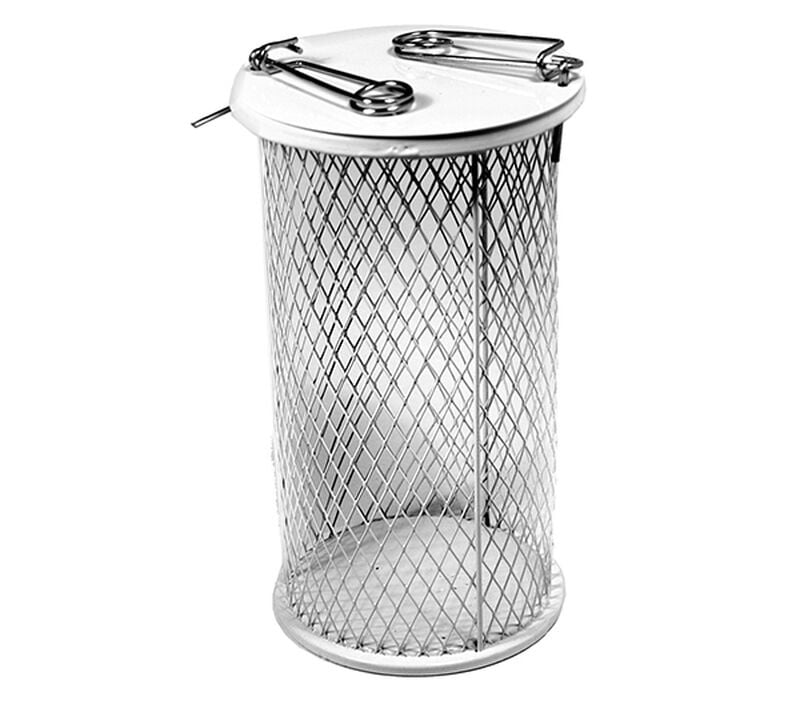
Eagle Claw 1 Quart Metal Chum Pot.
Chum Bags & Pots: Containers that disperse chum — ground fish, fish parts, or menhaden oil — slowly into the current to create a scent trail that brings fish to the boat. The chum slick works downwind and downcurrent from your position, attracting fish from a wide area. Highly effective for sharks, snapper, and grouper; also widely used for bluefin and yellowfin tuna offshore.
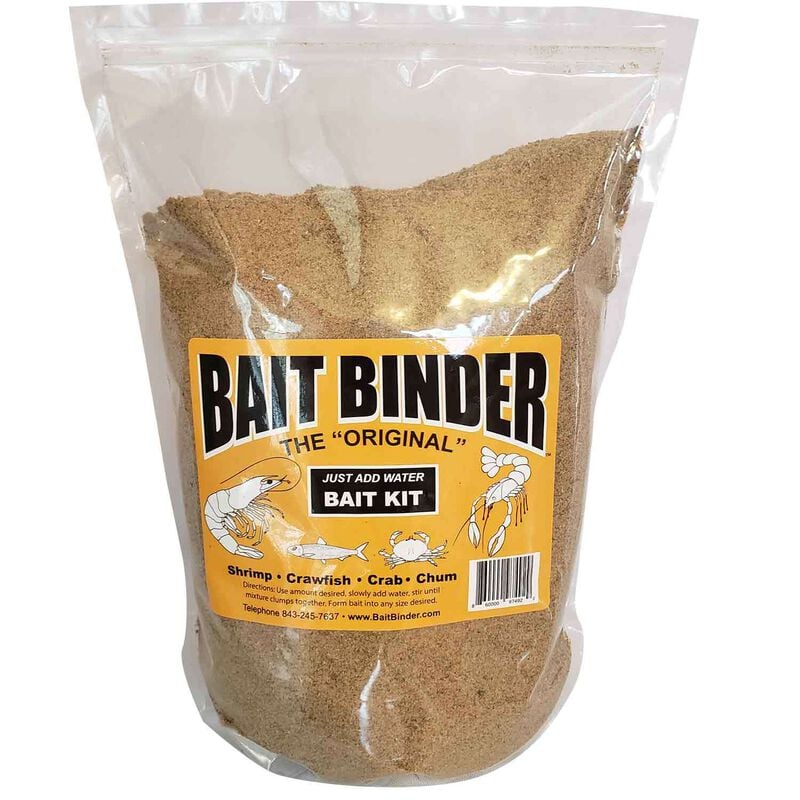
Bait Binder Original Chum Kit.
Scented Bait: Artificial baits and attractant formulas infused with fish, shrimp, crawfish, or garlic scents that trigger the predatory feeding response through smell as well as sight and movement. Particularly effective in low-visibility water where fish rely more heavily on scent. Used for bass, catfish, and trout; scented soft plastics like Berkley Gulp! are designed to dissolve in water and create an ongoing scent trail.
Ready to cast your line? Armed with the right lures and baits, you’ll be reeling in your best catch yet. Tight lines!
We’re Here to Help
West Marine is the perfect place to get ready for your next fishing trip. From the latest in fishing reels to free line spooling and locally assorted tackle in most of our stores, we have the expertise you need. Find your nearest store.
Related Articles
- Overview of Deep Sea Fishing Gear
- Organize Your Tackle
- Selecting Fishing Line
- Our 4 Best Selling Fishing Line and Leaders
- How to Tie 3 Essential Fishing Knots
- Interview with Steve Rodger and Scott Walker
Frequently Asked Questions
What is the difference between a crankbait and a swimbait?
A crankbait is a hard-bodied lure with a diving bill that determines its running depth and creates a tight wobbling action on a steady retrieve. A swimbait is a soft or segmented hard-bodied lure designed to closely replicate the undulating swimming motion of a real fish, often without a bill. Crankbaits cover water quickly and are designed for reaction strikes; swimbaits are generally fished more slowly and are particularly effective on fish that have been pressured by other lure types.
When should I use a topwater lure vs. a subsurface lure?
Topwater lures are most effective in low-light conditions — dawn, dusk, and overcast days — when fish are more likely to be feeding aggressively near the surface. They’re also productive over shallow grass flats, around dock pilings, and in any situation where bass, pike, or inshore predators are visibly surface-feeding. When fish are deeper, suspended, or less active, switch to a crankbait, soft plastic, or jig that reaches their depth. As a general rule: start topwater in the morning, switch to subsurface as the sun gets high.
What lures work for both freshwater and saltwater fishing?
Several lure types cross over effectively. Soft plastic swimbaits, creature baits, and grubs work for bass in fresh water and redfish, snook, and flounder in salt. Spoon baits produce trout and salmon in fresh water and bluefish, mackerel, and barracuda in salt. Skirted jigs and bucktails are equally at home in both environments. The main adjustment is lure size — saltwater species generally require larger presentations — and hardware quality, since saltwater demands corrosion-resistant hooks and split rings.
What is the difference between a dodger and a flasher?
Both are large reflective attractor devices trolled ahead of a lure for salmon, lake trout, and similar species. A flasher rotates in a full 360-degree spin, creating an ongoing flash and thump. A dodger swings side to side without rotating, creating a more subtle wobble. Flashers impart more action to the trailing lure through the force of their rotation; dodgers are used when a less aggressive presentation is needed, particularly for kokanee salmon and in lighter-current conditions. The trailing lure is fished on a short leader (18–24 inches) behind either attractor.