West Marine’s inflatable boats include top-quality, US-made Halkey Roberts air valves that are designed for reliable inflation, secure air retention and long-term durability in demanding marine environments. These valves are widely used throughout the inflatable boating industry because they are simple to operate, highly serviceable and capable of maintaining consistent air pressure in changing temperatures and water conditions. However, many first-time inflatable boat owners are unfamiliar with how the valve locking system works, which can create confusion during inflation and deflation.

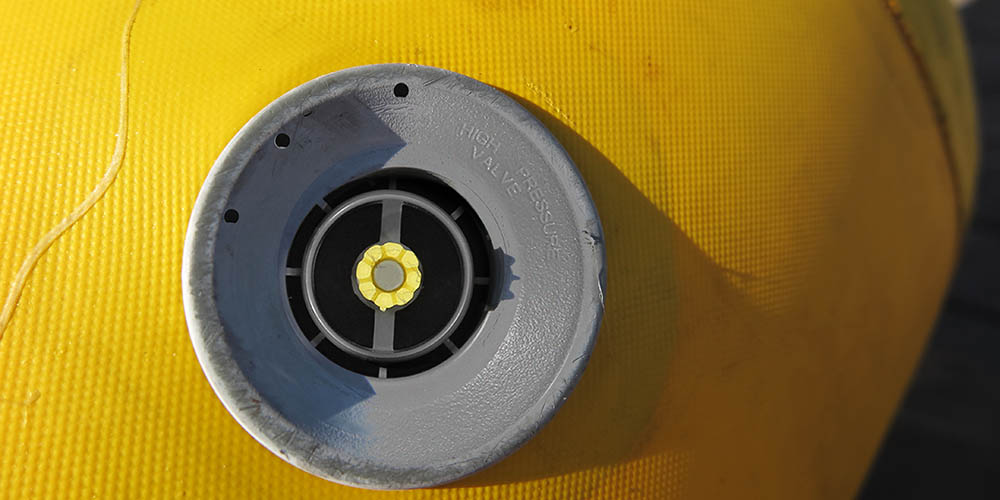
Push in and twist with your finger to make spring-loaded valve stem pop from the open position (top) to the closed position (bottom) and then you can add air. To deflate, just push in and twist until the valve locks in the open position.
One of the most common inflatable boat issues reported by owners is air escaping immediately after removing the pump hose from the valve. Many people assume the valve is defective, leaking or damaged because they hear air rushing out and struggle to fully inflate the boat before replacing the valve cap. In reality, the problem is usually caused by the valve pin being left in the open position during inflation.
When the pushpin is accidentally locked down, the valve remains open and allows air to escape freely from the chamber. This can make the boat feel soft even after inflation and may lead owners to incorrectly believe the inflatable tube has a puncture or slow leak. Understanding how the valve positions work is the key to properly inflating, deflating and maintaining air pressure inside the inflatable boat.
Inflatable boats naturally experience small pressure changes throughout the day as outside temperatures rise and fall. Tubes that feel firm in cool morning temperatures may feel softer later in the evening as air contracts, while boats left in direct sunlight can experience significant pressure increases during hot weather. This is normal and does not necessarily indicate a leaking valve or damaged chamber. Proper inflation pressure and valve operation help maintain safe performance while reducing unnecessary stress on the inflatable seams and internal air chambers.
How Halkey Roberts Valves Work
The Halkey Roberts valve uses a spring-loaded pushpin mechanism with two operating positions: open and closed. When the pushpin is pressed down and locked into the lower position, the valve remains open and allows air to freely escape from the inflatable chamber. This setting is used intentionally when deflating the boat for storage, transport or cleaning.
When the pushpin is pressed and rotated again, it pops back into the raised position. In the raised or “popped up” position, the valve automatically seals itself once the air pump hose is removed. This is the correct position for inflating and operating the inflatable boat because it prevents air from escaping through the valve opening.
Before inserting the air pump hose into the valve, always check that the pushpin is in the raised position. Once the pin is properly set, connect the air pump and inflate the chamber gradually until the tube becomes firm and reaches the manufacturer’s recommended pressure. Most inflatable boats perform best when inflated evenly across all chambers rather than fully inflating one chamber at a time before moving to the next.
After removing the pump hose, the valve should immediately seal and prevent noticeable air loss. The valve cap itself primarily protects the valve from dirt, sand, salt and accidental contact; the actual air seal is created internally by the valve mechanism. If significant air continues escaping after inflation, double-check that the pushpin is fully raised and not partially locked in the open position.
To deflate the boat, press down on the pushpin and rotate it until it locks into the lowered position. Once locked open, air will begin escaping immediately from the inflatable chamber. This allows the boat to deflate much faster for storage, transport or offseason maintenance.
Sand, salt crystals and debris can sometimes interfere with valve sealing if they accumulate around the valve housing or internal gasket surfaces. After boating in saltwater or sandy environments, rinse the valve area with fresh water and inspect for contamination that could prevent the valve from sealing properly. Periodic cleaning helps extend valve life and maintain consistent inflation performance throughout the boating season.
It is also important to periodically inspect the valve body itself for looseness. Over time, repeated inflation cycles, vibration and temperature changes may slightly loosen the valve assembly inside the inflatable tube. Many Halkey Roberts valves can be carefully tightened using a compatible valve wrench designed for inflatable boat maintenance. Tightening should only be done carefully to avoid damaging the valve housing or inflatable material.
Overinflation can place unnecessary stress on inflatable seams, chambers and valve assemblies, especially during hot weather. Boats inflated in cool morning temperatures may experience significant pressure increases after sitting in direct sunlight for several hours. If tubes become excessively hard during the day, slightly reducing pressure may help prevent unnecessary strain on the inflatable structure.
Most inflatable boats slowly lose a small amount of air pressure over time through normal air permeation, especially during large temperature swings. Minor pressure loss overnight does not automatically indicate a damaged valve or leaking tube. However, if a chamber rapidly loses firmness within a short period, inspect the valve position, valve tightness and surrounding chamber area for leaks or punctures before assuming the inflatable material itself has failed.