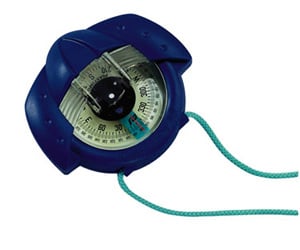
The Plastimo Iris 50 is a hockey puck style hand bearing compass with good reviews from our customers.
What Hand Bearing Compasses are Used For
A hand bearing compass is used to measure the magnetic direction of sighted objects relative to the user. While a steering compass helps determine where the boat is heading, a hand bearing compass helps determine where the boat is located relative to landmarks, navigational aids and surrounding traffic. These compact navigation tools remain valuable because they do not rely on electrical power, cellular reception or satellite signals to operate.
Even with modern GPS chartplotters and multifunction displays onboard, many experienced mariners still carry a hand bearing compass as a backup navigation instrument. Electronics can lose power, GPS signals may become unreliable in severe weather or remote locations, and paper chart navigation remains an important seamanship skill for offshore boating, passagemaking and emergency preparedness.
Hand bearing compasses are commonly used for coastal navigation, taking visual bearings, determining relative vessel movement, identifying navigational landmarks and improving situational awareness in reduced visibility. Racing sailors also use them to compare headings, monitor wind shifts and determine whether competing boats are gaining or losing position on the same tack or gybe.
Unlike a GPS receiver that performs many of these functions electronically, a hand bearing compass works instantly without batteries and provides immediate directional awareness in nearly any operating condition. For many boaters, it remains one of the simplest and most reliable backup navigation tools to keep onboard.
How Hand Bearing Compasses Work
A hand bearing compass allows you to take bearings of distant objects, which you can then transfer to a paper chart to create plot lines. Taking bearings of at least two objects that are 45 or more degrees apart results in intersecting lines on the chart, giving a position fix. To improve accuracy, we recommend taking bearings of three different objects and several sightings of each one and taking an average of the readings.
Position fixing with a hand bearing compass is one of the oldest and most dependable coastal navigation techniques still used today. Common landmarks for taking bearings include channel markers, lighthouses, towers, bridges, shoreline points and prominent buildings. By plotting multiple bearings onto a chart, mariners can estimate their location even if electronic navigation systems become unavailable.
Accuracy depends heavily on taking smooth, consistent readings while minimizing boat motion and visual error. Rough seas, fast movement, poor visibility and unstable footing can all affect the quality of the bearing. Many experienced navigators take several readings in succession and average the results to improve overall accuracy.
Different Styles
We offer several different hand bearing compasses, either in "hockey puck style" or with pistol grips. High-end binoculars also come with bearing compasses, and many boaters prefer a good set of binoculars over a hand bearing compass because they combine magnification and directional readings into one tool.
Pistol-grip compasses are generally designed to be held at arm’s length while sighting objects through alignment notches or sighting vanes. These models are often lightweight and straightforward to use, but they can become difficult to stabilize in rough water or high wind conditions.
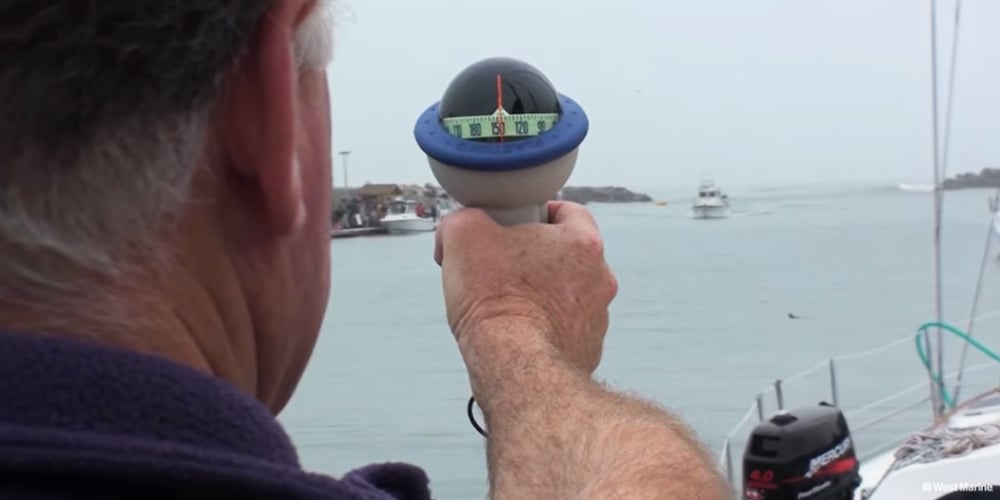
Hockey puck style compasses are especially popular among sailors and offshore boaters because they are compact, durable and easy to carry on a lanyard. Many use an infinity prism system that allows the user to simultaneously view the distant object and the bearing reading without shifting focus. This makes them much easier to use accurately while the boat is moving.
Some premium marine binoculars also feature illuminated bearing compasses and rangefinding reticles, allowing mariners to identify traffic, navigational aids and distant landmarks while simultaneously monitoring bearings. These systems are commonly used offshore where visibility distances are much greater than in protected inland waterways.
How to Take a Bearing
To use an arm's-length compass (usually with a pistol grip), put the lanyard around your neck to stabilize the unit. Hold the compass at eye level, then line up the V-notches in the sighting vanes on the top of the compass with the desired object; now check the bearing on the compass card. If this sounds like juggling while walking across the street, you feel the same way we do. It can be tough to keep compass and sights lined up and checking some small numbers all at the same time. Add to that the motion of a boat in a seaway and poor visibility and you face long odds of taking an accurate bearing.
One of the most common mistakes when taking bearings is focusing too heavily on the compass card instead of maintaining a stable sightline on the target object. Small movements of the boat can quickly change the reading, especially in rough conditions. Keeping your stance stable and bracing against part of the boat often improves accuracy significantly.
For the most reliable readings, take bearings from a location away from large metal objects, speakers, radios, tools or electronics that could interfere with the compass. Magnetic interference can distort readings and reduce accuracy, especially on smaller boats where electronics and metal hardware are close together.
A better choice is a hockey puck style compass with an infinity prism that is held up to your cheek, and lets you sight across the top of a small prism. When you are focusing on the object in the distance, the prism projects the bearing into your field of vision so you don't have to shift your eyes. Object and bearing are in focus at the same time, which is a tremendous asset for taking accurate bearings in rough conditions.
This style of compass is especially helpful offshore where wave motion can make traditional arm’s-length sighting difficult. Because the compass is stabilized against your face instead of being held at full arm extension, many users find it significantly easier to maintain a steady sight picture and produce repeatable readings.
Operating a digital compass is very much like taking a snapshot. You use the unit's aiming system to take the sight, then press a button. The compass stores the bearing in electronic memory for future recall. Digital systems can simplify repetitive bearing tracking, but traditional magnetic compasses remain preferred by many mariners because they require no batteries or charging systems.
Avoiding a Collision
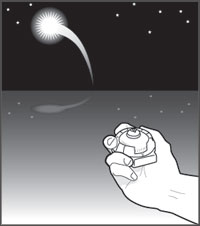
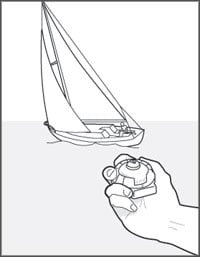
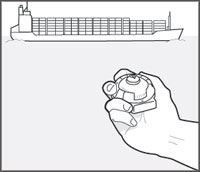
Take a bearing upon first sighting another approaching vessel, like a ship. Take a second bearing a few minutes later and repeat at regular intervals. If the approaching ship's bearing remains the same, you are at risk of a collision. If their bearing has changed, rotate so you are sighting along the original bearing. If you're now looking at the water in front of the ship, you'll pass ahead of it. Sighting behind the vessel means it will pass ahead of you.
This technique is one of the simplest traditional methods for evaluating collision risk on the water and remains highly effective even without radar or AIS systems. A constant bearing with decreasing distance is a classic indicator of a potential collision course. Mariners operating in fog, offshore shipping lanes or heavy traffic areas often use repeated bearing checks to monitor surrounding vessel movement.
While modern radar, AIS and chartplotters provide additional situational awareness, understanding how to monitor vessel movement manually remains an important navigation skill. Hand bearing compasses provide immediate directional awareness without depending on electronics or screen visibility.
What to Look For when Choosing a Hand Bearing Compass
- Compactness: We really like the models that are comfortable to wear around your neck on a lanyard and fit easily in a pocket, so you can keep them nearby. Compact compasses are easier to carry during sailing, kayaking, dinghy use and offshore passagemaking where quick access matters.
- Night Lighting: Like other navigation instruments, bearing compasses should have night-lights. Some use small battery-powered lamps. Others have glow-in-the-dark lighting which uses small quantities of photosensitive or radioactive gas. We like this type best because it is ready at a moment's notice and never needs charging or new batteries.
- Accuracy: A precisely graduated card and excellent damping are critical for obtaining accurate sights. On a moving boat, most people can get a bearing accurate to 2-3 degrees using a well-damped, infinity prism compass that is held near the cheek. In a seaway, pistol grip compasses that are held at arm's-length are probably accurate to about 10 degrees. Sources of error that affect the quality of your bearing include inaccurate aiming, violent motion, steel-rimmed glasses and bad visibility.
- Waterproof Construction: Hand bearing compasses are frequently exposed to spray, rain and wet conditions, especially offshore. Waterproof construction and floating capability help protect the compass if dropped overboard or used in rough weather.
- Damping Quality: A well-damped compass settles quickly after movement, making bearings easier to read on a moving boat. Poor damping can cause the compass card to oscillate excessively, slowing down sighting and reducing accuracy.
- Ease of Use: A compass that is comfortable to hold and easy to read often produces better results than one with overly complicated controls or difficult viewing angles. Simpler operation becomes especially important during rough weather, low visibility or emergency navigation situations.