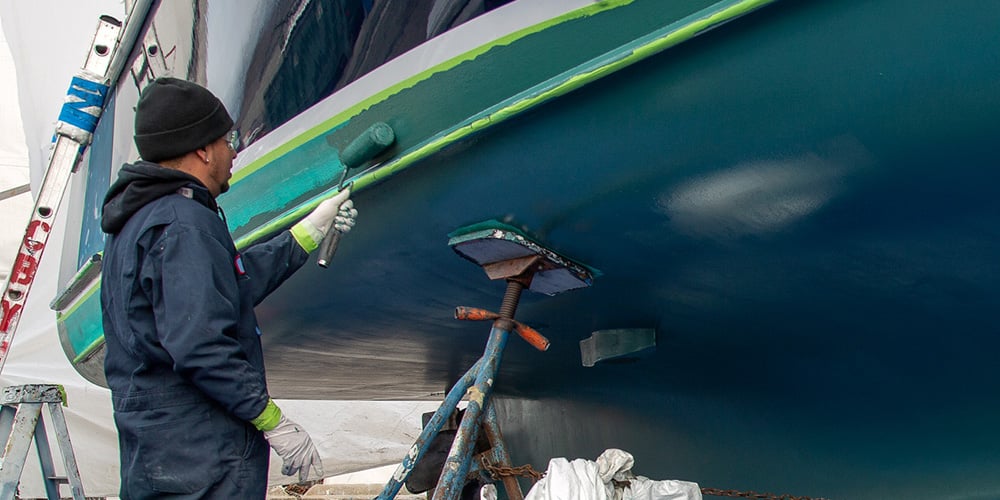
Whether you’re painting your boat for the first time or refreshing antifouling paint before the next boating season, proper planning and preparation make a major difference in how well your bottom paint performs. A quality bottom paint job not only helps protect your hull from marine growth, but also improves fuel efficiency, preserves boat performance and reduces long-term maintenance costs.
Bottom paint projects involve more than simply rolling paint onto the hull. Choosing the correct antifouling system, understanding paint compatibility, preparing the hull correctly and applying paint under the right weather conditions all directly affect durability and performance. The right process can help your paint last multiple seasons, while shortcuts often lead to premature failure, excessive fouling or expensive repainting work.
From calculating exactly how much paint you need to understanding the differences between ablative, hard modified epoxy and water-based antifouling paints, we’ll walk you through the entire process so you can complete the job confidently and get your boat back on the water with a properly protected hull.
Get Your Boat Out In Time
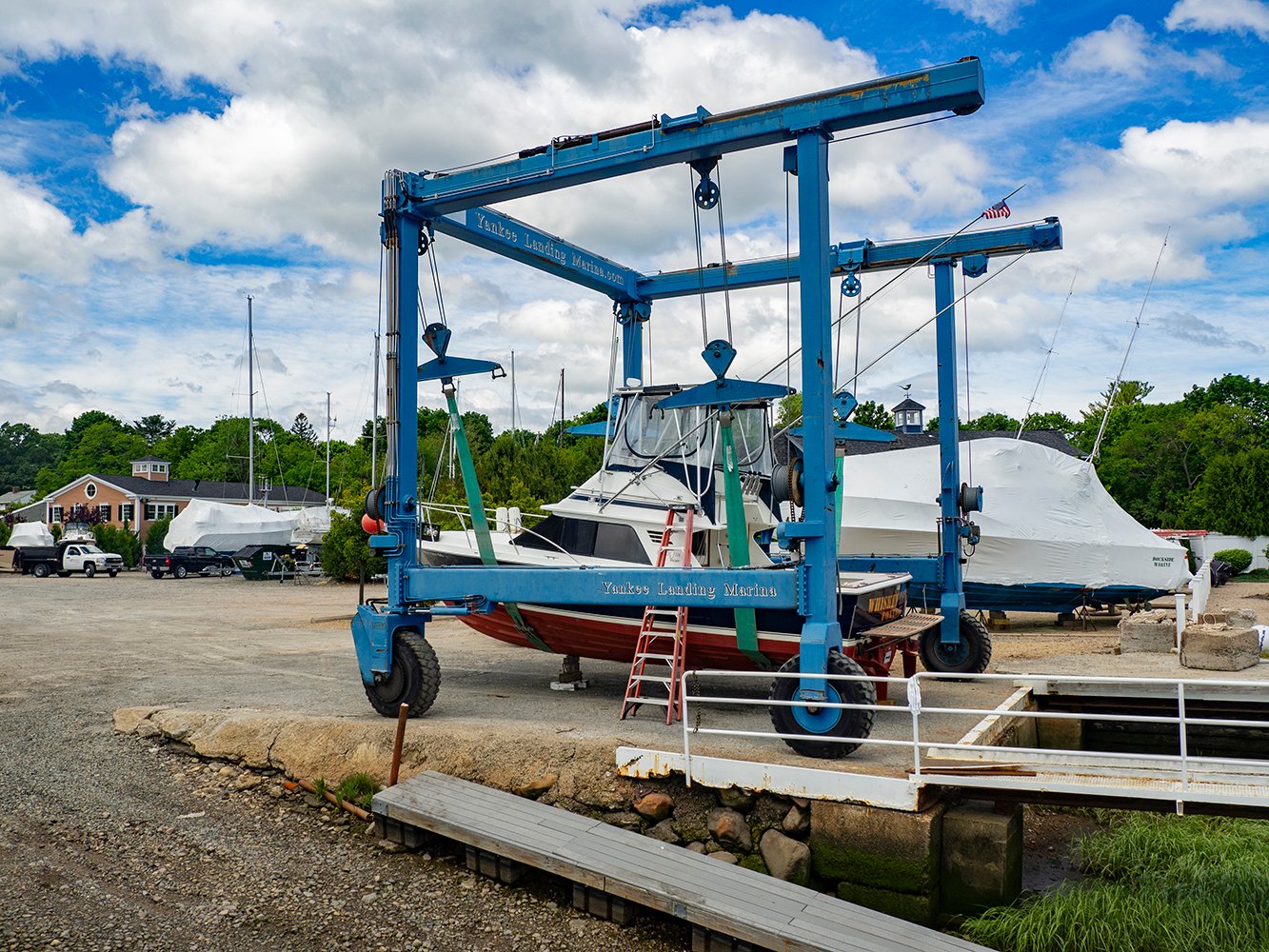
If you store your boat in a marina or harbor, the first step is scheduling a haul out with the boatyard. During spring commissioning season, yard schedules fill quickly, so book your haul out as early as possible. Delays can shorten your available work window and force you into poor weather conditions or rushed application schedules.
Once your boat is blocked and supported on stands, leave stand repositioning to trained yard personnel. Attempting to move stands or adjust blocking without proper equipment is dangerous and can result in hull damage, personal injury or instability while working beneath the boat.
If you own a trailerable boat, trailer lifts are an excellent alternative because they allow you to safely raise the hull above the bunks or rollers while the boat remains secured to the trailer. This creates enough access to prep and paint much of the hull without requiring a full yard haul out.
Why Haul Out Timing Matters
Bottom paint jobs often take longer than expected because prep work usually uncovers additional sanding, blister repair, loose paint removal or compatibility issues. Scheduling extra time reduces pressure and gives you flexibility if weather conditions become unfavorable during the project.
Planning ahead also ensures you have time to allow proper drying, curing and relaunch windows recommended by the paint manufacturer.
Be Ready when the Weather is Right
Temperature, humidity and wind all affect bottom paint performance. Most paint manufacturers publish minimum and maximum application temperatures along with humidity recommendations directly on the can or technical data sheet. Following these recommendations is critical for proper curing, adhesion and long-term antifouling effectiveness.
If you do not have access to a climate-controlled shed, monitor local forecasts and plan your project around stable weather. Try to avoid painting during extremely humid days, high winds, direct blazing sun or rapidly dropping evening temperatures.
Rushing a paint job during poor conditions often leads to uneven coverage, improper curing, poor adhesion and shorter paint life. Waiting for the right conditions almost always produces better results and longer-lasting antifouling protection.
How Weather Affects Bottom Paint
Cold weather can slow curing dramatically and may prevent some paints from bonding correctly. Excessive heat can cause paint to flash dry too quickly, creating roller marks and inconsistent film thickness.
Humidity is especially important because moisture trapped during curing can affect adhesion and surface finish. Wind also creates problems by blowing contaminants into wet paint and increasing solvent evaporation too rapidly.
Choose the Right Bottom Paint
How often you use your boat, where you use it and how long it stays in the water are major factors in choosing the right marine paint. Different antifouling technologies are designed for different usage patterns, hull materials and water conditions.
The two most common antifouling paint categories are ablative paints and hard modified epoxy paints, although water-based and hybrid technologies are also increasingly popular.
Copolymer ablative paints slowly wear away during use, exposing fresh biocide continuously. These paints are excellent for trailerable boats because they tolerate extended out-of-water storage without losing effectiveness. They are also popular with seasonal boaters because there is no urgent relaunch deadline after painting.
Hard modified epoxy paints create a tougher, more durable surface that resists abrasion and repeated cleaning. Many long-distance cruisers and year-round slip-kept boats prefer hard paints because they tolerate higher speeds and aggressive underwater cleaning.
Water Based Bottom Paints offer lower odor, easier cleanup and reduced solvent exposure during application. They are becoming increasingly popular with DIY boaters looking for easier handling and reduced environmental impact.
Ablative vs. Hard Bottom Paint
Ablative paints continuously renew themselves as the boat moves through the water, helping reduce paint buildup over time. Hard paints remain largely intact and gradually accumulate thickness with repeated recoating.
For trailer boats, seasonal storage and moderate use, ablatives are often easier to maintain. For high-speed boats, racing applications or year-round mooring, hard paints may offer better durability.
Water-Based Bottom Paint Benefits
Water-based bottom paints are easier on the applicator because they produce fewer harsh fumes and simplify cleanup. They are especially attractive for DIY boaters working in enclosed yards or environmentally sensitive areas.
Modern water-based paints now provide performance that rivals many solvent-based systems while improving ease of use.
Know What Paint Is On Your Boat Already
Paint compatibility is critical. Some antifouling paints can react poorly when applied over incompatible coatings, causing adhesion problems, lifting, cracking or premature failure.
If possible, identify what bottom paint is currently on your hull before selecting a new system. Many used boat listings include bottom paint history, but if records are unavailable, a simple inspection can help.
If paint rubs off easily onto your fingers when dry, it is likely an ablative paint. If little or no residue transfers, the hull probably has a hard modified epoxy paint.
There are three important compatibility rules:
- Make sure the old paint is firmly attached. Don’t apply fresh paint over loose or flaking coatings.
- Do not apply new paint over old coatings that contain slippery PTFE or vinyl additives without proper preparation.
- Do not apply hard modified epoxy paint directly over soft ablative paint without proper primers or barrier preparation.
Why Paint Compatibility Matters
Incompatible coatings can fail quickly, even if application technique is perfect. Some paints chemically soften underlying coatings while others fail to bond properly at all.
Using the manufacturer compatibility charts before painting can prevent expensive stripping and repainting later.
If you know what paint is already on your hull and have selected your new coating, refer to the manufacturer compatibility guides below:
West Marine Bottom Paint Guide
Figure Out How Much Paint You’ll Need
One of the most common DIY mistakes is underestimating how much bottom paint is required. Most antifouling systems require at least two full coats to provide adequate protection and film thickness.
The following chart provides a starting point for estimating paint quantities based on boat size and type.


