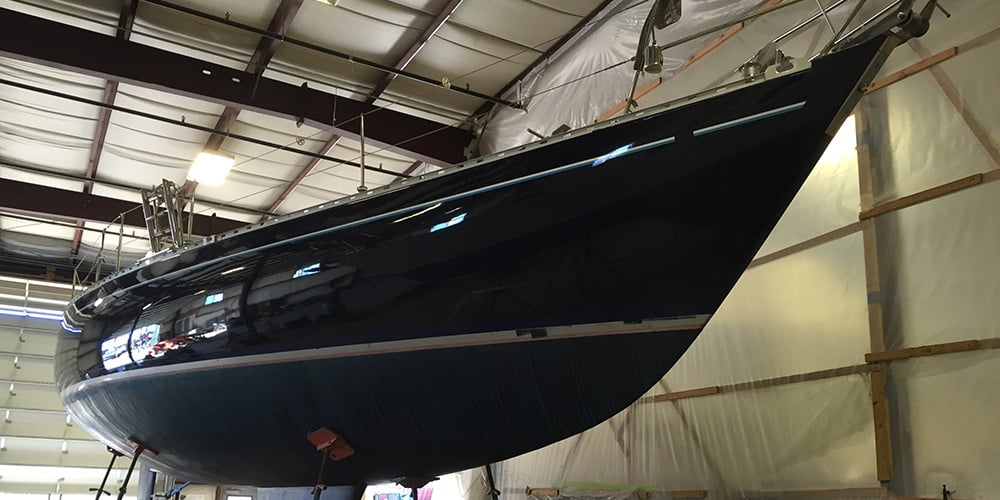
Painting a fiberglass boat is far more approachable than many boat owners expect. While achieving a professional-looking finish absolutely requires patience, planning and attention to detail, the actual techniques involved are well within reach for many DIY boaters. The difference between an average paint job and an exceptional one usually comes down to preparation, environmental control and understanding how marine coatings behave during application and curing.
A quality paint system does much more than improve appearance. Marine paint protects aging gelcoat from UV damage, moisture intrusion, oxidation, staining and long-term surface degradation. A properly painted fiberglass hull can dramatically improve the appearance, resale value and longevity of a boat while making ongoing maintenance easier.
Modern marine coatings have also evolved significantly. Today’s premium paints offer better durability, gloss retention, scratch resistance and UV protection than older marine enamels, while advances in foam roller application techniques now allow many boat owners to achieve surprisingly smooth finishes without professional spray equipment.
Before beginning your Epifanes painting project, be sure to watch the three-part instructional video on how to apply Epifanes two-part Poly-urethane using just a foam roller.
Why Fiberglass Boats Eventually Need Paint
Fiberglass-reinforced composite boats leave the factory protected by a glossy gelcoat layer that seals and shields the underlying fiberglass structure. Over time, however, exposure to UV radiation, saltwater, oxidation, abrasion and environmental contaminants slowly breaks down that gelcoat surface.
Initially, oxidation can often be corrected through compounding and polishing. But eventually the gelcoat becomes too thin, porous or weathered to restore effectively. When this happens, a properly applied marine paint system becomes the best long-term solution.
A professionally applied marine coating can restore depth, shine and protection while extending the useful life of aging fiberglass surfaces for many years.
When Polishing Is No Longer Enough
If the surface oxidizes rapidly after polishing, continues chalking heavily or shows widespread discoloration and porous texture, paint is often a better long-term investment than repeated restoration attempts.
Heavily weathered gelcoat may no longer hold gloss consistently and often benefits greatly from a complete coating system.
- Step 1: Preparation
- Step 2: Decide on One- or Two-Part Paint
- Step 3: Gather Your Tools
- Step 4: Double Check Your Surface Prep
- Step 5: Apply Primer
- Step 6: Choosing the Right Paint
- Step 7: Carefully Plan Your Painting Schedule
- Step 8: Be Ready for Setbacks
- Step 9: Enjoy Painting!
Step 1: Stunning Paint Jobs Start with Good Preparation
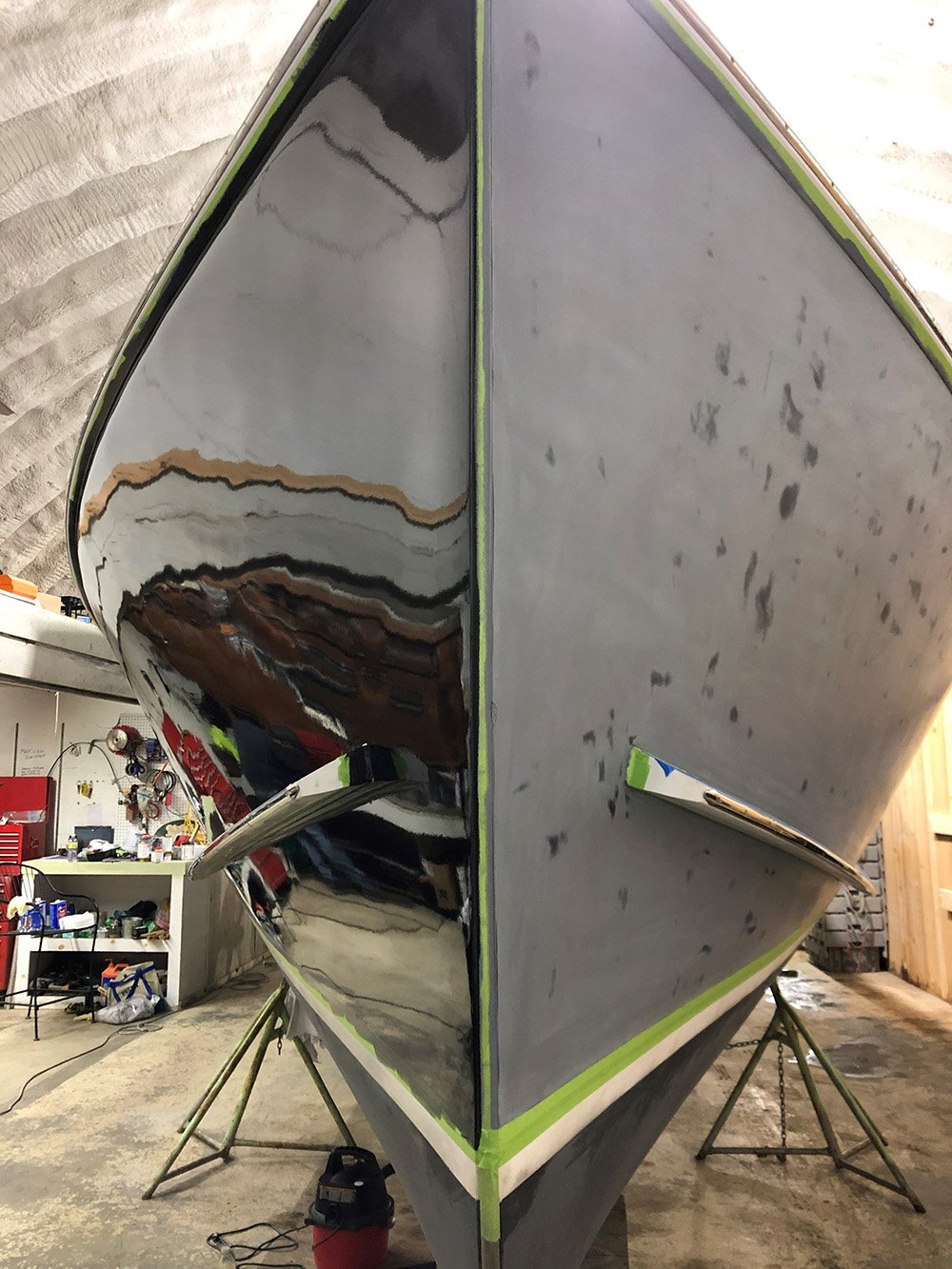
Preparation is the single most important factor in the success of any marine paint job. Clean and smooth should become your entire focus during this stage. Any contamination, leftover wax, sanding scratch, grease spot, silicone residue or poorly faired repair can become highly visible once glossy paint is applied.
Proper prep work also directly affects adhesion. Marine coatings bond best to clean, mechanically abraded surfaces free from oxidation and contaminants.
First, clean the fiberglass thoroughly using warm water and ammonia. Then clean it again using Epifanes Fiberglass Prep Cleaner to remove waxes, oils, silicones and residue that can ruin paint adhesion.
Next, sand the gelcoat surface thoroughly using 180–220 grit sandpaper. Sand evenly and consistently across the entire area being painted. After sanding, clean the surface again using Prep Cleaner.
Now is the ideal time to repair blisters, cracks, chips and scratches. Smaller imperfections can be filled with Epifanes Fiberglass Filler, while larger voids and structural repairs may require Epifanes Epoxy Filler 1500.
Important: apply primer to repaired areas as soon as filler cures to seal moisture out of the repair.
Why Surface Prep Takes So Long
Many first-time painters underestimate how much time surface preparation actually requires. Sanding, cleaning, masking, fairing and inspecting surfaces often consume far more time than the painting itself.
However, paint only magnifies imperfections. Thorough prep work is what separates smooth professional-looking finishes from disappointing results.
Temperature and Humidity Matter Early
Environmental conditions affect more than just paint application. High humidity during preparation stages can introduce moisture contamination into fillers, primers and sanded fiberglass surfaces.
Whenever possible, work in stable temperature conditions with controlled humidity and good ventilation.
Time Out: Has Your Boat Been Painted Before?
If you’re working with the original factory gelcoat surface that has never been repainted, you can generally choose either one-part or two-part paint systems. However, previously painted boats require additional evaluation because paint compatibility matters significantly.
Using incompatible coating systems can lead to lifting, wrinkling, adhesion failure and expensive rework later.
Step 2: Decide on One- or Two-Part Paint
If your boat has been painted previously and you want to use two-part Epifanes Poly-urethane, you must determine whether the existing finish is one-part or two-part paint.
To test the existing surface, saturate a lint-free cloth with acetone and place it on the painted area for approximately 10 minutes.
- If the surface wrinkles or softens, it is likely one-component paint.
- If the finish remains stable, it is likely two-component paint.
One-component paints can generally only be recoated with compatible one-component systems, while two-component paints offer greater flexibility.
Benefits of One-Part Marine Paint
One-part paints such as Epifanes Mono-urethane and Yacht Enamel are easier to apply and more forgiving under varying environmental conditions.
They flow beautifully, are simpler to touch up and remain excellent choices for many recreational boat owners.
Benefits of Two-Part Polyurethane Paint
Two-part polyurethane paints provide superior hardness, gloss retention, UV resistance and abrasion durability. However, they are less forgiving and require tighter control over temperature, humidity and application technique.
These systems cure through chemical catalyzation rather than simple air drying.
When to Choose One-Part vs. Two-Part Paint
- Choose one-part paint if: You want easier application, easier touch-up and broader working conditions.
- Choose two-part paint if: You prioritize maximum durability, long-term gloss retention and professional-grade finish quality.
Two-part poly-urethane should preferably be applied indoors with temperatures between 54°F and 77°F and humidity below 70 percent whenever possible.
Step 3: Gather Your Tools
Once you’ve selected your coating system and color, carefully estimate the amount of material required. Running out of paint mid-project can create color consistency problems and delay application schedules.
Hull Above the Waterline
2 x (length overall + beam) x freeboard
Superstructure
Total height + 2x length overall + 2x beam minus window sections
Decks
0.75 x total length overall x beam minus super structure
Always calculate an additional 10–15% material beyond estimated coverage rates to account for application method, waste and surface absorption.
Check batch numbers carefully. Mixing batches together before use helps ensure color consistency across the entire project.
Shopping List
- Brushes
- Rollers
- Masking tape
- Sandpaper
- Disposable gloves
- Respirator
- Safety glasses
- The correct Epifanes cleaners and thinners
High-quality tools directly affect final finish quality. Cheap rollers, poor-quality brushes and contaminated solvents often create unnecessary application problems.
Why Foam Rollers Work So Well
Modern high-density foam rollers can produce extremely smooth finishes when used correctly with compatible marine paints.
This application method dramatically simplifies the process for DIY boat owners who do not have access to spray facilities.
Step 4: Double Check Your Surface Prep
Surface prep should be reviewed carefully before primer or topcoat application begins.
For original gelcoat surfaces:
- Wash with water and ammonia
- Degrease using Epifanes Fiberglass Prep Cleaner or acetone
- Sand thoroughly with 180-grit paper
- Clean again before coating
For previously painted surfaces:
- Wash thoroughly
- Use appropriate cleaners and thinners
- Avoid aggressive solvents on older one-part paint systems
- Sand thoroughly with 180–220 grit paper
How Contamination Ruins Paint Jobs
Wax, silicone, grease, fingerprints and airborne contaminants can cause fisheyes, adhesion failure and uneven gloss during application.
Even tiny contamination points can become highly visible under glossy marine coatings.
Step 5: Apply Primer for Maximum Adhesion
Primer improves adhesion, seals repairs and creates a more uniform substrate for final topcoat application.
One-component options such as Epifanes Multi Marine Primer provide excellent filling and sanding characteristics.
Two-component epoxy primers provide superior long-term protection and moisture resistance.
Most professionals apply multiple primer coats and sand thoroughly between coats to maximize adhesion and surface smoothness.
If coating original gelcoat, thin the first epoxy primer coat by approximately 25 percent to improve penetration and bonding.
Why Sanding Between Coats Matters
Sanding between primer coats improves mechanical adhesion and helps level imperfections before topcoat application.
Skipping this step often reduces long-term coating performance and finish quality.
How Many Primer Coats Are Needed?
Most fiberglass paint systems perform best with at least two properly applied primer coats, although heavily repaired or weathered surfaces may require additional build coats.
Always follow manufacturer cure schedules and sanding recommendations.
Step 6: Choosing the Correct Paint
Different marine paints are designed for different environments, substrates and application priorities.
Epifanes Yacht Enamel
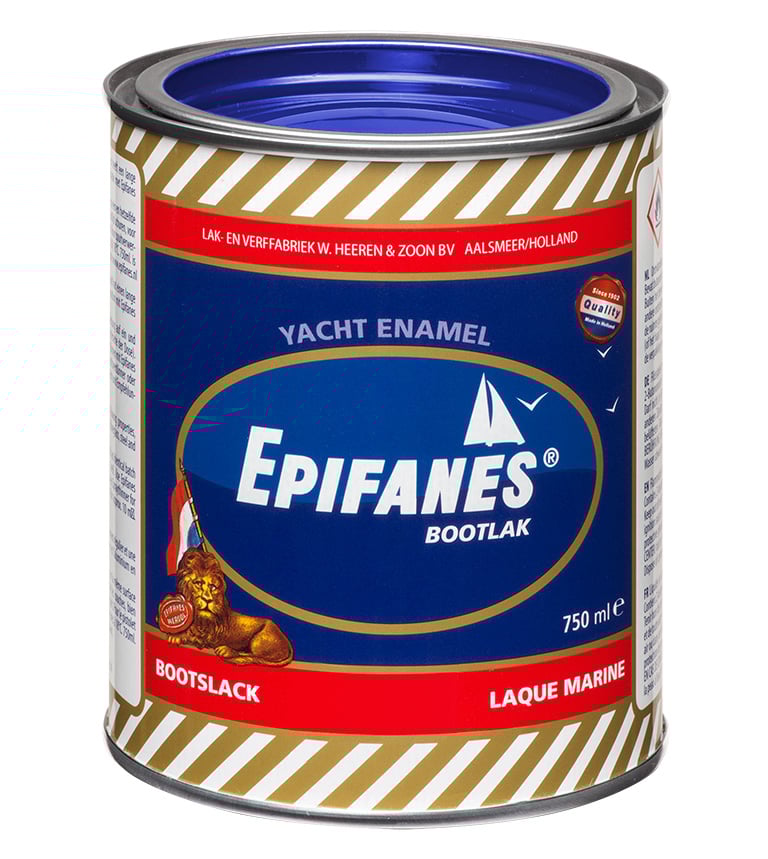
Epifanes Yacht Enamel is a classic one-component alkyd paint with excellent flow characteristics and flexibility. It performs especially well on wood and flexing structures.
Epifanes Mono-urethane
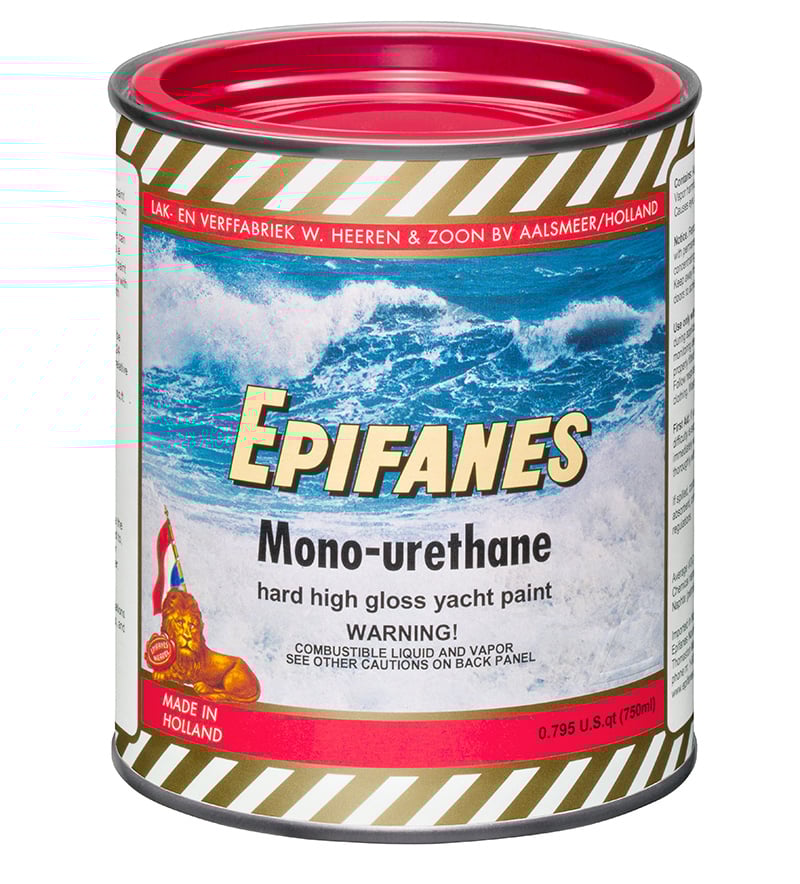
Epifanes Mono-urethane Yacht Paint offers improved hardness and durability while remaining easier to apply than two-component systems.
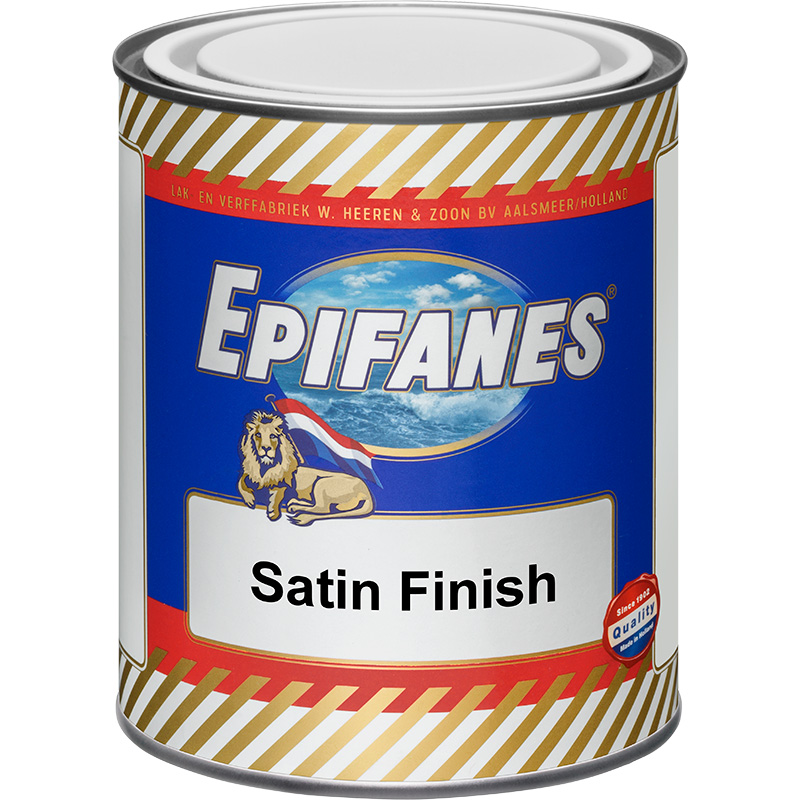
Epifanes Satin Finish and Epifanes Enamel Flat Black
These coatings provide specialized matte and satin aesthetic finishes suitable for interiors, trim and select exterior applications.
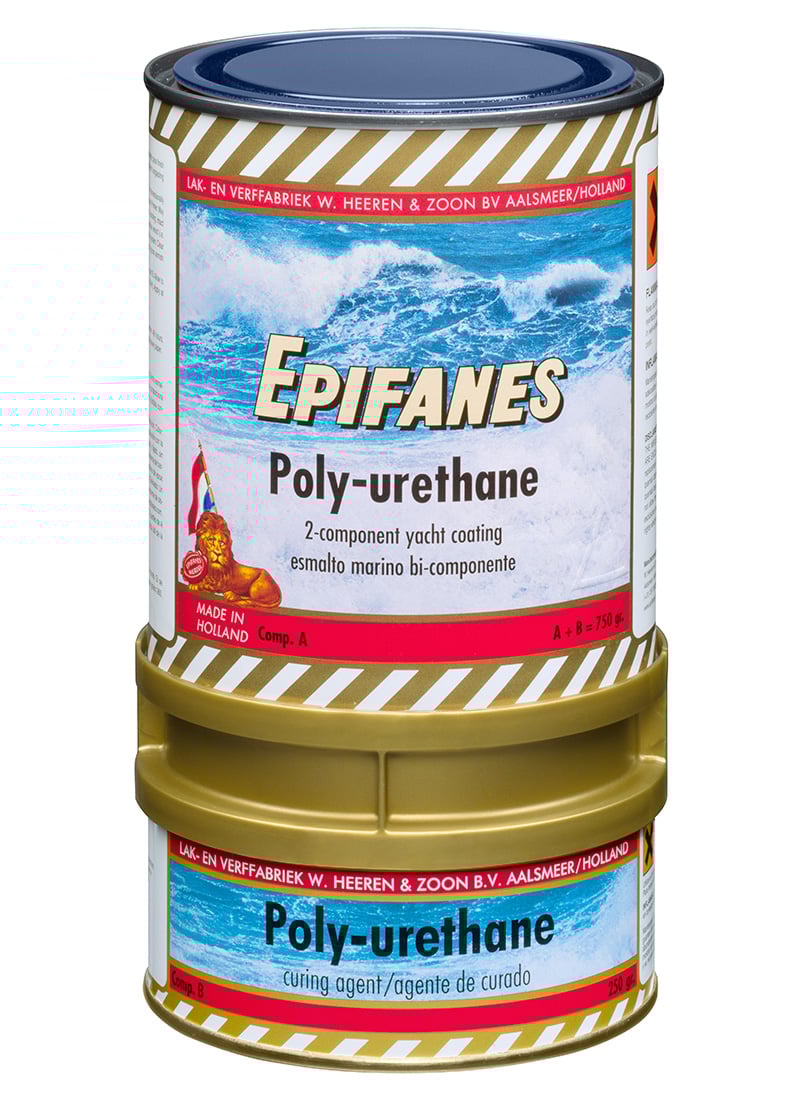
Epifanes Poly-urethane
Epifanes Poly-urethane Yacht Paint delivers exceptional gloss, hardness and scratch resistance when applied correctly.
It can be brushed, sprayed or foam-rolled and provides one of the most durable marine topcoat finishes available.
Because two-component polyurethane coatings contain strong chemical hardeners, proper respirator use and ventilation are critical during application.
What Color Is Best for Boats?
Darker colors often create striking appearance and depth but absorb more heat and may highlight imperfections more easily.
Lighter colors generally remain cooler and are often easier to maintain over time.
Step 7: Carefully Plan Your Painting Schedule
Marine painting projects require careful scheduling around cure times, weather conditions, humidity and working temperature.
Rushing between coats or painting outside recommended environmental conditions can compromise adhesion, gloss retention and cure quality.
Cold temperatures slow curing dramatically, while excessive humidity can affect finish quality and solvent evaporation.
Why Patience Matters
Most coating failures happen because steps were rushed, cure schedules ignored or surfaces recoated too soon.
Building extra time into the project schedule reduces stress and improves final finish quality significantly.
Step 8: Be Ready for Setbacks
Dust contamination, humidity changes, runs, fisheyes, solvent pop and unexpected weather interruptions can happen even on carefully planned projects.
The key is addressing problems immediately rather than ignoring them.
Most paint problems are far easier to correct early than after the entire system fully cures.
Common Marine Paint Problems
- Runs and sags
- Orange peel texture
- Fisheyes from contamination
- Poor adhesion
- Dust nibs
- Uneven gloss
- Premature lifting
Most issues can be minimized through proper prep, cleanliness and environmental control.
Step 9: Enjoy Painting
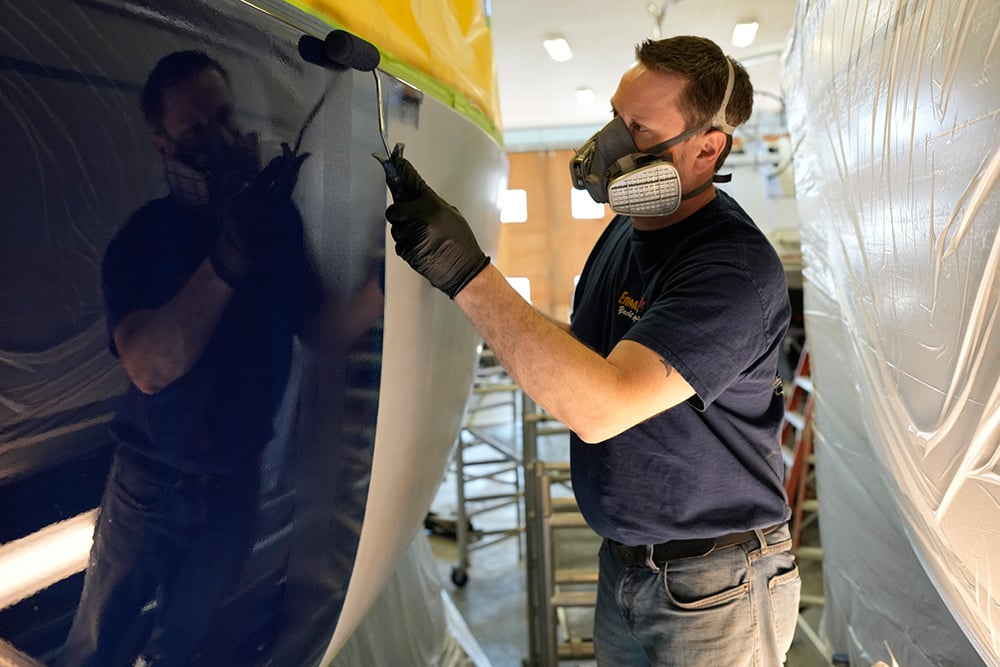
Painting a fiberglass boat takes time and effort, but many boat owners are surprised by how satisfying the process becomes once they settle into a steady rhythm of preparation, sanding and coating.
When done correctly, the final transformation can be dramatic. Faded, oxidized fiberglass can regain deep gloss, vibrant color and a professionally restored appearance that completely changes the look of the boat.
The key is patience, preparation and following each stage carefully instead of rushing toward the finish line.
Visit the Epifanes website for additional technical information or contact them directly at (207) 354-0804 for project-specific guidance and troubleshooting assistance.