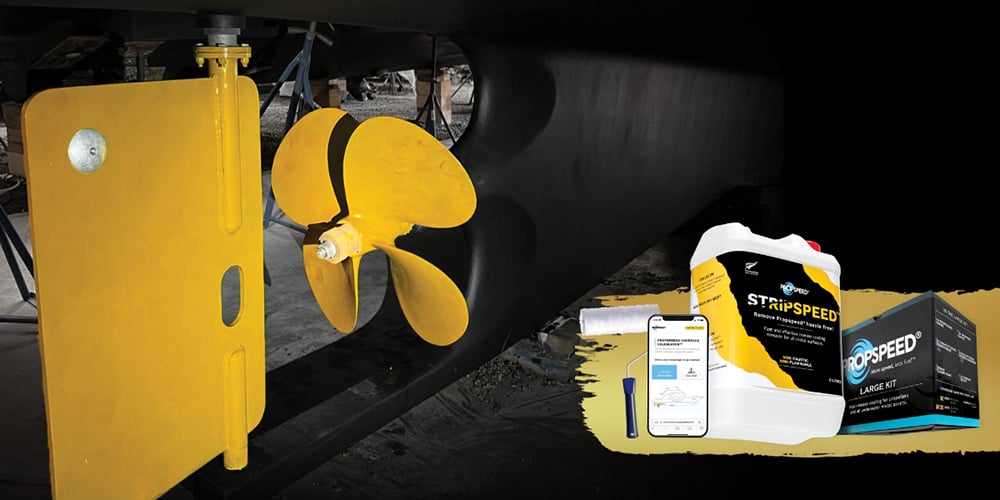
If you keep your boat in the water, protecting underwater metals is one of the most important — and most overlooked — parts of long-term boat maintenance. Propellers, shafts, trim tabs, struts, rudders, pod drives and underwater hardware are constantly exposed to saltwater, oxygen, marine growth and electrochemical activity that slowly reduce efficiency and accelerate corrosion over time.
Marine growth on underwater metals does much more than make components look dirty. Barnacles, slime and hard fouling dramatically increase drag, reduce fuel efficiency, lower boat speed, increase engine load and place additional stress on driveline components. Even relatively small amounts of fouling on a propeller can significantly impact vessel performance and operating costs.
Traditional antifouling paints have long been used to combat marine growth on hulls, but underwater metals present unique challenges. Many conventional bottom paints rely on biocides and copper-based chemistry that may not bond properly to metals and can sometimes contribute to galvanic or material degradation issues over time.
That’s why many boat owners, yards and professional applicators turn to specialized foul-release coatings like the Propspeed foul-release system. Instead of using toxic biocides, Propspeed creates an ultra-slick hydrophobic surface that prevents marine organisms from strongly attaching to underwater metals in the first place.
This article explains how foul-release coatings work, why Propspeed has become one of the most recognized systems in the industry, how to properly prepare and apply the coating and how to maintain underwater metals throughout the coating’s service life. :contentReference[oaicite:0]{index=0}
- What Is a Foul-Release Coating?
- Why Propspeed?
- How Marine Growth Hurts Performance
- Planning Your Application
- Environmental Conditions Matter
- Metal Preparation
- Application Process
- Common Propspeed Mistakes
- Maintenance
- Final Thoughts
What Is a Foul-Release Coating?
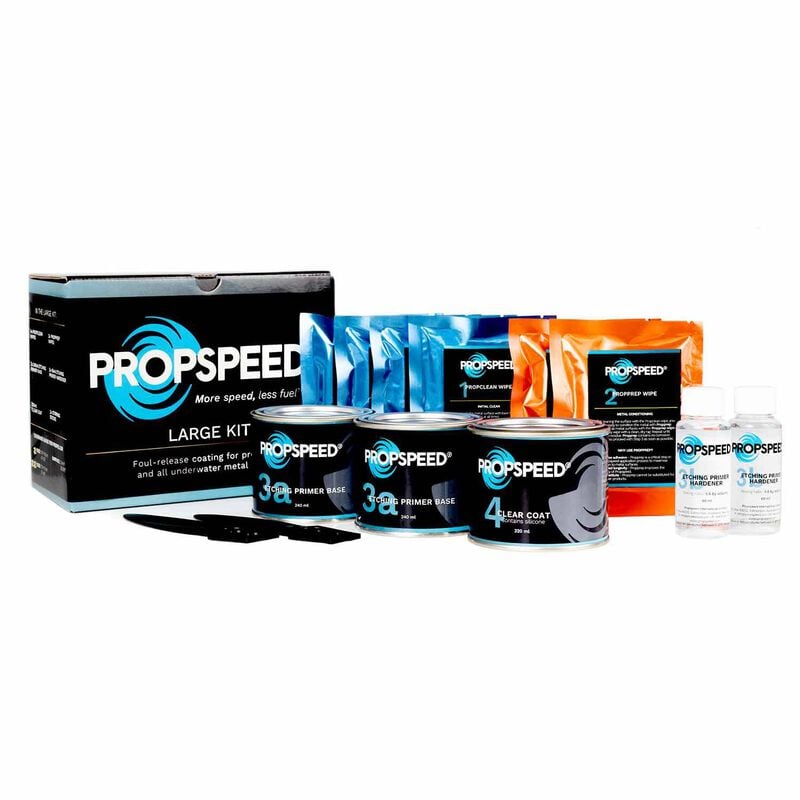
Foul-release coatings like Propspeed are specially formulated to prevent marine growth from bonding to metal surfaces below the waterline.
Foul-release coatings are specialized marine coatings designed to prevent marine growth from strongly adhering to underwater surfaces. Unlike traditional antifouling paints that rely primarily on toxic biocides or copper release, foul-release systems use physical surface properties to reduce adhesion strength.
Propspeed creates an ultra-slick hydrophobic surface that marine organisms struggle to grip effectively. While slime or organisms may initially settle on the surface while the boat sits stationary, they are much more easily removed once the vessel begins moving through the water.
This is a major difference compared to traditional antifouling paints. Conventional antifouling coatings continuously leach active ingredients into the surrounding water to discourage growth. Foul-release systems instead focus on preventing strong attachment altogether.
Because Propspeed does not rely on copper release, it also helps avoid issues associated with copper interaction on underwater metals like bronze and running gear components.
Why Underwater Metals Need Specialized Protection
Underwater metals face constant exposure to oxygen, saltwater, electrical activity and marine organisms. Propellers and running gear also operate under high-speed hydrodynamic loads where smooth surfaces directly affect efficiency.
Even moderate fouling on a propeller can reduce top-end speed, increase fuel burn and create additional strain on engines and driveline systems.
How Foul-Release Differs from Antifouling Paint
- Antifouling paint: Uses biocides or copper to discourage marine growth
- Foul-release coating: Creates a slick non-stick surface that prevents strong adhesion
- Traditional bottom paint: Commonly used on fiberglass hulls
- Foul-release systems: Ideal for propellers, shafts and underwater metals
Why Propspeed?
Years of Consistent Results
Propspeed is a biocide-free foul-release coating system designed specifically for underwater metals including propellers, shafts, rudders, trim tabs, struts, sail drives, pod drives, thrusters and running gear.
Since its introduction in 1999, Propspeed has become widely recognized throughout the marine industry because of its ability to maintain cleaner underwater metals for extended periods while improving efficiency and reducing corrosion exposure.
The system combines a specialized etching primer with an ultra-slick clear topcoat that chemically and mechanically bonds to the metal substrate.
This combination helps underwater metals resist marine growth while maintaining smoother hydrodynamic surfaces throughout the coating’s service life.
How Propspeed Improves Performance
Marine growth creates drag. Drag increases fuel consumption, reduces speed and forces propulsion systems to work harder.
Keeping propellers and running gear cleaner helps improve:
- Fuel efficiency
- Acceleration
- Cruising efficiency
- Top-end speed
- Engine load reduction
- Long-term driveline performance
For larger vessels and boats that remain in the water year-round, the efficiency gains can become significant over time.
Industry-Leading Performance
Not all foul-release coatings perform equally. Propspeed is known for exceptionally low marine adhesion strength, meaning marine organisms have a much harder time attaching firmly to the coating.
Lower adhesion strength means marine growth removes more easily during operation and cleaning.
This reduced attachment strength is one reason many professional yards and commercial operators continue using Propspeed systems globally.
Corrosion Protection Benefits
Propspeed also helps electrically isolate coated underwater metals from surrounding seawater, reducing direct exposure to ion exchange and electrochemical interaction.
While Propspeed does not replace sacrificial anodes or eliminate galvanic corrosion risk entirely, it helps support overall corrosion protection strategies.
Network of Trained Professionals
Propspeed has built a large network of trained applicators and technical support professionals throughout the marine industry.
Many professional boatyards already have trained Propspeed applicators capable of handling surface preparation and coating application.
Find your closest trained applicator using Propspeed's applicator map.
How Marine Growth Hurts Boat Performance
Marine growth creates drag on underwater surfaces, and drag directly reduces efficiency. Even thin slime layers can impact performance noticeably over time.
Hard fouling such as barnacles and shell growth creates even larger hydrodynamic penalties, particularly on fast-moving rotating surfaces like propellers.
Common Problems Caused by Fouled Running Gear
- Reduced fuel economy
- Slower cruising speed
- Reduced top-end performance
- Higher engine RPM requirements
- Increased vibration
- Poor throttle response
- Additional wear on propulsion systems
In severe cases, heavy fouling can significantly reduce maneuverability and overall vessel efficiency.
Planning Your Application
The first step is deciding whether you’ll apply Propspeed yourself or hire a trained applicator.
While the application process is manageable for many experienced DIY boat owners, timing and surface preparation are critical for long-term coating success.
Figure Out How Much Propspeed You Need
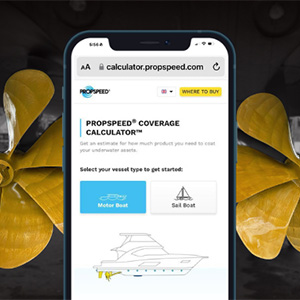
The Propspeed coverage calculator makes it easy to know exactly how much Propspeed you need for your application.
Propspeed provides an online coverage calculator that helps estimate required material based on vessel size and underwater hardware.
Using the proper amount of product is important because inadequate coating thickness can reduce performance and longevity.
Consumables and Personal Protective Equipment (PPE)
Like any marine coating project, preparation and safety equipment should be assembled before beginning the application.
Check List:
- Paper paint suits
- Disposable gloves
- Eye protection
- Dust sanding mask
- Dual action sander
- 80 grit sandpaper
- Clean cotton rags or microfiber towels
- Propspeed Application Kit (PSAP4KIT)
- 2x Disposable plastic trays
- 1x Roller handle
- 1x Propspeed roller for Etching Primer
- 1x Propspeed roller for Clear Coat
Why PPE Matters
Sanding old coatings and handling solvents or primers creates airborne particles and chemical exposure risks. Respiratory and eye protection should always be used during preparation and coating application.
Environmental Conditions Matter
Environmental conditions strongly influence coating performance and cure quality.
Propspeed performs best when temperatures remain between 50°F and 85°F, humidity remains below 85% and all coated surfaces stay dry throughout application and curing.
Temperature affects solvent evaporation, cure speed and recoat timing significantly.
Why Timing Between Coats Matters
The Propspeed system relies heavily on proper chemical bonding between coats.
Applying subsequent coats too early or too late can reduce adhesion performance and shorten coating lifespan.
Wind, direct sunlight and metal surface temperature can all influence working time dramatically.
When Not to Apply Propspeed
- During rain or heavy humidity
- In direct uncontrolled heat
- On wet surfaces
- When condensation is present
- When metal temperatures are outside recommended range
Metal Preparation

Surface preparation is the most important step in the entire Propspeed process. Proper adhesion depends on creating a clean, dry mechanically profiled metal surface.
Reapplication of Propspeed
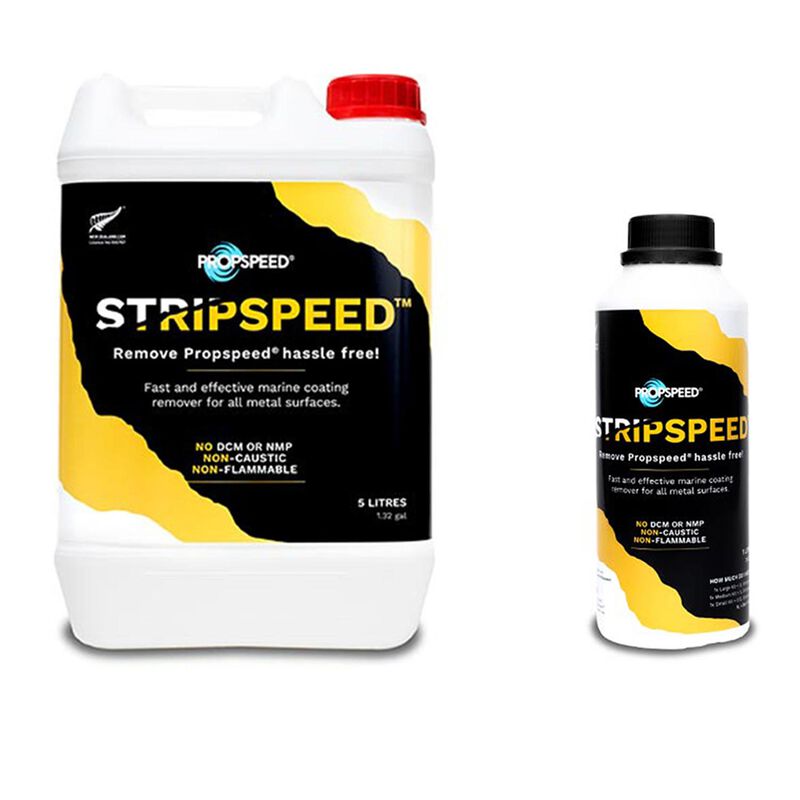
Stripspeed is specifically developed to remove foul-release coatings in less than 30 minutes and get the surface ready for reapplication.
If underwater metals are already coated with Propspeed or another coating system, all previous coatings must be removed completely before reapplication.
Stripspeed is designed specifically for removing foul-release coatings quickly and efficiently.
After coating removal, the metal must be sanded thoroughly to achieve an 80-grit surface profile for proper mechanical bonding.
First Time Application of Propspeed
For first-time applications, all metal surfaces should be abraded to an 80-grit profile using a dual-action sander or hand sanding.
Proper mechanical profile is critical because the primer relies on both chemical and physical adhesion.
Why Sanding Profile Matters
Smooth polished metal surfaces do not provide enough mechanical bite for long-term coating adhesion.
The proper surface profile dramatically improves bonding strength and coating durability.
Initial Clean

After sanding, clean all surfaces thoroughly using the supplied Propclean wipe.
Any remaining dust, residue or contamination can interfere with coating adhesion.
Metal Conditioning
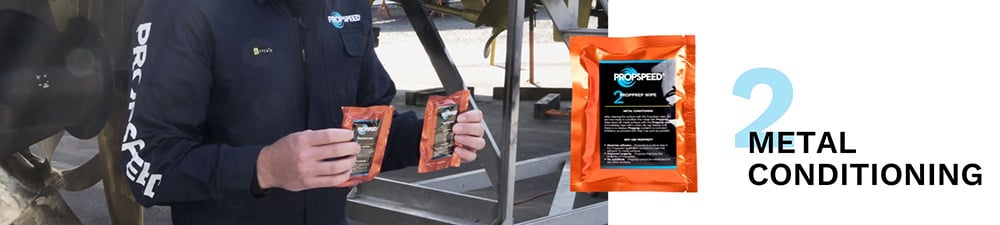
Apply Propprep solution liberally and wipe clean immediately with a dry cotton rag.
Propprep chemically conditions the metal surface and helps prepare it for primer adhesion.
The surface should be coated as quickly as possible after conditioning.
Application Process
Once application begins, all materials should already be mixed, staged and ready to use.
The Propspeed system relies on controlled timing between coats and should not be interrupted unnecessarily.
Etching Primer

The yellow pigment within the Etching Primer Base must be mixed thoroughly before adding hardener.
Improper mixing can cause premature failure, weak adhesion and reduced coating lifespan.
Two generous coats of Etching Primer are required.
The second coat should be applied when the first coat reaches the proper dry-to-touch stage.
Why Primer Timing Is Critical
The primer layers chemically bond together during a limited recoat window.
Missing this timing can reduce adhesion and compromise the coating system.
Clear Coat

The Clear Coat should be applied immediately after the final primer coat reaches proper tack stage.
The Clear Coat creates the slick hydrophobic foul-release surface that prevents marine growth from strongly attaching.
Any missed areas will appear dull and should be corrected before curing completes.
Dry Time Before Launch
Propspeed requires at least 8 hours minimum drying time before launch under normal conditions.
Cooler temperatures may require 24 hours or longer before immersion.
Common Propspeed Mistakes
- Insufficient sanding profile
- Improper cleaning before coating
- Poor timing between coats
- Applying in poor weather conditions
- Applying too thin or too thick
- Using abrasive cleaning tools during maintenance
- Failing to remove previous coatings completely
Why Most Coating Failures Happen
Most coating problems trace back to surface preparation, environmental conditions or incorrect recoat timing rather than the coating itself.
Careful preparation and patience are essential for long-term performance.
Maintenance
Once coated, underwater metals should still be inspected and maintained regularly, especially on boats kept in the water year-round.
Propspeed requires different cleaning methods than traditional antifouling paint.
Removing Shell Growth
- Use a flexible plastic resin spreader
- Maintain approximately 30° cleaning angle
- Use hydro wash below 1,500 PSI maximum
- Never direct pressure washer at 90° directly onto coating
- Remove shell growth before wiping surface
Removing Soft Marine Growth
- Microfiber cloth
- Synthetic sponge
- Soft carpet
- Silicone or cotton gloves
Never Use These Tools to Clean Propspeed
- Metal scrapers
- Hard nylon brushes
- Abrasive pads
- Power brushes
How Proper Maintenance Extends Coating Life
Gentle routine cleaning helps maintain coating smoothness and hydrophobic performance over its full service life.
Aggressive cleaning methods can damage the coating and reduce effectiveness prematurely.
Final Thoughts
Protecting underwater metals is one of the smartest long-term maintenance investments boat owners can make. Clean running gear improves efficiency, reduces fuel consumption, lowers drag and helps extend the life of expensive propulsion components.
Propspeed has become one of the marine industry’s most recognized foul-release systems because it addresses both marine growth and corrosion exposure without relying on traditional copper-heavy antifouling chemistry.
In addition to Propspeed foul-release coating and Stripspeed, the product lineup also includes Foulfree for transducers and Lightspeed for underwater lights.
Explore Propspeed's full selection of foul-release coatings for additional underwater protection solutions.