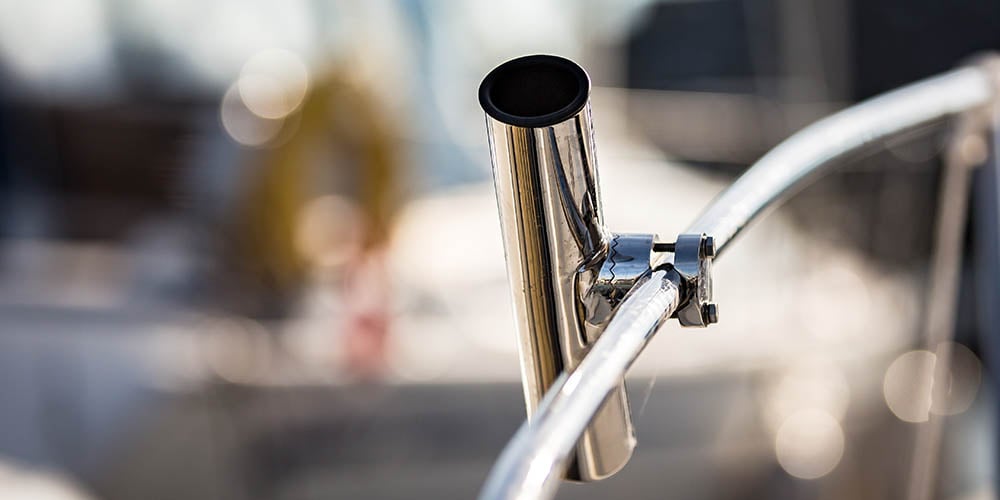
Fishing rod holders are one of the most important pieces of equipment on any fishing boat because they keep rods secure, organized and instantly accessible while freeing anglers to focus on navigation, bait preparation, fighting fish or managing multiple lines. Whether you’re trolling offshore, drifting reefs, live-bait fishing coastal flats or simply storing rods safely underway, the right rod holder setup dramatically improves both convenience and fishing efficiency.
Modern fishing rod holders do much more than simply “hold a rod.” They help distribute drag loads while trolling, reduce stress on anglers during long fights, organize deck layouts, protect expensive rods and reels from damage and create safer working conditions onboard. The correct mounting style, construction material and adjustability all play major roles in how well a rod holder performs in specific fishing conditions.
Boat size, fishing style and target species all influence the ideal rod holder configuration. Offshore trolling boats often require heavy-duty stainless-steel swivel bases capable of handling high drag pressures from large pelagic fish, while smaller bay boats and freshwater fishing rigs may prioritize removable or adjustable rod holders that maximize deck flexibility and storage efficiency.
This guide explains the major types of fishing rod holders, mounting systems, construction materials and adjustability options so you can build a rod holder setup that matches your boat, your fishing style and the conditions you fish most often. :contentReference[oaicite:0]{index=0}
- What Fishing Rod Holders Do
- What to Look for When Choosing a Fishing Rod Holders
- Rod Holder Materials Explained
- Rod Holder Mounting Styles
- Fixed vs. Removable Rod Holders
- Adjustable vs. Non-Adjustable Holders
- Rod Holders for Offshore Fishing
- Rod Holders for Small Boats and Kayaks
- Rod Holder Installation Considerations
- Maintaining Fishing Rod Holders
- Conclusion
What Fishing Rod Holders Do
In essence, fishing rod holders act like onboard fishing assistants that keep rods exactly where anglers want them while maintaining proper positioning and reducing fatigue during long days on the water.
Rod holders allow anglers to:
- Troll multiple lines safely
- Store rods securely underway
- Keep decks organized
- Reduce rod damage risk
- Spread baits effectively
- Manage live bait presentations
- Free up hands while rigging or navigating
The size and layout of the boat heavily influence which rod holder style works best. Offshore center consoles, sportfishing boats, bay boats, pontoons, kayaks and small skiffs all require different mounting strategies and holder configurations.
Why Proper Rod Positioning Matters
Rod angle directly affects trolling spread, bait presentation and fighting leverage.
Properly positioned rod holders help prevent line tangles while improving lure tracking and fish-fighting efficiency.
How Rod Holders Improve Safety
Loose rods sliding around decks create tripping hazards and increase the chance of expensive equipment damage.
Secure rod storage becomes especially important during rough water runs or sudden maneuvering.
What to Look for When Choosing a Fishing Rod Holder
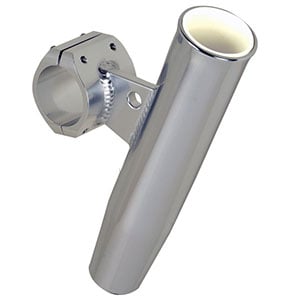
Clamp mount rod holders easily install on boat railings and can be removed if needed.

Flush mount rod holders install in the gunwale of your boat.
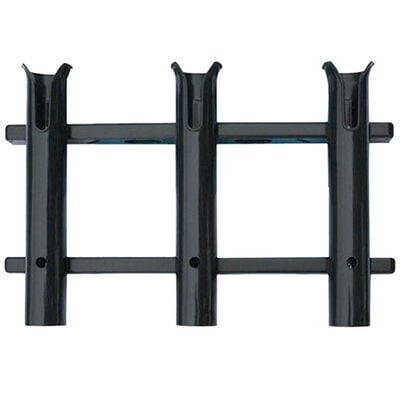
Surface mount rod holders can be mounted vertically or at an angle depending on your needs.
Choosing the right fishing rod holder depends on several major factors:
- Freshwater vs. saltwater use
- Target species size
- Trolling vs. casting applications
- Boat size and layout
- Permanent vs. removable installation
- Adjustability requirements
- Budget and corrosion resistance
Understanding how these variables interact helps anglers choose rod holders that match both their fishing style and long-term durability expectations.
Rod Holder Materials Explained
Fishing rod holders are available in several different materials, each offering unique advantages depending on fishing conditions and budget.
- Nylon
- ABS plastic
- Fiberglass
- Aluminum
- Stainless steel
- Chrome-plated brass
- Zinc alloys
Stainless Steel Rod Holders
We recommend stainless steel rod holders for heavy-duty saltwater fishing, offshore trolling and rough-water applications because of their exceptional rigidity, corrosion resistance and long-term durability.
Stainless-steel holders withstand heavy drag loads and repeated rod motion far better than lightweight plastic alternatives.
Chrome-Plated Brass Rod Holders
Chrome-plated brass holders provide excellent strength and corrosion resistance while maintaining a polished appearance popular on many offshore and sportfishing boats.
These are commonly used in permanent flush-mount applications.
Plastic and Nylon Rod Holders
Nylon, fiberglass and ABS plastic rod holders are cost-effective alternatives for calmer water conditions, freshwater use and lighter-duty fishing applications.
They resist corrosion naturally and work well for casual fishing setups or boats where flexibility and affordability are priorities.
When Lightweight Holders Make Sense
Kayaks, jon boats, pontoons and smaller skiffs often benefit from lightweight rod holders that are easy to reposition and remove when needed.
Rod Holder Mounting Styles
Mounting style affects rod positioning, strength, adjustability and installation complexity.
Flush Mount Rod Holders
Flush mount rod holders install directly into the gunwale and typically position rods vertically or at a fixed 30-degree angle.
These are among the most common rod holders found on center consoles and offshore fishing boats.
Many premium flush-mount models feature:
- Stainless-steel construction
- Vinyl liners
- Drain fittings
- Heavy-duty mounting flanges
Why Vinyl Liners Matter
Vinyl liners help protect rod butts from scratching and reduce vibration wear while underway.
Clamp Mount Rod Holders
Clamp-on rod holders attach directly to railings, towers, hardtops, radar arches or stanchions.
These holders are extremely versatile because they can be repositioned or removed without drilling permanent holes.
Clamp mounts are especially popular on:
- Pontoon boats
- Sailboats
- Small center consoles
- Boats with limited gunwale space
Surface Mount Rod Holders
Surface mount rod holders bolt directly to flat mounting surfaces and are available in both fixed and adjustable designs.
These are commonly mounted vertically, horizontally or at trolling angles depending on the fishing setup.
Fixed vs. Removable Rod Holders
One of the biggest decisions boat owners face is whether to install permanent fixed rod holders or removable systems.
Fixed Rod Holders
Fixed rod holders are generally stronger and better suited for offshore trolling or heavy drag pressures.
They are commonly installed in pre-existing gunwale holes or permanently mounted to vertical cabin surfaces.
Advantages include:
- Maximum rigidity
- Better heavy-tackle support
- Cleaner integrated appearance
- Improved long-term durability
Removable Rod Holders
Removable rod holders slide into mounting brackets or clamp onto rails, allowing quick installation and removal.
These are ideal for:
- Smaller boats
- Occasional fishing setups
- Multi-purpose boats
- Storage flexibility
Why Removable Holders Are Popular
Many boat owners prefer removable systems because they preserve deck space and reduce clutter when fishing gear is not in use.
Adjustable vs. Non-Adjustable Rod Holders
Adjustable rod holders offer significantly greater flexibility than fixed-angle designs.
Most adjustable holders can:
- Tilt
- Rotate
- Lock into position
- Change trolling angle
- Adapt to multiple fishing techniques
Advantages of Adjustable Holders
Adjustable rod holders are especially useful for:
- Spinning setups
- Bait-casting setups
- Live bait fishing
- Drifting
- Multi-species fishing
They allow anglers to fine-tune rod positioning based on trolling speed, lure spread and fighting angle.
When Fixed Holders Are Better
For heavy offshore trolling, fixed stainless-steel holders often provide superior rigidity under extreme drag loads.
Big-game trolling applications place enormous stress on rod holders during strikes and long fights.
Rod Holders for Offshore Fishing
Offshore trolling creates significantly higher rod-holder loads than freshwater casting or inshore fishing.
Large tuna, marlin, wahoo and mahi strikes can place tremendous side pressure on rod holders, especially when boats continue moving forward during the initial hookup.
Why Swivel and Pivot Bases Matter
If you target large offshore species, we strongly recommend rod holders with swivel or pivot bases.
These systems allow the rod to rotate under side pressure, reducing the chance of:
- Frayed fishing line
- Rod damage
- Sheared retaining pins
- Excessive drag-angle stress
Heavy-Duty Offshore Features
Premium offshore rod holders often include:
- 316 stainless-steel construction
- Heavy reinforcement backing plates
- Large-diameter tubes
- Drain systems
- Integrated gimbal pins
Rod Holders for Small Boats and Kayaks
Small boats require rod holder setups that maximize flexibility without overwhelming limited deck space.
Clamp-on and removable rod holders are often ideal because they allow:
- Easy repositioning
- Seasonal removal
- Portable storage
- Flexible rigging layouts
Kayak Fishing Considerations
Kayak rod holders must balance compactness, accessibility and secure retention because rods remain exposed to splashing, paddle movement and limited onboard storage.
Low-profile adjustable holders are especially popular for kayak applications.
Rod Holder Installation Considerations
Proper installation is critical for long-term rod holder reliability and deck protection.
Backing Plates Matter
Heavy-duty trolling applications often require backing plates underneath mounting surfaces to distribute loads and prevent stress cracking.
Thin fiberglass without reinforcement may flex or crack under heavy rod pressure.
Seal All Fastener Holes
All mounting holes should be sealed properly using marine sealant to prevent water intrusion into fiberglass cores.
Water intrusion can eventually damage decks, gunwales and coring materials.
Positioning for Fishing Style
Rod holders should be positioned based on how the boat is actually used.
Consider:
- Trolling spread angles
- Walking paths
- Clearing fish around the boat
- Access to reels
- Storage convenience
Maintaining Fishing Rod Holders
Rod holders require regular maintenance, especially in saltwater environments.
Routine Maintenance Tips
- Rinse thoroughly with fresh water
- Inspect mounting hardware
- Lubricate adjustable joints
- Check for corrosion
- Inspect liners and inserts
- Tighten loose hardware
Why Saltwater Maintenance Matters
Even stainless-steel components can eventually corrode if salt deposits remain trapped around fasteners and moving parts.
Routine rinsing dramatically extends hardware life.
Conclusion
Where you fish, what species you target and the type of boat you own all determine which fishing rod holders make the most sense for your setup.
We recommend stainless steel or chrome-plated models for heavy-duty offshore and saltwater trolling applications, while nylon, fiberglass and ABS plastic holders provide excellent cost-effective solutions for calmer water and lighter-duty fishing.
Flush mounts, clamp-ons, swivel bases, removable systems and adjustable holders each offer unique advantages depending on how your boat is rigged and how you fish.
For anglers targeting large offshore species, swivel and pivoting rod holders help reduce side-load stress and improve fish-fighting control. For smaller boats and flexible setups, removable and adjustable rod holders often provide the best combination of convenience and versatility.
Choosing the correct rod holder setup helps protect your gear, organize your deck and make every fishing trip safer, cleaner and more productive.