Stand up paddleboard fins play a major role in how a board feels, tracks, turns and performs on the water. While many paddlers focus heavily on board shape or paddle design, fin selection is often overlooked despite having a direct impact on stability, maneuverability, speed and overall paddling efficiency.
A paddleboard fin acts like the underwater steering and tracking system of the board. The size, shape, surface area, rake and material all influence how the board responds in different water conditions. A fin that feels excellent in calm flatwater may feel sluggish in surf, while a highly maneuverable surf fin may feel unstable during long-distance touring.
Choosing the right fin depends heavily on how and where you paddle. Flatwater touring, ocean paddling, downwinding, racing, recreational cruising and SUP surfing all place different demands on fin design. Paddler size, skill level and board width also influence which fin profile performs best.
This guide explains how paddleboard fins work, how different fin designs affect board handling and how to choose the right fin setup for your paddling style and conditions. :contentReference[oaicite:0]{index=0}
- Why Paddleboard Fins Matter
- How Fin Shape Affects Performance
- Fin Height and Stability
- Fin Base and Tracking
- Fin Surface Area Explained
- Understanding Fin Rake
- Weedless SUP Fins
- SUP Fin Materials
- Best Fins for Racing
- Best Fins for Surfing and Maneuverability
- How to Choose the Right SUP Fin
- Final Thoughts
Why Paddleboard Fins Matter
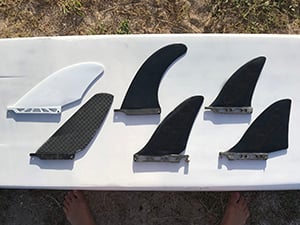
Different fin shapes dramatically change how a paddleboard performs on the water.
Paddleboard fins control directional stability and help reduce side-to-side yaw while paddling. Without a fin, a paddleboard would constantly slide and drift sideways with every paddle stroke.
The fin creates resistance below the waterline that helps the board maintain a straighter course.
However, no single fin design is perfect for every situation. Increasing stability often reduces maneuverability. Improving tracking can increase drag. Enhancing turning ability may reduce straight-line efficiency.
Every fin design involves balancing these characteristics.
How Fins Affect Paddle Efficiency
Efficient tracking means fewer corrective paddle strokes are needed to keep the board moving straight.
Better tracking conserves energy and improves glide during long paddles.
Why Fin Selection Changes Board Feel
Even the same paddleboard can feel dramatically different when paired with different fins.
Small changes in fin shape, rake or surface area can noticeably affect stability, turning response and water resistance.
How Fin Shape Affects Performance
Fin shape is generally described by four major characteristics:
- Height
- Base length
- Surface area
- Rake
Each characteristic changes how the board behaves in the water.
Understanding how these variables interact helps paddlers choose fins that better match their intended use.
Fin Height and Stability
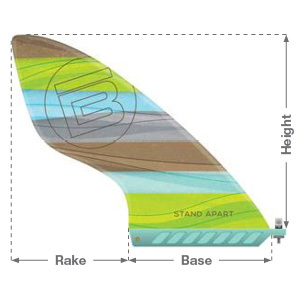
Fin height, base length, rake and surface area all influence paddleboard handling.
What Fin Height Means
Fin height refers to how deep the fin extends downward into the water from the bottom of the board.
Generally speaking, deeper fins provide greater directional stability because they create more underwater resistance against side-to-side rocking and yaw.
Advantages of Taller Fins
- Improved stability
- Better tracking
- Reduced board rocking
- Improved control in rough water
These characteristics make taller fins popular for touring boards, recreational paddling and rough-water conditions.
Disadvantages of Taller Fins
The deeper a fin penetrates into the water, the more drag it creates.
Increased drag can reduce acceleration and overall board speed.
Deep fins may also become problematic in shallow water, rivers or areas with submerged vegetation.
Why Stability Matters in Rough Water
Ocean chop, boat wakes and crosswinds all create instability.
Deeper fins help stabilize the board by increasing underwater resistance and reducing rolling motion.
Fin Base and Tracking
What Fin Base Means
The fin base is the length of the fin along the bottom edge closest to the board.
Base length strongly influences tracking performance.
How Wider Bases Improve Tracking
Wider-base fins resist side-to-side yaw more effectively, helping the board paddle straighter with fewer corrective strokes.
This is especially valuable during:
- Long-distance paddling
- Flatwater touring
- Fitness paddling
- Recreational cruising
Tradeoff: Wider Base vs. Maneuverability
While wider bases improve straight-line tracking, they also increase turning radius.
Boards equipped with wide-base fins tend to feel less agile and slower to pivot.
This can be undesirable for:
- SUP surfing
- Buoy turns
- Downwind maneuvering
- Tight river paddling
Why Tracking Efficiency Matters
Poor tracking forces paddlers to switch sides frequently or use corrective strokes that reduce overall efficiency.
A well-designed tracking fin helps maximize distance per stroke.
Fin Surface Area Explained
What Surface Area Means
Surface area refers to the total area of the fin measured in square inches.
How that area is distributed across the fin significantly changes board behavior.
Surface Area Near the Base
More surface area near the base of the fin generally improves:
- Tracking
- Glide efficiency
- Directional stability
However, it also reduces turning speed and maneuverability.
Surface Area Near the Tip
More surface area toward the tip increases stability because more of the fin remains engaged deeper in the water.
However, additional tip area also increases drag and reduces responsiveness.
Why Paddler Size Matters
Larger and heavier paddlers generally require fins with greater surface area to maintain stability and directional control.
Smaller paddlers can often use lower surface area fins without sacrificing handling.
How Surface Area Affects Glide
Properly balanced surface area can improve glide efficiency by reducing wasted side-to-side motion.
However, excessive surface area creates unnecessary drag.
Understanding Fin Rake
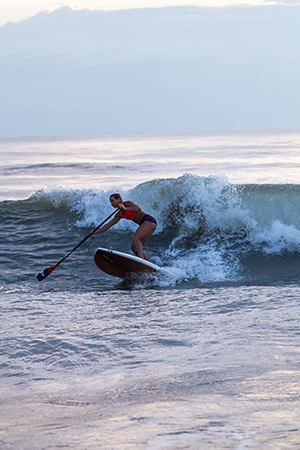
Fins with less rake generally improve turning responsiveness and maneuverability.
What Fin Rake Means
Rake refers to how far the fin sweeps backward from front to rear.
More upright fins have less rake, while heavily swept-back fins have more rake.
Less Rake = Faster Turning
Fins with minimal rake pivot more aggressively and create tighter turning response.
This is ideal for:
- SUP surfing
- Pivot turns
- Technical buoy turns
- Downwind maneuvering
More Rake = Better Weed Shedding
Fins with greater rake sweep weeds and grass more effectively because vegetation slides backward along the fin instead of catching.
Heavily raked “weedless” fins are extremely popular in:
- Kelp beds
- River grass
- Shallow flats
- Freshwater lakes
Why Weeds Hurt Performance
Even small amounts of grass caught on a fin create significant drag and instability.
Weedless fins help maintain speed and tracking efficiency in vegetated water.
Weedless SUP Fins
Weedless fins are specifically designed to minimize vegetation buildup while paddling.
These fins use heavy rearward rake to shed:
- Kelp
- Sea grass
- Lake weeds
- Floating debris
If you frequently paddle in shallow grassy water, a weedless fin can dramatically improve overall paddling efficiency.
Who Benefits Most from Weedless Fins?
- Florida paddlers
- River paddlers
- Lake paddlers
- Shallow-water touring paddlers
SUP Fin Materials
Plastic Fins
Plastic fins are inexpensive and widely available.
However, they are generally:
- Heavier
- More flexible
- Less responsive
Flex under load reduces efficiency and responsiveness during aggressive paddling or racing.
Fiberglass Fins
Fiberglass fins provide a strong balance between cost, stiffness and weight.
Advantages include:
- Improved rigidity
- Lighter weight
- Better response
Fiberglass remains one of the most popular all-around SUP fin materials.
Carbon Fiber Fins
Carbon fiber fins are the lightest and stiffest option available.
Advantages include:
- Minimal flex
- Maximum responsiveness
- Reduced overall weight
- Excellent racing performance
Carbon fiber fins are especially popular among competitive paddlers and racers seeking maximum efficiency.
Hybrid Construction Fins
Some specialty fins combine:
- Fiberglass
- Honeycomb cores
- Bamboo laminates
- Carbon reinforcement
These hybrid constructions balance weight, flex and responsiveness differently depending on intended use.
Best Fins for Racing
Racing fins prioritize efficiency, reduced drag and precise tracking.
Most race-oriented fins feature:
- Narrower profiles
- Reduced drag
- Lightweight materials
- Efficient water release
Carbon fiber fins are especially popular because reducing weight underneath the board improves acceleration and responsiveness.
Ocean Racing vs. Flatwater Racing
Flatwater racing often prioritizes tracking and glide efficiency, while ocean racing may require greater maneuverability and stability in rough water.
Fin selection should reflect expected race conditions.
Best Fins for Surfing and Maneuverability
SUP surfing fins prioritize agility and responsiveness.
These fins commonly feature:
- Reduced rake
- Narrower bases
- Lower drag
- Faster pivot response
This allows the board to turn more aggressively while surfing waves or performing buoy turns.
Why Smaller Fins Turn Faster
Reduced fin area creates less resistance during directional changes.
This improves maneuverability but may sacrifice some stability and tracking.
How to Choose the Right SUP Fin
Your ideal fin depends on several factors:
- Where you paddle
- Board type
- Paddler size
- Skill level
- Water conditions
- Primary use
Questions to Ask Yourself
- Do you paddle around weeds or grass?
- Do you need more stability?
- Do you struggle with tracking?
- Do you race competitively?
- Do you surf or perform pivot turns?
General Recommendations
- Flatwater touring: Larger base and improved tracking
- Ocean paddling: Balanced stability and maneuverability
- SUP surfing: Reduced rake and improved turning
- Racing: Lightweight carbon construction and reduced drag
- Weedy areas: Heavily raked weedless fin
Final Thoughts
Paddleboard fins dramatically influence how a board handles, tracks, accelerates and turns on the water. Height, base length, surface area, rake and material all work together to shape the paddling experience.
There is no universally “best” fin. The ideal setup depends on your board, body size, skill level and where you paddle most often.
Experimenting with different fin profiles is one of the best ways to fine-tune your paddleboard’s performance and discover what feels best for your paddling style.
The most important thing is getting on the water, building experience and having fun while learning how different fin designs affect your ride.


