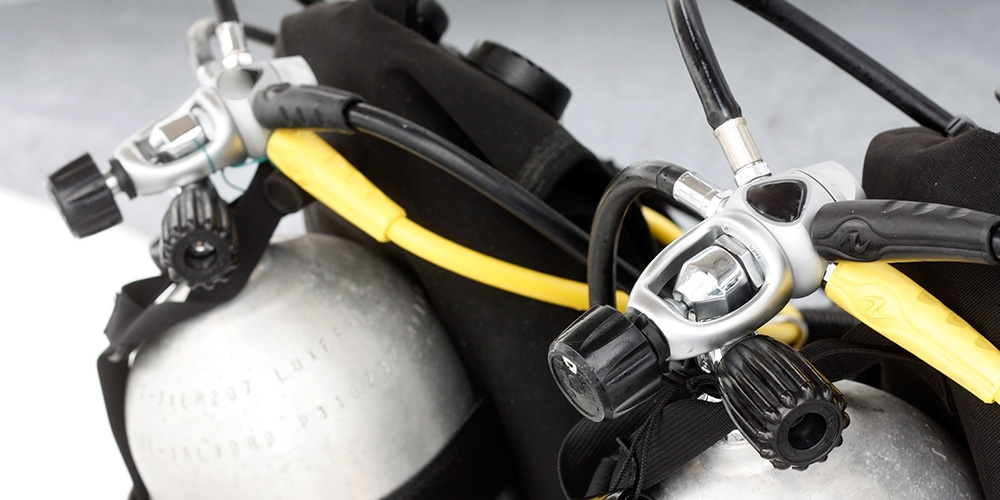
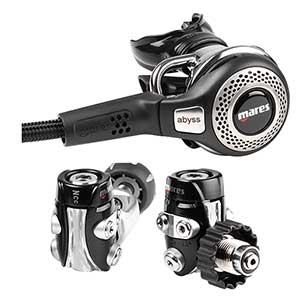
The Abyss 52 second stage regulator comes with a compact high-performance DIN first stage MR52 featuring 2 high-pressure ports and 4 low-pressure ports.
A diving regulator is one of the most important pieces of life-support equipment in any SCUBA setup because it allows divers to breathe compressed air safely and comfortably underwater at varying depths and pressures. Without a properly functioning regulator, the extremely high-pressure air stored inside a scuba cylinder would be impossible to breathe directly.
Modern SCUBA regulators are designed to reduce tank pressure in controlled stages so air reaches the diver at a breathable intermediate pressure regardless of changing depth or cylinder pressure. Reliable regulators also help minimize breathing effort, improve gas delivery consistency and reduce diver fatigue during long dives.
Today’s diving regulators are significantly more advanced than earlier generations. Modern designs improve cold-water performance, breathing smoothness, corrosion resistance and airflow efficiency while also integrating ports for buoyancy compensators, dry suits, pressure gauges and dive computers.
Choosing the right regulator depends heavily on the type of diving you plan to do. Recreational warm-water diving, technical diving, cold-water diving, wreck diving and travel diving all place different demands on regulator performance and configuration.
This guide explains how SCUBA regulators work, the differences between DIN and yoke systems, what features matter most in first and second stage regulators and how to select the best regulator setup for your diving style and environment.
- How SCUBA Regulators Work
- Understanding First Stage Regulators
- DIN vs. Yoke Regulators
- Ports and Air Distribution
- Second Stage Regulator Features
- What an Octopus Regulator Does
- Balanced vs. Unbalanced Regulators
- Cold Water Diving Considerations
- Regulator Comfort and Ergonomics
- Regulator Maintenance and Service
- How to Choose the Right SCUBA Regulator
- Final Thoughts
How SCUBA Regulators Work
SCUBA stands for Self-Contained Underwater Breathing Apparatus. A regulator system allows divers to breathe compressed air stored inside a scuba cylinder by reducing the cylinder’s extremely high pressure into breathable pressure levels.
Most modern scuba regulators use a two-stage pressure reduction system:
- First stage regulator: Reduces tank pressure to intermediate pressure
- Second stage regulator: Delivers breathable air to the diver on demand
The first stage attaches directly to the scuba cylinder valve, while the second stage is the mouthpiece regulator the diver breathes from underwater.
As the diver inhales, the second stage senses slight negative pressure and automatically opens an internal valve to deliver air.
Why Two Stages Are Necessary
Air inside a scuba tank is stored at extremely high pressure — often 3,000 PSI or more.
Breathing directly from tank pressure would be impossible and dangerous.
The two-stage regulator system safely reduces this pressure in controlled steps.
How Regulators Adjust to Depth Automatically
As divers descend deeper underwater, surrounding water pressure increases.
Modern regulators automatically compensate for these pressure changes so the diver receives air at the correct breathing pressure regardless of depth.
Understanding First Stage Regulators
The first stage regulator attaches directly to the scuba cylinder and performs the initial pressure reduction.
Its primary job is reducing high-pressure cylinder air into intermediate-pressure air that can then be safely delivered through hoses to the diver’s second stage regulator and other equipment.
Most first stage regulators also distribute air to:
- Primary second stage regulator
- Alternate air source (octopus)
- BCD inflator
- Submersible pressure gauge
- Dry suit inflator systems
Piston vs. Diaphragm First Stages
Most modern first stage regulators use either piston or diaphragm internal designs.
Piston regulators are known for high airflow and mechanical simplicity.
Diaphragm regulators isolate internal components from water and contaminants more effectively, making them especially popular for cold-water and technical diving.
Balanced vs. Unbalanced First Stages
Balanced regulators maintain more consistent airflow as tank pressure decreases during the dive.
Unbalanced designs may require slightly more breathing effort as cylinder pressure drops.
DIN vs. Yoke Regulators
There are two primary first-stage attachment styles used in scuba diving:
- DIN regulators
- Yoke regulators
DIN Regulators
DIN (Deutsche Industrie Norm) regulators thread directly into the tank valve.
The O-ring sits inside the regulator connection itself, helping protect it from external damage.
DIN systems are widely preferred for:
- Technical diving
- Cold-water diving
- High-pressure tanks
- Advanced recreational diving
Advantages of DIN Regulators
- More secure threaded connection
- Better high-pressure sealing
- Reduced O-ring extrusion risk
- Improved cold-water reliability
Yoke Regulators
Yoke-style regulators clamp externally over the tank valve using a yoke screw.
The tank valve itself contains the sealing O-ring.
Yoke systems remain extremely common in recreational diving and rental operations worldwide.
Advantages of Yoke Regulators
- Widely available worldwide
- Common at rental operations
- Simple setup for recreational divers
Why O-Ring Inspection Matters
Damaged or deteriorated O-rings can create dangerous air leaks.
Divers should inspect tank O-rings before every dive, especially when using rental cylinders.
Ports and Air Distribution
First stage regulators contain multiple ports that distribute air to other diving equipment.
These include:
- High-pressure ports (HP)
- Low-pressure ports (LP)
High-Pressure Ports
High-pressure ports typically connect to:
- Submersible pressure gauges
- Wireless air transmitters
Low-Pressure Ports
Low-pressure ports supply air to:
- Primary regulator
- Octopus regulator
- BCD inflator
- Dry suit inflator
Why Port Positioning Matters
Port placement affects hose routing, comfort and streamlining.
Technical divers often prefer regulators with optimized hose-routing geometry for cleaner equipment configuration.
Second Stage Regulator Features
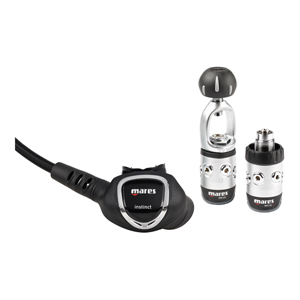
The Instinct 12S second stage regulator is designed for comfort, low breathing effort and improved field of vision.
The second stage regulator is the portion divers actually breathe from underwater.
Second stages are demand valves, meaning they deliver air only when the diver inhales.
Modern second stages are engineered to minimize breathing resistance and reduce jaw fatigue during extended dives.
Comfort Matters More Than Many Divers Realize
A poorly balanced or uncomfortable second stage can cause:
- Jaw fatigue
- Mouth irritation
- Breathing discomfort
- Diver fatigue over long dives
Ergonomic mouthpieces and lightweight housings significantly improve comfort.
Adjustable Breathing Resistance
Some advanced regulators allow divers to manually adjust inhalation resistance.
This helps:
- Fine-tune breathing effort
- Reduce free-flow risk
- Adapt to varying dive conditions
Purge Valves
Second stage regulators include purge buttons that force air through the regulator to clear water from the housing.
Oversized purge buttons are especially useful while wearing thick dive gloves.
Exhaust Valve Design
High-quality regulators route exhaled bubbles away from the diver’s field of vision.
This improves visibility underwater and reduces distraction during photography, navigation and marine life observation.
What an Octopus Regulator Does
An octopus regulator is an alternate second-stage regulator carried as an emergency backup air source.
It is typically attached to the same first stage as the primary regulator.
The octopus serves two primary purposes:
- Backup breathing source if the primary regulator fails
- Emergency air-sharing with another diver
Why Octopus Regulators Are Brightly Colored
Most octopus regulators are yellow or brightly colored for quick identification during emergencies.
Easy visibility becomes extremely important during low visibility or stressful emergency situations.
Symmetrical Octopus Designs
Some octopus regulators use symmetrical housing designs that allow easy use from either side of the diver.
This improves flexibility during emergency air-sharing situations.
Balanced vs. Unbalanced Regulators
Balanced regulators maintain more consistent breathing performance throughout the dive regardless of tank pressure.
As the tank empties, balanced systems continue delivering smooth airflow with minimal breathing resistance changes.
Benefits of Balanced Regulators
- More consistent airflow
- Reduced breathing effort
- Improved deep-diving performance
- Better high-demand airflow
When Unbalanced Regulators Are Acceptable
Many entry-level recreational divers still use unbalanced regulators successfully for warm-water recreational diving.
However, balanced systems generally offer superior comfort and performance.
Cold Water Diving Considerations
Cold-water diving places additional demands on regulators because rapidly expanding compressed air cools dramatically.
This cooling effect can create regulator icing and free-flow problems in very cold water.
Features Important for Cold Water Diving
- Environmentally sealed first stages
- Cold-water rated regulators
- High airflow capacity
- Freeze-resistant designs
Why Environmental Sealing Matters
Environmentally sealed regulators prevent water, salt and contaminants from entering critical internal first-stage components.
This improves reliability in cold or contaminated water environments.
Regulator Comfort and Ergonomics
Comfort becomes increasingly important during repetitive or long-duration dives.
Well-designed regulators reduce physical strain and breathing fatigue significantly.
Features That Improve Comfort
- Lightweight second stages
- Soft ergonomic mouthpieces
- Flexible hoses
- Compact profile designs
- Reduced inhalation resistance
Why Hose Routing Matters
Poor hose routing creates jaw tension and drag underwater.
Proper hose positioning improves both comfort and streamlining.
Regulator Maintenance and Service
SCUBA regulators require routine maintenance to remain safe and reliable.
Basic Regulator Care Includes:
- Rinsing thoroughly with fresh water after dives
- Keeping dust caps dry
- Protecting hoses from kinks
- Storing regulators out of direct sunlight
- Annual inspection and service
Why Professional Service Matters
Regulators contain precision internal components that wear gradually over time.
Regular professional servicing helps maintain safe breathing performance and manufacturer warranty coverage.
How to Choose the Right SCUBA Regulator
The best regulator depends on:
- Where you dive
- Water temperature
- Dive frequency
- Travel needs
- Technical vs. recreational diving
- Comfort preferences
Questions to Ask Yourself
- Will you primarily dive warm or cold water?
- Do you travel frequently with dive gear?
- Will you dive recreationally or technically?
- Do you need dry suit compatibility?
- Do you prefer DIN or yoke systems?
General Recommendations
- Warm-water recreational diving: Standard balanced recreational regulator
- Cold-water diving: Environmentally sealed regulator
- Technical diving: DIN first stage with advanced hose routing
- Travel diving: Lightweight compact regulator systems
Final Thoughts
SCUBA regulators are among the most critical life-support systems divers use underwater. Choosing the right first and second stage setup improves breathing comfort, reliability, safety and overall dive enjoyment.
DIN vs. yoke systems, balanced vs. unbalanced designs, cold-water protection, airflow performance, comfort and hose routing all influence how a regulator performs in real-world diving conditions.
The best regulator is one that matches your diving environment, experience level and long-term diving goals while providing smooth, reliable breathing performance dive after dive.