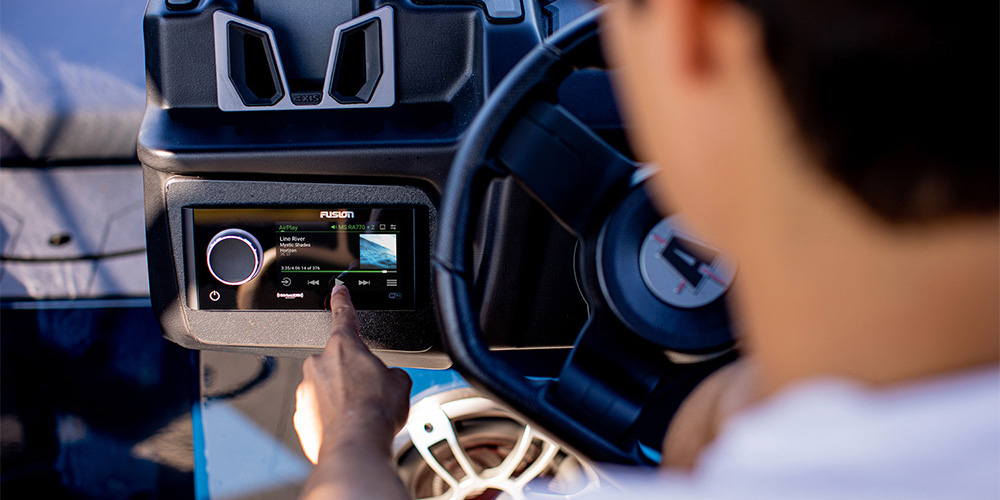
Over the past decade, streaming technology has completely transformed how people access and enjoy music, podcasts and entertainment — especially on boats where physical media storage, environmental exposure and connectivity limitations create unique challenges. Modern boaters now expect the same seamless entertainment experience on the water that they enjoy at home, in their cars or through portable devices.
However, marine environments create additional technical considerations that land-based audio systems rarely face. Saltwater exposure, vibration, limited internet bandwidth offshore and the acoustics of open-air boating all influence how marine audio systems perform. As a result, building a great onboard streaming experience requires more than simply adding speakers and connecting a smartphone.
Installing a quality marine stereo system with properly matched marine-grade amplifiers, speakers and head units is the foundation of excellent onboard sound. But understanding how streaming technology works — and how different wireless technologies and codecs affect sound quality — is equally important for maximizing audio performance on the water.
This guide explains how music streaming works in marine environments, the differences between Wi-Fi and BLUETOOTH® audio streaming, how codecs affect sound quality and what boaters should know when building a high-quality marine audio system for streaming entertainment underway. :contentReference[oaicite:0]{index=0}
- How Music Streaming Works
- Why Marine Audio Streaming Is Different
- Understanding Buffering and Connectivity
- What Bit Rate Means for Audio Quality
- Wi-Fi vs. BLUETOOTH Streaming
- What Audio Codecs Do
- Lossy vs. Lossless Audio
- Popular Music Streaming Platforms
- Marine Audio Systems for Streaming
- How to Improve Streaming Audio on Your Boat
- The Future of Marine Audio Streaming
- Final Thoughts
How Music Streaming Works
Music streaming technology allows audio files to be transmitted continuously over wired or wireless internet connections rather than permanently stored on a local device.
Instead of downloading an entire media file before playback begins, streaming services send small packets of audio data sequentially so playback can start almost immediately.
Popular streaming services such as Spotify®, TIDAL®, Apple Music®, Pandora® and YouTube® Music operate using remote cloud-based servers that store enormous music libraries accessible through internet-connected devices.
As long as the user maintains a stable internet connection, audio content can be streamed on demand directly to a marine stereo system, smartphone, tablet or network-connected audio receiver.
Why Streaming Became So Popular
Streaming eliminates the need to store massive music libraries locally on phones, tablets or onboard storage devices.
Instead of carrying thousands of downloaded files, boaters can instantly access millions of songs, playlists and podcasts through cloud-based streaming platforms.
How Streaming Differs from Downloads
Traditional downloads store media permanently on a device.
Streaming temporarily buffers media for playback without permanently transferring ownership of the actual audio files.
Why Marine Audio Streaming Is Different
Boats create unique challenges for streaming entertainment systems because marine environments are far more demanding than homes or automobiles.
Challenges include:
- Changing internet signal strength
- Limited offshore cellular coverage
- Saltwater corrosion exposure
- Open-air listening environments
- Engine and wind noise
- Electrical system fluctuations
- Moisture and vibration
These conditions place greater demands on both the audio hardware and the wireless transmission technology being used.
Why Open-Air Audio Requires More Power
Unlike enclosed vehicles or home listening rooms, boats lose sound energy rapidly in open-air environments.
This is why marine audio systems often require:
- Higher amplifier output
- Marine-specific speakers
- Improved signal quality
- Better source audio quality
Why Reliable Connectivity Matters Offshore
Streaming depends heavily on internet connectivity.
As boats travel farther offshore, cellular data connections may weaken or disappear entirely, affecting streaming reliability.
Understanding Buffering and Connectivity
Streaming systems use buffering to temporarily preload several seconds of audio into memory.
This allows playback to continue briefly even if the internet connection fluctuates or momentarily drops.
Buffering helps prevent interruptions caused by:
- Weak cellular signals
- Network congestion
- Wi-Fi instability
- Offshore movement
Why Slow Connections Affect Audio Performance
When internet bandwidth becomes too limited, the streaming system may:
- Pause playback
- Reduce audio quality automatically
- Increase buffering delays
- Interrupt playback entirely
This is especially common while boating in remote coastal areas or crowded marinas with overloaded wireless networks.
Offline Downloads vs. Streaming
Many streaming services now offer temporary offline downloads for subscribers.
This allows boaters to preload playlists before leaving shore where internet access may become unreliable.
What Bit Rate Means for Audio Quality
Bit rate measures how much digital audio data is transmitted each second during playback.
Bit rate is typically measured in kilobits per second (Kbps).
Generally speaking:
- Lower Kbps = more compression and lower detail
- Higher Kbps = more detail and better sound quality
Higher bit rates preserve more of the original recording’s dynamic range, clarity and depth.
Examples of Common Streaming Bit Rates
- 128 Kbps: basic compressed audio
- 256–320 Kbps: high-quality compressed audio
- Lossless streaming: thousands of Kbps
Why Marine Systems Benefit from Better Source Audio
High-quality marine speakers and amplifiers can reveal weaknesses in low-quality compressed audio files.
Better source quality becomes increasingly noticeable on premium marine audio systems.
Wi-Fi vs. BLUETOOTH Streaming
Modern marine streaming systems primarily use two wireless technologies:
- Wi-Fi® networking
- BLUETOOTH® connectivity
Both technologies transmit audio wirelessly, but they differ dramatically in bandwidth capacity and potential sound quality.
BLUETOOTH Audio Streaming
BLUETOOTH audio systems are extremely common because they are:
- Easy to use
- Widely compatible
- Affordable
- Simple to install
However, BLUETOOTH bandwidth limitations generally restrict streaming quality to compressed MP3-level audio.
Typical BLUETOOTH streaming quality reaches approximately 320 Kbps.
Wi-Fi Audio Streaming
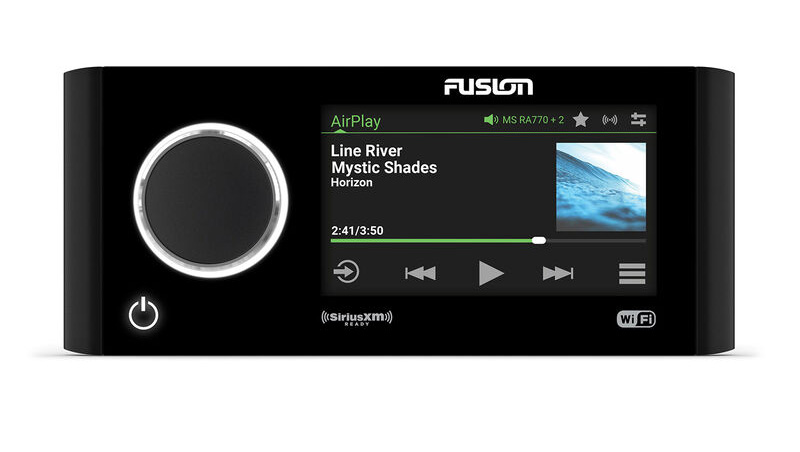
The award-winning Fusion® Apollo series supports Wi-Fi®, BLUETOOTH®, Apple AirPlay® 2, DSP technology and advanced high-fidelity marine streaming capabilities.
Wi-Fi-based audio systems support dramatically higher data throughput than BLUETOOTH.
High-fidelity Wi-Fi streaming can exceed 9,000 Kbps depending on the file format and codec being used.
This allows:
- Higher resolution audio
- Reduced compression
- Improved dynamic range
- Better clarity and detail
Why Wi-Fi Supports Better Sound Quality
Wi-Fi functions like a much larger digital “pipe” capable of carrying far more audio information simultaneously.
More transmitted data means less aggressive compression and higher potential fidelity.
When BLUETOOTH Still Makes Sense
BLUETOOTH remains extremely practical for casual onboard listening because of its simplicity and broad device compatibility.
For many recreational boaters, BLUETOOTH streaming still provides excellent everyday performance.
What Audio Codecs Do
Audio codecs are digital processing systems that encode and decode audio data for storage and streaming.
Codecs help reduce file sizes while maintaining acceptable audio quality.
Different codecs compress audio differently depending on the balance between:
- File size
- Bandwidth efficiency
- Audio quality preservation
Why Compression Exists
Uncompressed audio files are extremely large.
Compression allows music streaming services to deliver audio more efficiently while reducing storage and bandwidth requirements.
Popular Audio Codecs
- MP3
- AAC
- ALAC
- FLAC
Each codec balances quality and compression differently.
Lossy vs. Lossless Audio
Lossy Audio Compression
Lossy codecs reduce file size by permanently removing portions of the original audio information.
Examples include:
- MP3
- AAC
Modern lossy codecs still sound very good for most listeners, especially at higher bit rates.
Advantages of Lossy Audio
- Smaller file sizes
- Lower bandwidth requirements
- Faster streaming
- Reduced cellular data usage
Lossless Audio Compression
Lossless codecs compress audio without permanently removing audible information.
Examples include:
- ALAC (Apple Lossless Audio Codec)
- FLAC (Free Lossless Audio Codec)
Lossless audio preserves the original recording much more accurately.
Who Benefits Most from Lossless Streaming?
Audiophiles and boaters with premium marine sound systems often notice improved:
- Clarity
- Instrument separation
- Dynamic range
- Bass detail
Popular Music Streaming Platforms
Most major streaming services support marine audio streaming through smartphones, tablets or network-connected marine stereos.
Popular Platforms Include:
- Spotify®
- Apple Music®
- TIDAL®
- Pandora®
- YouTube® Music
- SoundCloud®
Why Streaming Quality Varies by Platform
Not all streaming services use the same codec quality or bitrate limitations.
Some services prioritize convenience and lower bandwidth, while others focus on premium high-fidelity audio.
Marine Audio Systems for Streaming
Premium marine stereos increasingly support advanced streaming ecosystems designed specifically for boating environments.
Modern marine audio systems may include:
- Wi-Fi streaming
- BLUETOOTH connectivity
- Apple AirPlay® integration
- DSP tuning
- Multi-zone audio control
- Network synchronization
Why DSP Matters
Digital Signal Processing (DSP) allows marine stereos to optimize speaker tuning based on:
- Speaker size
- Amplifier power
- Listening zones
- Acoustic environments
This significantly improves overall sound performance.
Multi-Zone Audio on Boats
Many larger boats use independent audio zones for:
- Cockpit
- Cabin
- Flybridge
- Swim platform
Modern streaming systems allow separate control of each listening area.
How to Improve Streaming Audio on Your Boat
Use High-Quality Source Files
Better source quality improves overall sound performance dramatically.
Low-quality compressed audio cannot fully utilize premium marine speakers and amplifiers.
Optimize Speaker Placement
Marine speaker positioning strongly affects clarity and volume consistency.
Proper placement helps overcome wind and engine noise.
Maintain Strong Connectivity
Reliable internet or onboard network performance reduces buffering interruptions and audio dropouts.
Download Playlists Before Offshore Trips
Offline playback helps maintain uninterrupted listening when cellular coverage becomes unreliable offshore.
The Future of Marine Audio Streaming
Marine streaming technology continues evolving rapidly.
Future systems will likely include:
- Higher-resolution wireless audio
- Improved onboard networking
- Smarter DSP integration
- Voice control integration
- Expanded multi-zone synchronization
As onboard internet connectivity improves, high-fidelity marine streaming will become increasingly common.
Final Thoughts
Music streaming has transformed marine entertainment by giving boaters instant access to enormous music libraries, podcasts and personalized playlists from nearly anywhere with connectivity.
However, achieving excellent sound quality on the water depends on more than simply pairing a phone with a stereo. Wi-Fi vs. BLUETOOTH bandwidth, codec quality, source compression and onboard audio hardware all play major roles in the listening experience.
Premium marine audio systems paired with high-quality streaming formats and properly optimized networking can deliver impressive high-fidelity sound even in demanding marine environments.
Whether you prioritize casual convenience or audiophile-level performance, understanding how streaming technology works helps you build a better marine entertainment system for every day on the water.