By Tom Burden, West Marine Technical Editor | Tom Burden has worked in the marine industry for over 30 years, served as West Marine's Technical Editor, and is a lifelong boater, boatbuilder, and sailing instructor.
I tested Hydrocoat ECO on my own boat starting in October 2015, and I chose it for a reason that has only become more relevant in the years since: copper antifouling paint is under increasing regulatory scrutiny in the harbors where many of us keep our boats, and the question of what actually works as a replacement is one that matters practically, not just environmentally. Below I'll give you my honest first-hand experience with the product, and I'll update you on where the regulatory landscape actually stands today — because a lot has changed since I first applied this paint.
Why Copper-Free Antifouling Paint Matters Now
Copper has been the dominant biocide in antifouling bottom paint since the 1980s, and for good reason — it works. But copper is highly toxic to salmon and other aquatic species even at low concentrations. It interferes with their sense of smell, which impairs their ability to detect predators and return to spawning streams. Young salmon are particularly susceptible. As measured copper concentrations in marina basins have risen over decades, regulators in Washington State and California have moved to address it — though the path has been complicated.
Here is the current regulatory status as of 2025, drawn directly from state agency publications:
Washington State: Washington enacted its Antifouling Paints Law in 2011, originally targeting a copper ban effective in 2018. The timeline has been repeatedly revised as the Washington Department of Ecology studied whether available alternatives are genuinely safer. Their findings have been striking: multiple independent reviews found that some non-copper biocidal alternatives may be more environmentally harmful than copper itself. As a result, Washington's Department of Ecology concluded in its 2024 report to the Legislature that safer and effective alternatives are not yet feasible, reasonable, and readily available — and the potential restriction on copper-based antifouling paints will not take effect in 2026 as previously planned. The next review report is due June 30, 2029. One action that did take effect: irgarol (also known as cybutryne), a biocide previously used in some antifouling paints, has been banned for use on recreational vessels in Washington as of January 1, 2023, after studies showed it to be more toxic to marine life than previously believed.
California: California regulates copper antifouling paints through the Department of Pesticide Regulation (DPR), which as of July 1, 2018 limits registered copper-based antifouling paints to a maximum adjusted daily mean copper release rate of 9.5 micrograms per square centimeter per day. Most common recreational antifouling paints meet this threshold. Individual harbors face additional requirements through Total Maximum Daily Load (TMDL) regulations under the Clean Water Act. Marina del Rey Harbor — the largest small-boat harbor in North America — has been formally listed as an impaired water body due to copper levels, and the Los Angeles Regional Water Quality Control Board approved amendments to its TMDL in June 2024, incorporating a water effects ratio for copper and extending the compliance deadline to March 2026. San Diego's Shelter Island Yacht Basin and Newport Harbor face similar TMDL requirements. Boaters in these harbors are encouraged to use non-biocide bottom paints or the lowest leach rate copper paints available — the county publishes a ranked list of paints by copper release rate for Marina del Rey boaters specifically.
The net result: if you keep your boat in Puget Sound, Marina del Rey, San Diego, Newport Bay, or a growing number of regulated California harbors, copper-free or low-leach-rate paint is not just an environmental preference — it is increasingly a compliance requirement or a practical necessity to avoid future restrictions.
What Hydrocoat ECO Is and How It Works
Pettit's Hydrocoat ECO is a water-based, copper-free, co-polymer ablative antifouling paint. It uses two active biocides: ECONEA (tralopyril) at the highest level available in a recreational antifouling product, and zinc pyrithione as a slime inhibitor. It also contains PTFE, which creates a low-friction surface that can slightly reduce hull drag.
The ablative mechanism matters for how you apply and maintain it. As the boat moves through the water, the paint film gradually wears away, releasing biocide from fresh paint below. This controlled ablation serves two purposes: it delivers consistent biocide concentration at the hull surface over a multi-season service life, and it eliminates the paint buildup that accumulates with hard antifouling paints over years of recoating. With an ablative like Hydrocoat ECO, you apply new coats directly over previous coats without sanding between seasons, as long as paint is still visible on the hull.
Because it uses water as a carrier rather than petroleum solvents, Hydrocoat ECO has meaningfully lower VOC content than solvent-based antifouling paints, cleans up with soap and water, and has no heavy solvent smell during application — a practical difference anyone who has spent a day in a boatyard applying conventional bottom paint will immediately appreciate. It is compatible with virtually all bottom paint substrates and is safe for use on aluminum and steel as well as fiberglass, which solvent-based copper paints are not.
My Application Experience
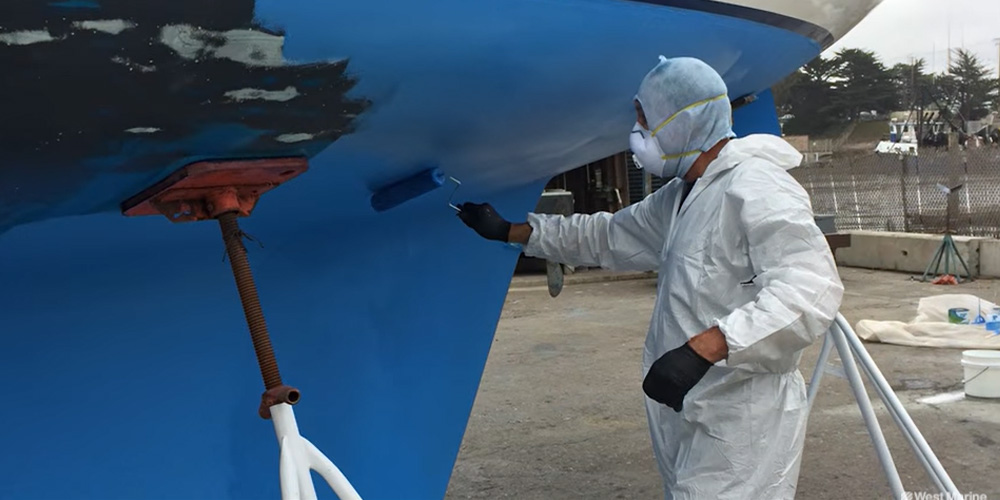
I applied Hydrocoat ECO at my October 2015 haulout. The water-based formulation requires some adjustment in technique compared to solvent-based paints. I used a short-nap roller (3/16" maximum nap, as specified), applied thin coats, and worked in moderate temperatures. The absence of solvent fumes was the most immediately noticeable difference — the application experience is genuinely more comfortable. Pettit recommends thinning the paint approximately 5–10% for the smoothest possible finish when rolling. Mix thoroughly before and during application to keep the biocide evenly distributed.
The video below documents my application process and initial observations in detail.
Performance: What You Should Realistically Expect
Hydrocoat ECO has received consistently strong reviews from boating journalists and customers across a range of conditions. Boating Magazine conducted panel testing on the product. User reviews from boatyards in brackish water environments like the Hudson River, as well as saltwater applications, report effective protection with regular bottom cleaning by a diver.
There are conditions where copper-free ablatives face a steeper challenge than copper paints. Tropical and subtropical waters — including South Florida, the Caribbean, and Gulf Coast — present the most aggressive fouling pressure, and ablative paints in these environments generally require more frequent bottom cleaning than in colder northern waters. Hydrocoat ECO is formulated for use in tough marine environments, including tropical conditions, but if you're keeping your boat in warm, high-fouling waters and rarely move it, set your expectations accordingly and plan on more frequent diver cleanings than you might need with a high-copper paint. For boats that are sailed or run regularly, the ablation process works as designed and performance is typically strong.
One note specific to Washington State boaters: ECONEA (tralopyril), one of Hydrocoat ECO's two active biocides, is currently legal for use in Washington. Washington's 2024 Ecology report identified Sea-Nine (DCOIT) as the one alternative biocide that may be considered "safer" than copper based on current data, but noted insufficient performance data. The status of other biocidal alternatives — including ECONEA and zinc pyrithione — remains under review. Washington boaters should confirm the current registration status of any antifouling product with the Washington State Department of Agriculture before purchasing.
Who Should Consider Hydrocoat ECO
Hydrocoat ECO is the right choice to evaluate if any of the following apply to your situation: you keep your boat in a harbor with active copper TMDL requirements (Marina del Rey, Shelter Island, Newport Bay, or other regulated California harbors); you have an aluminum hull, aluminum outdrive, or aluminum saildrive where copper paint cannot be used; you want to minimize VOC exposure and solvent smell during annual painting; you want a multi-season ablative that eliminates sanding between coats; or you are proactively moving away from copper ahead of future regulatory changes in your area.
It is not the automatic choice if you are in a non-regulated harbor with aggressive fouling pressure and rarely move the boat — in that specific scenario, a copper ablative with a higher biocide load may still provide more consistent protection.
Frequently Asked Questions: Copper-Free Antifouling Paint
Is copper antifouling paint still legal in Washington State?
Yes, as of 2025. Washington's Department of Ecology concluded in its 2024 report to the Legislature that safer and effective copper alternatives are not yet feasible, reasonable, and readily available statewide, so the potential 2026 restriction on copper-based antifouling paints will not take effect. The next review is due June 30, 2029. One exception: irgarol (cybutryne) paints are banned for use on recreational vessels in Washington as of January 1, 2023. Always confirm the current registration status of specific products with the Washington State Department of Agriculture before purchasing.
Is copper antifouling paint banned in California?
No, but it is regulated. California's Department of Pesticide Regulation limits registered copper-based antifouling paints to a maximum adjusted daily mean copper release rate of 9.5 micrograms per square centimeter per day, effective July 1, 2018. Most recreational antifouling products sold in California meet this threshold. Separately, individual harbors including Marina del Rey, Shelter Island Yacht Basin in San Diego, and Newport Harbor face Total Maximum Daily Load (TMDL) requirements that encourage or require boaters to use non-copper or low-leach-rate copper paints. If you keep your boat in one of these harbors, check the specific requirements with your harbor authority.
Can I use copper antifouling paint on an aluminum hull?
No. Copper is galvanically incompatible with aluminum and will accelerate corrosion of aluminum surfaces it contacts, including hulls, outdrives, and saildrives. Copper-free antifouling paints like Hydrocoat ECO are safe for use on aluminum and are the correct choice for any boat with aluminum underwater surfaces.
How does Hydrocoat ECO compare to copper antifouling in performance?
In most temperate-water conditions with a boat that is used regularly, Hydrocoat ECO delivers comparable antifouling protection to copper-based ablatives. The ablative mechanism works similarly — paint wears away with use to release fresh biocide — and ECONEA is an effective broad-spectrum biocide. Performance is most comparable in conditions where the boat is moved regularly, which activates the ablation process. In very warm, high-fouling water with minimal boat usage, a high-copper paint may provide stronger protection with less frequent cleaning. Pettit's test data shows that antifoulants made with 6% ECONEA are comparable in effectiveness to those made with 50% copper.
Can I apply Hydrocoat ECO over my existing copper bottom paint?
In most cases, yes. Hydrocoat ECO is compatible over almost all existing bottom paints, including copper-based ablatives and hard paints. The exception is if your existing paint is severely built up or in poor condition — in that case, mechanical removal or sanding down to a sound surface is recommended before applying any new antifouling paint. When switching from a hard copper paint to an ablative, ensure the old paint is sound and well-adhered before applying Hydrocoat ECO over it.