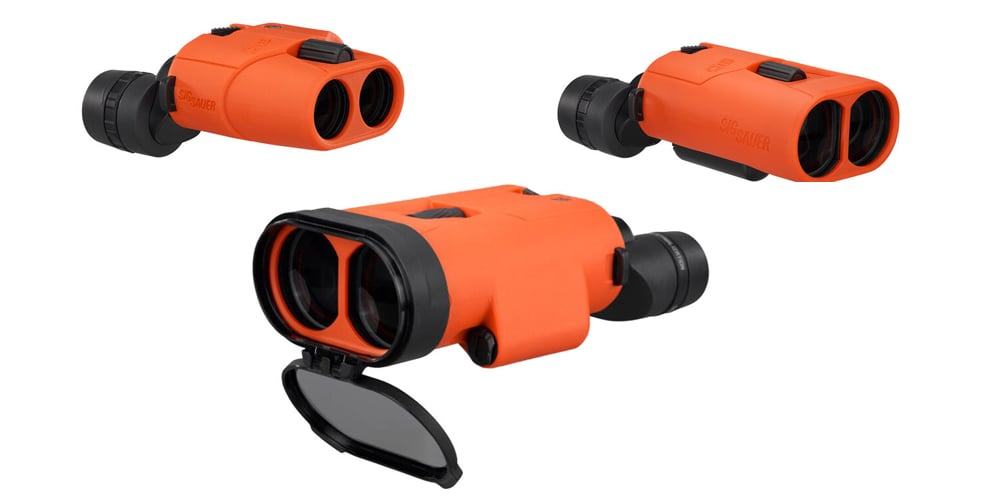
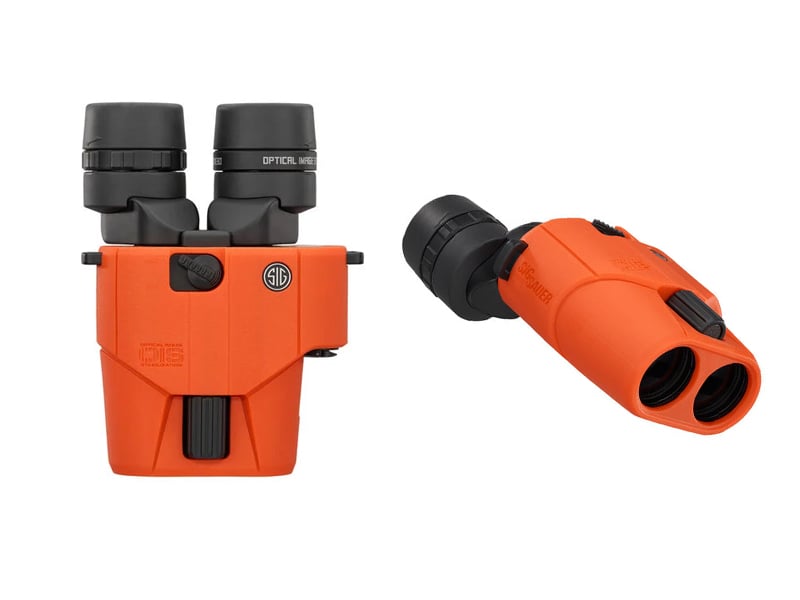
Sig Sauer's ZULU6 HDX OIS 16 x 42 Image Stabilized Marine Binoculars are waterproof and feature 16x magnification.
Image-stabilizing (IS) binoculars solve the single biggest problem with high-magnification optics on a boat: the platform never holds still. Waves, engine vibration, boat speed, and the simple act of bracing yourself on a moving deck make standard binoculars above 7x magnification nearly impossible to use effectively at sea. IS binoculars automatically compensate for that motion in real time, delivering sharp, usable images at magnifications of 14x, 16x, and 18x — two to two-and-a-half times what a conventional marine binocular can practically achieve from a moving boat.
That difference in magnification is not academic. At 7x, you can identify a vessel type or read a channel marker at moderate distance. At 16x, you can read a boat name, spot a person in the water, assess sea conditions ahead, or identify a navigation hazard at a range that gives you meaningful time to respond. For offshore passage-making, coastal cruising, fishing, and search-and-rescue applications, that additional reach changes what you can see and when.
Why Standard Binoculars Max Out at 7x on a Boat
The practical limit of hand-held binoculars on a boat is set by angular motion, not optics. Every time the binocular moves — and on a moving boat it is always moving — the image moves proportionally to the magnification. At 7x, a small hand tremor shifts the image a manageable amount. At 14x, the same tremor shifts it twice as far. At 16x, the image is moving so rapidly that your eye cannot track a target, and the visual result is an unusable blur. This is the same motion that makes a standard binocular nearly useless in any sea state above flat calm at magnifications above 7x, regardless of the quality of the glass. The optics are fine — the problem is physics.
Traditional 7x50 binoculars became the standard for recreational boating specifically because 7x is the highest magnification at which an average person can hold a steady enough image from an unstable platform to be useful. The 50mm objective lens was paired with that magnification to maximize the exit pupil — the circle of light reaching each eye — for low-light and night use. IS binoculars eliminate the magnification ceiling by mechanically or electronically stabilizing the image, allowing useful magnifications of 14x to 18x from a hand-held, battery-powered unit on a moving boat.
How Sig Sauer's Image Stabilized Binoculars Work
SIG SAUER's ZULU6 HDX OIS binoculars use Optical Image Stabilization (OIS) — a physical, lens-based stabilization system rather than a digital correction applied to the image after it is captured. The distinction matters: digital stabilization crops the image and processes it electronically, which degrades resolution and introduces lag. OIS works by suspending a lens element inside the optical path on a floating mount. Onboard sensors continuously detect angular motion of the binocular body, and the suspended element shifts its physical position in real time to counteract that motion — keeping the optical axis aligned with your target even as the binocular housing moves around it.
The ZULU6 HDX OIS uses SIG SAUER's proprietary OIS system with two user-selectable modes: Scan Mode, designed for general observation and scanning wide areas, and Target Mode, which increases stabilization intensity by up to 50% for holding on a specific target at distance. The HDX optical system uses upgraded lens coatings for improved light transmission and glare reduction — relevant for marine use where glare off the water is a persistent challenge. The 16x42mm configuration carries an IPX-7 waterproof rating, meaning it is protected against submersion in up to 1 meter of water for 30 minutes — appropriate for the wet environment of a boat deck. Battery power comes from two standard AA cells, making field replacement straightforward without specialized batteries or charging equipment.
The ZULU6 HDX PRO Marine is a further-developed model in the same family, featuring 50mm objective lenses (versus 42mm in the HDX OIS), SIG's OmniScan OIS technology — which uses a digital accelerometer to automatically adjust the degree of stabilization based on how much motion is detected, eliminating the need to manually toggle between modes — and 40+ hours of battery runtime. The Marine version is wrapped in high-visibility orange body armor and includes a floating neck strap and waterproof Pelican carry case, specifically configured for on-water use.
What to Consider When Choosing IS Binoculars for a Boat
Magnification and objective lens size are the two primary specifications. Higher magnification delivers longer range but reduces field of view — at 16x, you are looking through a narrower window than at 14x, which makes initially locating a target harder. Larger objective lenses (50mm vs. 42mm) gather more light, which improves low-light and dawn/dusk performance — relevant for dawn fishing departures and evening arrivals. For most coastal and offshore recreational applications, 14x to 16x with a 42mm or 50mm objective is the practical range.
Waterproofing rating is non-negotiable for marine use. IPX-7 (submersion to 1 meter for 30 minutes) is the appropriate minimum for a boat deck. Fog-proofing — achieved by purging moisture from the interior and filling with nitrogen or argon — prevents internal fogging when you move between temperature environments, such as from an air-conditioned cabin to a humid cockpit.
OIS vs. electronic stabilization is a meaningful distinction. Optical stabilization (OIS) physically moves a lens element, preserving full image resolution and introducing no lag or digital artifacts. Electronic stabilization processes the image after capture and typically involves some image cropping. For a given optical quality level, OIS systems generally deliver sharper images at high magnification, which is why they are the specification used in professional marine and military binoculars.
Battery type and runtime matter at sea where recharging may not be available. Standard AA batteries that can be sourced anywhere are a practical advantage over proprietary rechargeable cells when you are offshore or cruising.
Related Articles
- Steady as You Go: SIG SAUER ZULU6 Binoculars Deliver Jitter-Free Views
- 8 Best Selling Binoculars for Boats
- Buyer's Guide to Marine Binoculars
Frequently Asked Questions: Image Stabilizing Binoculars for Boats
Why can't I just use regular high-powered binoculars on a boat?
Standard binoculars above 7x magnification are effectively unusable on a moving boat in most sea conditions. The problem is that magnification amplifies motion proportionally — at 14x, any movement of the binocular moves the image twice as far as the same movement at 7x. On a boat that is constantly pitching, rolling, and vibrating, the image bounces so rapidly at high magnification that your eye cannot fix on a target. Image-stabilized binoculars physically compensate for that motion in real time, making magnifications of 14x to 18x genuinely usable from a moving deck.
What is the difference between optical image stabilization (OIS) and electronic image stabilization?
Optical image stabilization physically shifts a suspended lens element inside the binocular to counteract detected motion, keeping the optical path aligned with the target without degrading the image. Electronic stabilization captures the image and then corrects it digitally — a process that typically involves cropping the image and can introduce lag or reduce resolution. OIS preserves full image resolution and reacts with no perceptible delay, which is why it is used in professional and military-grade marine optics. Electronic stabilization can work well at lower magnifications but tends to show its limitations at the higher magnifications (14x–18x) where stabilization is most critical.
How much magnification do I actually need for boating?
For most coastal cruising and day sailing, 14x is highly capable and provides a wider field of view than 16x or 18x, making it easier to initially locate a target. For offshore passage-making, fishing applications where you are scanning for distant bird activity or fish signs, or any scenario where maximum range is the priority, 16x or 18x with a larger 50mm objective lens delivers meaningful additional reach. The BoatUS Foundation notes that standard marine binoculars top out at 7x because anything greater becomes too unstable without IS technology — IS binoculars effectively double or triple that practical ceiling.
Are image-stabilized binoculars waterproof?
The Sig Sauer ZULU6 HDX OIS and HDX Marine models both carry IPX-7 waterproof ratings, meaning they are protected against submersion in up to 1 meter of water for 30 minutes. They are also fog-proofed through nitrogen purging of the interior, which prevents the internal fogging that occurs when optics experience rapid temperature changes — common when moving between an air-conditioned cabin and a warm, humid cockpit. For marine use, both waterproofing and fog-proofing are essential specifications, not optional extras.
How long do the batteries last in IS binoculars?
The Sig Sauer ZULU6 HDX PRO Marine runs on two standard AA batteries with a rated runtime of 40+ hours of continuous use. The standard ZULU6 HDX OIS also runs on AA batteries. Using common AA cells rather than proprietary rechargeable batteries is a practical advantage at sea — standard AAs are available worldwide and can be swapped in seconds without charging equipment. An auto-shutoff feature activates after 10 minutes of inactivity to conserve battery life when the binoculars are set down.


