About the Technology
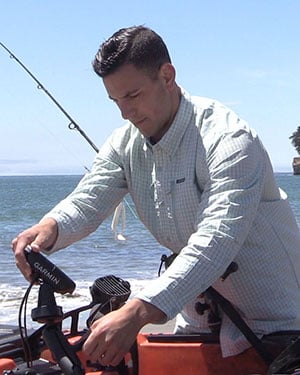
Adjusting a fishfinder mount becomes a lot easier when you are not slapping bugs. Shown is the Simms BugStopper® Guide Shirt with Insect Shield®.
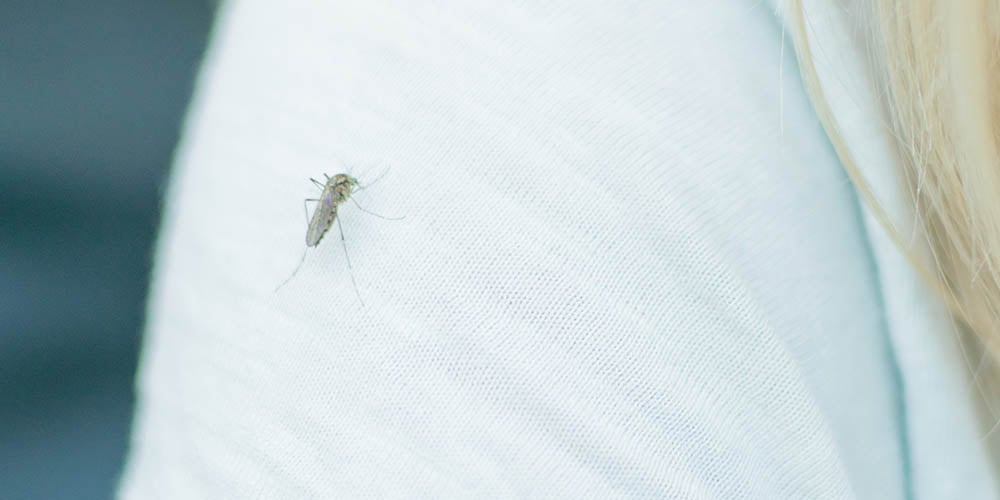
If your adventures on the water take you into buggy environments, you are probably familiar with how a pack of hungry, aggressive mosquitoes or no-see-ums can put a damper on your fun. Paddling a kayak or casting for bass while these pests have a picnic on your face and arms is genuinely miserable — and increasingly, it's more than just an inconvenience. Insect-borne diseases are a real and growing concern for outdoor boaters and anglers across the United States, and protecting yourself effectively requires more than a quick spray of repellent on exposed skin.
Insects Pose Real Health Risks
Mosquitoes transmit a range of serious diseases, including Zika, Dengue fever, Malaria, Yellow fever, and West Nile virus. Ticks are well-documented vectors for Lyme disease and Rocky Mountain spotted fever, among others. The scale of tick-borne illness in the United States has grown substantially over the past decade. According to the CDC's most recent surveillance data, over 89,000 cases of Lyme disease were reported to CDC by state health departments in 2023 — more than triple the approximately 25,000 cases reported in 2014. CDC also notes that estimates using insurance claims and other methods suggest approximately 476,000 people may be diagnosed and treated for Lyme disease each year in the United States, reflecting significant underreporting in official surveillance figures. Lyme disease is now the most common vector-borne disease in the United States, concentrated in the Northeast, mid-Atlantic, and upper Midwest — regions that overlap heavily with popular fishing, kayaking, and boating destinations.
Given these facts, when spending extended time outdoors on the water — particularly in wooded shorelines, marshy areas, or tall grass near launch ramps and campsites — keeping insect pests away from your skin and clothing is a genuine health priority, not just a comfort issue.
Limiting Your Exposure
There are several complementary approaches to insect protection, and for serious outdoor time, the most effective strategy uses more than one of them. Topical repellents applied to exposed skin — available as creams, aerosols, and pump sprays — remain the standard first line of defense. The CDC recommends EPA-registered repellents containing DEET, picaridin, IR3535, or oil of lemon eucalyptus for skin application. However, topical repellents require reapplication, wear off with sweat and water, and many people prefer to minimize how much they apply to skin directly.
Covering exposed skin with long sleeves and long pants helps but is not sufficient on its own — in heavy mosquito environments, they can penetrate the weave of lightweight fabrics and reach skin through loosely woven materials. This is where permethrin-treated garments add a meaningful additional layer of protection that topical repellents cannot replicate.
This brings us to Insect Shield® technology, which is now available in recreational apparel.
What Is Insect Shield®?
Insect Shield® is an EPA-registered process that bonds the insect repellent permethrin directly and durably to fabric fibers at the manufacturing stage. Permethrin itself has been EPA-registered as a safe and effective insecticide since 1979 and was first registered for use as a repellent on military clothing in 1990. Insect Shield's factory-treatment process was first developed in 1996 in response to a U.S. Military request for a durable, long-lasting method of bonding permethrin to uniforms, and received its first consumer-oriented EPA registration in 2003. The EPA accepted an amendment in 2006 extending Insect Shield's durability claims from 25 to 70 washes.
The key distinction between Insect Shield factory-treated garments and clothing that has been sprayed with permethrin at home is durability and bonding. Factory treatment bonds permethrin tightly to individual fabric fibers through a proprietary process, resulting in protection that is odorless at normal temperatures and rated for the expected lifetime of the garment — stated by Insect Shield as 70 washings. Today, millions of military uniforms include Insect Shield technology, and the same EPA-registered process is available in garments for recreational use. Among the most popular are the garments we offer by Simms Fishing Products and ExOfficio.
Note that Insect Shield garments should not be dry cleaned — dry cleaning removes permethrin from the fabric, reducing repellent effectiveness. Normal machine washing at home does not significantly degrade the treatment within the rated 70-wash lifespan.
Does Insect Shield® Really Work?
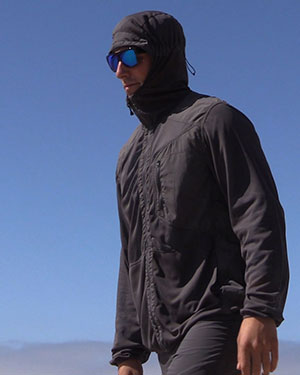
ExOfficio's Hooded Sandfly Jacket with Insect Shield® surrounds this West Marine associate in a lightweight, breathable, insect-repellent mesh.
Yes. Efficacy is measured through knockdown testing — a widely accepted scientific method used by the World Health Organization, the CDC, and the U.S. Department of Agriculture to evaluate insect repellent treated textiles. A repellent-treated fabric sample is placed in an enclosed space containing insects for a specified time period, after which the sample is removed and insect response is documented. After 70 washes, Insect Shield testing shows treated fabric to be between 80 and 96 percent effective against mosquitoes and between 95 and 100 percent effective against ticks. Insect Shield has also been proven effective against flies, sandflies, ants, chiggers, midges, and fleas.
The CDC's Yellow Book for travel medicine — a reference for physicians advising travelers — states that at a concentration of 0.5%, permethrin-treated clothing repels and kills ticks, chiggers, mosquitoes, and other biting arthropods. Permethrin-treated apparel is actively recommended by the CDC, the American Academy of Family Physicians, the World Health Organization, and the National Institute for Occupational Health and Safety as a protective measure against insects and the diseases they carry.
Is Insect Shield® Safe?
Yes. Insect Shield's permethrin-treated clothing received an EPA safety rating of Category IV — the most favorable safety classification the EPA awards for pesticide products. The EPA's evaluation of factory-treated permethrin clothing covered multiple exposure scenarios including toddlers wearing or mouthing treated clothing and military personnel wearing permethrin-treated uniforms daily. The EPA's conclusion, as stated in its assessment: permethrin factory-treated clothing is unlikely to pose any significant immediate or long-term hazard to people wearing the clothing.
Insect Shield was additionally awarded both "Hypoallergenic" and "No Allergy Potential" labels by the Hohenstein Institute, an accredited independent testing laboratory, following extensive allergy and skin sensitivity testing.
One practical note: the EPA requires that permethrin-treated clothing be washed separately from untreated clothing, as small amounts of permethrin can transfer in the wash to other fabrics. Treated garments should not be applied to skin directly — only outer clothing is treated with permethrin, not undergarments.
Does Insect Shield® Clothing Look or Feel Different?
No. The insect-repellent garments we carry by Simms and ExOfficio are designed and constructed to deliver the same performance, comfort, and features you would expect from non-treated outdoor apparel. The Simms BugStopper® Guide Shirt, for example, includes angler-specific features such as pockets for fly boxes and a sunglass chamois, all in a ventilated, breathable design built for strenuous fishing activity. For maximum breathability, the BugsAway® Sandfly™ Jacket by ExOfficio uses a lightweight mesh construction. In both cases, Insect Shield treatment is completely odorless at normal temperatures — the only difference between treated and untreated versions of these garments is the insect protection bonded into the fabric.
Who Should Consider Insect Shield® Apparel
Insect Shield clothing is worth considering for any boater, angler, or paddler who spends extended time in environments where mosquitoes, ticks, or biting flies are prevalent — marshy shorelines, wooded launch areas, creek and river fishing, camping near the water, or kayak touring. It is particularly valuable for activities in the Northeast, mid-Atlantic, and upper Midwest, where Lyme disease pressure is highest. It is a complementary tool, not a complete solution: the CDC recommends using permethrin-treated clothing together with an EPA-registered skin repellent for the most effective protection, particularly in areas with high mosquito or tick populations.
Frequently Asked Questions: Insect Repellent Clothing
How long does Insect Shield protection last?
Insect Shield's EPA-registered durability claim covers 70 normal home washings — the expected useful life of most garments. After 70 washes, testing shows treated fabric remains between 80 and 96 percent effective against mosquitoes and between 95 and 100 percent effective against ticks. Do not dry clean Insect Shield garments — dry cleaning removes permethrin from the fabric and reduces protection. Normal machine washing at home does not significantly degrade the treatment within the rated lifespan.
Is permethrin clothing safe for children?
Yes, according to EPA evaluation. The EPA's safety assessment covered multiple exposure scenarios including toddlers wearing and mouthing permethrin-treated clothing, and concluded that factory-treated permethrin clothing is unlikely to pose any significant immediate or long-term hazard. Insect Shield also holds "Hypoallergenic" and "No Allergy Potential" certifications from the Hohenstein Institute. As with all pesticide products, follow label directions — permethrin-treated clothing should not be applied directly to skin, and treated outer garments should be washed separately from other clothing.
Do I still need to use bug spray if I'm wearing Insect Shield clothing?
For exposed skin areas — hands, face, and neck — a topical repellent is still recommended. Insect Shield protects the fabric it is bonded to, not skin left uncovered. The CDC recommends using permethrin-treated clothing together with an EPA-registered skin repellent (containing DEET, picaridin, IR3535, or oil of lemon eucalyptus) for the most complete protection against mosquitoes and ticks in high-exposure environments.
How does factory-treated permethrin clothing compare to spraying permethrin on clothing yourself?
Factory treatment bonds permethrin more tightly and durably to individual fabric fibers than spray-on application, which sits more on the surface and washes out faster. Insect Shield's factory process is what allows the EPA-registered durability claim of 70 washings. Consumer spray-on permethrin products are EPA-registered and effective, but provide shorter protection — typically rated for 6 or fewer washings — and require reapplication. For garments you intend to use repeatedly over multiple seasons, factory-treated clothing provides more consistent, longer-lasting protection.
What insects does Insect Shield protect against?
Insect Shield has been tested and proven effective against mosquitoes, ticks, flies, sandflies, ants, chiggers, midges, and fleas. The CDC's Yellow Book states that at 0.5% concentration, permethrin-treated clothing repels and kills ticks, chiggers, mosquitoes, and other biting arthropods. It does not protect against stinging insects such as wasps or bees, which are not attracted to humans the same way biting insects are.