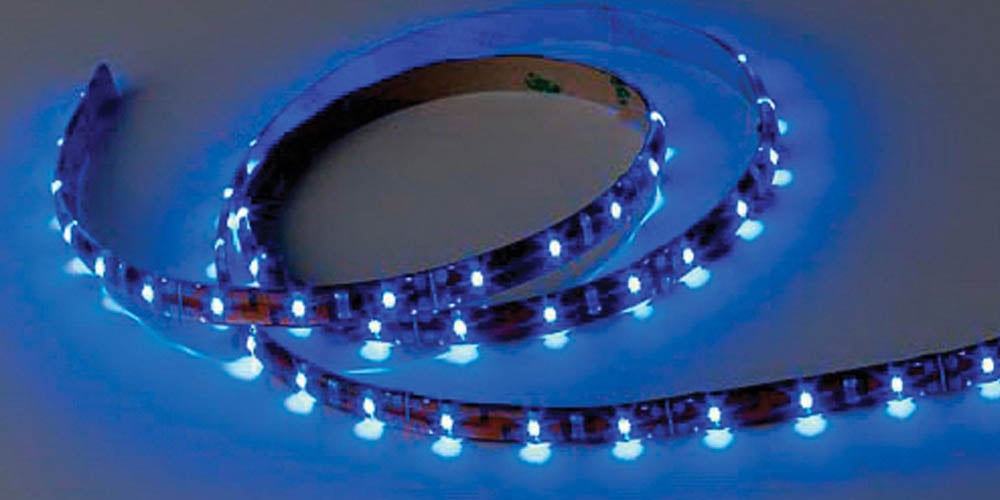
Light Emitting Diodes, more commonly known as LEDs, operate at lower temperatures, use less energy, tolerate vibration better and last far longer than conventional incandescent bulbs. They also do not contain small amounts of toxic mercury, an environmental disposal hazard associated with fluorescent and compact fluorescent lamp (CFL) lights. LEDs cost a bit more but are worth their premium price in the long run. We'll explain why.
- LEDs Use Less Energy than Incandescent Bulbs
- Uses for LEDs
- How LEDs Work
- Measuring Light
- Why Marine LEDs Are Different
- How LEDs Reduce Battery Consumption
- Choosing the Right Color Temperature
- LED Navigation Light Considerations
- Converting Your Boat to LED Lighting
- LED Lighting for Fishing Boats
- LED Lighting for Cruising Boats
- Marine LED Buying Guide
- Common LED Upgrade Mistakes
- Frequently Asked Questions
LEDs Use Less Energy than Incandescent Bulbs
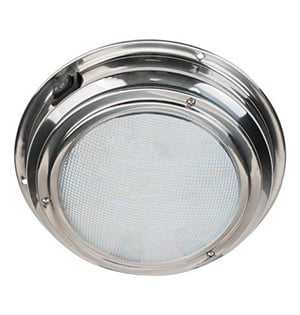
Interior LED dome lights provide a lot of light with little power consumption.
The light bulb, that marvel of technology created by Thomas Edison, operates by cramming a large volume of electrical current through a resistor encapsulated in a vacuum. This resistor, the tungsten filament, gets so hot that it glows white, and only the absence of oxygen prevents it from burning up in an instant. About five percent of the energy is released as light. The rest is mostly turned into heat.
LED technology changes that equation dramatically. Modern marine LED lights can produce comparable or greater brightness while consuming up to 90% less energy than traditional incandescent bulbs. For boaters operating from battery banks, every amp saved matters. Reduced power draw means longer battery life, less generator runtime and more available power for electronics, refrigeration, navigation equipment and onboard comforts.
In addition to energy savings, LEDs generate very little heat. This improves comfort below deck and reduces the risk of heat damage to nearby materials and fixtures.
Uses for LEDs
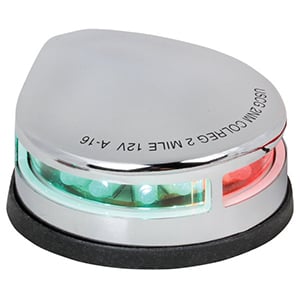
LED navigation lights are bright enough to meet USCG visibility requirements and use less energy than incandescent bulbs.
LED lighting is now used throughout modern boats, from navigation lights and anchor lights to engine room lighting and underwater illumination. As LED efficiency and brightness have improved, they have largely replaced incandescent and fluorescent technologies across the marine industry.
Common marine LED applications include:
- Cabin lighting
- Courtesy lighting
- Cockpit floodlights
- Spreader lights
- Anchor lights
- Navigation lights
- Engine room lights
- Livewell lighting
- Underwater lighting
- Trailer lighting
- Dock lighting
- Accent and RGB lighting systems
Because LEDs are solid-state devices with no fragile filament, they tolerate vibration, impacts and constant movement far better than incandescent bulbs.
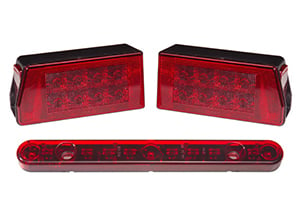
LED trailer lights are not vulnerable to thermal shock like incandescent bulbs are.
How LEDs Work
LEDs are semiconductors that allow current to flow in one direction through a P-N junction. When electricity passes through the junction, energy is released as visible light.
Unlike incandescent bulbs, LEDs do not rely on a heated filament to generate illumination. This makes them dramatically more efficient and significantly more durable in demanding marine environments.
The color emitted by an LED depends on the semiconductor materials used during manufacturing. Modern white LEDs are commonly produced using blue LEDs combined with phosphor coatings that convert part of the emitted light into a broad-spectrum white light.
Measuring Light
Watts: Measures power consumption, not brightness.
Lumens: Measures total visible light output. Lumens are the best way to compare brightness between fixtures.
Lux: Measures light intensity at a specific surface or location.
Color Temperature: Measured in Kelvin (K), indicating whether light appears warm, neutral or cool.
CRI (Color Rendering Index): Measures how accurately colors appear under a light source.
Why Marine LEDs Are Different
Marine environments present challenges that household lighting never encounters. Saltwater exposure, vibration, moisture intrusion, UV radiation and voltage fluctuations can quickly damage poorly designed fixtures.
Marine-grade LED lights are specifically engineered with corrosion-resistant housings, waterproof seals, marine wiring connections and voltage protection circuitry. Many include IP67 or IP68 waterproof ratings and are designed to withstand years of exposure to harsh marine conditions.
While automotive or household LED products may appear similar, marine-certified fixtures generally offer greater durability and longevity in wet environments.
How LEDs Reduce Battery Consumption
One of the biggest advantages of converting to LED lighting is reduced battery drain.
For example, replacing ten 20-watt incandescent cabin bulbs with equivalent LED fixtures can reduce lighting consumption from roughly 200 watts to less than 30 watts. Over an evening at anchor, this reduction can save a substantial number of amp-hours.
For cruisers and sailors operating away from shore power, reduced electrical demand can:
- Extend battery runtime
- Reduce generator operating hours
- Improve solar charging efficiency
- Reduce overall electrical system loads
- Increase energy available for navigation electronics and refrigeration
Choosing the Right Color Temperature
Color temperature affects both comfort and visibility aboard your boat.
- 2700K-3500K: Warm white light ideal for cabins and living spaces.
- 4000K-5000K: Neutral white light for general-purpose illumination.
- 5000K-6500K: Cool white light commonly used for work lights, engine rooms and fishing applications.
Many cruisers prefer warmer color temperatures below deck because they create a more comfortable environment during extended overnight stays aboard.
LED Navigation Light Considerations
Navigation lights are among the most important lighting systems aboard any vessel. When upgrading to LED navigation lights, verify that the fixture is certified to meet applicable visibility and color requirements.
Simply replacing an incandescent bulb inside an older navigation fixture may not always maintain compliance. Purpose-built LED navigation fixtures are designed to produce the correct beam angles, visibility distances and color standards required by navigation regulations.
Converting Your Boat to LED Lighting
Converting an entire boat to LED lighting is often one of the most cost-effective electrical upgrades available.
Before upgrading, confirm:
- Voltage compatibility
- Bulb base type
- Fixture dimensions
- Dimming compatibility
- Navigation light compliance requirements
Many boat owners begin by upgrading cabin lights, anchor lights and frequently used fixtures before expanding to the rest of the vessel.
LED Lighting for Fishing Boats
Fishing boats benefit significantly from LED technology. Bright, efficient lighting improves visibility during early morning launches, night fishing trips and fish-cleaning operations.
Popular fishing applications include:
- Under-gunwale courtesy lights
- Livewell illumination
- Cockpit floodlights
- Spreader lights
- Underwater fish-attracting lights
- Deck work lights
Because LEDs draw minimal power, they can remain operational for extended periods without significantly impacting battery reserves.
LED Lighting for Cruising Boats
Long-distance cruisers often prioritize energy efficiency above nearly everything else. LED lighting reduces electrical consumption throughout the vessel while improving reliability.
Common cruising upgrades include:
- Reading lights
- Cabin lighting
- Anchor lights
- Engine room lights
- Red night-vision lighting
- Courtesy lighting
The reduced power consumption of LEDs can significantly improve battery autonomy during multi-day cruising and overnight anchoring.
Marine LED Buying Guide
When selecting marine LED lighting, consider more than just brightness.
- Light output in lumens
- Color temperature
- CRI rating
- Voltage range
- Waterproof rating
- Housing materials
- Corrosion resistance
- Dimming compatibility
- Certification requirements
Choosing the right fixture for the intended application helps maximize both performance and lifespan.
Common LED Upgrade Mistakes
Avoid these common mistakes when upgrading boat lighting:
- Using household LED products in marine environments
- Ignoring voltage compatibility
- Overlooking waterproof ratings
- Installing non-certified navigation lights
- Mixing incompatible dimmers and fixtures
- Failing to protect wiring connections from corrosion
Proper installation and quality components help ensure years of reliable performance from your marine lighting system.
Frequently Asked Questions About Marine LED Lighting
Why are LED lights better for boats than incandescent bulbs?
LED lights are better for boats because they use significantly less energy, produce less heat, resist vibration and last far longer than incandescent bulbs. On boats with limited battery capacity, this lower power draw can make a noticeable difference during overnight trips or extended time away from shore power.
Can I replace my boat’s incandescent bulbs with LEDs?
In many cases, yes. Many incandescent bulbs can be replaced with LED equivalents, but you need to confirm the bulb base, voltage, polarity and fixture size before installing a replacement. Navigation lights require additional caution because the fixture must still meet visibility and color requirements after the upgrade.
What color LED light is best inside a boat cabin?
Warm white LEDs, typically in the 2700K to 3500K range, are usually best for cabins, berths and living areas because they create a more comfortable and natural feel. Cool white LEDs are better for work areas, engine rooms and fishing applications where brighter task lighting is needed.
Do LED lights save battery power on a boat?
Yes. LEDs can reduce lighting-related battery consumption by 75% to 90% compared with incandescent bulbs. This can extend battery runtime, reduce charging needs and free up power for electronics, refrigeration, pumps and other onboard systems.
Are marine LED lights waterproof?
Some marine LED lights are waterproof, but not all LEDs are designed for wet locations. Look for marine-grade fixtures with appropriate waterproof ratings, sealed housings and corrosion-resistant materials when installing lights in cockpits, bilges, engine rooms, exterior locations or underwater applications.
Why do LED lights flicker on boats?
LED flicker is often caused by voltage fluctuations, loose wiring, corrosion, poor grounding, incompatible dimmers or low-quality LED drivers. Inspect electrical connections, confirm voltage stability and make sure the LED fixture is compatible with any dimming controls.
Can I use household LED lights on a boat?
Household LEDs are not recommended for marine environments. Boats expose lighting fixtures to moisture, salt air, vibration and voltage variation. Marine-grade LEDs are designed to withstand those conditions and are generally a better long-term choice.
How long do marine LED lights last?
Many marine LED fixtures are rated for tens of thousands of hours of operation. Actual lifespan depends on fixture quality, heat management, voltage stability, installation quality and exposure to water or corrosion.
Are LED navigation lights legal?
LED navigation lights are legal when they are properly certified and installed for the vessel type and required visibility range. Avoid using uncertified replacement bulbs in older navigation fixtures unless the manufacturer confirms the combination remains compliant.
What are the best LED upgrades to start with?
The best first upgrades are usually the lights used most often or for the longest periods, such as cabin lights, anchor lights, cockpit lights and navigation lights. These upgrades provide the greatest battery savings and reliability improvements.