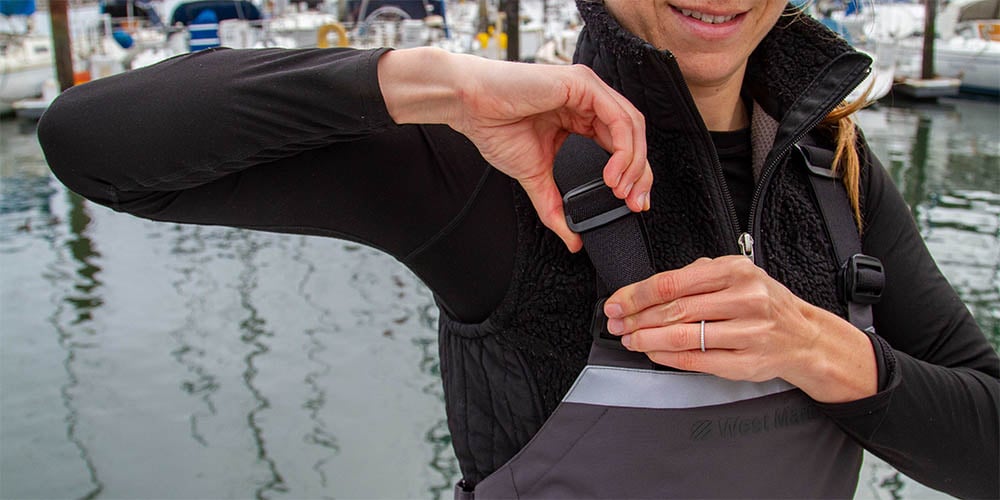
Stay Comfortable in Any Weather
Layers of technical clothing for active boating, such as foul weather gear, fleece jackets and long underwear, help keep us warm, dry and comfortable in changing weather. We can't always depend on the weather being balmy and inviting when our schedules allow us to spend a day on the water.
Boating weather may range from freezing conditions for New England frostbite sailing to hot and humid tropical weather for offshore fishing in Miami or cruising in Baja California. Staying comfortable means staying safer. If you are shivering and using your body's energy to keep warm, if you have cold hands or numb toes, or if the inside of your foul weather jacket feels like a steam bath, your ability to function and make sound decisions may suffer.
You may have difficulty gripping a line, maintaining balance on a moving foredeck, operating electronics, tying knots or reacting quickly when conditions change. Fortunately, wearing the right layered boating gear helps maintain a comfortable microclimate around your body by controlling temperature, moisture and wind exposure.
- Layered Clothing Keeps You Dry
- Three Layers in Modern Tech Gear
- The Base Layer
- The Insulating Layer
- The Weather Protection Layer
- Recommended Additions
- Layering for Warm Weather
- Layering FAQ
- Conclusion
Layered Clothing Keeps You Dry
At rest, your body gives off about 1/4 cup, or 2 oz., of sweat per hour. With moderate activity like sail trimming, that amount increases to about a pint per hour. With heavy activity, such as changing a sail in rough weather or fighting a powerful fish, output can increase to a quart per hour and heat becomes a factor too.
Since water absorbs heat 25 times faster than air of the same temperature, wet skin gets cold faster than dry skin. Staying dry is a key goal of any layered boating clothing system. Proper layering helps moisture migrate away from your skin, insulates you appropriately for the conditions and allows you to shed or add layers as your activity level changes.
The goal is not simply to stay warm. The goal is to stay dry enough, ventilated enough and protected enough to keep moving safely. If perspiration builds up inside your gear, you may feel warm while active and then become chilled once you stop moving. A good layering system helps prevent that cycle.
Three Layers in Modern Tech Gear
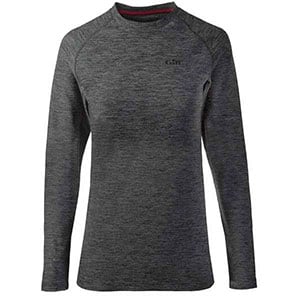
Base layers, like this one from Gill, retain heat and wick away moisture.
Modern clothing systems consist of three layers, used in many combinations to control heat transfer and manage moisture. Some combination of layers will be right for almost every condition, whether it is a complete system of wicking and insulating layers worn under waterproof, breathable offshore foul weather gear, or a simple T-shirt and jacket combination using a wind- and spray-proof shell.
In extreme cold and wet conditions, and at varying activity levels, comfort can be improved dramatically through proper layering. Several carefully selected layers are warmer and more versatile than a single heavy layer. Layering also lets you adjust quickly as the day changes: add insulation during a cold watch, remove a mid layer while grinding winches or open vents when the sun comes out.
The Base Layer
Constructed of nonabsorbent, stretchy, double-knit synthetic fibers, the base layer or wicking layer is worn next to the skin. Capillary, or wicking, action of this hydrophobic, water-repelling fabric facilitates the transfer of moisture away from the skin. Wicking allows the body's natural evaporation process to help maintain body temperature and preserve a layer of warm, dry air next to the skin.
Polyester, nylon and polypropylene are the primary fabrics used to create hydrophobic, slippery, sheer and very light material. Fabrics such as Dupont's Coolmax® and Henri Lloyd's Fast-Dri are designed to move moisture away from the skin. Our selection of men's baselayers and women's baselayers includes short and long sleeve tops, plus short and long pants.
The traditional fabric, cotton, is inferior to these synthetic fabrics at removing moisture. Wearing a cotton base layer, which can absorb up to 25% of its own weight in water, reduces the effectiveness of high-performance outer layers. Cotton may feel comfortable at the dock, but once wet it dries slowly and can leave you cold and clammy.
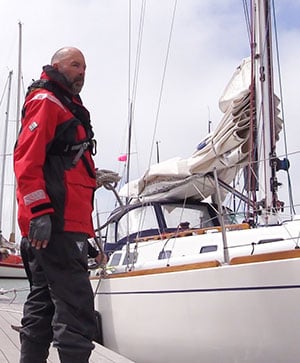
Layered gear I was wearing at the start of a 2000-mile race to Hawaii:
Base layer: Long sleeve technical top, Patagonia Capilene Midweight Long Underwear Bottoms, and Smartwool socks.
Mid layer: West Marine fleece pullover (very old, 1998), REI fleece pants
Outer layer: Kaenon Arlo sunglasses, Musto BR2 Offshore Jacket, BR2 Offshore Bibs, Ronstan 3/4 Finger Sticky Race Gloves Spinlock Deckvest™ PFD with Harness DuBarry Newport Boots with GORE-TEX lining
The Insulating Layer
Worn over the wicking layer, the insulating or mid layer acts as a buffer between warm skin and cold air or foul weather gear fabric. Its job is to reduce heat loss from convection by limiting air circulation and trapping a layer of warm air near the body.
Wool is the traditional insulating layer because it retains some insulating ability even when wet. Modern synthetic fibers like fleece are even better insulators for many boating uses because they are lighter, dry quickly, pass moisture outward and resist mildew. Densely woven fabrics, like the Polartec family of polyester fleeces, help maintain warmth by trapping air within the fabric. The insulating mid layer can be removed as conditions warm up.
Insulating layers are available in three varieties. Windbreakers are very lightweight and can increase the warmth of layering systems, but have little insulation. Shelled fleece garments combine the wind and water protection of a windbreaker with an inner layer of fleece for warmth. Fleece garments, made of 100% polyester, are ideal insulators. Fleece is soft, lightweight and has a high warmth-to-weight ratio. Even better, fleece does not absorb water, dries quickly and stays warm even when wet, making it an excellent thermal midlayer. It does not itch or chafe, so you can wear it next to your skin. It is washable and shrink-proof.
A miracle fabric? Almost. Fleece is not windproof or waterproof. However, some fleece fabrics are produced with coatings or laminates, such as Polartec Windbloc®, that make garments windproof for added warmth. Others, like Polartec Wind Pro, are made with a tighter weave to block wind penetration. Shelled jackets combine the benefits of windbreakers and fleece. They provide protection from wind and light water exposure while adding warmth. They are useful boating garments and casual wear.
The Weather Protection Layer
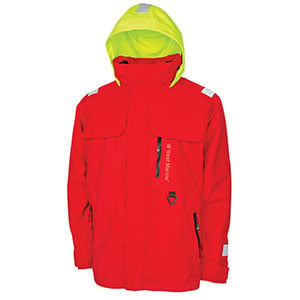
Our Third Reef jackets are lightweight, windproof, waterproof and breathable and are a great addition to your foul weather gear.
The outside layer keeps water and cold air out of the inner insulating layers and helps preserve the temperate microclimate inside your layering system. Your choice of exterior layer depends on whether rain, snow, spray or wind is a factor. Stopping wind penetration is relatively simple with tightly woven material, coated fabric or fabric with a wind-blocking membrane. Stopping moisture is more complicated.
Non-breathable foul weather gear keeps water out, but it also traps perspiration vapor inside. Breathable foul weather gear allows moisture from inside your layering system to pass through to the outside, keeping you drier and more comfortable.
Choose breathable foul weather gear that matches the kind of boating you do and the typical conditions you encounter. Do you use your boat only during the day, or do you spend time on deck or in the cockpit at three a.m.? If you regularly operate your vessel on overnight trips in nasty weather, consider offshore-rated equipment. For daytime use, coastal or inshore gear may suffice.
Highly breathable gear that is easy to adjust is especially important because perspiration can overload your foul weather gear's ability to shed moisture when you engage in intense activity. Afterward, you may feel cold and clammy. Look for hoods, zippers, vents, collars and cuffs that are easy to adjust with cold hands or gloves. We carry men's foul weather gear and women's foul weather gear to fit boaters and conditions.
Recommended Additions
The extremities, especially the head and neck, are where a great deal of heat loss can occur, so protection is critical for the head, neck, hands and feet. The layering principles apply here too. Bulk can be a serious negative factor, especially on the hands, so garments often combine the functions of several layers. Cold weather gloves may use a waterproof, breathable nylon exterior and fleece lining for insulation. Palms are reinforced with materials such as amara, a synthetic leather that does not curl, shrink or harden, and Kevlar, the material used in bulletproof vests.
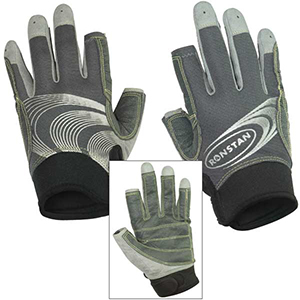
The author is a fan of the Ronstan Sticky Race Gloves.
Wearing insulating head protection can reduce the risk of hypothermia and is important for keeping warm and comfortable on a cold watch. A fleece cap provides lightweight insulation that dries quickly and keeps you warm even when wet.
Many boaters have no incentive to spend more for high-tech synthetic socks and will instead wear cotton. The problem is that cotton retains moisture, and this moisture causes friction and blisters. Cotton absorbs moisture and, in socks, that moisture stays next to the foot, creating an ideal environment for bacteria and fungi to grow and for blisters to form. Stay away from all-cotton socks when boating in cool or wet conditions.
Modern socks, like Smartwool socks, work like other base layer clothing. They move moisture away from your feet using hydrophobic yarns that resist absorbing perspiration vapor next to your foot and hydrophilic yarns on the outside to draw moisture outward where it can evaporate. This helps keep feet warm and dry during active sports or while wearing clammy boots.
Layering for Warm Weather
Layering is not only for cold weather. In hot, humid and sunny conditions, the same principles apply: manage moisture, block sun and protect yourself from wind and spray. A lightweight synthetic or sun-protective base layer can help wick sweat and reduce UV exposure. A breathable long-sleeve shirt, fishing hoodie or lightweight shell can provide sun and wind protection without overheating.
For warm-weather boating, avoid cotton when you expect spray, rain or heavy perspiration. Choose quick-drying fabrics, ventilated hats, polarized sunglasses, lightweight gloves and deck shoes or sandals that grip wet surfaces. Bring a light shell even on warm days, since wind, rain or a long run home can make conditions feel much cooler.
Layering FAQ
What are the three main layers for boating?
The three main layers are a moisture-wicking base layer, an insulating mid layer and a weather protection outer layer. Together, they help move moisture away from the skin, trap warmth and block wind, rain and spray.
Why is cotton a poor choice for boating base layers?
Cotton absorbs moisture and dries slowly. Once wet from sweat, spray or rain, it holds water against the skin and can make you cold and uncomfortable, especially when activity slows or wind increases.
What should I wear under foul weather gear?
Wear a synthetic or wool base layer next to your skin and add fleece or another insulating mid layer when conditions are cold. Avoid bulky cotton layers that trap moisture and reduce the performance of breathable outerwear.
Do I need offshore foul weather gear?
Offshore foul weather gear is best for extended trips, overnight watches, cold conditions and heavy weather. For protected daytime boating, inshore or coastal gear may be enough if it provides wind, rain and spray protection.
How do I keep my hands and feet warm while boating?
Use moisture-wicking socks, waterproof or insulated boots and gloves suited to the activity. Avoid cotton socks, protect your hands from wind and spray, and carry dry spare socks or gloves for longer trips.
In Conclusion
Wearing layered clothing helps keep you dry and comfortable because each layer is only required to do one thing well. A hydrophobic wicking layer worn next to the skin disperses perspiration outward. A middle insulating layer traps warm air, providing a barrier from cold outside air or fabric, and helps move moisture to the weather protection layer. The breathable outside layer uses hydrophilic, water vapor-absorbing coatings or microporous membranes like a heat-driven water pump, allowing water vapor molecules to escape while blocking liquid water and wind from entering.
With each layer performing its designed function, you stay drier, warmer and more alert, even when the outside environment turns hostile.