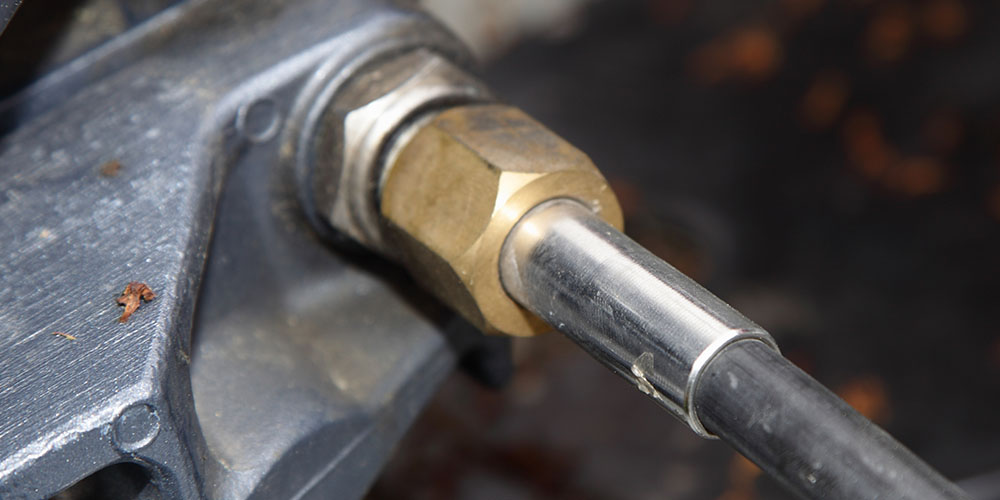
Boaters generally pay little attention to their boat’s steering system as long as it turns smoothly, holds course and does the job without excess friction or play. But as boats age, mechanical steering cables, helms and engine connection hardware can wear, corrode or develop enough free play to affect control. A stiff or sloppy steering system is not just inconvenient; it can make docking, maneuvering and high-speed handling less predictable.
When installing new steering, it’s good practice to replace a steering system with one of the same type as was originally installed in your boat—rotary with rotary, rack with rack, hydraulic with hydraulic. This helps preserve the way the boat was designed to handle and usually simplifies installation. Try to identify the type of cable from markings on the jacket, and the helm from lettering on its cast or molded body.
Repair parts for mechanical steering helms, cables and engine connection kits are not available. These components must be replaced as units for safety and convenience and, since engine interfacing is standardized on systems newer than 1976, your task is often straightforward. If you want to improve performance for faster response or lower steering effort, upgrading to No Feedback, power-assisted mechanical or hydraulic steering can result in a major improvement. The retrofit becomes more complicated, however, and requires careful consideration of fit, performance and value. Changing from the original steering configuration may affect your boat’s handling and feel and may require modifications to accommodate the new components. Water-test your new system carefully as you become familiar with any changes in maneuvering.
- Parts of a Mechanical System
- Rotary Helms
- Rack and Pinion Helms
- Mechanical Advantage—Response vs. Effort
- No FeedBack or Zero Torque Technology
- Steering Cables
- Pro Tricks for Installing a Steering System
- How to Measure for Mechanical Steering Cables
- Mechanical Steering FAQ
Parts of a Mechanical System
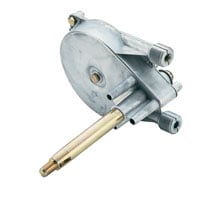
Safe-T rotary helm has a relatively quick three turns lock-to-lock, but has a bulky gear housing, so is almost 7" wide.
Mechanical Steering Systems achieve good handling performance and provide safe operation for smaller powerboats up to 34'. They consist of a wheel, helm, push-pull cables and connection kits—hardware that allows you to connect your steering system to your boat’s I/O or outboard engine. We’ll start by looking at the most important component, the helm.
The helm converts wheel movement into cable movement. The cable then pushes or pulls the engine, sterndrive or rudder linkage. Because the system is mechanical, cable routing, bend radius, helm type and engine connection condition all affect how the wheel feels. A good system feels smooth and predictable. A worn, corroded or poorly routed system can feel stiff, notchy or loose.
Rotary Helms
The helm is the mechanism behind the instrument panel that converts the wheel’s rotary motion into a push-pull motion on the cable. The steering wheel attaches to the helm. Rotary steering helms have a round gear around which the cable turns as you turn the wheel. There are two types of rotary helms, with different applications, strengths and weaknesses.
Reduction gear type: One or more gears mesh with the steering drum to move the helical core of the steering cable. This original rotary design, which includes the Big-T and Safe-T helms, is still strong and efficient because there are usually only two gears. These helms have the drawback of requiring a fairly large round assembly behind the dash, since the steering shaft is located outside the cable drum. That means they often cannot be installed in smaller, more crowded dashboards.
Planetary gear type: This alternative style uses three or more gears that mesh internally with the cable drum to move the core of the steering cable. The Safe-T II design from SeaStar, or the similar Rotech T71FC helm from Uflex, takes up the least possible space behind the dash, so it’s recommended for boats with small dashboards or with instruments clustered around the wheel. Drawbacks include more wear points and more accumulated backlash, or free play, from four or more gears meshing compared with two typically found in reduction gear helms. They fit outboards up to V-4 size only.
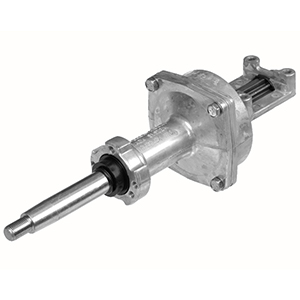
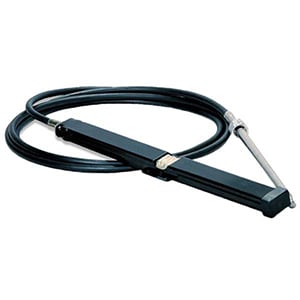
You can buy replacement rack helms and cables separately, or save money by ordering a mechanical steering kit from either Uflex or Seastar Solutions
Rack and Pinion Helms
The rack and pinion helm includes a pinion gear fitted directly on the steering shaft that engages a rack gear in a tubular housing. Rack steering is the most efficient mechanical system for moving the cable, but its drawback is its width. Rack steering requires a long rack housing that cannot fit behind many dashboards. Although a rack and pinion helm can be installed at several different angles in relation to the dash surface, using 10° or 20° wedge kits mounted under the bezel, the mounting bracket and trim ring, rack helms have less mounting flexibility than rotary helms.
The primary difference between a rack and pinion and rotary helm is the form factor of the helm—how it fits in the space behind the mounting surface. Rotary helms extend a few inches above and below the axis of the steering wheel, and a few inches in the opposite direction of the steering cable. On boats with very low dashboards, rotary helms may not have enough vertical clearance. Rack and pinion helms are long rectangular boxes extending about 1' away from the direction of the cable, but they are very compact vertically.
When replacing an existing system, dash clearance is often the deciding factor. If the original helm was rotary, replacing it with another rotary helm usually avoids surprises. If the original system was rack steering, a replacement rack kit may preserve the same cable path and helm position. Changing helm styles can work, but it may require new mounting holes, a different bezel, a different cable style or a revised cable route.
Mechanical Advantage—Response vs. Effort
Another attribute to consider is the mechanical advantage of the helm, or how “fast” it turns. When a helm is specified as having a certain number of turns “lock to lock,” it means the number of steering wheel rotations necessary to fully extend the cable from a retracted state. Faster gear ratios, such as 3:1, require fewer turns, but there is heavier helm pressure to offset engine torque. Slower gear ratios, such as 4.2:1, require more turns, but there is less helm pressure when turning against prop torque.
Fast steering can feel more responsive, especially on smaller boats, but it may increase steering effort. Slower steering can feel easier and more controlled, but it requires more wheel movement during docking, tight turns or trailer loading. The best choice depends on the boat, engine torque, speed, steering load and how the boat is used.
No FeedBack or Zero Torque Technology
Most steering systems in our catalog are available as standard or No FeedBack types. No FeedBack, which Uflex calls “Zero Torque”, isolates the driver from the engine’s torque. With traditional steering systems, the engine has a tendency to turn to the right, which the driver compensates for by keeping pressure to the left on the wheel. This also allows the boat to turn rapidly to the right should the driver lose his/her grip on the wheel, resulting in a dangerously tight turn.
NFB helms have a clutch mechanism built in which keeps the boat on course without constant fighting. The only time you feel the engine’s torque is when you turn the helm. There are no disadvantages to the NFB systems, other than a modest additional cost over regular systems, and we heartily recommend them if you are replacing your steering system. NFB cannot be used with PowerAssist or autopilots.
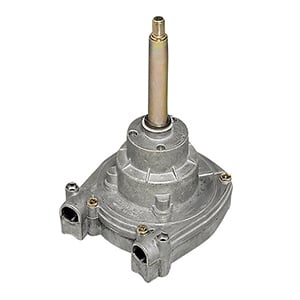
Big outboards have lots of torque coming from the prop. The UFLEX Zero Torque helm locks this out, isolating you from this constant tug on the wheel.
Steering Cables
Mechanical steering systems rely on push-pull steering cables to move your engine or rudder. The cable is the most common wear item in the system because it bends through the boat, moves every time the wheel turns and often terminates near the engine tilt tube where corrosion is common.
Dual (Twin) Cable Systems
Mechanical steering systems rely on push-pull steering cables to move your engine or rudder, but all cables include some backlash or lost motion due to the nature of their design. Some high-performance boat/engine combinations with maximum speeds above 50mph cannot tolerate this amount of play and develop high-speed instability. We recommend dual cable mechanical systems or SeaStar PRO hydraulics for these performance boats. Dual cable steering allows you to remove most of the backlash by adjusting one or both cables at the engine, minimizing engine flutter and handling instability.
Maintaining your steering cable
We suggest the following periodic maintenance at least twice a season. Clean and lubricate the engine tilt tube or cable support tube, and the steering cable telescopic output ram as follows:
- Remove the steering cable from the tilt tube
- Clean the tilt tube inside diameter thoroughly
- Remove corrosion in the tilt tube with a wire brush. Wipe until all loose material is removed.
- Lubricate the tilt tube with a good water-resistant grease
- Scour the steering cable telescopic ram with a brass wire brush and wipe until clean
- Lubricate the sliding parts of the telescopic ram with a high-quality water, resistant grease
- Reassemble making sure all fasteners are correct and tight and there is no binding or excessive free play in moving parts
If steering remains stiff after the tilt tube and telescopic ram are cleaned and lubricated, the cable may have internal corrosion or wear. Mechanical steering cables are sealed assemblies and cannot be rebuilt internally. A cable that binds, sticks or will not move freely should be replaced rather than forced back into service.
Common Mechanical Steering Problems
- Stiff steering: Often caused by corrosion in the engine tilt tube, internal cable corrosion, tight cable bends or binding connection hardware.
- Excessive free play: May indicate wear in the helm, cable, engine connection kit or steering linkage.
- Wheel kickback: Common with standard mechanical systems when engine torque feeds back through the wheel.
- Engine flutter at speed: Can occur when backlash in a single-cable system allows the engine to move slightly from side to side.
- Uneven steering effort: May result from improper cable routing, tight bends, poor lubrication or damaged hardware.
Do not ignore steering symptoms that develop gradually. A steering system can feel only slightly stiffer from one season to the next until the cable begins binding badly. Inspect the system before long trips and after storage, especially if the boat is used in saltwater.
Mechanical vs. Hydraulic Steering
Mechanical steering remains a practical choice for many smaller and mid-sized powerboats because it is cost-effective, familiar and relatively straightforward to replace with common tools. A properly installed mechanical system can provide good control, good helm feel and reliable service.
Hydraulic steering reduces steering effort and eliminates the push-pull cable path, making it a strong upgrade for larger boats, higher-horsepower outboards, offshore boats and applications where mechanical steering effort becomes excessive. Hydraulic steering is also the better path for many autopilot installations.
If the boat handled well with its original mechanical system, replacing it with the same style is usually the simplest solution. If the boat has high horsepower, heavy steering torque, an autopilot plan or repeated cable problems due to routing constraints, hydraulic steering may be worth considering.
Pro Tricks for Installing a Steering System
Be sure you have the correct cable for the helm on your boat. There are several kinds of cables and helms that are not interchangeable. This applies whether the system is rotary or rack and pinion.
Mechanical helm replacement: The mounting hardware for NFB 4.2, Safe-T II and HPS helms fits the Safe-T dash cutout. NFB Rack helms fit 1984-date "The Rack" mounting holes. 1996-date back mount rack helms use a wider rack cable and will not work with old style rack cable (SSC124XX).
Outboards without power steering: No feedback/Zero Torque mechanical steering, BayStar or SeaStar hydraulic are recommended as replacement steering for all non-power-assisted outboards. For high performance boats or other applications in which there may be engine flutter or some steering instability, dual cable NFB 4.2/Pro Rack mechanical systems or SeaStar PRO hydraulic systems are recommended. For most rotary steered boats made after 1993, upgrading to NFB can be as simple as a helm and bezel change.
Sterndrives and outboards with power steering: HPS™ High Performance Steering is recommended for power-steered sterndrives and other power-assisted applications. Traditional mechanical systems, Safe-T QC and Back Mount Rack & Pinion, may also be used for power-assisted applications. A BayStar or SeaStar hydraulic system is recommended for all vessels using autopilots.
Replacing the mechanical system with a hydraulic system: SeaStar helms retrofit into most boats. The SeaStar front mount cylinder is best for outboards with 22" splashwells or wider. Side/splashwell mount cylinders are available, but require more room. Check splashwell dimensions before ordering outboard cylinders.
Allow for generous large cable bends, notably where the cable exits from the helm or rack housing and where the cable makes the bend to connect with the engine, drive or rudder. The tighter the bends, the stiffer the cable will be in operation. Also, tight bends reduce the lifespan of the cable. An 8" bend radius is generally the minimum bend radius recommended for SeaStar cables.
If you’re using zip ties to secure the cable along the gunwale area, allow a little slack. Don’t cinch them completely tight. A little slack in the attachments allows the cable to flex as it’s actuated, for smoother operation and longer cable life.
When installing the cable at the engine end, be sure to lubricate the telescopic ram, the part that slides in and out, with plenty of good waterproof lithium-based grease. This is especially important if the steering cable is connected through the engine tilt tube, as this area tends to get very rusty. Advice from the professionals at SeaStar is “always remember: grease, grease, grease.”
How to Measure for Mechanical Steering Cables
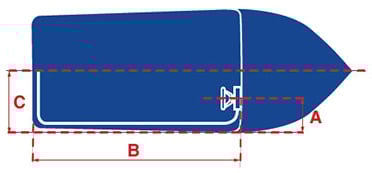
Refer to the diagram at right. Start by adding dimensions A + B + C.
For installations through engine tilt tube.
A + B + C + 6" = cable length, rounded up to the next largest size.
Example: A = 18" B = 96" C = 24"
Total: 138" + 6" = 144" = 12 ft. cable
For installations mounted to transom or splashwell.
A + B + C - 6" = cable length, rounded up to the next largest size.
Example: A = 18" B = 96" C = 24"
Total: 138" - 6" = 132" = 11 ft. cable
Measure the actual cable path, not a straight line from helm to engine. Follow the route the cable will take along the gunwale, around bends and into the engine connection point. If the measurement falls between available cable lengths, round up to the next length. A cable that is slightly long can usually be routed with gentle bends; a cable that is too short will not install correctly and may create unsafe steering geometry.
For more details on how to measure for mechanical steering cables see the Teleflex-Seastar PDF.
View our current selection of Mechanical Steering Products.
Mechanical Steering FAQ
How do I know if my mechanical steering cable is bad?
Common signs include stiff steering, grinding or notchy movement, excessive free play, visible corrosion at the ram, binding near full lock or steering that does not return smoothly. If cleaning and lubricating the tilt tube does not improve the problem, the cable may have internal corrosion and should be replaced.
Can a mechanical steering cable be repaired?
No. Mechanical steering cables are sealed assemblies and are not rebuilt internally. If the cable is internally corroded, kinked, worn or binding, replacement is the safe solution.
Should I replace my steering system with the same type?
In most cases, yes. Replacing rotary with rotary or rack with rack usually preserves the boat’s original handling and simplifies installation. Changing system type can work, but may require different mounting holes, new cable routing, dash modifications or a different steering feel.
What is No Feedback steering?
No Feedback steering uses a clutch mechanism inside the helm to isolate engine torque from the wheel. This helps the boat hold course without constant steering pressure and reduces the chance of wheel kickback if the operator releases the wheel.
When should I upgrade from mechanical to hydraulic steering?
Consider hydraulic steering for larger boats, higher-horsepower outboards, offshore use, autopilot installations or boats where steering effort is too high with a mechanical system. Hydraulic steering typically costs more, but it can provide smoother and lighter control.