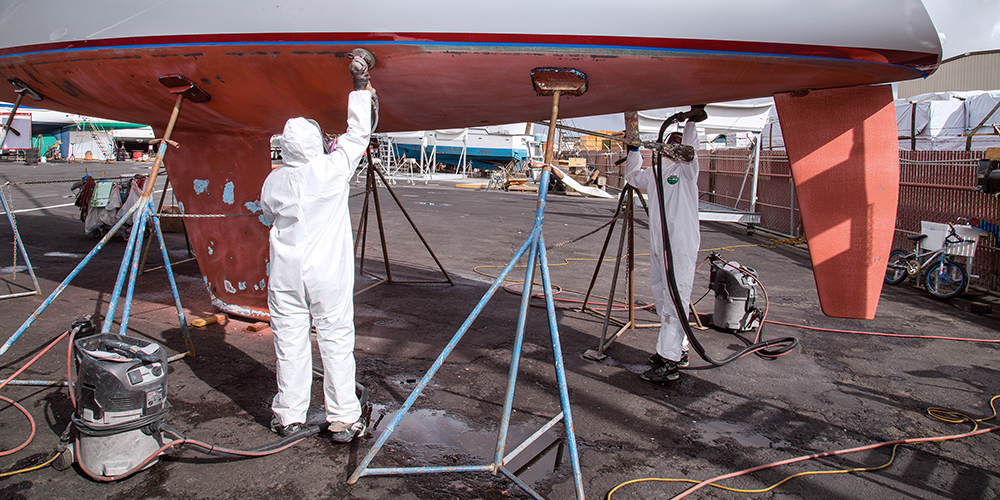
While a boat’s sleek exterior often takes center stage, it’s the unseen underwater components that bear the brunt of the marine environment. "Out of sight, out of mind" doesn't cut it, as ignoring the condition of your boat's hull and underwater hardware can lead to compromised performance and expensive repairs. In this guide to underwater maintenance, we discuss the important role that antifouling paint, barrier coats and sacrificial anodes play in preventing marine growth, osmotic blisters and costly galvanic corrosion.
- What is Antifouling Paint?
- Benefits of Bottom Paint
- Categories of Bottom Paints
- Copolymer Ablative Bottom Paints
- Water Based Bottom Paints
- Modified Epoxy Bottom Paints
- Thin Film and Vinyl Bottom Paints
- Biocide: Is more better?
- What is ECONEA?
- Are copper based antifouling paints prohibited where you boat?
- For Aluminum Hulls and Outdrives: Owners' Alert!
- Speciality Antifouling Products
- Barrier Coating Systems
- Sacrificial Anodes
- Glossary
- Conclusion
- We're Here to Help!
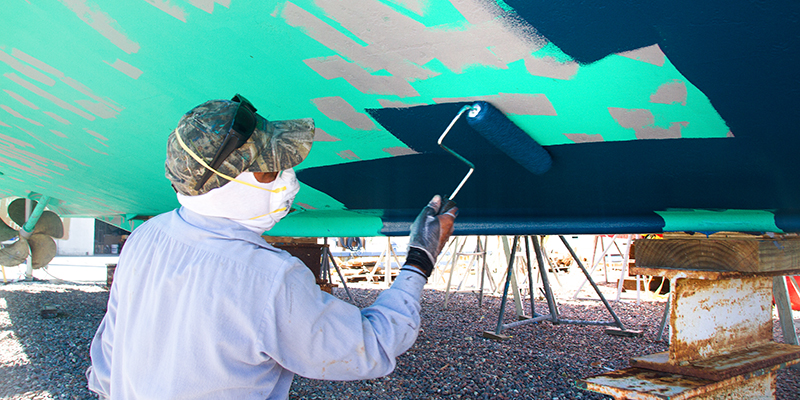 Rolling on new bottom paint. Shop all bottom paint>
What is Antifouling Paint?
Antifouling paint, loosely referred to as bottom paint, is a type of marine coating applied to boat hulls that prevents the growth of marine organisms. To accomplish this task, true antifouling paints include one or more biocides which are toxic to marine organisms. Examples of biocides include cuprous oxide, cuprous thiocyanate, and more recently the non-metallic biocide ECONEA. In addition to having one or more biocides, many bottom paints also include an additive such as zinc pyrithione to prevent the growth of slime.
Benefits of Bottom Paint
If you keep your boat in the water for any longer than a week or so, applying antifouling paint to its hull can benefit you in four different ways:
-
Deters Soft and Hard Marine Growth: Antifouling paint performs the essential function of preventing the growth of soft and hard organisms like algae, barnacles and other marine life. Unpainted boats can quickly develop a veritable jungle of growth that acts like a ball and chain on boats whenever they cast off. Along with creating drag, these organisms detract from the visual appeal of boats.
-
Provides a Smooth Surface: Properly applied antifouling paint creates a smooth surface that helps reduce drag while the boat is in motion, enhancing speed and overall performance.
-
Increases Fuel Economy: Along with enhanced speed and overall performance, reducing drag boosts fuel efficiency, leaving more dollars in your wallet for boat gear you might be pining for — like a new set of dock lines, life jackets or other gear.
-
Enhances Appearance: Beyond protection, bottom paint can also improve the visual appeal of your boat, with an available range of colors and finishes.
Categories of Bottom Paints
Antifouling paints are divided into two broad categories, based upon how the paint releases its biocide: conventional and soluble.
Conventional bottom paints allow water to diffuse through the paint film and differ based upon their main binder ingredient: modified epoxy or vinyl.
Soluble bottom paints use a binder that allows them to wear away over time in the water. Copolymer ablative paints are an example of soluble bottom paint.
Copolymer Ablative Bottom Paints
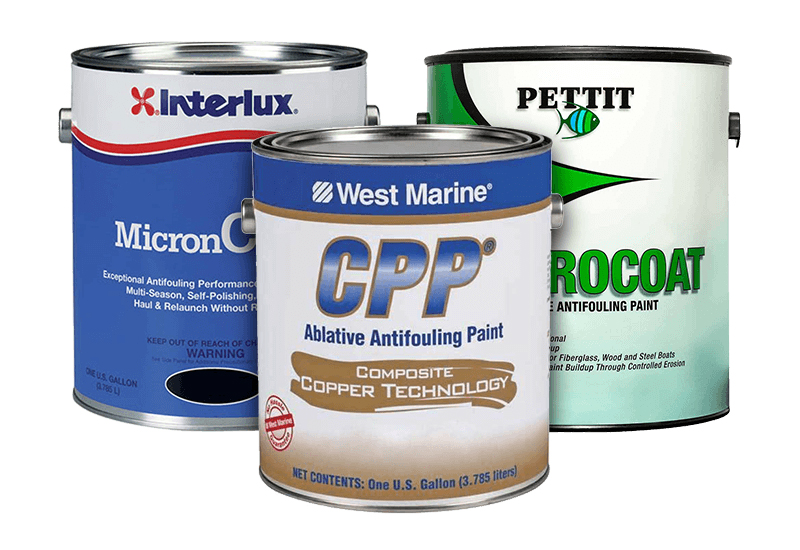
Offered in single-season and multi-season formulations, this type of paint gradually wears away or "ablates" over time, much like a bar of soap. As these paints wear away, they release their biocide in a controlled fashion until little or no paint remains on the boat — which boat owners appreciate, since unlike boats coated with hard epoxy or vinyl paints, little or no sanding is needed at haulout. A second advantage to copolymer ablative paints is that they, unlike hard epoxy or vinyl paints, do not oxidize and lose antifouling effectiveness when the boat is hauled out of the water for an extended period of time.
Water Based Bottom Paints
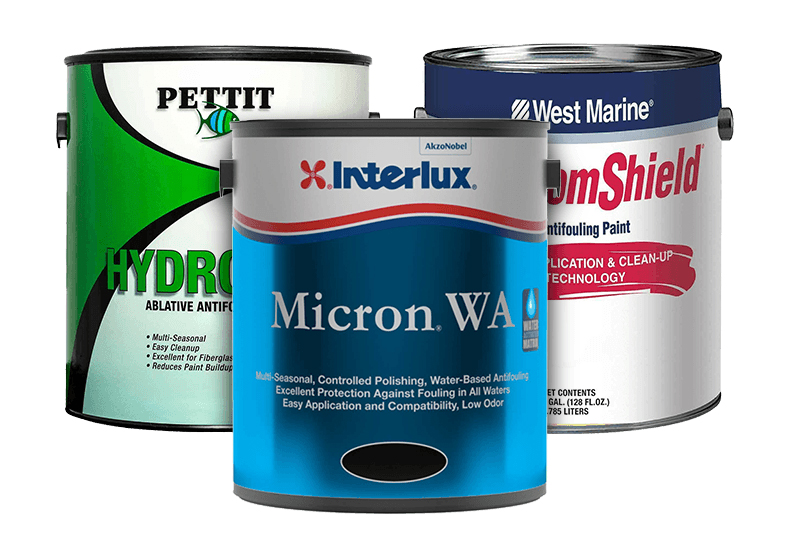
Most antifouling paints have traditionally been solvent-based, but boaters now have the option of choosing from an expanding selection of water-based bottom paints. These paints come with several advantages, such as lower VOC emissions, making them a more eco-friendly choice. Additionally, water-based paints are easier to clean up with soap and water, and they are more user-friendly, thanks to the absence of the strong solvent odors found in traditional formulas.
Modified Epoxy Bottom Paints
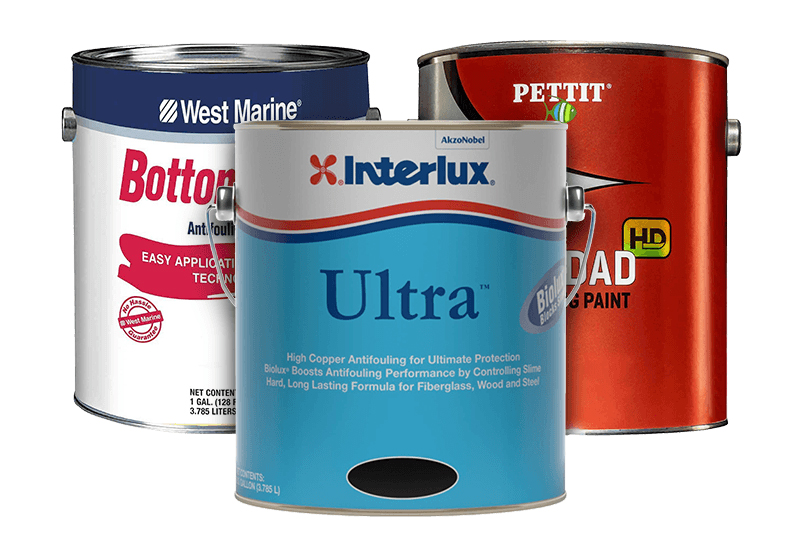
Known for its durability, hard, modified epoxy paints are hard paints that provide long-lasting protection and are resistant to abrasion. They can be a good choice for boats that are used frequently or stay in the water year-round. Hard, modified epoxy paints that are heavily loaded with copper can be a good choice for extreme fouling conditions and are often the choice of long distance cruisers who want a paint that will not wear off during the course of their voyage.
One drawback to hard epoxy bottom paint is that it does not wear away like ablative paints. Instead, after it has diffused out its biocide, it leaves an inert, egg-shell-like coating, which sooner or later must be laboriously sanded off when the boat is hauled out for repainting. A second disadvantage to these paints is that unlike copolymer ablatives, they begin to oxidize and lose antifouling effectiveness when hauled out of the water for an extended period of time.
Thin Film and Vinyl Bottom Paints
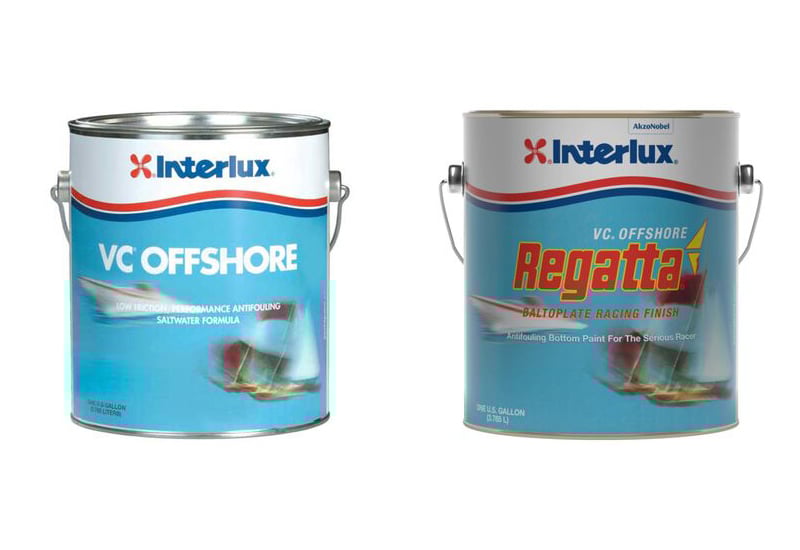
Many owners of high-performance powerboats and sailboats often protect against marine growth with hard vinyl-based paints which can be polished to reduce drag. Thin-film paints are also a type of vinyl-based paint that along with its biocide includes the additive PTFE which further reduces friction, making it popular for application on racing sailboats.
While a great choice for performance boats, vinyl bottom paints suffer from the same set of drawbacks as hard, modified epoxy paints: Antifouling effectiveness begins to diminish when the boat is hauled out; and they require plenty of sanding when the time comes to repaint.
Biocide: Is more better?
The amount of biocide (expressed as a percentage) that the paint contains is one of the biggest differences between paint types. Many people assume that the more copper a paint contains, the more effective it will be. However, it is the rate at which the copper is released that determines how cost effective the paint will be at preventing marine growth. While the percentage of copper may give you some idea of how long the paint will last, the overall performance of the paint will vary based on a wide variety of other factors such as the binder type, frequency of boat use, type of boat, etc.
What is ECONEA?
ECONEA is a relatively new, non-metallic biocide now commonly used in marine bottom paints to prevent the growth of marine organisms on boat hulls. It offers an eco-friendly alternative to traditional copper-based biocides, effectively protecting hulls without the environmental impact. ECONEA is known for its strong antifouling properties and reduced toxicity.
Are copper based antifouling paints prohibited where you boat?
If environmental regulations prohibit the use of copper biocides are where you boat, consider a bottom paint that uses ECONEA as the active biocide.
For Aluminum Hulls and Outdrives: Owners' Alert!
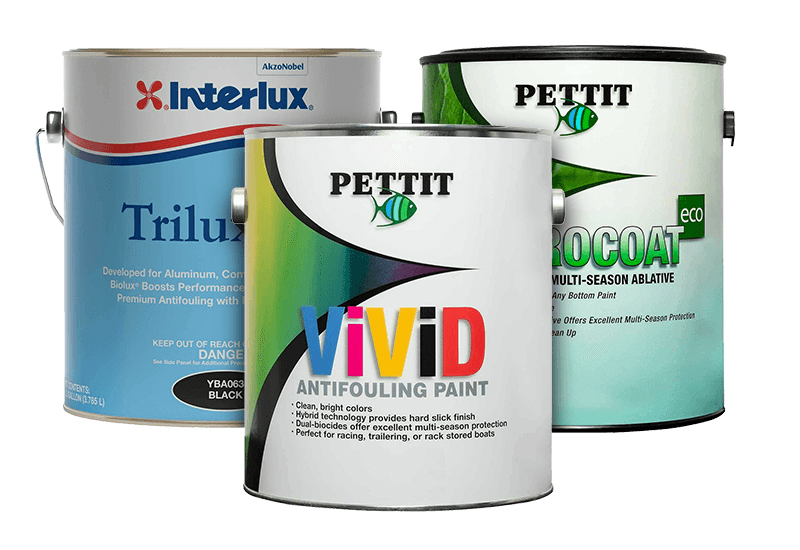
If you want to protect an aluminum hull or an outdrive, never use an antifouling paint that contains cuprous oxide as its biocide. Doing so will cause a galvanic reaction that can destroy an aluminum hull or outdrive in very short order. Instead, choose a bottom paint that uses cuprous thiocyanate (white copper) as it biocide or ECONEA, which as discussed is a non-metallic biocide that is also safe for use on aluminum hulls.
Specialty Antifouling Products
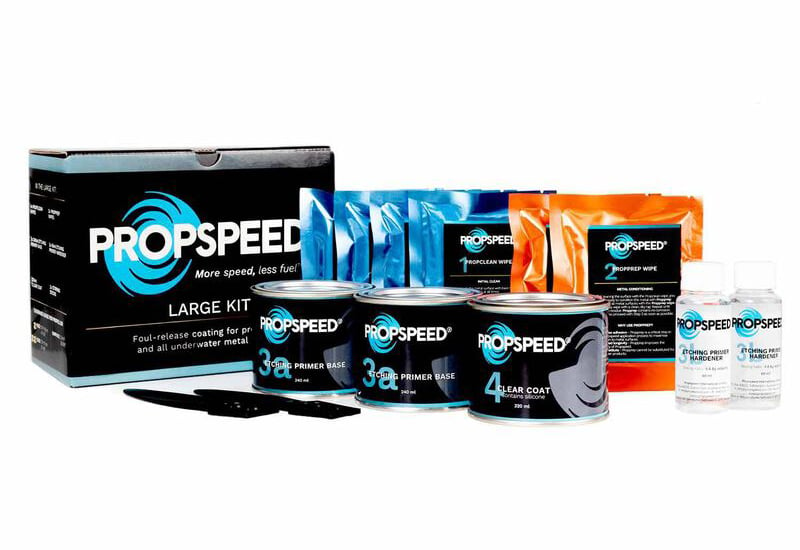
Speciality products include aerosol antifouling paints that are safe for application on aluminum outdrives and outboards. Speciality products also include PropSpeed and similar coatings that contain no biocide at all. Instead, they prevent marine fouling by creating an ultra-slick surface that marine organisms can't cling to. Unlike traditional antifouling paints, these coatings work without biocides, relying instead on their smooth finish to reduce drag and keep underwater surfaces clean. These coatings are often applied to underwater metals such as propellers and shafts, where a non-stick surface minimizes growth without the environmental impact of toxic biocides.
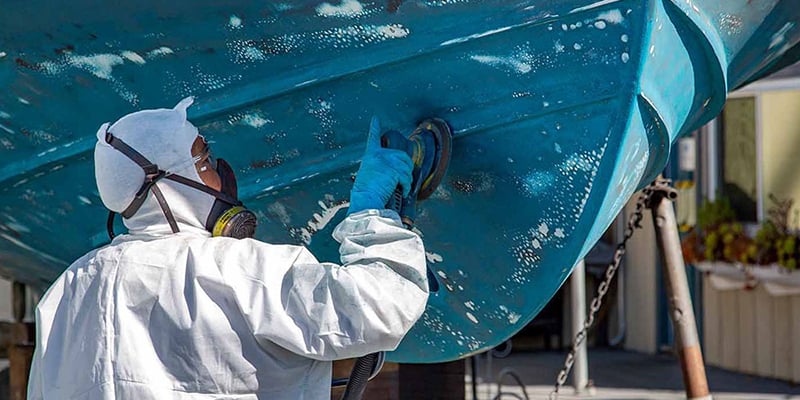 How many blisters do you see here? Shop barrier coat systems>
Barrier Coating Systems
The purpose of a barrier coat is to protect a fiberglass hull from from water intrusion. This protective layer prevents moisture from penetrating the hull's surface, which can lead to issues like osmotic blistering—a condition where water gets trapped between the layers of fiberglass, causing blisters and weakening the hull's structure. By creating a waterproof barrier, a barrier coat helps maintain the structural integrity of the hull, reducing the need for costly repairs and extending the life of the boat.
When a boat that spends most of its time in the water is hauled for a new coat of bottom paint, it is common to find hundreds of blisters on an otherwise smooth hull. The solution to this dilemma is to dry the hull, fix the blisters, coat the hull surface with a waterproof barrier coating system, sand and reapply the bottom paint. Barrier coats must be applied to the bare hull, underneath all other bottom coatings.
Bottom paint manufacturers offer barrier coating systems that work well. Each epoxy barrier coat is a two-part (resin/catalyst) mixture with a high solids content that increases the coating's effectiveness.
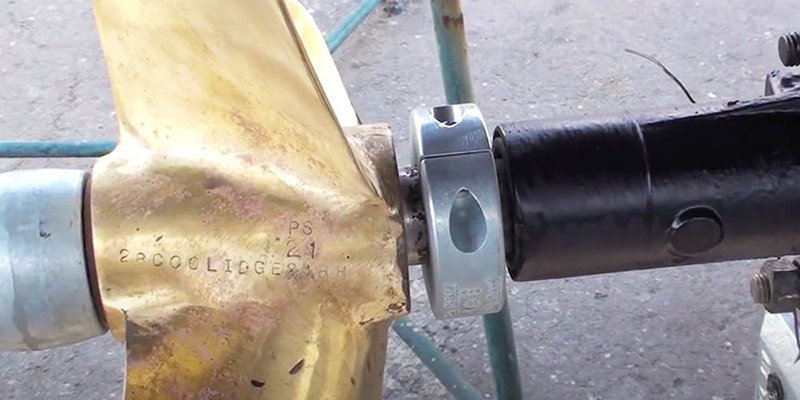 Propnut anode (partially obscured) and shaft anode Shop all anodes>
Sacrificial Anodes
Sacrificial anodes are pieces of zinc, aluminum or magnesium that are fastened to underwater boat surfaces. They are designed to wear away and protect other underwater metal parts from galvanic corrosion.
What is Galvanic Corrosion?
Galvanic corrosion occurs when two different metals, connected electrically and submerged in an electrolyte like saltwater, form a galvanic cell. This generates a current that gradually deteriorates the more reactive (less noble) metal, known as the anode.
To guard against galvanic corrosion, sacrificial anodes are installed on underwater metal surfaces. These anodes act as the more active metal in the galvanic reaction, sacrificing themselves to protect the less active metal parts. By corroding first, the sacrificial anodes shield the protected metal components, preventing them from suffering damage in the galvanic reaction.
Here are a couple examples of metal components that can corrode due to galvanic reactions:
-
Propellers: Made from metals like aluminum or bronze, propellers are particularly susceptible to galvanic corrosion when in contact with dissimilar metals in the marine environment.
-
Shafts: Bronze prop shafts can corrode if they are in contact with other metals, such as stainless steel, especially if sacrificial anodes are not installed.
Anodes come in many different sizes and shapes and are available in zinc, aluminum or magnesium. Which anode material should you choose?
-
Zinc for Saltwater: Best suited for saltwater environments, zinc anodes are the traditional choice for most saltwater marine applications.
-
Aluminum for Saltwater or Brackish Water: Suitable for both saltwater and brackish water, aluminum anodes are lighter and offer a broader range of protection.
-
Magnesium for Fresh Water: Magnesium anodes offer the highest level of protection in fresh water, but can corrode too quickly in saltwater.
Sacrificial Anode Applications
Sacrificial anodes protect critical underwater metals, such as:
-
Inboard Engines: Protect critical engine components from galvanic corrosion.
-
Inboard/Outboard and Outboard Engines: Protect lower units and other metal parts.
-
Prop Shafts, Struts, Propellers: Protect these vital parts from deteriorating due to galvanic corrosion.
-
Keel Coolers: Prevent galvanic corrosion of keel coolers.
-
Water Heaters: Many marine water heaters require the use of a sacrificial anode.
How Can Sacrificial Anodes Be Purchased?
-
Individually: Anodes can be bought separately to replace those that have worn out.
-
Kits: Complete kits are available, containing all the necessary anodes for specific makes and models of inboard/outboard motors, outboard motors and other applications.
Glossary
Copolymers: A binder formulation used in ablative type antifouling paints where the biocide is chemically bound to the polymer binder material.
Reducer: Another term for thinner.
Resin: The natural or synthetic material that forms the paint film.
TBT: Tributyl Tin. A biocide formerly used in some antifouling paints. Now outlawed for use on most boats because of its extreme toxicity to marine life.
Thinner: Solvents used to reduce the viscosity of paints to enable easier brushing or spraying.
Vinyl Paints: Lacquer-type paints with polymerized resin base that cures by solvent evaporation.
Barrier Coating Systems: Help seal gelcoat and fiberglass laminates by increasing the moisture exclusivity of the hull surface.
Osmotic Blistering: Occurs on the surface of fiberglass hulls that are five or more years old.
Boat Pox: Another name for osmotic blisters.
Osmosis: Process by which water passes through the fiberglass laminate barrier.
Anode: The "less noble" metal which is sacrificed in a galvanic cell.
Sacrificial Anode: Anodes made of zinc, aluminum or magnesium installed on boats to protect underwater hardware against galvanic corrosion.
Cathode: The "more noble" metal which is protected in a galvanic cell.
Electrolyte: A non-metallic electric conductor such as seawater through which current can travel.
Galvanic corrosion: The process that leads to the breakdown of metals immersed in an electrolyte, such as salt water.
Active Metal: The "less noble" metal alloy that sacrifices itself in a galvanic reaction.
Conclusion
Underwater maintenance is a critical aspect of boat ownership that involves choosing the right bottom paint, applying barrier coating systems, and regularly replacing sacrificial anodes. Each of these elements plays a vital role in preserving your boat’s integrity, enhancing its performance, and extending its lifespan. By staying informed and proactive in your maintenance routine, you can ensure that your boat remains in top condition, ready for any adventure on the water.
We're Here to Help!
Online and in over 230 West Marine stores, boaters find more of what they need to enjoy great times on the water. Whether you want to bottom paint your boat, apply a barrier coat or install a new set of anodes, we're ready to help with the products and expertise you need. Use our handy store locator to find a West Marine store near you.