
Packing the right personal gear before you leave the dock is one of the most important things you can do for your safety and comfort on the water. Boat gear covers the vessel itself — safety equipment, electronics, ground tackle. Personal gear is what you bring for yourself. It is the layer between you and whatever conditions the day brings, and the kit you rely on if something goes wrong. This guide covers every category of personal boating gear, explains why each item matters, and helps you choose within each category based on how and where you boat.
- Foul Weather Gear
- Insulating and Base Layers
- Eye and Sun Protection
- Personal Safety Gear
- Navigation and Communication
- Offshore Additions
- Quick Reference Checklist
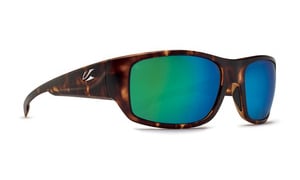
Many pro sailors, anglers, and paddlers prefer polarized sunglasses like this pair from Kaenon — gray lenses for offshore, amber or copper for inshore and low light.
Foul Weather Gear
Foul weather gear is the single most important personal investment a boater can make. Hypothermia is a real risk even in moderate temperatures when you combine wind, spray, and wet clothing — conditions that are normal on the water even on fair-weather days. Good foul weather gear keeps you warm, dry, and functional when conditions deteriorate, which they will at some point.
Jacket: Look for a jacket with taped seams (not just seam-sealed), a proper storm collar, adjustable cuffs, and at minimum a hood. The two key ratings to understand are waterproofness (expressed in millimeters of water column — 10,000mm is adequate for most coastal sailing; 20,000mm+ for offshore) and breathability (expressed as MVTR — moisture vapor transmission rate). A jacket that is waterproof but not breathable will leave you soaked in sweat. Quality offshore jackets from brands like Henri Lloyd, Gill, and Helly Hansen balance both.
Bibs or pants: Bibs provide better protection than pants because they cover the core and eliminate the gap at the waist where water runs in. For offshore or racing use, bibs are strongly preferred. For coastal daysailing in mild conditions, foul weather pants with an elastic waist are adequate and easier to get on and off quickly.
Footwear: Sea boots for offshore and wet conditions — look for non-slip soles, ankle support, and insulation if you sail in cold water. Boat shoes with non-slip rubber soles are appropriate for warm-water daysailing but offer no waterproofing or ankle support. The most important feature of any footwear on a boat is a sole that grips wet fiberglass.
- Foul weather jacket
- Foul weather bibs or pants
- Sea boots or non-slip boat shoes
Insulating and Base Layers
The layering system that works for hiking and skiing works equally well on a boat — and matters more than most new boaters realize. Water conducts heat away from the body 25 times faster than air at the same temperature. A cotton t-shirt that feels fine on shore becomes dangerous when wet because it provides zero insulation and stays wet for hours. The right layering system keeps you warm even when wet.
Base layer: Synthetic or merino wool base layers wick moisture away from the skin and retain warmth even when wet. Avoid cotton entirely as a base layer on the water. Quick-drying synthetics are excellent for warm-water sailing; merino wool provides more warmth and odor resistance for multi-day passages in cooler conditions.
Mid layer: Synthetic fleece is the standard insulating mid layer for boating — it provides warmth even when wet, dries quickly, and compresses well for stowage. Wool works equally well. Down insulation is not appropriate as a boating mid layer because it loses all insulating value when wet.
Gloves: Sailing gloves serve two purposes: grip and hand protection. Fingerless gloves allow line handling without sacrificing feel; full-finger gloves are better for cold conditions. In genuinely cold water, neoprene gloves provide meaningful thermal protection. Always carry gloves even in mild weather — wind chill on a boat is significant.
- Synthetic fleece or wool insulating layer
- Quick-drying base layer (Men’s, Women’s)
- Gloves
- Hat (Men’s, Women’s)
- Warm socks
- Waterproof watch
Eye and Sun Protection
UV exposure on the water is significantly higher than on land because you receive direct sunlight plus reflected glare from the water surface. Eye damage from UV is cumulative and irreversible. Sunburn happens faster on the water. Both are entirely preventable with the right gear.
Polarized sunglasses: Polarized lenses are not optional for boating — they eliminate horizontal glare from the water surface, dramatically improving visibility and reducing eye strain on long passages. Non-polarized lenses block UV but do not cut glare. For offshore sailing in full sun, gray lenses provide the most accurate color perception. Amber and copper lenses enhance contrast in low light and overcast conditions, making them better for inshore fishing and dawn/dusk sailing. For lens material, polycarbonate is impact-resistant and appropriate for most boating; glass lenses provide slightly better optical clarity but are heavier and will shatter if dropped on a deck fitting. Look for frames that wrap around the eye to block peripheral glare and that float or can be secured with a retainer.
Sunglasses retainer: A simple, inexpensive piece of gear that prevents an expensive pair of glasses from sinking. Buy one.
Sunscreen: Water-resistant SPF 30 or higher, applied before you leave the dock and reapplied every two hours. Pay attention to the tops of ears, back of the neck, and the underside of the chin — all areas that receive intense reflected UV on a boat that are often missed on shore. A buff or sun-protective shirt provides more reliable protection than sunscreen alone for multi-hour exposures.
- Polarized sunglasses
- Sunglasses retainer
- Sunscreen — SPF 30 or higher, water-resistant
Personal Safety Gear
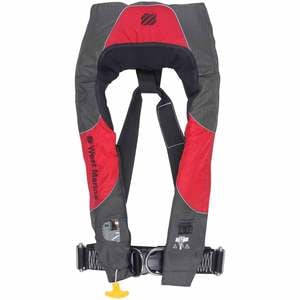
Offshore life jackets like this West Marine inflatable model include an integrated harness — essential for clipping to a tether when conditions deteriorate.
Personal Flotation Device (PFD): USCG-approved, worn — not stowed below. The most common failure mode of a life jacket is that it is on the boat but not on the person. A Type I or Type II offshore life jacket provides the most buoyancy and is designed to turn an unconscious person face-up in the water. Inflatable PFDs are comfortable enough to wear all day and provide excellent buoyancy when deployed, but they require annual inspection and re-arming: check the CO2 cylinder for corrosion and proper weight, inspect the automatic inflation mechanism, and replace the re-arm kit if the inspection window shows red. An inflatable PFD that has not been maintained is not a reliable life jacket.
Signal mirror and whistle: Both are small enough to attach to a life jacket and should be. A whistle is audible further than a voice in wind and breaking waves — the Fox 40 Pealess design works when wet. A signal mirror can be seen for miles in sunlight and is visible to aircraft. These are last-resort signaling devices but they weigh almost nothing and take up no space.
First aid kit: A marine first aid kit appropriate to the distance from shore and duration of the trip. A daysail close to port can rely on a basic kit; an offshore passage should carry a comprehensive kit including wound closure strips, trauma dressings, seasickness medication, and prescription medications if appropriate. Keep it in a waterproof case and inspect it annually.
Hand bearing compass: A backup navigation tool that works without electricity, satellite signal, or batteries. Useful for taking bearings on landmarks or vessels, and for checking the ship’s compass. An essential offshore tool and a useful coastal one.
Rigging knife: A knife with a marlinspike, blade, and ideally a shackle key, worn on the body or kept immediately accessible. If a line becomes fouled around a person in the water, a knife is the fastest way to cut them free. The blade should be able to be opened one-handed. Serrated blades cut rope faster than plain edges.
Headlamp and flashlight: A headlamp keeps your hands free for line handling, chart reading, and working in the engine compartment at night. A bright handheld flashlight is useful for signaling and for illuminating areas a headlamp cannot reach. Carry spare batteries for both.
- Personal Flotation Device — USCG approved, worn at all times offshore and in rough conditions. Inspect and re-arm inflatable PFDs annually.
- Signal mirror and whistle — attach to your PFD
- First aid kit
- Hand bearing compass
- Rigging knife — accessible on your person, not stowed
- Headlamp
- Bright flashlight
- Extra batteries for all electronics
Navigation and Communication
Handheld VHF radio: The most important communication device on a boat. VHF Channel 16 is the international distress, safety, and calling channel — monitored by the Coast Guard, commercial vessels, and most recreational boats. A handheld VHF is your backup if the fixed-mount VHF fails, and your primary communication device if you are separated from the boat. Look for a radio with a DSC (Digital Selective Calling) function, which transmits your vessel identity and GPS position automatically in a distress call. Waterproof rating matters — look for IPX7 (submersible to 1 meter for 30 minutes) or better.
Weather alert: Many handheld VHF radios include NOAA weather alert functionality, which sounds an alarm when the Coast Guard or NOAA broadcasts a weather warning. This is a critical feature for coastal boating — weather changes faster on the water than forecasts suggest, and knowing a warning has been issued before it arrives is the difference between being caught and being prepared.
Handheld GPS: A backup navigation tool when the chartplotter fails or loses power. A handheld GPS with a loaded chart card can show your position, track, and nearby waypoints. In fog or poor visibility, the ability to identify your position precisely and navigate to a safe anchorage is life-saving capability. Keep it charged and updated.
- Handheld VHF radio — with DSC and weather alert
- Handheld GPS
- Weather radio or handheld VHF with weather alert
Offshore Additions
When you venture beyond sight of land or into conditions where rescue may take hours or days, personal safety gear requirements increase significantly. These items are not optional for offshore passages.
Safety harness and tether: A harness worn over your foul weather gear clips to a tether that clips to a jackline or strong point on the boat. It keeps you attached to the boat if you fall or are swept overboard. Many offshore life jackets include an integrated harness — this is the most practical solution because it ensures the harness is always with the PFD. A tether with a quick-release shackle at the harness end is essential — if you are dragged alongside the boat, you need to be able to release quickly. Double-leg tethers with 6-foot and 3-foot legs allow you to stay clipped in while moving forward.
Personal Locator Beacon (PLB) or satellite communicator: A registered PLB transmits a distress signal with your GPS position to the COSPAS-SARSAT satellite system and is received directly by rescue coordination centers. No subscription required. A Garmin inReach or SPOT Satellite Tracker allows two-way messaging via satellite and is useful for regular position updates to shore contacts, but requires a subscription. For offshore passages, carry at minimum a registered PLB on your person — not stowed in the grab bag.
Flares and visual distress signals: Required by law for nighttime use offshore; strongly recommended for daytime as well. Carry a mix of types: handheld red flares for close-range signaling to rescue vessels; parachute flares for long-range signaling; orange smoke for daytime use. Check expiration dates — expired flares should be replaced and disposed of properly. Electronic flares (white strobes) are approved for use in addition to pyrotechnic signals and never expire.
- Safety harness — with integrated PFD preferred; harness must fit over foul weather gear
- Safety harness tether — double-leg with quick-release shackle
- Personal Locator Beacon (PLB), Garmin inReach, or SPOT Satellite Personal Tracker — registered and carried on your person
- Flares and Visual Distress Signals — check expiration dates before each season
Quick Reference Checklist
Use this list as a pre-departure check. Items marked with an asterisk (*) are required offshore.
Foul Weather Gear
- Foul weather jacket
- Foul weather bibs or pants
- Sea boots or non-slip boat shoes
Apparel
- Synthetic fleece or wool insulating layer
- Quick-drying base layer (Men’s, Women’s)
- Gloves
- Hat (Men’s, Women’s)
- Warm socks
- Waterproof watch
Eye and Sun Protection
Safety
- PFD — USCG approved, worn *
- Signal mirror and whistle — on your PFD
- First aid kit
- Hand bearing compass
- Rigging knife — on your person
- Headlamp
- Flashlight
- Extra batteries
Navigation and Communication
- Handheld VHF radio — with DSC and weather alert *
- Handheld GPS *
Offshore Only
- Safety harness *
- Safety tether *
- PLB or satellite communicator *
- Flares and visual distress signals *
- View our current selection of Men’s clothing accessories and Women’s clothing accessories
- View our current selection of Safety products