
Freshwater Pumps
Freshwater pumps deliver water to fixtures onboard a boat. Pressurized water systems make life aboard more comfortable by providing water on tap for dishwashing, showers, and other applications. The complexity of installing and maintaining one depends on the number of outlets and accessories you choose.
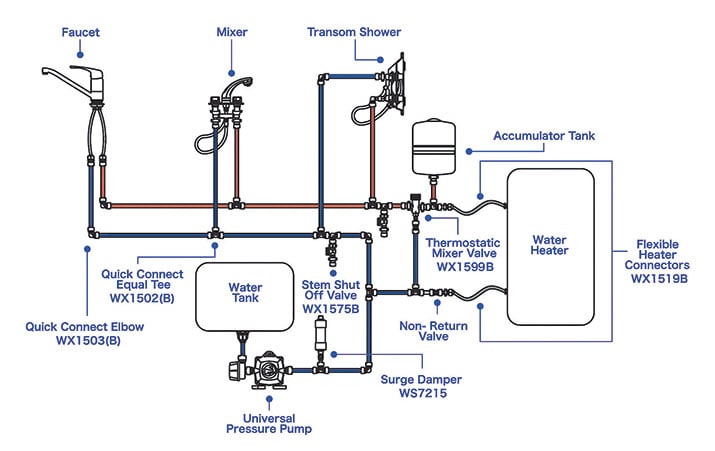
The Whale Water System is a user-friendly system for the do-it-yourself boat owner.
Where they are used: On all boats larger than runabouts and daysailers, fresh water aboard is both a convenience and a necessity. The freshwater pump is at the heart of the delivery system that ensures a constant supply to the fixtures in galley, head, and shower.
- Common Questions When Choosing a Freshwater Pump
- What to Look for When Choosing a Freshwater Pump
- The Rest of the Freshwater System
- Water Use and Conservation
- Winterizing Your Freshwater System
- Final Notes
- FAQs
Common Questions When Choosing a Freshwater Pump
Do you want on-demand water supply?
On-demand pumps have a pressure switch that builds up pressure in the fresh water line. Whenever a faucet is opened, pressurized water is immediately available. The pump turns on automatically to maintain system pressure as needed. Manual pumps have no pressure switch and must be turned on by a switch before the water is required. Most cruising boats use on-demand electric pumps as the primary system, with a manual backup pump in the galley for use during electrical failure or to conserve power on passage.
How many outlets does the pump need to serve?
Freshwater pumps are often described by the number of outlets they can supply (“for two or three faucets”). Additional taps or fixtures may cause reduced flow capacity, erratic pressure, or excessive pump cycling if several are open simultaneously. Size the pump for the maximum number of fixtures that could realistically be in use at the same time, not the total number of fixtures in the system.
How much capacity do you want?
Pumps are selected by gallons per minute (gpm) output and by operating pressure. The freshwater pumps we offer have capacities between 1.1 and 11 gallons per minute. General sizing guidelines:
| Number of Fixtures | Recommended gpm |
|---|---|
| 1–2 | Up to 3.0 gpm |
| 2–3 | Up to 4.0 gpm |
| 4+ | More than 4.0 gpm |
Do you want an electric or a manual pump?
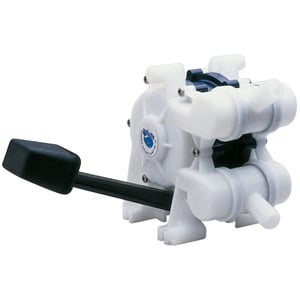
Whale Gusher Mk III surface-mounted manual pump handles both fresh and saltwater.
Some pumps use electricity to operate; others use muscle power. Any pressurized water system should include a manual freshwater pump and spigot as backup. Electrical pump failure should not eliminate your access to fresh water — this is especially important offshore or at anchor where provisioning or repairs may not be immediately available.
Do you want to pump both fresh and saltwater?
Many galley pumps cannot be used with saltwater because salt damages valves, seals, and internal metal components. However, to conserve freshwater — especially on small vessels with limited tankage — some boaters use saltwater for initial dishwashing before rinsing with fresh water, either in the galley sink or with the deck shower. If you want to pump both fresh and saltwater, select a saltwater-compatible pump such as the Paragon Jr. by Groco.
Where would you mount the pump?
Pump location determines whether you need a self-priming or non-self-priming pump. Non-self-priming pumps must be mounted at or below the water level in the tank, so water is already present in the pump chamber. Self-priming pumps can be located above the water level because they draw water up to themselves when switched on. Most modern diaphragm pumps are self-priming.
What kind of electrical system does your boat have?
Is it 12V or 24V? We offer several pumps for both voltages. Amperage draw varies by pump capacity, but the 24V version of a given pump draws approximately half the current of its 12V equivalent — an advantage on boats with larger 24V electrical systems. Starting amperage draw may be significantly higher than operating draw; see individual product specifications.
Which port size do you need?
Higher-capacity pumps use 3/4” or 1” port sizes to allow adequate flow. Some shower pumps offer multiple port sizes between 3/4” and 1-1/2”. Otherwise, 1/2” NPT ports are the most common on freshwater pumps and match most standard marine faucets and hose barbs.
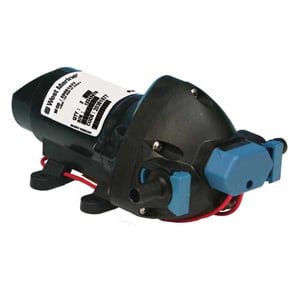
West Marine Freshwater System Pump is designed to meet the needs of most boats with a water heater, shower, and up to three faucets.
What to Look for When Choosing a Freshwater Pump
Multiple pump chambers: In diaphragm pumps, more chambers mean smoother, more consistent water flow with less pulsation. A three-chamber pump provides noticeably steadier output than a single-chamber unit of equivalent capacity.
Variable speed: Variable speed pumps change motor speed to deliver the precise amount of water required at any given moment. They provide virtually no lag time and maintain consistent pressure whether one or multiple faucets are open simultaneously — a noticeable improvement over fixed-speed pumps paired with accumulator tanks.
Rated GPM: Gallons per minute describes the pump’s output under ideal open-flow conditions. This does not account for head height, friction losses in the hose runs, or fixture flow restrictions — all of which will reduce real-world output. For most boats, very high GPM ratings may not be an advantage if the fixtures themselves limit flow.
Run dry capability: Some electric pumps can be damaged by running without water, burning up the motor or wearing out internal parts when the tank runs empty. Pumps with run-dry sensors detect the absence of water flow and shut off automatically to prevent damage. This is a valuable feature on any boat where the tank may occasionally run low.
Vibration dampeners absorb pump action shock, making the pump quieter during operation. Useful when the pump is mounted in a location where noise is noticeable in the cabin.
Check valve: A check valve permits water flow in one direction only, preventing backflow. It also protects the pump from high municipal water pressure at the dock, which exceeds what the pump can handle. Most diaphragm pumps have check valves built in.
Pressure switch: Opens the electrical circuit and turns the pump off when water pressure in the system reaches a pre-set threshold (typically 35–60 psi). When pressure drops below that point, it closes the circuit and restarts the pump. This is the device that makes on-demand operation automatic.
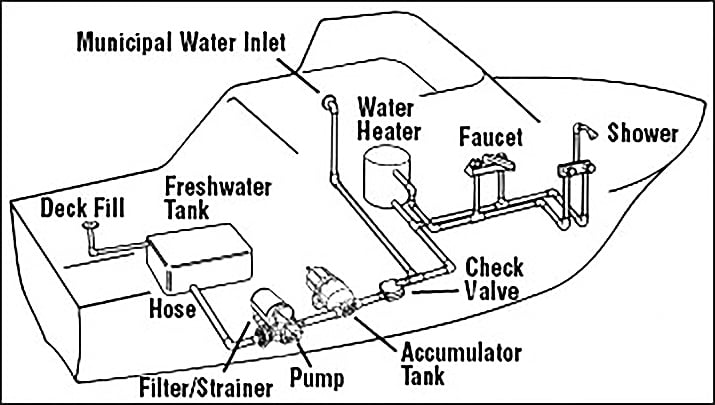
The basic parts of a typical freshwater system with hot and cold water.
The Rest of the Freshwater System
Freshwater tank: Rigid holding tanks are generally preferable, but flexible tanks work well in odd-shaped or inaccessible spaces. Make sure the tank’s deck fill has a tight seal and that the vent terminates above deck and is positioned so that spray or washdown water cannot contaminate the drinking water supply.
Hose: Most pumps and fixtures use 1/2” ID hose. Confirm that the hose you select is rated for 35–40 psi and is made from FDA-approved nontoxic materials. Hot-water hoses must be reinforced to withstand elevated temperatures.
Strainer: Any electric pump should be protected by a strainer or in-line filter upstream of the pump inlet. Debris from the tank or hose runs can clog diaphragm valves and damage pump internals. Most pump manufacturers sell matched strainers for this purpose.
Accumulator tank: A sealed air-over-water pressure vessel that stores pressurized water, smoothing out pump cycling and providing steady flow for small draws. Larger accumulator tanks can satisfy brief water demands — filling a glass, rinsing hands — without triggering the pump at all. Fixed-speed pump systems benefit significantly from a properly sized accumulator; variable speed pumps reduce but do not eliminate the value of one.
Municipal water inlet: A shore water connection allows the boat to run on dock water pressure without operating the onboard pump or depleting the tank. Use a drinking-water-safe hose and install a one-way check valve to isolate your pump and accumulator from potentially damaging high shore pressure.
Water heater: Water heaters can be powered at the dock by AC shore power or underway by drawing heat from the engine’s cooling water circuit. Even a small 6-gallon heater provides enough hot water for dishwashing and short showers.
Faucet/Shower: A shower — whether in the head or at the swimstep — significantly improves quality of life aboard. Interior showers require a shower sump pump to drain the sump rather than allowing shower water to accumulate in the bilge. Higher-capacity pumps and larger accumulator tanks provide the most consistent shower pressure.
Water Use and Conservation
Tank capacity and pump sizing must be matched to how the boat is used. Daily water consumption varies enormously depending on crew habits and whether showers are taken aboard:
- Day sailing / weekend use: 1–2 gallons per person per day is achievable with conservative habits — drinking water, handwashing, brief dish rinses.
- Typical coastal cruising: 2–4 gallons per person per day covers cooking, dishwashing, and brief showers.
- Comfortable liveaboard or passage making: 4–8 gallons per person per day when full showers are taken and cooking is done regularly.
Size your water tank for the longest expected period between fills at the conservative end of your expected usage range, then add 25% as a buffer. Running out of fresh water offshore is a serious situation. On long passages, a watermaker (reverse osmosis desalinator) eliminates tankage limitations entirely and should be considered on any boat planning offshore passages of more than three to five days.
Winterizing Your Freshwater System
Pressurized freshwater systems must be winterized before cold-weather storage to prevent freeze damage to the pump diaphragm, valves, hose, and tank fittings. Freezing water expands with enough force to crack pump housings, split hose, and damage valves.
Two approaches:
- Drain completely: Turn off the pump, open all faucets, and drain the tank. Remove residual water from the pump and hose runs by blowing compressed air through the system. This is thorough but requires careful attention to all low points where water may pool.
- Flush with non-toxic antifreeze: Pour non-toxic propylene glycol antifreeze (pink marine antifreeze, not automotive antifreeze) into the tank and run each faucet until antifreeze flows out. This is simpler and ensures all water in hose runs and the pump itself is displaced. Flush the system thoroughly with fresh water in the spring before use.
Never use ethylene glycol (green automotive antifreeze) in a potable water system. Use only food-safe propylene glycol antifreeze rated for potable water use.
Final Notes
System sanitation: Add a water system purifier or sanitizer to your tank periodically to inhibit algae growth. Untreated tanks on boats that sit unused for weeks can develop a green or slimy lining that is unpleasant and potentially unhealthy. Follow the product instructions for the correct dosage and contact time, then flush before using the water for drinking or cooking.
Hose and clamp inspection: Inspect the entire freshwater system at least annually. Look for hose that has become stiff, cracked, or discolored; loose or corroded hose clamps; and any fitting that shows signs of weeping or staining. Fresh water hose that has been in service for more than ten years should be proactively replaced regardless of appearance.
Sink siphon protection (sailboats): Sailboat owners should install a siphon break in sink drain lines or close the sink thru-hull valves when not in use. When a sailboat heels significantly, cockpit drains and galley sink drains can be submerged below the waterline, creating a siphon that allows seawater to flow back into the boat through the drain. This is a known and serious flooding risk on many older production sailboats.
Offshore: Boats venturing offshore should consider adding a watermaker (reverse osmosis desalinator) to eliminate dependence on limited onboard tankage.
Frequently Asked Questions
What size freshwater pump do I need?
Size the pump for the maximum number of fixtures that could realistically be used simultaneously, not the total fixtures in the system. One or two fixtures in simultaneous use needs up to 3.0 gpm; two to three fixtures need up to 4.0 gpm; four or more fixtures need more than 4.0 gpm. If you plan to add a shower, factor in that a typical shower head flows 1.5–2.0 gpm. For variable speed pumps, follow the manufacturer’s fixture count guidance specifically.
What is an accumulator tank and do I need one?
An accumulator tank is a sealed pressure vessel that stores pressurized water to smooth out pump cycling and provide steady flow. Without one, a fixed-speed pressure pump will cycle on and off rapidly for any small draw — a glass of water, a hand wash — which shortens pump life and creates annoying noise. If you have a variable speed pump, an accumulator is less critical but still useful. If you have a fixed-speed pump, an accumulator is strongly recommended.
Can I connect my boat to shore water at the dock?
Yes, with a municipal water inlet fitting and a pressure-reducing check valve. Shore water pressure (typically 40–80 psi) is higher than most marine pumps and accumulator tanks are rated for. A check valve or pressure regulator between the shore connection and the boat’s water system protects the pump and accumulator from high-pressure damage. Use a drinking-water-safe hose between the dock and the boat.
How do I winterize my boat’s freshwater pump?
Either drain the system completely or flush it with non-toxic propylene glycol antifreeze (pink marine antifreeze). Draining requires blowing out all hose runs to remove water from low points. Flushing with antifreeze is simpler and more reliably complete — run each faucet until antifreeze flows out, confirming the pump and all hose runs are protected. Never use automotive antifreeze (ethylene glycol) in a potable water system.
Do I need a saltwater pump in addition to a freshwater pump?
Not necessarily, but it is worth considering on small boats with limited tankage. A dedicated saltwater pump at the galley sink allows you to use seawater for initial dishwashing, saving fresh water for rinsing. If you do add a saltwater pump, ensure it is rated for saltwater service — standard freshwater pump valve materials and internal metals can be damaged by prolonged salt exposure.