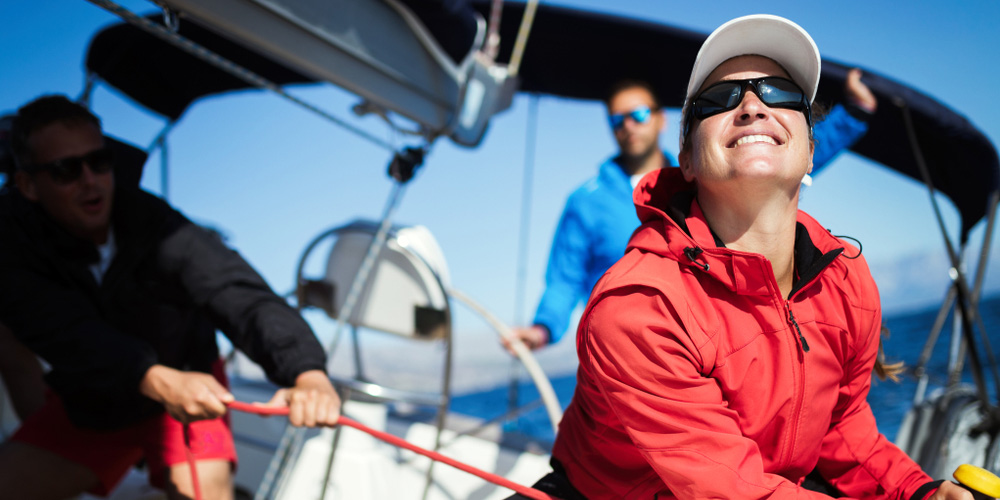
Whatever type of boat you sail, whatever your age and current fitness level, every sailor can benefit from improving strength, agility, balance and endurance. Sailing is physical. Even casual daysailing can involve climbing aboard, moving across a cockpit, trimming sails, handling dock lines, reefing, anchoring and reacting quickly when conditions change.
Getting fit for sailing does not mean training like a professional athlete. It means building enough strength, mobility and stamina to handle the routine actions you perform on your boat safely and confidently. A stronger, more agile sailor is usually a safer sailor.
- Why Sailing Fitness Matters
- Define Your Sailing Fitness Goals
- Fitness for Dinghy Sailors
- Fitness for Sportboat Sailors
- Fitness for Keelboat Sailors
- Core Strength and Balance
- Cardiovascular Endurance
- Flexibility and Mobility
- Find a Training Partner
- Get Help When You Need It
- Simple Sailing Fitness Routine
- Sailing Fitness FAQ
Why Sailing Fitness Matters
From the pro sailor racing a maxi boat in the Transpac Race, to a high school sailor competing in a CFJ, to a cruising sailor daysailing an Islander 36, sailing places real physical demands on the body. The loads, movements and risks vary by boat, but nearly every sailor benefits from better conditioning.
Fitness helps you move around the boat more safely, recover balance faster, trim sails more efficiently and reduce fatigue during long days on the water. It also helps lower the risk of injury when handling loaded lines, grinding winches, hoisting sails, lifting gear or stepping from dock to deck.
One of the best ways to build sailing fitness is by sailing itself. Hiking, trimming, grinding, hoisting and moving around the boat all develop sailing-specific strength. But if you live somewhere with a short sailing season, off-season training can help you return to the water stronger and better prepared.
Define Your Sailing Fitness Goals
The best training plan depends on the type of sailing you do. A dinghy sailor, sportboat sailor and keelboat sailor all use different movement patterns and muscle groups. Start by thinking honestly about your boat, crew role and current limitations.
Ask yourself:
- Do I need more endurance for long races or days on the water?
- Do I struggle with winch grinding, hoisting or trimming loaded lines?
- Do I need better balance moving around the cockpit or foredeck?
- Do I get sore after hiking, crouching or repeated tacks and gybes?
- Do I want to reduce injury risk as I get older?
Once you know what you want to improve, you can focus your training on the strength, mobility and endurance that matter most for your sailing style.
Fitness for Dinghy Sailors
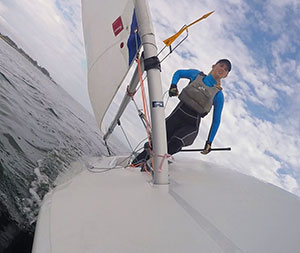

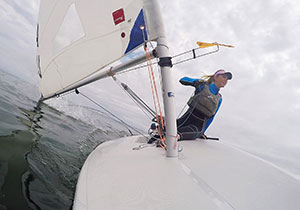
Sailing a Laser requires flexibility, balance and endurance.
Dinghy sailing demands agility, flexibility, balance and sustained core endurance. A Laser, for example, requires long periods of straight-leg hiking, repeated tacks and gybes, quick fore-and-aft movement and constant upper-body trimming. Raw strength matters, but mobility and endurance often matter more.
Dinghy sailors should focus on:
- Core endurance for hiking
- Hip and hamstring flexibility
- Leg strength and stamina
- Shoulder mobility
- Balance and quick transitions
Bodyweight exercises, planks, squats, lunges, rowing movements and mobility work can all help prepare dinghy sailors for the repeated movement and sustained effort required on small boats.
Fitness for Sportboat Sailors
Sportboats such as a Melges 24, J/70 or Ultimate 20 place a different set of demands on sailors. Many sportboats use highly loaded lines, active crew movement and repeated maneuvers. Sailors may stand up, sit down, cross the boat, trim loaded sheets and move quickly during every tack, gybe and spinnaker set.
Sportboat sailors often benefit from a combination of strength, power and conditioning. Training should support quick movements, repeated efforts and the ability to handle loaded control lines without fatigue.
Useful training areas include:
- Leg strength for repeated standing and crouching
- Upper-body pulling strength for trimming
- Core stability for balance during maneuvers
- Cardio conditioning for full race days
- Grip strength for sheets and halyards
Fitness for Keelboat Sailors
Keelboat sailors may not hike like dinghy sailors, but they still face significant physical demands. Grinding winches, trimming large sails, handling reefing systems, operating windlasses, carrying sails, climbing companionways and moving around a heeled boat can all be physically demanding.
For older sailors especially, strength and mobility training can reduce injury risk when handling loaded systems. Poor ergonomics, sticky hardware and awkward body positions can turn routine tasks into strains or sprains.
Keelboat sailors should focus on:
- Core strength for stability
- Rotational strength for grinding and trimming
- Grip and forearm strength
- Shoulder and back strength
- Balance and fall prevention
- General endurance for long passages or race days
Core Strength and Balance
Core strength is central to sailing fitness because nearly every movement on a boat involves balance and body control. A strong core helps you brace against motion, hike longer, trim more efficiently and move around the boat with confidence.
Useful core exercises include:
- Planks
- Side planks
- Bird dogs
- Dead bugs
- Pushups
- Rotational cable or band exercises
- Balance work on one leg
Pushups are especially useful because they train the chest, shoulders, arms and core together. They also build the kind of whole-body stability sailors need when moving across a boat or supporting body weight during maneuvers.
Cardiovascular Endurance
Strength matters, but sailors also need endurance. A long day of racing, cruising or dinghy sailing can wear down even experienced sailors. Fatigue affects judgment, reaction time and coordination.
Cardiovascular training can include walking, running, cycling, rowing, swimming, stair climbing or interval training. The goal is to build enough aerobic capacity that you can stay alert and active throughout the day.
For sailors returning to fitness after time away, start with low-impact activity such as brisk walking, swimming or cycling and gradually increase duration and intensity.
Flexibility and Mobility
Sailing often requires awkward positions: crouching under a boom, stepping over lifelines, hiking with straight legs, crawling forward, ducking through companionways and reaching for lines under load. Mobility training helps your body handle these movements more safely.
Focus on:
- Hip mobility
- Hamstring flexibility
- Thoracic spine rotation
- Shoulder mobility
- Ankle mobility
- Gentle stretching after workouts
Improved mobility can make tacks, gybes, sail handling and cockpit movement smoother and less tiring.
Find a Training Partner
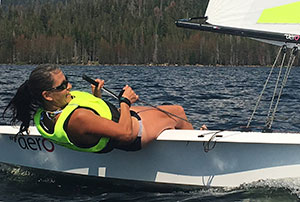
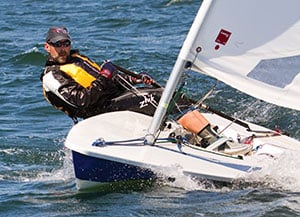
Sailing a high-performance dinghy like a Laser or RS Aero takes fitness, balance and endurance.
Working out alone can be difficult, and many fitness plans fail when motivation fades. Training with a partner, crewmember or spouse can make consistency easier. A partner helps with accountability, encouragement and making workouts more enjoyable.
If your crew trains together, you may also build better teamwork. Stronger, more conditioned crew members can move faster, communicate better and stay sharper late in the day.
Get Help When You Need It
If you are unsure where to begin, consider working with a personal trainer, physical therapist or fitness professional. Explain the type of sailing you do and the movements you need to perform: grinding, hiking, trimming, lifting sails, moving on deck or staying active for long periods.
A professional can help you build a safe program around your current fitness level, past injuries and sailing goals. This is especially important if you are returning to exercise after a long break or managing existing medical concerns.
Simple Sailing Fitness Routine
The best fitness program is one you can stick with. Start with a simple routine performed two or three times per week, then build gradually.
Beginner Sailing Fitness Workout
- Brisk walk, bike or row for 10–20 minutes
- Bodyweight squats: 2 sets of 10
- Pushups or elevated pushups: 2 sets of 8
- Plank: 2 rounds of 20–30 seconds
- Side plank: 1 round each side
- Walking lunges or step-ups: 2 sets of 8 each leg
- Band rows or cable rows: 2 sets of 10
- Gentle hip, hamstring and shoulder stretching
As you improve, gradually increase repetitions, duration or resistance. The goal is not to exhaust yourself; it is to build strength and endurance consistently so sailing feels easier and safer.
Make It Fun
There is an old saying that "80 percent of success is showing up." That is especially true for getting into shape. The exact workout matters less than consistency. Walk, swim, row, bike, stretch, lift weights, take a class or train with your crew. The important thing is to keep moving.
The more fit you become, the more comfortable and confident you will feel onboard. Better strength, balance, endurance and mobility can help you sail longer, react faster and enjoy your time on the water more fully.
Sailing Fitness FAQ
What muscles are most important for sailing?
Sailing uses the core, legs, back, shoulders, arms and grip muscles. Core strength, balance and endurance are especially important because sailors constantly brace, trim, hike and move on unstable surfaces.
How can I get fit for sailing in the off-season?
Focus on a mix of cardio, bodyweight strength training, core exercises, mobility work and balance training. Walking, rowing, cycling, pushups, planks, squats and stretching can all support sailing fitness.
Do dinghy sailors need different fitness than keelboat sailors?
Yes. Dinghy sailors often need more hiking endurance, flexibility and agility, while keelboat sailors may need more strength for winch grinding, sail handling, balance and injury prevention.
Is strength or endurance more important for sailing?
Both matter. Strength helps with trimming, hoisting, grinding and moving around the boat, while endurance helps sailors stay alert and effective during long days on the water.
Should older sailors train differently?
Older sailors should prioritize strength, mobility, balance and injury prevention. A gradual program and professional guidance can help build fitness safely, especially after time away from exercise.