
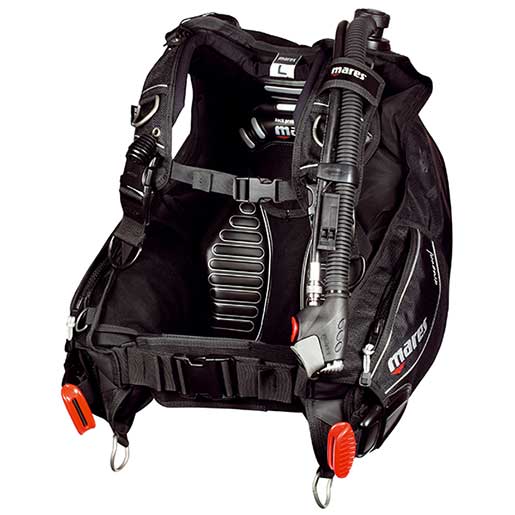
Experienced divers know that buoyancy control is one of the most important skills in scuba diving. A properly selected BCD, or Buoyancy Compensating Device, helps divers control buoyancy at the surface, during descent, at depth and during ascent. It also provides a secure mount for the scuba tank and a platform for organizing hoses, gauges and accessories.
Adding air to a BCD increases buoyancy, while releasing air decreases buoyancy. At the beginning of a dive, the BCD provides flotation at the surface. During descent, the diver releases air to sink gradually. At depth, small adjustments help maintain neutral buoyancy. At the end of the dive, controlled venting helps the diver ascend safely and return to positive buoyancy at the surface.
- What a BCD Does
- Jacket vs. Back-Inflate BCDs
- BCD Fit and Comfort
- Lift Capacity and Weighting
- Integrated Weight Systems
- Inflator Hoses and Dump Valves
- D-Rings, Straps and Accessory Setup
- Travel BCDs
- BCD Care and Maintenance
- BCD FAQ
What a BCD Does
A BCD helps a diver manage buoyancy throughout the dive. Buoyancy changes as depth, wetsuit compression, tank pressure and breathing patterns change. The BCD allows the diver to add or release air to stay controlled and balanced.
When used properly, a BCD helps the diver become neutrally buoyant, producing the weightless feeling that makes scuba diving comfortable and enjoyable. Good buoyancy control also helps protect reefs and bottom habitats by reducing accidental contact with the seafloor.
Jacket vs. Back-Inflate BCDs
BCD style affects how the diver feels both underwater and at the surface. The two most common recreational scuba BCD styles are jacket-style and back-inflate.
Jacket-Style BCDs
A jacket-style BCD has air cells around the sides and back of the diver. This design provides balanced surface flotation and helps keep the diver upright while waiting at the surface. Jacket-style BCDs are popular with beginners, rental fleets and divers who want a stable, familiar fit.
Back-Inflate BCDs
A back-inflate BCD carries most of its air behind the diver. Underwater, this can promote a more horizontal swimming position and reduce bulk around the torso. At the surface, however, some back-inflate models may tend to push the diver slightly forward if overinflated.
Which BCD Style Is Best?
Choose a jacket-style BCD if you value upright surface flotation, easy adjustment and a traditional feel. Choose a back-inflate BCD if you prefer a streamlined profile and a more horizontal underwater trim position.
BCD Fit and Comfort
A BCD should fit snugly without restricting breathing or movement. If the BCD is too loose, it can shift while diving, making buoyancy control and tank stability more difficult. If it is too tight, it may feel uncomfortable once fully loaded with gear.
Look for adjustable shoulder straps, waist straps, chest straps and cummerbunds that allow a secure fit over your exposure suit. Always try a BCD with the type of wetsuit or exposure protection you expect to wear most often.
Lift Capacity and Weighting
Lift capacity describes how much buoyancy a BCD can provide. The correct lift capacity depends on the diver's body size, exposure suit, tank type, weighting, gear configuration and diving environment.
Heavier divers, cold-water divers and those wearing thick wetsuits or carrying more equipment may need greater lift. Smaller divers, warm-water divers and travelers using lightweight gear may need less.
Divers generally fall into two natural buoyancy categories:
- Positive buoyancy: You naturally float.
- Negative buoyancy: You naturally sink.
Your buoyancy, wetsuit thickness, tank type and gear load determine how much weight and BCD lift you need. A BCD should never be used as a substitute for proper weighting. During scuba training, divers learn how to perform a buoyancy check and adjust weights safely.
Integrated Weight Systems
Many modern BCDs include integrated weight pockets. These systems allow divers to carry lead weight in the BCD instead of using a traditional weight belt. Integrated weights can improve comfort and reduce the amount of gear around the waist.
When choosing an integrated weight system, consider:
- How easily the weight pockets load and lock in place
- Whether the weights can be released quickly in an emergency
- Total weight capacity
- Trim weight pocket placement
- Comfort when walking or standing with the BCD loaded
Practice removing and replacing weight pockets before diving so you understand how the release system works.
Inflator Hoses and Dump Valves
The power inflator allows the diver to add air from the low-pressure inflator hose connected to the first stage regulator. It should be easy to reach and simple to operate with one hand.
Dump valves allow the diver to release air from the BCD. Common locations include the shoulder, lower rear and inflator hose assembly. Multiple dump valve locations help vent air in different body positions during ascent or underwater adjustments.
Important inflator and valve features include:
- Compatible low-pressure inflator hose connection
- Easy-to-use oral inflation valve
- Accessible shoulder and rear dump valves
- Overpressure relief valve to protect the bladder
- Smooth, predictable air release
An overpressure valve helps prevent bladder damage if the BCD is overinflated, which is especially important when adding air at depth or handling gear at the surface.
D-Rings, Straps and Accessory Setup
A BCD also functions as an equipment platform. D-rings, hose retainers and accessory pockets help organize gauges, alternate air sources, dive lights, surface marker buoys, knives and other gear.
Good hose routing reduces drag and keeps equipment close to the body. D-rings allow divers to clip off accessories so they remain secure but accessible. This is especially useful for divers carrying cameras, reels, lights or spearfishing equipment.
When comparing BCDs, look for:
- Stainless steel or durable plastic D-rings
- Accessory pockets
- Knife mounting points
- Octopus and gauge retainers
- Tank strap stability
- Trim weight pockets
Travel BCDs
Travel BCDs are designed to reduce weight and bulk. They often use lightweight materials, low-profile valves and simplified harness systems to make packing easier.
A travel BCD is a good choice for warm-water destination divers who want compact gear. However, some travel models may have less lift, fewer pockets or lighter-duty materials than full-featured BCDs, so match the BCD to the type of diving you do most often.
BCD Care and Maintenance
Proper care helps extend the life of a BCD and keeps valves, bladders and inflators working correctly.
- Rinse the BCD thoroughly with fresh water after each dive.
- Flush the inside of the bladder with fresh water after saltwater diving.
- Partially inflate the BCD while drying to prevent the bladder from sticking together.
- Store the BCD in a cool, dry place out of direct sunlight.
- Inspect straps, buckles, valves and inflator buttons before each dive.
- Have the BCD serviced according to the manufacturer's recommendations.
Frequently Asked Questions About BCDs
What does a BCD do in scuba diving?
A BCD helps a scuba diver control buoyancy by adding or releasing air. It also provides surface flotation and secures the scuba tank to the diver.
What is the difference between a jacket BCD and a back-inflate BCD?
A jacket BCD has air cells around the sides and back for upright surface flotation, while a back-inflate BCD carries most of its air behind the diver for a more streamlined underwater position.
How much BCD lift do I need?
The required lift depends on body size, exposure suit, tank type, ballast weight and diving conditions. Divers using thicker wetsuits or heavier gear generally need more lift.
Are integrated weights better than a weight belt?
Integrated weights can improve comfort and reduce gear around the waist, but divers should practice using the release system and confirm the BCD has enough weight capacity.
How should a BCD fit?
A BCD should fit snugly without restricting breathing or movement. It should stay stable around the torso and hold the tank securely without shifting during the dive.
Need More Help?
Choosing the right BCD is important for comfort, safety and buoyancy control. West Marine offers scuba gear and accessories to help divers prepare for confident days underwater. Visit your local store or shop online to find the right BCD for your diving style.