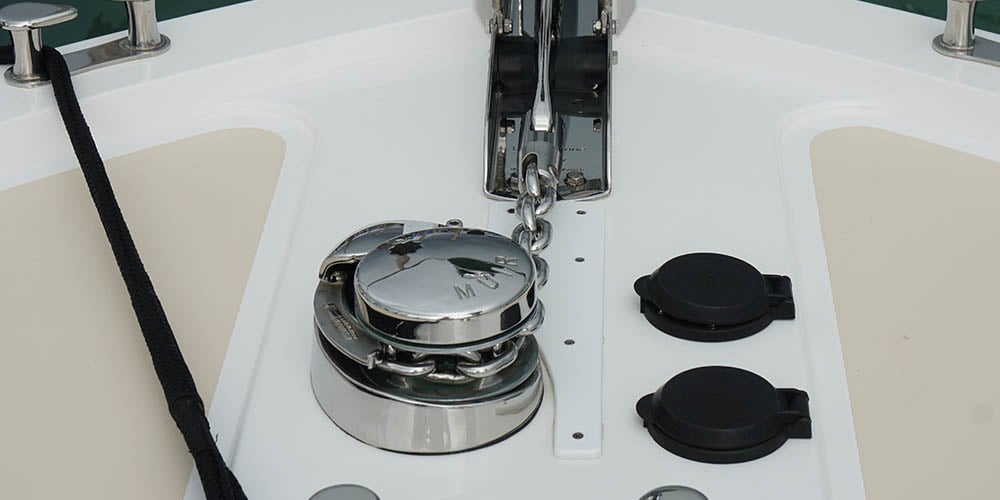
Save Your Back: Get a Windlass
Raising an anchor by hand can be a real workout. Whether you own a fishing boat, power cruiser, or sailboat, a windlass makes anchoring easier on your back and your crew. A windlass is the key component in a full-function anchoring system, which also includes your primary anchor, anchor roller, rode, usually a chain locker, and deck hardware such as a chain stopper or cleat.
Windlasses can be DIY-installed by a boat owner with intermediate mechanical and electrical skills. Your choice depends on your style and size of boat, anticipated anchoring conditions, and the weight and type of ground tackle. This guide covers all the key decisions.
- Windlass Pulling Power
- Anchor Locker Size and Chain Fall
- Horizontal vs. Vertical Windlass
- Choosing a Windlass for Your Anchor Rode
- Gypsy Compatibility
- Chain Stopper and Snubber
- Remote Operation Options
- Wiring and Electrical Requirements
- FAQs
Windlass Pulling Power
The pulling power required of a windlass is one of the most important selection criteria — and one of the most commonly misunderstood. A windlass is not designed to drag a boat against a 25-knot wind with the engine in neutral, or to break out a deeply buried anchor by brute force. The correct technique is to use the engine to motor upwind and use the boat’s motion to break out the anchor — the windlass then retrieves the slack rode as the anchor releases. A windlass that is being used to drag the boat to its anchor is being overloaded, and it is also doing the engine’s job.
In practice, many boaters do put strain on the windlass beyond the hanging weight of the rode, because proper technique is not always followed. Manufacturers account for this by recommending windlasses with significant safety margins above the working load. Lewmar recommends selecting a windlass whose maximum load capacity is at least four times the working load — the combined weight of the anchor, rode, and hardware.
To size your windlass:
- Add the weight of your anchor, anchor rode (chain and/or rope), and all shackles and swivels. This is your working load.
- Multiply by four. This is the minimum recommended maximum load capacity.
- If your boat has high windage (tall superstructure, mast, large cabin), heavy displacement, or if you frequently anchor in current, size up to the next larger model.
Example: A 33-foot boat with a 22 lb. Delta anchor, 200’ of 1/2” nylon rope, 15’ of 1/4” chain, and a shackle weighs approximately 62 lbs. of total ground tackle. Multiply by four: this boat needs a windlass rated for at least 248 lbs. of pull.
Anchor Locker Size and Available Chain Fall
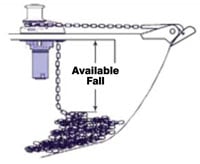
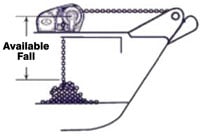
Measure the depth of your anchor locker to determine the available “fall” — the distance between the top of the locker and the top of the rode when it is completely stowed inside. This measurement is critical to determining which windlass orientation will work on your boat.
A vertical windlass typically requires a longer chain fall than a horizontal model because the chain must make a 90° turn as it descends into the locker. If your locker is shallow, a horizontal windlass may be the only workable option regardless of other preferences.
Horizontal vs. Vertical Windlass
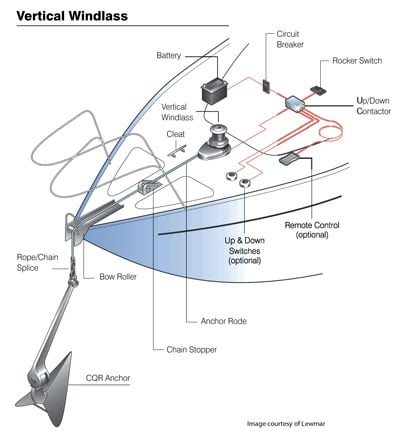
Vertical windlasses are the most popular style because they have a lower, less obtrusive presence on the foredeck. The motor hangs below deck, protecting most of the mechanism from the elements. The rode makes a full 180° wrap around the gypsy before feeding through a deck pipe into the anchor locker, making a 90° turn. This full wrap provides excellent chain grip. Vertical windlasses require a larger below-deck cutout for the motor housing and generally need a deeper anchor locker to accommodate the chain fall.
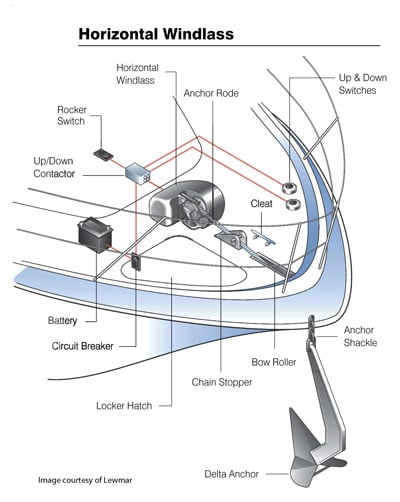
Horizontal windlasses are self-contained on deck. Installation requires only holes for the chain pipe, wire runs, and through-bolts — no large below-deck motor cutout. The chain enters the gypsy and makes a 90° turn directly into the locker, requiring a minimum fall of only about 12”. Horizontal models are the right choice for boats with shallow or unusually shaped chain lockers. Very large yacht windlasses and most manual windlasses are also horizontal. One important limitation: side-to-side alignment is critical for horizontal windlasses because they cannot accept rodes leading from significantly off-center angles. If your bow roller is not directly in line with the gypsy, a horizontal windlass may not work correctly.
Choosing a Windlass for Your Anchor Rode
All-chain: All-chain rode is the preference of most serious cruising boaters. Chain is highly abrasion-resistant, lies flat on the bottom, and provides natural catenary (sag) that cushions the anchor load in surge. All-chain gypsies are self-tailing and self-stowing — the weight of the chain pulls it through the deck pipe and into the locker without assistance. The trade-offs are weight, cost, and the tendency to collect mud and sea life.
Rope-chain: Rope-chain windlasses use a single gypsy with chain pockets on the outer perimeter and V-shaped grooves in the center to handle rope. This requires your anchor rope to be spliced directly to the last link of the chain. The splice is strong when properly made and is a common and acceptable rode assembly — inspect it regularly for chafe, particularly where it passes over the bow roller. Rope-chain rode is lighter and less expensive than all-chain, and many coastal cruisers use it successfully.
Rope only: Simple rope capstans wrap the rode around a drum powered by the electric motor. You tail the rode by hand as the capstan pulls, ending up with a pile of line on deck to coil and stow. Rope capstans are useful for singlehanders or when anchors are difficult to break out, but they require you to be at the bow to operate them and provide no self-stowing function. Rope-only self-tailing models wrap the line around an internal pulley and deposit it below, but are generally limited to one or two sizes of three-strand anchor line and can only accommodate a short length of chain between the windlass and bow roller. For most recreational applications, a rope-chain windlass is a more practical choice.
Gypsy Compatibility With Your Chain
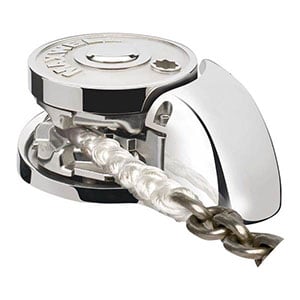
The Maxwell RC12-10 vertical windlass uses a Wave Design™ gypsy that fits High Test, BBB, or Proof Coil chain. Other windlasses require careful matching between rode and gypsy.
Gypsy compatibility is one of the most overlooked windlass selection criteria and one of the most common sources of problems after installation. The gypsy must match both the diameter and the type of your chain.
Different chain types have different link dimensions even at the same nominal diameter. A gypsy designed for 5/16” High Test chain will not work correctly with 5/16” BBB chain, which has shorter, more compact links. The chain will skip, jam, or fail to engage the gypsy pockets properly. If you are selecting a windlass to use with existing chain, bring a sample of your chain to a West Marine store or confirm the specific chain type with the windlass manufacturer before purchasing.
Many windlasses are available with a selection of gypsies for different chain types, which may need to be specially ordered to match your specific rode. Some windlasses, like the Maxwell RC12-10 with its Wave Design™ gypsy, are engineered to accept multiple chain types, which provides useful flexibility.
Chain Stopper and Snubber
A windlass is designed to raise and lower the anchor rode — not to hold the boat at anchor. Once the anchor is set, the load should be transferred off the windlass entirely using a chain stopper or snubber. Running the boat at anchor with the full load on the windlass gypsy will stress the motor and gearbox and shorten windlass service life.
A chain stopper is a deck-mounted fitting that grips the chain and holds the anchor load, freeing the windlass. It is installed between the windlass and the bow roller. Once the anchor is set and the stopper is engaged, you can ease the windlass and let the stopper carry the load.
A snubber is a length of nylon rope with a hook or splice that attaches to the anchor chain below the bow roller and leads back to a cleat. The nylon stretches under load, which absorbs the shock of wave action and surge on the anchor rode — protecting both the windlass and the anchor from the sharp shock loads that an all-chain rode transmits without any elasticity. On all-chain rode boats, a snubber is highly recommended as standard practice at anchor.
Remote Operation Options
Determine whether you want to operate the windlass from a location other than the bow. On sailboats, the crew typically weighs anchor from the foredeck, so bow-mounted controls are usually sufficient. On powerboats, it is often more convenient — and sometimes safer in rough conditions — to operate from the helm.
- Deck foot switches: Located near the windlass on the foredeck. Allow hands-free operation while handling the anchor and rode. Useful on any boat even if helm control is also installed.
- Helm panel switches: Popular on powerboats. Allow the helmsman to raise and lower the anchor while managing the boat’s position with the throttle.
- Wired handheld remotes: A control pendant on a cable that can be operated from multiple positions. Useful when the operator needs to move around the foredeck.
- Wireless remotes: Offer full freedom of movement anywhere on the boat. Increasingly common on larger vessels. Require a battery in the remote and occasional pairing maintenance.
On any boat, the ability to control the windlass from the bow is important for safety — the person handling the anchor needs to be able to stop the windlass immediately if the chain jams, a hand is in danger, or the anchor snags something. Never operate a windlass remotely without a crew member at the bow who can see the chain and stop it if needed.
Wiring and Electrical Requirements
Windlasses draw substantial current at startup and under load. Incorrect wiring is the most common cause of windlass underperformance and premature motor failure. The key electrical considerations:
- Dedicated circuit: A windlass must be on its own dedicated circuit directly from the battery or battery switch, not shared with other loads. The windlass circuit bypasses the main distribution panel and runs directly to the battery with its own circuit breaker or manual reset breaker.
- Wire gauge: Size the windlass power cable for the full rated current draw of the windlass at the length of the wire run. Voltage drop at the windlass must be kept to a minimum — even a small voltage drop significantly reduces the windlass’s pulling power and generates excess heat. Follow the windlass manufacturer’s wire sizing chart, which specifies cable gauge by amperage and run length. Many larger windlasses require 2/0 or 4/0 AWG cable for runs over 15–20 feet.
- Circuit breaker: Install a manual reset circuit breaker or a fused disconnect at the battery, sized to the windlass’s maximum current draw. The breaker protects the wiring in case of a motor stall or short circuit and also provides a way to disconnect the windlass when not in use.
- Battery proximity: Mount the windlass as close to the battery as practical. Every additional foot of wire adds resistance and voltage drop. Many boats dedicate a battery on the bow specifically for the windlass to minimize wire run length.
- Solenoid: Most windlasses include or require a solenoid (relay) that switches the heavy current to the windlass motor. The solenoid is typically mounted below deck near the windlass and is controlled by the lighter-gauge switch wiring from the foot switches or helm panel. Confirm the solenoid is included in the windlass kit or purchased separately as required.
Frequently Asked Questions
How do I size a windlass for my boat?
Add the weight of your anchor, all chain, rope, and hardware. Multiply by four — that is the minimum rated pulling capacity you need. If your boat has high windage, heavy displacement, or you anchor frequently in strong current, size up to the next model. Always check the chain fall available in your locker before selecting a vertical or horizontal model.
What is the difference between High Test and BBB chain for a windlass gypsy?
Both are common anchor chain types sold at the same nominal diameters, but their link dimensions differ. BBB chain has shorter, more compact links than High Test chain of the same diameter. A gypsy designed for one will not work correctly with the other — the chain will skip or jam. Always confirm your chain type (High Test, BBB, or Proof Coil) and match it to the specific gypsy when ordering a windlass.
Should I use a chain stopper or snubber with my windlass?
Both are strongly recommended. A chain stopper transfers the anchor load off the windlass once you are set, protecting the motor and gearbox from continuous stress. A snubber (a nylon line attached to the chain and led to a cleat) absorbs surge and wave shock that an all-chain rode would otherwise transmit directly to the anchor and windlass as sharp jerks. For all-chain rode boats, a snubber is standard practice.
What wire gauge do I need for a windlass?
Wire sizing depends on the windlass’s rated current draw and the length of the wire run from the battery. Windlasses draw high current — often 60–120 amps at full load — and undersized wire causes significant voltage drop that reduces pulling power and can damage the motor. Follow the windlass manufacturer’s wire sizing chart explicitly. Runs over 15 feet on larger windlasses commonly require 2/0 or 4/0 AWG cable.
Can a windlass replace my engine when weighing anchor?
No. A windlass is designed to retrieve slack rode and lift the hanging weight of the anchor and chain — not to drag the boat to its anchor against wind and current. The correct technique is to motor upwind until the rode is nearly vertical, then use the boat’s motion to break out the anchor while the windlass takes up the slack. Using the windlass to drag the boat overloads the motor, wears the gypsy, and risks damage to the windlass mechanism.


