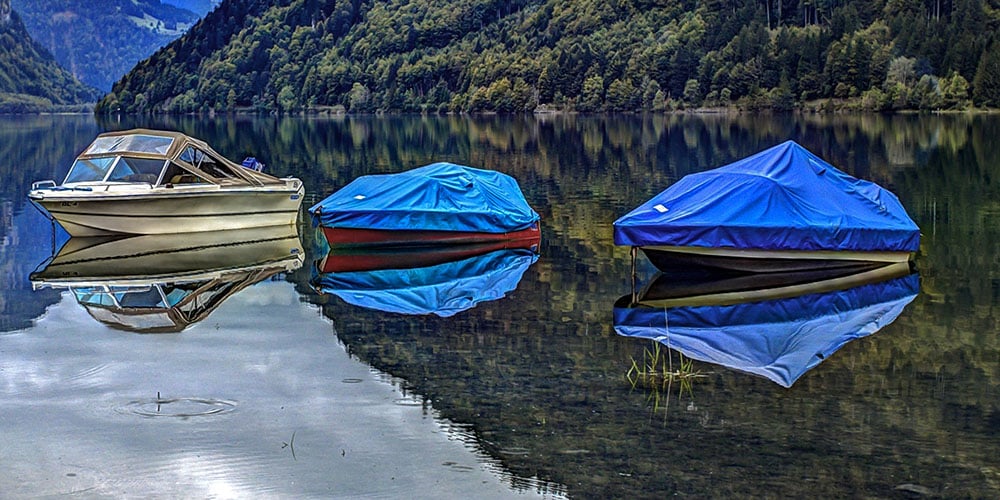
Every day, most boats endure a cycle of temperature and humidity changes, from cool and damp nights to hot, bright sun. This expansion and contraction, wet-dry daily cycling — occurring even on days with the best boating weather — takes a toll on gelcoat and wood brightwork. Add salt air, pollution, dirt, bird droppings, and the occasional hailstorm, and your prized possession is under siege. That’s why a good boat cover is so important. A modest investment in a cover prevents faded and oxidized gelcoat, bleached and cracked wood, and mildew and mold. It also hides valuable equipment from theft — what’s out of sight is out of mind. We’ll walk you through everything you need to consider to pick the right one for your boat.
- What Type of Boat Cover
- Types of Boat Cover Fabrics
- Color Selection
- Taylor Made and Carver Covers
- How to Measure a Boat Cover
- Avoid Common Mistakes
- Snug it Down and Keep it Clean
- FAQs
What Type of Cover Do You Want?
Storage vs. trailering: Storage covers are designed to fit loosely and are best for protecting boats at anchor, at the dock, or when stored on a trailer in place. They range from a simple tarp to a framed canopy — essentially a portable garage made from metal tubing and fabric — or a mast-up mooring cover for a sailboat. Covers used on trailered boats must have a snug fit and reinforcement in high-wear areas to withstand traveling at highway speeds. A storage cover used for trailering will billow, flap, and potentially tear or come loose, creating a hazard on the road.
Semi-Custom Covers for a Better Fit
Semi-custom covers are designed to fit several makes and models of boats with the same hull style. If you own a bass boat, the same model fits a Crestliner, Lund, Alumacraft, or Starcraft. One size fits a Mastercraft or Correctcraft competition ski boat. A more forgiving fit accommodates size variations within the same hull category.
If you own a one-of-a-kind boat or your boat has unusual options and features, you may need to have measurements taken by a custom canvas shop. They can build to your exact specifications, but a custom cover will be the most expensive option and may take substantially longer to receive.
Types of Boat Cover Fabrics
Boat cover fabrics need the right combination of breathability and water repellency — keeping rain out while allowing trapped water vapor to escape. They also need to be UV- and mildew-resistant. Tensile strength and abrasion resistance are especially important in trailering covers, which must withstand the stresses of road travel.
Cotton and polyester blends do not last as long as fully synthetic fabrics — natural fibers have lower resistance to mildew and UV. Pigment-dyed polyester fabrics offer a good strength-to-weight ratio and are a strong choice: strong, breathable, water-repellent, and UV-resistant. Acrylic-coated polyesters such as Hot Shot™ are a good economical choice that provides these same properties at a lower price point than solution-dyed alternatives.
Key properties to look for in any cover fabric:
- Breathability: Allows moisture vapor to escape, preventing mold and mildew from forming under the cover.
- Water repellency: Sheds rain without soaking through. Look for a durable water-repellent (DWR) treatment on the outer surface.
- UV resistance: Protects the cover itself from degrading in sunlight and protects what is underneath from UV damage.
- Mildew resistance: Particularly important in hot, humid climates where covers trap moisture.
- Abrasion resistance: Critical for trailering covers; the cover rubs against fiberglass, metal fittings, and road debris at speed.
What Color Do You Want?
We recommend dark colors — which may seem counterintuitive, but the higher dye content in dark materials significantly increases UV resistance and contributes to fabric longevity. Blue, black, and green covers outlast white, tan, or red covers of the same material for this reason. The trade-off is that darker colors absorb more heat and transmit it to whatever is under them, which is worth considering if your cover will be left on in direct summer sun for extended periods.
Taylor Made and Carver Covers
Taylor Made® Semi-Custom Boat Covers are available from West Marine in six different colors for 21 different hull styles, including Whaler-style inshore fishing boats, bass boats, center console boats, and bay boats. Features include sewn-in tie-down loops, double-folded hems, an integrated shock cord, and 4-ply seams. All are made of Hot Shot™ fabric — a 6-ounce, acrylic-coated polyester with good breathability, strength, and resistance to water, mildew, and UV — making it an appropriate choice for hot or humid climates. Seams are sewn with Gore® Tenara® thread, which will not stain, mold, mildew, or discolor, and is rated to outlast the material it is sewn into.
If you own a traditionally built wood boat, Hot Shot™ fabric is a suitable choice, but to help manage wood’s expansion and contraction cycle, consider adding extra ventilation to the cover — such as the Taylor Boat Vent II (Model 5378575) — to increase air circulation underneath.
Carver Universal Fit Flex-Fit™ PRO Boat Covers are an economically-priced option for mooring, trailering, or storage. Made from Carver’s solution-dyed Poly-Flex II 5.3-ounce material with a 3/4-ounce urethane coating, they offer a durable, water-repellent, mildew-resistant finish. Carver’s Flex-Fit PRO covers are the only domestically produced universal boat covers cut and sewn in the USA.

How to Measure a Boat Cover
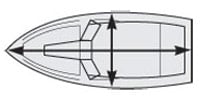
Measure beam width (widest point across the boat) and centerline length (farthest points fore and aft) in straight flat lines.
To buy the right cover, match your boat’s hull style as closely as possible to the hull style pictures in our catalog or on our website. Then take a tape measure and determine two key dimensions:
- Beam width: The widest distance across the boat, measured in a flat horizontal line. Do not follow the curve of the hull — measure straight across.
- Centerline length: The overall length of the boat measured in a flat line between the farthest points forward and aft you want covered. Account for bow pulpits and swim platforms in your measurement but keep the tape line flat and straight rather than following the contour of the hull.
Covers are offered in one-foot length increments. When between sizes, go with the larger size and use tie-downs and support systems to keep it snug and supported. A cover that is even slightly too small will pull at its seams and hem under load.
Avoid Common Mistakes
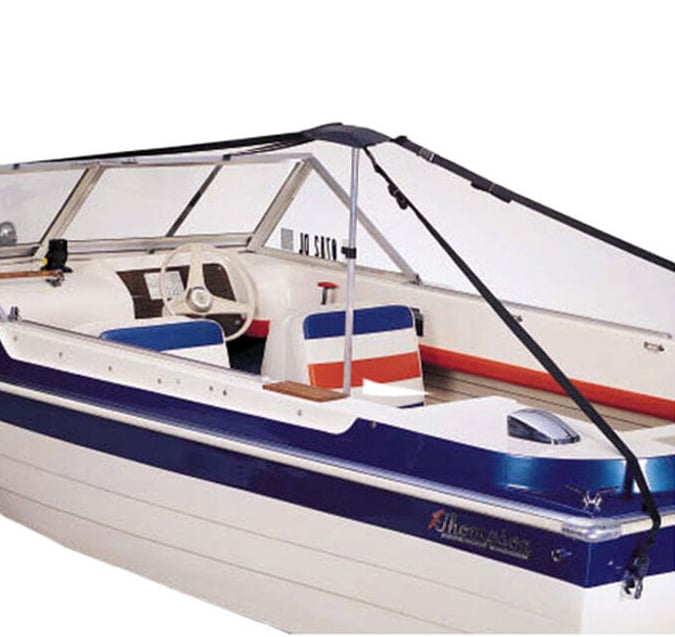
Boat cover support systems elevate your cover to keep water, leaves, and debris from pooling and collapsing it.
Include all the equipment you want to protect when taking your measurements. If the cover is too large it will sag under the weight of collected rainwater and billow in windy conditions, increasing the risk of snagging and tearing on sharp objects. If the fit is too tight, seams and fabric are subject to excessive stretching that leads to premature failure.
Never trailer a boat using a storage cover. Storage covers are not designed for highway speeds — they will flap violently, reducing the driver’s rear visibility and creating a road hazard. If you must trailer without a proper trailering cover, remove the storage cover entirely rather than risk it coming loose on the freeway.
Use a cover support system to create a ridge or peak that sheds water rather than collecting it in a central pool. A collapsed cover full of standing water is heavy, damages the boat’s finish, and stresses cover seams from the weight.
Snug it Down and Keep it Clean
How well the cover is secured is the single most important factor in its service life. Every tie-down loop must be securely attached to the boat or trailer using rope, shock cord, or straps. If tying off to the trailer, the boat must also be securely fastened to the trailer. Before tightening, confirm the cover is properly supported and that no hooks or buckles contact the boat’s finish.
If using shock cord, choose cord heavy enough that the cover does not billow when trailering. Fabric straps must be UV-resistant. Use ratchet-type tighteners with care — they can place excessive stress on the cover and shorten its life.
To clean the cover, wash with mild soap or detergent. Shake out dust, rinse with a garden hose, or use compressed air for stubborn dirt. Do not scrub with a brush, machine wash or dry, use bleach, or use harsh cleaners. Line dry only.
Related:
Frequently Asked Questions
What is the difference between a storage cover and a trailering cover?
Storage covers are designed to fit loosely and protect a stationary boat at the dock, on a mooring, or in storage. They are not designed for road speeds and will billow, flap, and tear if used while trailering. Trailering covers are cut to fit snugly, reinforced at wear points, and designed to withstand the aerodynamic forces and road debris of highway travel. If you need one cover for both uses, a semi-custom trailering cover is the better compromise — it can protect a stationary boat and will survive the road.
What is the best material for a boat cover?
Solution-dyed or pigment-dyed synthetic fabrics — acrylic-coated polyester and polyester-based composites — outperform cotton-polyester blends for marine use. Look for a fabric that is simultaneously breathable (moisture vapor can escape), water-repellent (rain is shed), UV-resistant, and mildew-resistant. Hot Shot™ acrylic-coated polyester and Carver’s Poly-Flex II are both strong choices across these criteria at different price points.
Why do dark-colored covers last longer?
Darker colors require higher concentrations of dye during manufacturing. That higher dye content absorbs UV radiation more effectively, protecting the fabric itself from UV breakdown. Blue, black, and dark green covers outlast white, tan, and red covers made from the same base material for this reason. The trade-off is that dark covers absorb more heat, which is worth considering if the boat sits in direct sun all summer.
How do I keep my boat cover from collecting water?
Use a cover support system — a pole, frame, or inflatable insert — to create a peaked or ridged profile that sheds water to the sides rather than collecting it in a pool at the center. Standing water in a cover adds significant weight, stresses the cover’s seams, presses down on the boat’s finish, and creates conditions for mildew growth underneath. A $20–$50 support system is cheap insurance against this very common problem.
How do I measure my boat for a cover?
Measure beam width (the widest point across the boat in a flat horizontal line) and centerline length (the farthest points fore and aft you want covered, measured in a flat straight line — not following the curve of the hull). Account for bow pulpits and swim platforms. When between cover sizes, choose the larger size and use tie-downs and a support system to keep it properly fitted and supported.