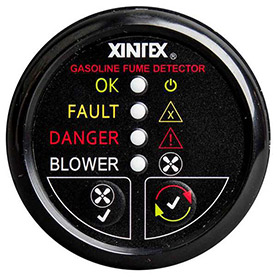
The Xintex M-Series fuel vapor detector monitors gasoline fumes and automatically activates the bilge blower when fumes become dangerous.
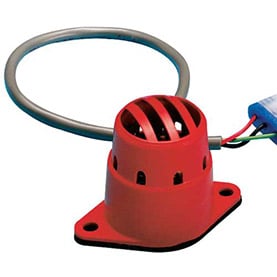
Order an extra sensor to monitor a second location on your vessel.
Fume detectors monitor the concentration of dangerous gases in the air and sound an alarm before a potentially explosive situation develops. They help prevent fires and explosions from concentrations of gasoline vapor or propane gas aboard your boat. A vapor detector is not optional safety equipment — it is the difference between a warning you can act on and a catastrophic failure with no warning at all.
- How Vapor Detectors Work
- Gasoline Fumes
- Propane and CNG
- Features to Look For
- Sensor Mounting Position
- When the Alarm Sounds
- Sensor Lifespan and Maintenance
- FAQs
How Vapor Detectors Work
A special sensor wire carries a small electrical current when the unit is powered on. The presence of combustible hydrocarbon vapors changes the wire’s resistance, triggering the alarm. Fuel vapor sensors are calibrated to alarm at 10 to 20 percent of the Lower Explosive Limit (LEL) — the minimum concentration of vapor in air that can combust if there is a spark or other ignition source. Alarming well below the LEL gives you time to identify and correct the problem before the situation becomes dangerous.
Fuel vapor detectors react to combustible hydrocarbon vapors including gasoline, propane, CNG, and some solvents and cleaning compounds. They do not detect carbon monoxide. If your boat has a gasoline or diesel engine in an enclosed space, a separate carbon monoxide detector is also necessary — CO poisoning is a separate and equally serious hazard that vapor detectors do not address.
Gasoline Fumes
Gasoline vapor is heavier than air and settles in the lowest points of the bilge, where it can accumulate to dangerous concentrations undetected. A common misconception is that running the bilge blower before starting a gasoline engine eliminates the risk of combustion. This is not always true: fuel leaks from a fitting, hose, or carburetor can produce fumes as quickly as the blower can remove them. A fuel fume detector with automatic bilge blower activation keeps the blower running whenever vapor concentration rises, even when no one is aboard, and sounds an alarm if the blower cannot keep pace with the fumes.
Gasoline sensors should be mounted just above slosh height in the bilge but no lower than the height of the starter solenoid. This keeps the sensor in the vapor zone without risk of water submersion during normal boat motion.
Propane and Compressed Natural Gas
Propane is the most popular onboard cooking and heating fuel because it is efficient, widely available, and burns hot. It is also heavier than air and settles below deck in enclosed spaces — storage lockers, the bilge, and other low areas — where an electrical spark can ignite it. Because propane accumulates in areas where you are not likely to smell it, a detector is essential. Propane sensors must be mounted low, near the appliance using propane, to detect accumulation at the floor level where propane collects.
Compressed Natural Gas (CNG) behaves differently: it is lighter than air and rises to the top of enclosed spaces. CNG detectors must be mounted within 9 inches of the ceiling to detect accumulation where CNG actually collects. If you use CNG aboard, you need a detector specifically designed for CNG — a propane detector mounted low will not detect CNG accumulation at ceiling level.
Features to Look For in a Vapor Detector
Automatic bilge blower activation: The best fuel fume detectors activate the bilge blower automatically when vapor concentration rises, without requiring manual intervention. This is especially important when no one is aboard — a slow fuel leak can produce dangerous concentrations overnight, and an automatic response significantly reduces the risk.
Audible and visible alarms: Both types of alarm are necessary. An audible alarm alone may not be heard from the cockpit or from shore. A visual alarm (indicator light) may not be noticed in bright sunlight. Units with both provide redundant notification. Test your alarm regularly to ensure it is working. A detector that senses fumes correctly but fails to trigger an alarm provides no protection.
Sensitivity calibrated to LEL: Vapor detectors are calibrated to alarm at 10 to 20 percent of the LEL — well below the concentration at which ignition can occur. This margin gives you time to respond before the situation becomes dangerous. Do not adjust or attempt to recalibrate a vapor sensor.
Power indicator light: A detector without power is not protecting your boat. Choose a detector with a visible power indication light so you know at a glance that it is on and functioning. We recommend hardwired units that are always on rather than battery-powered units that can go unnoticed when the battery dies.
Sensor Mounting Position
Correct sensor placement is as important as having a detector at all. A sensor in the wrong location will not detect the vapor it is meant to monitor:
- Gasoline sensors: Mount just above slosh height in the bilge, no lower than the height of the starter solenoid. Gasoline vapor is heavier than air and accumulates at the lowest point of the bilge.
- Propane sensors: Mount low, near the propane appliance (stove or heater). Propane is heavier than air and collects at floor level near potential leak sources.
- CNG sensors: Mount within 9 inches of the ceiling of the enclosed space being monitored. CNG is lighter than air and rises to the highest point in the compartment.
- All sensors: Vapor sensors are not waterproof and must not be mounted where they will be submerged or in areas of heavy spray. A flooded sensor is a non-functioning sensor.
When the Alarm Sounds
A vapor detector alarm is not a false alarm until you have confirmed it is. Treat every alarm as a genuine emergency until proven otherwise:
- Do not operate any electrical switches. Do not turn lights, fans, bilge blowers, or any other electrical devices on or off. Even the arc from a switch can ignite accumulated vapor.
- Do not start the engine.
- Get all crew off the vessel and move to a safe distance immediately.
- Open hatches and ports from outside the boat if it is safe to do so, to allow natural ventilation.
- Identify and correct the source of the leak before anyone goes below. Common sources include loose fuel fittings, deteriorated hose, a failed carburetor float, or a propane system with an open valve or leak.
- Do not return to or operate the vessel until the source of the fumes has been identified, corrected, and the boat has been thoroughly ventilated and confirmed clear of vapors.
Sensor Lifespan and Maintenance
Vapor detector sensors have a finite useful life. The catalytic bead sensor element degrades over time regardless of whether it has triggered any alarms. Most manufacturers rate sensor life at 3 to 5 years. A sensor that has exceeded its rated lifespan may respond slowly, fail to alarm at the correct threshold, or fail to alarm at all — while still appearing to function normally based on the power indicator light. The power light confirms the unit has electricity, not that the sensor is still effective.
Mark the sensor installation date on the unit with a permanent marker and replace per the manufacturer’s recommendation. Do not assume a sensor is still effective because it has not triggered an alarm. Annual inspection and replacement on schedule is the only way to be certain your detector is protecting the boat.
Test your alarm regularly using the unit’s built-in test function if it has one. Most detectors include a test button that verifies the alarm circuit without exposing the sensor to actual vapor. This confirms the alarm will sound but does not verify the sensor’s sensitivity to actual fumes — which is why scheduled replacement on the manufacturer’s timeline is still necessary regardless of how the test results appear.
Frequently Asked Questions
What is the difference between a vapor detector and a carbon monoxide detector?
Vapor detectors (fuel fume detectors) sense combustible hydrocarbon gases — gasoline vapor, propane, CNG — that can ignite and cause an explosion. Carbon monoxide detectors sense CO, an odorless byproduct of incomplete combustion from engines and generators, which causes poisoning rather than explosion. Both are separate hazards requiring separate detectors. A vapor detector does not detect CO, and a CO detector does not detect explosive fuel vapors. Boats with enclosed gasoline or diesel engines need both.
Do I need a vapor detector if I run the bilge blower before starting my engine?
Yes. Running the bilge blower before starting is required and good practice, but it does not eliminate the need for a vapor detector. A fuel leak can produce fumes as quickly as the blower can remove them, and a blower only runs when you actively turn it on. A vapor detector monitors continuously — including when the boat is unattended — and can activate the blower automatically when vapor levels rise, providing protection that manual blower operation cannot replicate.
How long do vapor detector sensors last?
Most manufacturers rate sensor life at 3 to 5 years. After that, the catalytic bead sensor element degrades and may respond slowly, alarm at the wrong threshold, or fail to alarm entirely — even though the power light still indicates the unit is on. Replace sensors on the manufacturer’s schedule. Mark the installation date on the unit so you know when replacement is due.
Can I use the same detector for propane and gasoline?
Many fuel vapor detectors are calibrated to detect both gasoline vapor and propane since both are combustible hydrocarbons. However, correct sensor placement differs: gasoline sensors mount low in the bilge (gasoline vapor is heavier than air), while propane sensors also mount low but near the propane appliance. CNG requires a separate detector mounted within 9 inches of the ceiling. Check your detector’s specifications to confirm which gases it is rated to detect, and always mount it in the correct position for the primary vapor you are monitoring.
Where should I NOT mount a vapor sensor?
Never mount a vapor sensor in any location where it may be submerged or subjected to heavy spray — sensors are not waterproof. Do not mount a gasoline sensor below the starter solenoid height in the bilge where normal bilge water could submerge it. Do not mount a propane sensor at ceiling level (it will not detect propane at floor level where propane accumulates). Do not mount a CNG sensor at floor level (it will not detect CNG at ceiling level where CNG accumulates).