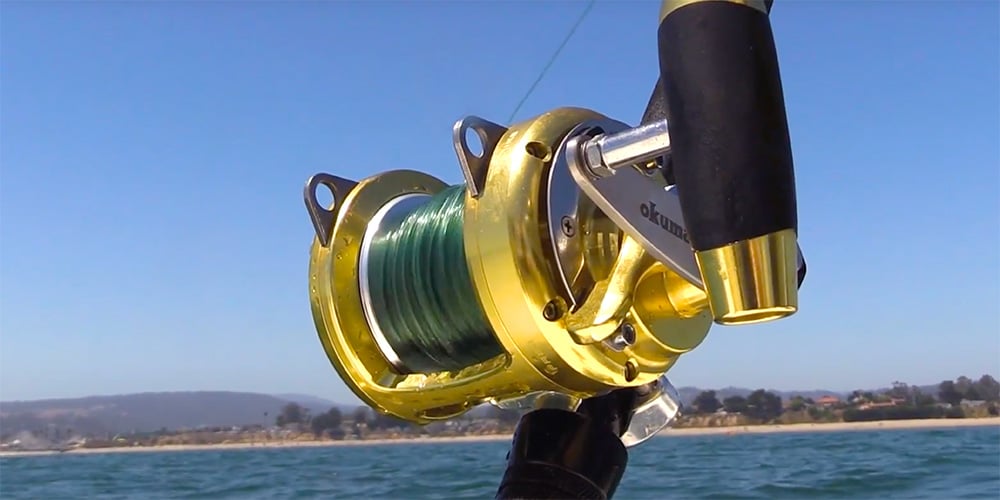
What a Fishing Reel Does
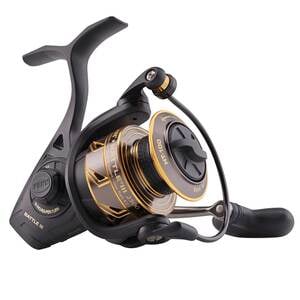
Penn’s Battle III Spinning Reel is suited for ocean use and features sealed, stainless steel ball bearings.
Reels let you control your fishing line — how it’s paid out and how it’s retrieved. They provide a drag system to pressure a fish during the fight, and the mechanical advantage needed to bring a big fish to the boat. Choosing the right reel starts with understanding the four main types and how each is suited to different fishing situations.
- Spinning Reels
- Conventional Reels
- Baitcasting Reels
- Electric Reels
- Fly Reels
- What to Look for When Selecting a Reel
- FAQs
Spinning Reels
Spinning reels are popular with many anglers because they are versatile and easy to use. The spool is mounted parallel to the rod on the underside and remains stationary during the cast — line uncoils from the fixed spool as the lure or bait flies through the air. When retrieving, an arched rotating bail lays the line back on the spool while simultaneously reversing the twist that resulted from casting. Spinning reels are an excellent choice for light tackle and are the easiest style for less experienced anglers to learn. For more detail, see our West Advisor: Selecting a Spinning Reel.
Conventional Reels
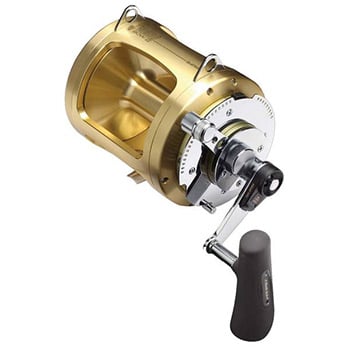
Shimano’s Tiagra A TI80WA Two-speed Conventional Reel features a lever drag system for easy adjustment while playing a fish.
Conventional reels mount on top of and perpendicular to the rod, and are built to haul in large bluewater and game fish. The spool spins during the cast, releasing line in a straight path rather than the spiral of a spinning reel. Many conventional reels offer two speeds: a low gear for high torque when cranking a heavy fish, and a high gear for fast line retrieval or taking up slack. A lever drag system allows quick drag adjustment mid-fight without losing focus on the fish. Conventional reels require more casting technique than spinning reels — the spinning spool can cause backlash if not controlled by the angler’s thumb or a mechanical anti-backlash mechanism. For more detail, see our West Advisor: Selecting a Conventional Reel.
Baitcasting Reels
Baitcasting reels are similar to conventional reels but are designed specifically for casting accuracy and feature braking systems to reduce backlash. Even with braking, the angler still needs to control the spool with their thumb at the end of the cast to prevent line tangles. Baitcasters are available in round and low-profile styles. Low-profile models allow the angler to palm the reel and keep an index finger on the line for better sensitivity when detecting strikes. For more detail, see our West Advisor: Selecting a Baitcasting Reel.
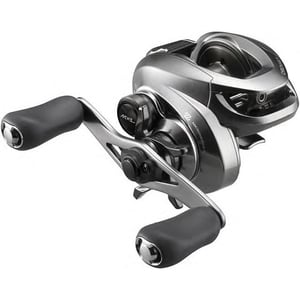
Shimano’s Chronarch Baitcasting Reels feature MicroModule gearing for a smoother, more positive feel.
Electric Reels
Power-assist electric reels are used for deep dropping to depths of several hundred feet or for kite fishing. They are large, fast conventional reels with an electric motor assist. Most connect to a 12V battery, plug into a deck receptacle, or use an integrated lithium battery pack. Current models include an expanding range of control panel features such as automatic jigging functions and LCD depth counters that display exact depth in real time — critical for presenting baits accurately at extreme depths for tilefish, swordfish, and grouper.
Fly Reels
Fly reels are a specialized category designed for fly fishing, where weight and balance are critical. Unlike spinning or conventional reels, the fly reel’s primary function is line storage and drag — most of the casting work is done by the angler controlling the fly line by hand. Fly reels use either a click-and-pawl or disc drag system. Click-and-pawl drags are simple and traditional, suited for smaller freshwater species. Disc drags provide smoother, more adjustable resistance for larger fish like steelhead, salmon, and saltwater species. Arbor size (the diameter of the reel’s center spool) affects line retrieval rate and backing capacity — large-arbor reels retrieve line faster and are the standard for most modern saltwater and freshwater trout fishing.
What to Look for When Selecting a Fishing Reel
- Saltwater vs. freshwater: Freshwater reels do not need the extensive corrosion protection required for saltwater. Saltwater reels use anodized aluminum frames, shielded stainless steel or bronze bearings, and forged aluminum spools — all of which add cost but are necessary to survive repeated ocean exposure.
- Bearings vs. bushings: Small, inexpensive reels use bushings because they are cheap and simple to produce. Quality reels use sealed ball bearings, resulting in noticeably smoother action under the loads imposed by big fish. More bearings generally indicate higher quality, but bearing quality matters as much as quantity — eight quality bearings outperform ten cheap ones.
- Gear ratio: Gear ratio measures how many times the spool turns per one revolution of the crank. A lower ratio (4:1–5:1) provides more torque and is better for grinding in big fish. A higher ratio (6:1–8:1) retrieves line faster and suits presentations where speed is needed — topwater lures, buzzbaits, and any technique requiring quick line pickup. Two-speed conventional reels let you switch between fast retrieval and high-torque low gear mid-fight.
- Drag system: The drag is a friction mechanism that controls how much resistance the fish must overcome to pull line from the reel. Quality drag systems operate smoothly without momentary binding that can snap a light line at the worst moment. Some systems offer a “strike” setting for hook-setting tension and a separate preset “fight” tension. Drag is adjusted by knob (spinning reels), star wheel (most conventional and baitcasting reels), or lever (offshore conventional reels).
- Levelwind mechanism: Some conventional reels include a levelwind that automatically distributes line evenly across the spool during retrieve. Without a levelwind, the angler must guide line with their thumb — a skill that takes practice but gives experienced anglers more control over line placement.
- Spool capacity: Match spool capacity to the line weight and length you need for your target species. Deep, V-shaped or skirted spools hold more and heavier line; shallow spools cast more easily because line comes off with less resistance. Each reel lists a line class and yardage capacity — most reels handle the next lighter and heavier class as well.
Putting It Together
A rod and reel work together as a system. Match the reel weight and power to the rod: light reels for light-action rods, heavier reels for heavier rods. Within that constraint, your fishing style and target species determine the reel type.
Spinning reels are the easiest to cast and the most versatile for light to medium applications. They lack the sheer cranking power of conventional reels for large saltwater fish. Conventional reels require more casting skill but deliver more power for offshore and bluewater fishing. Baitcasters offer the best casting accuracy and are the preferred choice for most bass and inshore saltwater fishing once the technique is mastered.
Whatever configuration you choose, spending more on a reel buys either smoother action, improved durability, or both. A reel with a smooth drag and reliable retrieve is worth the extra cost — a jerky drag or stiff bail at the wrong moment loses fish. For saltwater fishing, non-corrosive materials (graphite, stainless steel, anodized aluminum) are a sound long-term investment.
Frequently Asked Questions
What is the difference between a spinning reel and a conventional reel?
A spinning reel hangs below the rod with a fixed spool — line spirals off during the cast and a bail retrieves it. It is easy to use, excels with light line and lures, and is the most beginner-friendly option. A conventional reel sits on top of the rod with a rotating spool that releases line straight during the cast. It provides more cranking power and line capacity, is better suited for heavy saltwater fish, and requires more skill to cast without backlash.
What gear ratio should I choose?
Match the gear ratio to your technique. Lower ratios (4:1–5:1) provide more torque for cranking heavy fish, deep crankbaits, and bottom fishing. Higher ratios (6:1–8:1) retrieve line faster, suiting topwater lures, buzzbaits, and techniques where quick line pickup matters. Many serious anglers own multiple reels at different ratios to cover different presentations.
How important is drag quality in a fishing reel?
Very. A smooth, consistent drag is arguably the most important functional characteristic of any reel. A drag that grabs or releases unevenly creates sudden tension spikes that break light line or allow a fish to gain slack at a critical moment. Quality reels use high-friction materials (carbon fiber, felt, HT-100) that operate smoothly across the full drag range. If you are fishing light line or targeting fish that make long, fast runs, drag quality matters more than bearing count or gear ratio.
Do I need a different reel for saltwater fishing?
Yes, if you fish in saltwater regularly. Freshwater reels corrode quickly in salt environments — bearings seize, frames pit, and drag systems degrade. Saltwater-rated reels use sealed bearings, anodized aluminum or graphite frames, and corrosion-resistant drag materials. Rinse any reel thoroughly with fresh water after every saltwater use regardless of its rating.
Related Articles
- Selecting a Fishing Rod
- Selecting a Rod and Reel Combo
- Selecting a Baitcasting Reel
- 9 of Our Most Popular Saltwater Fishing Rods
- How to Plan a Multi-day Fishing Trip by Boat
- Our 4 Best-Selling Fishing Lines and Leaders
- Selecting Fishing Line
- Spinning or Baitcasting — What’s the Best Reel for You?
- Best Fillet Knives for Anglers
- Ultimate Guide to Freshwater and Saltwater Fishing Lures and Baits