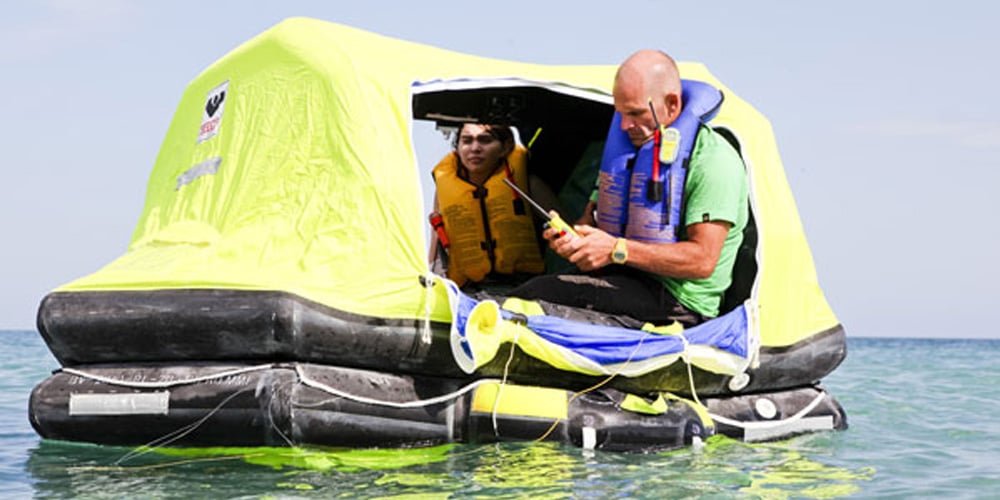
A life raft is one of the most important safety investments a boater can make. While modern boats are incredibly reliable, emergencies such as fire, collision, flooding or capsize can make abandoning ship necessary. A properly selected life raft helps keep your crew out of the water, provides shelter from the elements and improves your chances of survival until rescue arrives.
The right life raft depends on where you boat, how far offshore you travel, expected rescue times and the environmental conditions you may encounter. Understanding life raft classifications, equipment packs and storage options will help you choose the best raft for your vessel and crew.
- When You Need a Life Raft
- Time to Expected Rescue
- Types of Life Rafts
- Inshore Life Rafts
- Coastal & Nearshore Life Rafts
- Offshore & Ocean Life Rafts
- Life Raft Storage Options
- Building a Ditch Bag
- How to Launch a Life Raft
- Life Raft FAQ
When You Need a Life Raft
A life raft is designed for situations where your boat is no longer safe to occupy. Common scenarios include onboard fires, major collisions, catastrophic flooding, capsizing or structural damage that makes remaining aboard impossible.
Most safety experts emphasize that a life raft should be considered a last resort. The goal is always to "step up" from your boat into the raft rather than abandoning a vessel that remains afloat. History contains numerous examples of crews leaving damaged boats only to have those vessels remain afloat longer than expected.
Time to Expected Rescue
One of the most important factors when selecting a life raft is how long you may need to survive before rescue arrives.
Boaters operating close to shore, within VHF range and near Coast Guard resources may only require protection for a few hours. Offshore cruisers, passagemakers and ocean racers may need to survive for days until rescue assets arrive.
Many life rafts are available with different equipment packs designed for either:
- Rescue expected within 24 hours
- Rescue expected after 24 hours
The farther you travel from assistance, the more robust your survival equipment should be.
Understanding Life Raft Standards
Modern life rafts are commonly categorized using ISO 9650 standards, which were developed to improve offshore survival equipment after several high-profile maritime disasters.
| Life Raft Type | Best Use | Typical Rescue Time |
|---|---|---|
| Rescue Platform | Protected inland and nearshore waters | Hours |
| ISO 9650 Type II | Coastal and nearshore boating | Less than 24 hours |
| ISO 9650 Type I | Offshore cruising and racing | 24+ hours |
| SOLAS Life Raft | Commercial and ocean-crossing vessels | Extended survival |
Inshore Life Rafts and Rescue Platforms
Rescue platforms are the most basic form of inflatable survival equipment. They provide flotation and keep occupants out of the water but typically offer little protection from wind, rain or waves.
These systems are best suited for:
- Lakes and inland waterways
- Protected bays and harbors
- Areas close to shore
- Locations with rapid rescue availability
Even in nearshore environments, cold water can quickly lead to hypothermia. Keeping occupants out of the water significantly improves survival time.
Coastal and Nearshore Life Rafts
Coastal life rafts provide greater protection than rescue platforms and are designed for boaters operating farther from shore but still within areas where rescue resources are readily available.
Features commonly include:
- Protective canopy
- Boarding ladder or webbing step
- Single-layer floor
- Ballast bags for stability
- Basic emergency equipment pack
ISO 9650 Type II life rafts are specifically intended for coastal waters, bays, estuaries, lakes and other protected boating environments.
Offshore and Ocean Life Rafts
Offshore life rafts are built for rougher sea conditions, stronger winds and longer survival times. These rafts are intended for serious offshore cruising, passagemaking, fishing expeditions and offshore sailing races.
ISO 9650 Type I Life Rafts
Type I rafts include significant upgrades designed for open-ocean survival:
- Dual independent buoyancy chambers
- Self-erecting canopy
- Large ballast bags
- Improved freeboard
- Boarding ladder
- Enhanced survival equipment
These features improve stability, reduce the risk of capsizing and provide better protection from exposure.
SOLAS Life Rafts
SOLAS (Safety of Life at Sea) life rafts are designed for the harshest conditions and longest survival scenarios. These rafts are commonly carried on commercial vessels and ocean-racing yachts.
SOLAS rafts typically include:
- Extensive emergency equipment packs
- Enhanced insulation
- Heavy-duty construction
- Additional food and water provisions
- Improved storm survival capability
Buy or Rent?
For boaters undertaking a single offshore trip, renting a life raft can be a cost-effective option. Long-term cruisers and frequent offshore boaters often benefit from purchasing a raft and maintaining it according to the manufacturer's service schedule.
Life Raft Storage Options
Canister Storage
Canister-mounted life rafts are designed for permanent deck mounting. The waterproof fiberglass housing protects the raft from weather and allows rapid deployment during an emergency.
Canister systems are commonly paired with:
- Hydrostatic releases
- Deck cradles
- Security cables
Valise Storage
Valise-packed life rafts are lighter and easier to store below deck. They are often less expensive than canister versions but require rapid access if an emergency occurs.
If stored below deck, ensure the raft can be deployed quickly under emergency conditions.
Your Ditch Bag Matters
Even the best life raft contains limited survival supplies. A properly equipped ditch bag greatly improves survival odds and should be stored near the life raft.
Recommended ditch bag items include:
- EPIRB or Personal Locator Beacon (PLB)
- Waterproof handheld VHF radio
- Emergency watermaker
- Prescription medications
- Signal flares
- Spare batteries
- Reading glasses if needed
Many experienced offshore sailors consider the EPIRB the single most important item in the ditch bag because it dramatically increases the likelihood of rescue.
How to Launch a Life Raft
Most life rafts are launched by securing the painter line to a strong point on the boat and throwing the raft overboard. A firm pull on the painter activates the inflation system.
Best practices include:
- Launch from the leeward side when possible.
- Keep the raft close to the vessel until boarding.
- Avoid deploying too early.
- Bring your ditch bag before boarding.
- Board only when remaining on the vessel is no longer safe.
A floating boat remains a larger target for rescuers than a life raft. Whenever possible, remain with the vessel until abandoning ship becomes absolutely necessary.
Frequently Asked Questions About Life Rafts
Do I need a life raft for coastal boating?
Many coastal boaters choose a life raft or rescue platform, especially when operating in cold water or beyond immediate swimming distance from shore.
What size life raft should I buy?
Select a raft rated for the maximum number of people who may be aboard. Avoid purchasing a raft that only matches your average crew size.
How often should a life raft be serviced?
Most manufacturers require inspection and recertification at specified intervals. Always follow the service schedule provided by the manufacturer.
What is the difference between ISO and SOLAS life rafts?
ISO life rafts are designed primarily for recreational boating, while SOLAS rafts meet more stringent commercial and ocean-crossing requirements with larger survival equipment packs and enhanced construction.
Should I choose a canister or valise life raft?
Canisters are best for permanent deck mounting and quick deployment. Valise models are lighter and easier to store below deck but require rapid access during emergencies.
Need More Help?
Choosing a life raft is one of the most important safety decisions you'll make as a boater. Whether you're planning coastal cruising, offshore fishing or an ocean passage, West Marine can help you select the right life raft, ditch bag and emergency equipment for your voyage.