
A fixed mount marine VHF radio is one of the most important safety devices you can install on your boat. Whether you're cruising inland lakes, fishing offshore or navigating coastal waters, a VHF radio provides reliable communication with marinas, bridge operators, fellow boaters and emergency services when you need it most.
Modern fixed mount VHF radios offer much more than basic voice communication. Features like Digital Selective Calling (DSC), AIS integration, built-in GPS, weather alerts and NMEA networking can dramatically improve both safety and convenience on the water.
- What VHF Radios Do
- How VHF Radios Work
- Digital Selective Calling (DSC)
- Coast Guard Rescue Systems
- Setting Up DSC Safety Features
- Choosing the Right Radio Size
- GPS and AIS Integration
- Second Stations and Remote Microphones
- User Interface Features
- Weather Alerts
- Understanding Receiver Performance
- Frequently Asked Questions
What VHF Radios Do
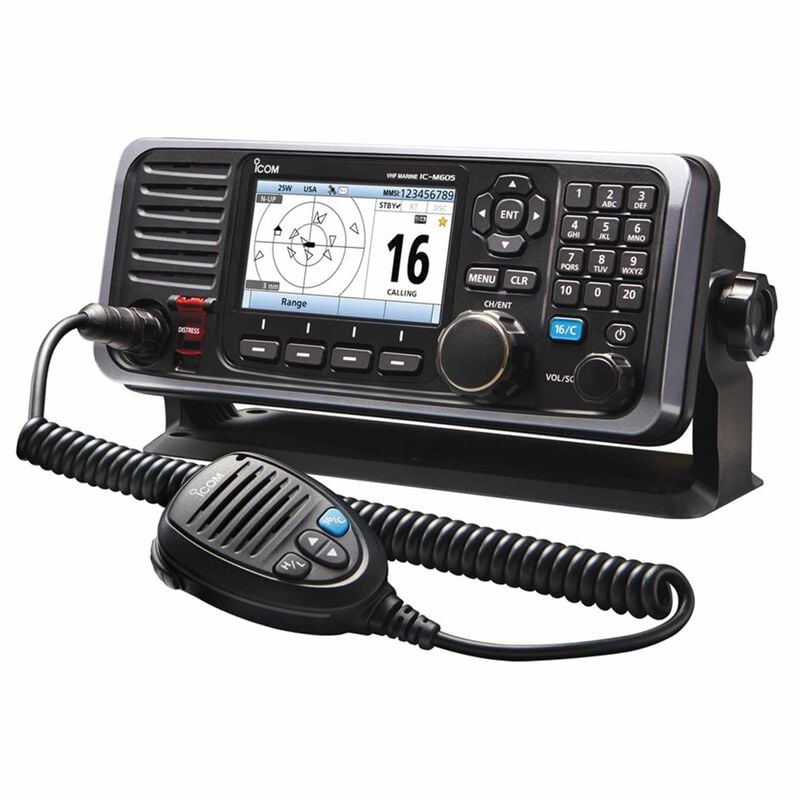
Modern fixed mount VHF radios offer GPS integration, DSC emergency calling, AIS capability and networking features.
VHF radios provide dependable short-range communication between vessels, marinas, bridge operators and emergency responders. Unlike cell phones, VHF radios are specifically designed for marine communication and remain one of the fastest ways to request assistance during an emergency.
Common uses include:
- Emergency communication with the Coast Guard and rescue agencies
- Communicating with marinas and harbor masters
- Bridge and lock coordination
- Boat-to-boat communication
- Receiving NOAA weather forecasts and alerts
- Coordinating fishing, cruising and racing activities
How VHF Radios Work
Marine VHF radios operate using line-of-sight transmission. The farther your antenna can "see," the farther your radio can communicate.
Antenna Height Matters Most
The single biggest factor affecting VHF range is antenna height. Mount antennas as high as practical on your vessel. Sailboats typically mount antennas near the masthead, while powerboats often mount them on radar arches, hardtops or towers.
Even the best radio cannot compensate for a poorly installed antenna system.
Transmit Power
Fixed mount VHF radios transmit at up to 25 watts and generally allow users to switch to lower-power 1-watt transmissions for close-range communication. Using low power whenever possible helps reduce channel congestion.
Channels
Marine VHF radios operate on designated marine frequencies used throughout the United States, Canada and internationally. Channel 16 remains the primary distress and hailing channel and should always be monitored when practical.
Battery Power
Fixed mount radios draw power from your boat's electrical system, providing virtually unlimited operating time while batteries remain charged. Many boaters also carry a handheld VHF radio as a backup communication device.
Digital Selective Calling (DSC)
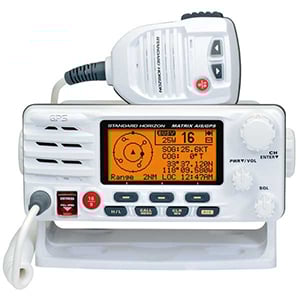
DSC-equipped VHF radios allow automated emergency distress calls with position information.
Digital Selective Calling is one of the most important safety features available on modern marine VHF radios.
DSC enables boaters to send automated distress calls with the push of a single button. When properly configured, the radio automatically transmits:
- Your MMSI number
- Your vessel's GPS position
- The nature of the emergency
- A digital distress alert on Channel 70
After transmitting the distress message, the radio automatically switches to Channel 16 for voice communication.
DSC also supports non-emergency functions including direct vessel-to-vessel calling and position sharing among cruising companions.
Coast Guard Rescue Systems and DSC
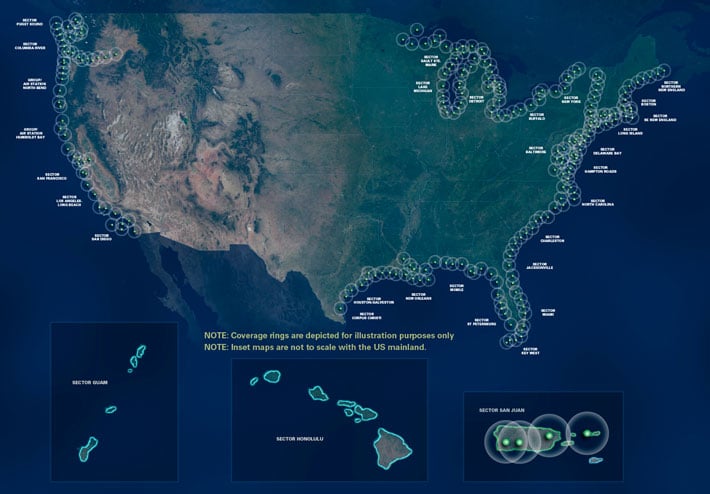
Modern Coast Guard rescue systems can rapidly identify DSC distress calls and vessel locations.
The Coast Guard's Rescue 21 system significantly improves emergency response capabilities by monitoring DSC distress transmissions and helping identify vessel locations.
When properly configured, a DSC-equipped VHF radio can provide rescue personnel with critical information before voice communication even begins.
For many coastal boaters, a properly configured VHF radio serves as one of the most valuable emergency communication tools onboard.
How to Enable DSC Safety Features
To fully activate DSC capabilities, you must complete two important steps:
- Obtain and register an MMSI (Maritime Mobile Service Identity) number.
- Connect the VHF radio to a GPS source or use a model with integrated GPS.
Without GPS position data and an MMSI number, DSC distress features cannot provide their full safety benefits.
Choosing the Right Radio Size
Today's fixed mount VHF radios are available in several configurations.
Compact Radios
Compact units fit well on smaller center consoles, fishing boats and runabouts where dashboard space is limited.
Standard Fixed Mount Radios
Traditional fixed mount units provide larger displays, more controls and expanded networking capabilities.
Black Box VHF Radios
Black box designs place the radio module out of sight while leaving only a microphone and control display visible at the helm. These systems are ideal when panel space is limited.
GPS and AIS Integration
Many modern VHF radios include built-in GPS receivers, simplifying DSC setup and eliminating the need for external positioning sources.
Some premium models also incorporate AIS (Automatic Identification System) receivers or transceivers that display nearby vessel traffic on compatible chartplotters.
AIS can significantly improve situational awareness in crowded waterways, low visibility and offshore environments.
Second Stations and Remote Microphones
Many VHF radios support remote microphones that act as full-function secondary stations.
These are particularly useful on:
- Flybridge boats
- Tuna towers
- Cockpit steering stations
- Pilothouses
- Navigation stations
Unlike handheld radios, remote stations use the fixed mount radio's full transmit power and antenna system.
Hailer and Foghorn Functions
Premium VHF radios may include hailer functions that allow voice communication through an external speaker.
Many also offer automatic foghorn signals that meet navigation requirements during periods of restricted visibility.
User Interface Features
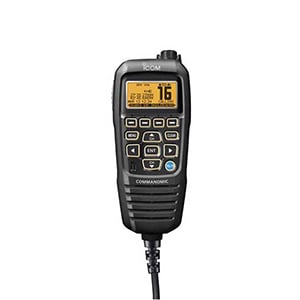
Remote microphones provide convenient access to key VHF functions throughout the boat.
Modern VHF radios vary significantly in how users interact with them.
Features worth considering include:
- Dedicated channel knobs
- Soft-key menus
- Large displays
- Backlit controls
- Remote microphone compatibility
- Programmable favorites
- AIS target controls
Look for controls that remain easy to operate while underway in rough conditions.
Audio Features
Noise-canceling microphones improve communication quality in windy or noisy environments. Water-clearing speaker functions available on some radios help maintain audio clarity after exposure to spray and rain.
Weather Alerts
Most marine VHF radios include NOAA weather channels and weather alert functions.
When severe weather warnings are issued, the radio can automatically sound an alarm to alert the crew. Some models offer location-specific weather alerts that reduce unnecessary interruptions from distant forecasts.
Understanding Receiver Performance
Not all VHF radios receive signals equally well.
Two specifications often separate premium radios from basic models:
- Sensitivity: How well the radio detects weak signals.
- Selectivity and Rejection: How effectively the radio filters interference from nearby frequencies.
These factors become especially important in busy harbors, metropolitan areas and high-traffic boating regions.
However, even the best receiver depends on proper antenna installation, quality coax cable and corrosion-free connections.
Frequently Asked Questions
Do I need a VHF radio if I have a cell phone?
Yes. VHF radios remain the primary marine communication tool and are often more reliable than cell phones on the water.
What is DSC on a VHF radio?
Digital Selective Calling allows automated distress alerts and vessel-to-vessel communication using MMSI numbers and GPS position data.
Do all VHF radios need GPS?
A VHF radio can operate without GPS, but DSC emergency functions work best when connected to GPS or equipped with an integrated GPS receiver.
Is AIS worth having on a VHF radio?
AIS improves awareness of nearby vessel traffic and is especially valuable for offshore cruising, passagemaking and operation in crowded waterways.
What affects VHF radio range the most?
Antenna height is the single biggest factor affecting VHF communication range.
Conclusion
The best fixed mount VHF radio for your boat depends on your boating style, available helm space and desired features. At a minimum, choose a DSC-equipped radio and properly connect it to GPS data. Boaters who frequently travel offshore or in busy waterways may also benefit from AIS integration, remote microphones and advanced networking capabilities.
Regardless of which model you choose, proper antenna installation remains the most important factor in maximizing communication performance and safety.