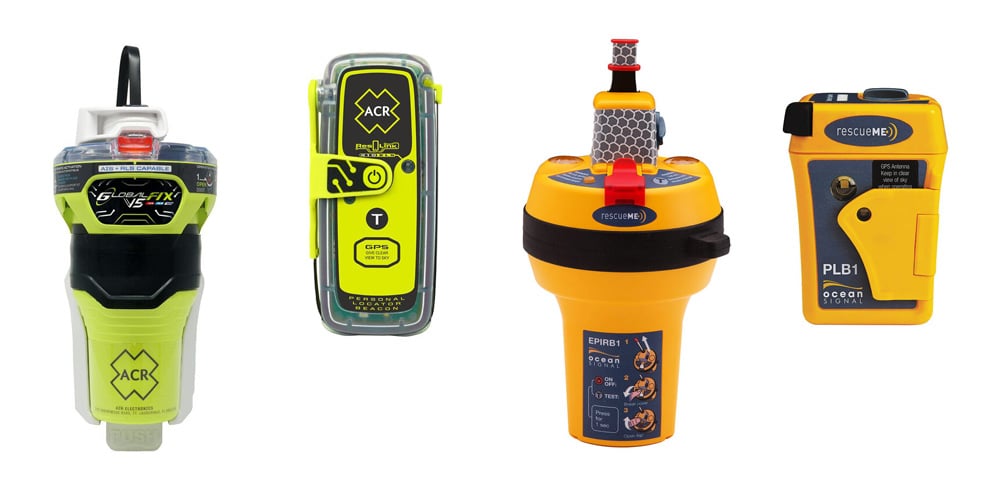
EPIRBs (Emergency Position Indicating Radio Beacons) and PLBs (Personal Locator Beacons) are the last line of defense in a life-threatening situation at sea. No matter where you are in the world — far offshore, in fog, in a sinking vessel at night — either of these devices can alert rescue services to your precise location when no other communication is possible. This guide covers how they work, how they differ, what features matter, and how to choose the right device for your situation.
- How EPIRBs and PLBs Work
- EPIRBs vs. PLBs: Key Differences
- Category I vs. Category II EPIRBs
- Built-In Display
- Other Features to Consider
- Registration and Maintenance
- Personal AIS Beacons (PABs)
- FAQs
How EPIRBs and PLBs Work
EPIRBs and PLBs are radio transmitters. When activated in an emergency, they broadcast a 406 MHz distress signal via satellite to the Cospas-Sarsat global emergency network, which is monitored by search and rescue (SAR) agencies worldwide. Before GPS-enabled models were introduced, your position was triangulated from the satellite signal to within about two nautical miles, and the notification process could take up to one hour. SAR personnel then followed a 121.5 MHz homing signal to your exact location.
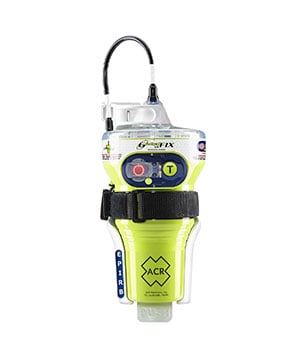
ACR’s GlobalFix™ V4 EPIRB includes an internal GPS receiver for position accuracy within 100 yards.
Current EPIRBs and PLBs include a built-in GPS receiver. In an emergency, GPS-equipped models transmit your precise position directly with the distress signal. SAR agencies receive your emergency notification and your GPS coordinates in as little as two to three minutes. Position accuracy is within 100 yards — a dramatic improvement over the two-nautical-mile range of pre-GPS technology. This difference in response time and position accuracy can be decisive in a survival situation.
We strongly recommend purchasing an EPIRB or PLB with an internal GPS. The price difference between GPS and non-GPS models has narrowed significantly, and the improvement in rescue response time is life-saving. A non-GPS beacon should be considered only if cost is the deciding factor, and even then the gap has closed enough that GPS models are accessible for most budgets.
EPIRBs vs. PLBs: Key Differences
EPIRBs and PLBs both operate on 406 MHz and 121.5 MHz and provide the same worldwide Cospas-Sarsat coverage. The key differences are in how they are used, where they are registered, and their physical characteristics.
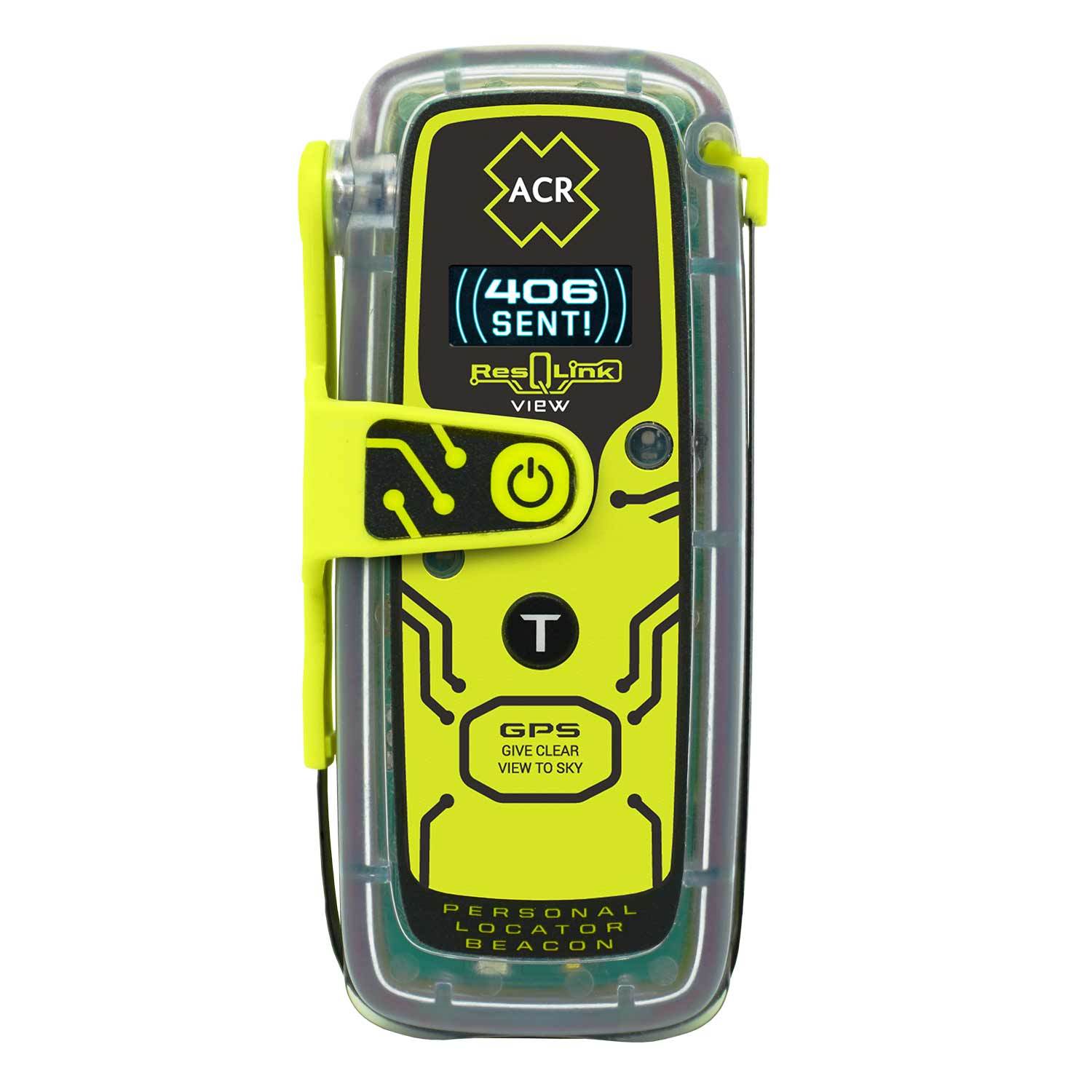
ACR’s ResQLink View Personal Locator Beacon includes an integrated status display showing battery life, self-test results, and GPS position.
EPIRBs are larger devices designed to be installed on or kept aboard a vessel. They are registered to a specific boat in a government database — when an EPIRB transmits, SAR agencies can immediately identify the vessel, contact emergency contacts listed in the registration, and verify the vessel’s itinerary. EPIRBs are intended for marine use only. Once activated, EPIRBs have approximately 48 hours of battery life. They are required to float and include a built-in strobe light. EPIRBs are the appropriate choice for any vessel that operates offshore or in coastal waters where life-threatening emergencies are a genuine risk.
PLBs are smaller, personal devices designed for use by individual crew members rather than as a vessel-mounted installation. PLBs are registered to a person rather than a boat, giving you the flexibility to carry the same PLB from vessel to vessel, on a dinghy excursion, or on land activities. In addition to marine use, PLBs are legal for use on land by hikers, climbers, hunters, and other outdoor adventurers — EPIRBs are strictly for marine use. Once activated, PLBs have approximately 24–28 hours of battery life (less than EPIRBs). PLBs are not required to float or include a strobe, though many do. A PLB is essential insurance when leaving the mother ship in a dinghy, and makes an excellent less-bulky alternative to an EPIRB for small boats.
| EPIRB | PLB | |
|---|---|---|
| Registered to | Vessel | Person |
| Battery life (activated) | ~48 hours | ~24–28 hours |
| Use on land | No (marine only) | Yes |
| Required to float | Yes | No (many do) |
| Strobe light required | Yes | No (many included) |
| Typical size | Larger, bracket-mounted | Smaller, pocket or PFD-mounted |
| Activation | Auto (Cat I) or Manual (Cat II) | Manual only |
Category I vs. Category II EPIRBs
EPIRBs fall into one of two categories based on their activation method:
Category I EPIRBs are designed to automatically release from their bracket and activate when submerged between 3 and 14 feet. This automatic hydrostatic release means the EPIRB activates and floats to the surface if the vessel sinks rapidly — even if no crew member is able to manually activate it. Category I is the appropriate choice for any offshore or open-water vessel where a rapid or catastrophic sinking is possible.
Category II EPIRBs require manual activation. If installed in a fixed bracket, the crew must manually remove and activate the device. Category II is appropriate for vessels that stay in nearshore waters where rapid sinking is less likely and crew will have time to manually deploy the beacon.
Both categories include a built-in strobe light and are designed to float upright with the antenna oriented correctly for signal transmission. For offshore and bluewater use, Category I is strongly recommended.
Built-In Display
Certain rescue beacons include a built-in digital display that provides useful information at a glance: self-test results, remaining battery power, operating instructions, transmission burst count, and your GPS latitude/longitude position. The ResQLink View PLB by ACR Electronics is a widely-used example of a beacon with an integrated display.
The display is a meaningful feature in an emergency — it confirms the beacon is transmitting, shows your GPS position for relay via VHF or satellite communicator, and confirms battery status before deployment. For a device you hope never to use, the ability to quickly verify it is functioning correctly after activation provides important confidence during a high-stress situation.
Other Features to Consider
As noted above, EPIRBs are required to float and include a strobe light; PLBs are not required to have either feature but many include both. Buoyancy is important if a crew member goes overboard — a PLB that sinks is not useful if you enter the water. A built-in strobe (conventional and infrared) significantly improves SAR personnel’s ability to find you at night or in low-visibility conditions. When comparing PLBs, treat floating construction and an integrated strobe as essential features rather than optional extras.
Also consider whether the PLB attaches easily to your PFD. Most offshore life jackets have a designated PLB or EPIRB pocket. A PLB that can be mounted securely on the outside of the PFD inflatable bladder is accessible immediately upon activation and stays with you if you enter the water.
Registration and Maintenance
Registration is required by law for both EPIRBs and PLBs in U.S. waters. An unregistered beacon wastes SAR resources — when an unregistered beacon activates, responders cannot confirm whether it is a genuine emergency or a false alarm, significantly delaying response. Registration is free and takes about 10 minutes:
- U.S. beacon registration is managed by NOAA at beaconregistration.noaa.gov
- EPIRBs are registered to the vessel with the vessel name, type, home port, and emergency contact information
- PLBs are registered to the individual owner
- Update your registration immediately if you sell the vessel, sell the beacon, or if your contact information changes
Battery maintenance: Both EPIRBs and PLBs have a battery expiration date stamped on the unit. The battery must be replaced by a certified service center before expiration — you cannot replace beacon batteries yourself. Most beacons require battery service every five to seven years. Mark the expiration date in your log and schedule service in advance. An expired battery is the most common reason a beacon fails to perform as intended.
Annual self-test: Test your beacon regularly using the built-in self-test function (not a live transmission). Most beacons have a self-test button that verifies the unit is functional without transmitting to the Cospas-Sarsat network. Do not perform a live test outside of the designated first five minutes of any UTC hour — tests performed at other times generate a genuine SAR alert and can result in significant emergency response costs and potential fines.
Personal AIS Beacons (PABs)
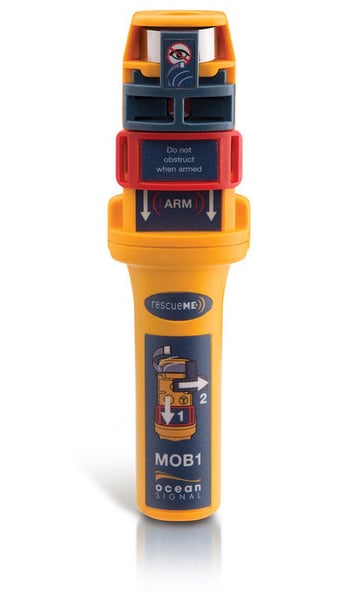
Ocean Signal’s RescueME MOB1 is a Personal AIS Beacon (PAB) that transmits your GPS position to any AIS receiver within range, enabling rapid crew overboard recovery.
EPIRBs and PLBs call for rescue via the Cospas-Sarsat satellite network, which is the right tool for offshore emergencies where no other vessels are nearby. But in a crew overboard situation, the goal is immediate recovery by your own vessel — not a SAR helicopter that may be hours away. This is where a PAB (Personal AIS Beacon) is essential.
PABs are small devices designed to be worn on the life jacket. When activated — manually or automatically upon water contact — they transmit your GPS position directly to any AIS receiver within approximately four miles. Your vessel’s chartplotter immediately shows the overboard crew member’s position, bearing, and distance. Other AIS-equipped vessels in the area are also alerted. Combined with a DSC-capable VHF radio that can transmit a man overboard alert, a PAB dramatically improves recovery odds in the critical first minutes after someone goes overboard.
A PAB does not replace an EPIRB or PLB — it operates over a short range using VHF frequencies and is not a satellite-based distress system. Think of them as complementary: the EPIRB or PLB calls for offshore rescue when the situation has gone beyond what the vessel can handle, while the PAB helps the vessel find and recover the crew member immediately. For any offshore or coastal passage sailing crew, carrying both is the right approach.
Frequently Asked Questions
Do I need an EPIRB or a PLB?
For most offshore and coastal boaters, an EPIRB is the better choice as the vessel’s primary emergency beacon. It is registered to the boat, automatically activates if the vessel sinks (Category I), and has a longer battery life. A PLB is the right complement for individual crew members who spend time away from the boat — in a dinghy, kayaking, or shoreside activities — and is the right choice as a personal device for any boater who wants emergency signaling capability that travels with them regardless of vessel. Many offshore sailors carry both: an EPIRB as the vessel beacon and PLBs for individual crew members.
What is the difference between a Category I and Category II EPIRB?
Category I EPIRBs automatically release from their bracket and activate when submerged between 3 and 14 feet — the vessel can sink without any crew action and the beacon will deploy. Category II EPIRBs require manual activation. For offshore use where a rapid or catastrophic sinking is possible, Category I is the correct choice. Category II is appropriate for nearshore use where crew will have adequate time to manually deploy the beacon.
What is the difference between an EPIRB/PLB and a PAB?
EPIRBs and PLBs transmit via satellite to the Cospas-Sarsat network, alerting SAR agencies worldwide. They are designed for offshore emergencies where professional rescue is required. A PAB (Personal AIS Beacon) transmits your GPS position to AIS receivers within approximately four miles — it alerts your own vessel and nearby ships immediately in a crew overboard situation. PABs do not communicate via satellite. Carry an EPIRB or PLB for offshore rescue capability and a PAB for immediate crew overboard recovery.
How do I register my EPIRB or PLB?
In the United States, register free at beaconregistration.noaa.gov. EPIRBs are registered to the vessel (vessel name, type, home port, and emergency contacts). PLBs are registered to the individual owner. Registration is required by law and is the most important step after purchasing a beacon — an unregistered beacon delays rescue response and can cause SAR resources to be diverted unnecessarily.
When does an EPIRB or PLB battery need to be replaced?
Beacon batteries have an expiration date stamped on the unit and must be replaced by a certified service center — you cannot replace them yourself. Most beacons require battery service every five to seven years. An expired battery is the most common cause of beacon failure. Mark the expiration date on your maintenance calendar and schedule service several months in advance.
Can I test my EPIRB or PLB?
Yes, using the built-in self-test function. Press the self-test button to verify the unit is functional — this does not transmit to the Cospas-Sarsat network. Never perform a live transmission test except within the designated first five minutes of any UTC hour, which is the internationally recognized test window. Unauthorized live tests generate genuine SAR responses and can result in significant costs and potential fines.