What Is Spring Boat Commissioning?
Spring boat commissioning is the process of preparing a vessel for safe operation after winter storage. It involves inspecting structural components, servicing engines, restoring electrical systems, verifying safety equipment, and testing onboard systems to ensure the boat operates reliably once launched.
Most experts recommend beginning spring commissioning several weeks before your planned launch date. This allows time to order parts, schedule professional service if needed, and correct any issues discovered during inspection before they become launch-day problems.
Spring Boat Commissioning Checklist
Before launching your boat after winter storage, inspect these critical systems:
- Hull and through-hulls
- Batteries and electrical systems
- Fuel system and lines
- Engine and cooling system
- Steering and controls
- Safety equipment
- Bilge pumps
- Trailer condition
Use this checklist to work through each system. We have organized the tasks by type so you can address them in a logical sequence regardless of boat type.
- Batteries
- Lights & Communication
- Hoses, Valves, Seals & Pumps
- Hatches & Detectors
- Safety Gear
- For Boats Stored on Land
- Outdrives & Outboards
- Engines & Engine Systems
- Sailboat Rigging
- Trailers
- Most Common Problems at Spring Launch
- FAQs
Batteries
- Reinstall batteries if you removed them at the end of the season.
- Top up lead acid batteries with distilled water — never tap water, which contains minerals that accelerate plate degradation.
- Fully charge batteries with a compatible battery charger. A battery that will not hold a full charge after extended charging should be replaced before launch.
- Clean and tighten all electrical connections. Corroded connections cause hard starting and unpredictable electrical behavior.
- Coat battery terminals with an insulating film of grease or apply protective battery terminal spray to prevent future corrosion.
Lights & Communication
- Test all running lights and replace any that are not working. Running lights are required by law when operating at night and in reduced visibility.
- Spray VHF and GPS antenna connections with moisture-displacing lubricant, then reconnect and test that all electronics are working properly.
- Test the VHF radio on a working channel and verify the antenna is secure at both the radio and the antenna base.
Hoses, Valves, Seals & Pumps
- Open and close all seacocks; handles should move freely without stiffness or binding. A stuck seacock cannot be closed in an emergency — service or replace any that do not operate freely.
- Check all hose clamps and replace any that are corroded, cracked, or have stripped screws.
- Inspect the raw-water intake strainer for cracks and confirm it is clean and free of debris and corrosion.
- Check for leaks at trim cylinders and hoses as well as at hydraulic steering pumps and rams. Replace O-rings or gaskets if you see signs of leakage.
- Confirm the stuffing box or shaft seal is completely dry when the boat is at the dock. A small drip (one drop every 30–60 seconds) is acceptable only in traditional stuffing boxes when underway — dry at rest is the standard.
- Test bilge pumps and high-water switches and alarms. Pour water into the bilge to confirm the float switch activates the pump at the correct level.
Hatches & Detectors
- Inspect portlights, hatches, and deck fittings for dirty or displaced caulking, water trails, dirt, or green corrosion. Recaulk any fittings showing signs of leaks — deck leaks cause hidden rot and electrical problems.
- Test smoke and carbon monoxide alarms. Replace batteries and verify the sensor responds to a test activation.
- Test LPG and gasoline fume detectors. Fume detectors that do not respond should be replaced, not bypassed — they are the primary protection against explosion on gasoline-powered boats.
Safety Gear
- Check flare expiration dates. Pyrotechnic flares are valid for 42 months from the manufacture date; replace any that are expired or within a few months of expiration.
- Check fire extinguisher charge indicators and expiration dates. Recharge or replace as necessary — a discharged extinguisher in a bracket looks fine until you need it.
- Inspect life jackets for condition, ensure you have the correct type and quantity for your vessel, and service or replace any that are damaged or waterlogged.
- Check inflatable PFD CO2 cylinder weight (compare to new), bobbin condition, and re-arm kit expiration. A PFD that has not been inspected and re-armed is not a reliable life jacket. See our guide to Inflatable Life Jacket Re-arming Kits.
- Check hydrostatic inflators and replace if past the expiration date stamped on the housing.
- Verify MOB (man overboard) gear, first aid kit, and any other USCG required safety equipment is aboard and serviceable.
For Boats Stored on Land
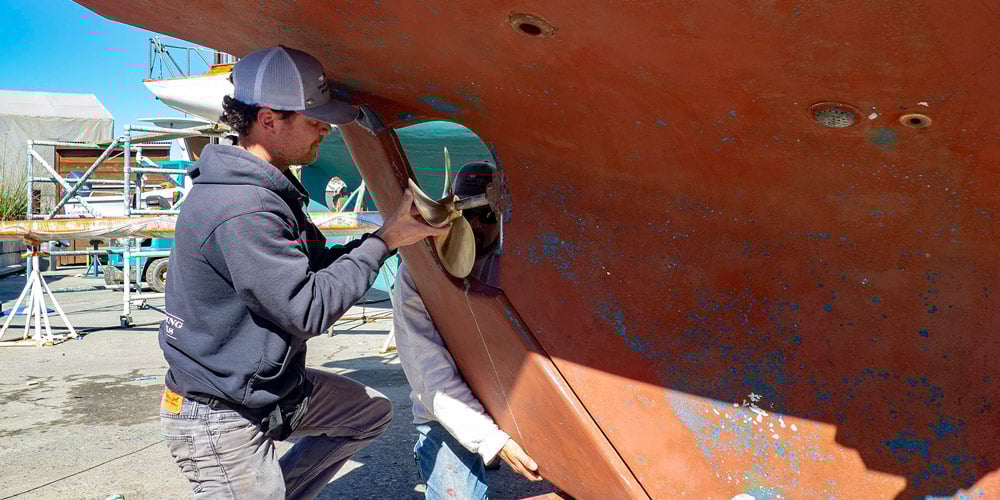
- Inspect props for dinging, pitting, and distortion. Even minor damage to a propeller causes vibration and reduces efficiency. A damaged prop should be repaired or replaced before launch.
- Confirm prop cotter pins are secure and properly bent.
- Grip the prop and try to move the shaft axially and radially. Looseness may indicate a worn cutlass bearing that should be replaced before launch.
- Replace any plastic through-hull fittings near or below the waterline with bronze or Marelon — plastic fittings degrade with UV exposure and are not appropriate for below-waterline use.
- Inspect sacrificial anodes on the shaft, outdrive, and trim tabs. Replace any that are more than half-deteriorated — a depleted anode is not protecting the metal beneath it.
- Check the rudderstock for bending and the rudder pintles and gudgeons for wear.
- After launch, check around all thru-hulls for leaks and check the stuffing box while underway to confirm a steady, slow drip (for traditional packing) or a dry seal (for modern shaft seals).
Outdrives and Outboards
- Inspect rubber outdrive bellows for cracked, dried, or deteriorated spots — pay particular attention to the folds where cracks typically originate. A failed bellows will flood the bilge immediately after launch. Replace if any deterioration is visible.
- Replace deteriorated outdrive zinc anodes.
- Check hydraulic trim fluid level and condition. If you did not change it in the fall, change it now.
- Check lower-unit lubricant level and condition. Creamy or milky oil indicates water intrusion, meaning the lower unit seals have failed and need service before the engine is run in the water.
Engines and Engine Systems
- Check fuel hoses and replace any that have hardened, cracked, bulged, or developed soft spots. Fuel hose that smells of gasoline when wiped with a rag is permeating — replace it immediately.
- Check cooling hoses to confirm they fit snugly over fittings and are solidly clamped with no signs of cracking or swelling.
- Replace any hose clamps showing corrosion or rust — a corroded clamp will fail under pressure.
- Replace fuel filters. Old fuel can leave deposits that clog filters rapidly.
- Clean or replace the air filter.
- Change engine oil if you did not change it in the fall. Oil that sat over winter contains moisture and combustion acids that corrode internal engine surfaces.
- Check all fluid levels including transmission fluid, hydraulic steering fluid, and fresh water coolant.
- Check belts for proper tension, cracking, and glazing. A belt that is frayed or glazed will fail without warning.
- Check raw-water and freshwater pumps for seepage at the cover gasket and replace the gasket if you see signs of leakage.
- Replace raw water impellers if they are more than a year old or if the engine sat unused all winter — rubber blades that sit compressed all season take a permanent set and fail quickly on startup. See our Impeller Replacement Guide for full instructions.
- Check exhaust manifolds for signs of corrosion and water seepage, which indicates a blockage or failed water jacket. Remove and inspect if you see staining or mineral deposits.
- Replace heat exchanger gaskets if they were not replaced in the fall.
- Test the bilge blower and inspect the hose for cracks or disconnections.
- Inspect outer jacket of throttle and shift cables for cracks and swelling. Replace cables that show signs of deterioration.
Sailboat Rigging
- Inspect swage fittings at the ends of standing rigging for rust streaks and hairline cracks. A cracked swage fitting will fail under load — replace the entire wire if you see any cracks.
- Confirm running rigging is supple and free of chafe. Stiff or hardened sheets and halyards have been UV-damaged and should be replaced.
- Run a clean rag over stays and shrouds along their full length to find “fishhooks” — broken wire strands that snag the rag — which indicate the wire needs to be replaced.
- Remove tape at turnbuckles and lubricate threads. Reinstall and retape after inspection.
- Run a hose over chainplates and check for leaks into the cabin. Check for rust streaks on the chainplate bolts inside and out. Remove and recaulk if any leaks are present — chainplate leaks cause hidden structural rot over time.
Trailers
- Inspect tire treads and sidewalls. Cracks in the sidewall or worn tread indicate the tire should be replaced. Trailer tires often degrade from UV and ozone exposure even at low mileage — replace any tires older than five to six years regardless of tread appearance.
- Check tire pressure on all tires including the spare. Trailer tires are often run at higher pressure than passenger car tires — check the sidewall for the correct maximum pressure.
- Sand and paint any rusted areas to prevent further corrosion.
- Inspect wheel bearings and repack with waterproof marine grease as necessary. Bearings that were repeatedly submerged and not serviced are at high risk of overheating failure on the road.
- Test tail and backup lights.
- Replace any burned-out bulbs or chafed wiring.
- Clean corroded terminals and confirm the ground wire is securely attached to the trailer’s frame.
- Test the trailer winch to confirm it operates smoothly in both directions.
Most Common Problems Found at Spring Launch
Even well-maintained boats can develop issues during winter storage. Identifying these problems before or immediately after launch prevents breakdowns, safety hazards, and costly repairs. The following failures are among the most frequently encountered at the start of the boating season:
Dead or sulfated batteries preventing engine start: Batteries that sit unused for months often lose charge or suffer permanent sulfation, reducing their ability to deliver cranking current. Test batteries under load before launch — a battery that reads 12.6 volts at rest but drops below 10 volts under load should be replaced.
Fuel contamination causing rough running or stalling: Stored fuel degrades, absorbs moisture, and can develop microbial growth — particularly in ethanol-blended gasoline and diesel systems. Symptoms include hard starting, loss of power, clogged filters, and engine shutdown under load. Replace fuel filters before launch and consider a fuel treatment or tank cleaning if the fuel sat all winter.
Cooling system blockages leading to overheating: Debris, scale buildup, or a deteriorated impeller can restrict raw-water flow through the cooling system. Insufficient cooling leads to overheating, automatic engine shutdown, or severe internal damage if operation continues. Replace the raw water impeller at spring commissioning as a matter of course.
Seacocks left closed causing engine damage: After winterization, intake valves are sometimes left closed and forgotten. Running the engine without cooling water flow can destroy the impeller, overheat exhaust components, and cause engine failure within minutes. Verify all seacocks are open before starting the engine at launch.
Failed bilge pumps allowing water accumulation: Bilge pumps and float switches can seize, clog, or lose electrical contact during storage. If leaks develop after launch and the pump fails to operate, water accumulates rapidly. Test the bilge pump by pouring water into the bilge before launch, not by pressing the manual switch — confirming the automatic float switch works is the critical test.
Trailer bearing failure during transport: Wheel bearings not serviced before the season may overheat, seize, or disintegrate while towing. Bearing failure can cause wheel separation, axle damage, or roadside emergencies before you reach the launch ramp. Repack with waterproof marine grease annually.
Spring Boat Commissioning FAQs
What is a spring fitting-out checklist for a boat?
A spring fitting-out checklist is a systematic process for preparing a boat for launch after winter storage. It covers hull inspection, engine service, electrical systems, safety gear, and onboard systems to ensure the boat operates reliably and safely at the start of the season.
When should I start spring commissioning?
Begin several weeks before your planned launch date. This allows time to order parts, schedule professional service, and correct any issues discovered during inspection before they become launch-day problems. Many boatyards are heavily booked in early spring — earlier is better.
Should I change engine oil every spring?
Yes, if you did not change it at the end of the previous season. Oil that sat unused all winter contains moisture and combustion acids that slowly corrode internal engine surfaces. Changing oil in the fall before layup or in the spring before launch — but not skipping it entirely — is the correct practice.
How do I know if my fuel system is safe to use after winter?
Inspect fuel lines, connections, filters, and tanks for cracks, leaks, or contamination. Hose that smells of fuel when wiped with a cloth is permeating and should be replaced. Old fuel may have degraded or absorbed water, particularly ethanol-blended gasoline — replace fuel filters before the first run and consider draining and replacing old fuel if it sat untreated all winter.
Do I need to replace the raw water impeller every spring?
For most engines, yes — annual replacement at spring commissioning is the practical standard. Rubber impeller blades that sat compressed all winter often take a permanent set and fail quickly on startup. The cost of a new impeller ($30–$60) is negligible compared to the cost of an overheating event caused by a failed impeller. See our complete Impeller Replacement Guide.
What hull inspections should be done before launch?
Check for cracks, blisters, loose fittings, damaged gelcoat, and signs of water intrusion. Inspect bottom paint condition — repaint when protection is compromised, not necessarily every year. Inspect all thru-hulls and seacocks to confirm they move freely and show no signs of corrosion or seepage. Replace any plastic thru-hull fittings below the waterline with bronze or Marelon.
What safety gear needs to be checked before the season?
At minimum: check flare expiration dates (valid for 42 months from manufacture date), verify fire extinguisher charge, inspect life jackets for condition and proper type/quantity, check inflatable PFD CO2 cylinder and re-arm kit, test all alarms and detectors. Any safety item that is expired, discharged, or in questionable condition should be replaced before launch, not after.
What is a shakedown cruise and why is it recommended?
A shakedown cruise is a short test run after launch to confirm that all systems operate correctly under real conditions before a longer trip. Take the boat out for 30–60 minutes in calm conditions near the marina, monitor engine temperature, check all electronics, confirm steering response, and look for any leaks or new problems. Issues found on a shakedown are much easier to address than issues that appear offshore.


