By Tom Burden, West Marine Technical Editor
If your stuffing box is dripping more than it should — or you’re ready to eliminate the drip entirely with a dripless shaft seal — this guide walks you through how each system works, how to replace flax packing yourself, and how to tell when your cutlass bearing needs replacing. Understanding these three components can save you a haul-out and a significant repair bill.
- How a Stuffing Box Works
- Flax Packing
- Determine What Size Packing You Need
- How to Install Flax Packing
- Shaft Seals
- How to Tell if Your Shaft Bearing is Bad
- How to Install a Shaft Bearing
- Stuffing Box and Shaft Bearing FAQs
How a Marine Stuffing Box Works
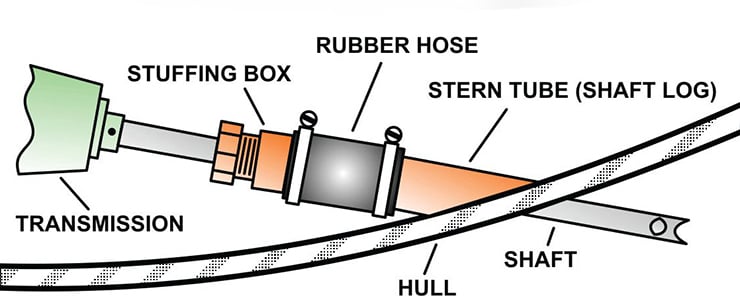
Illustration of traditional stuffing box. (Stuffing box lock nut not shown.)
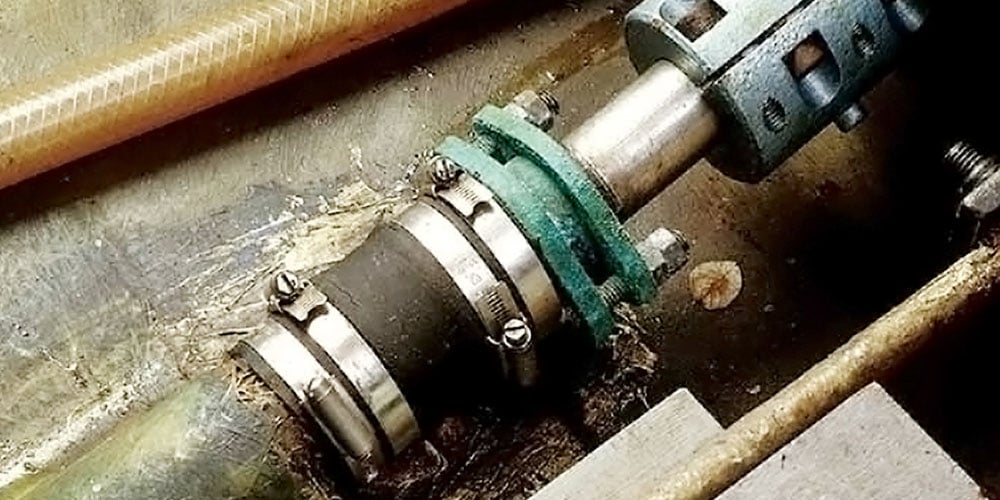
A stuffing box — also called a stuffing gland, packing gland, or packing box — forms a watertight seal between the propeller shaft and the hole in the hull through which the shaft passes, while allowing the shaft to turn freely. It consists of a threaded sleeve and a hollow nut, which the prop shaft passes through. The nut is filled with rings of wax-impregnated material called flax packing and screwed into the sleeve. The packing is compressed around the smooth shaft as the nut is tightened, allowing a small, controlled amount of water to leak past the packing into the boat. This slight water leak is intentional — it cools and lubricates the shaft at the point where it contacts the packing. The packing adjustment nut allows the flax to be periodically tightened to compensate for wear. Over time, the flax decomposes and must be replaced entirely.
A properly adjusted traditional stuffing box allows two to three drops of water per minute when the engine is running and the shaft is turning. This is correct and necessary — it is not a problem to fix. Do not attempt to seal the shaft completely. A completely dry stuffing box generates heat from friction that can damage or score the shaft, and in severe cases weld the packing to the shaft. If your stuffing box is leaking more than a few drops per minute and tightening the nut does not bring it under control, the packing needs replacement.
Flax Packing
If your boat has a traditional stuffing box that is leaking excessively despite repeated tightening of the nut, you most likely need to replace the flax packing. West Marine offers three types of packing:
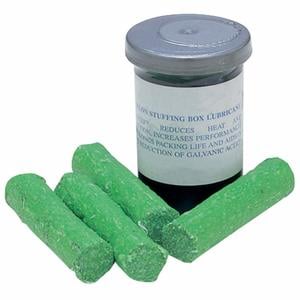
Drip-Less Moldable Marine Packing Kit
| Feature | Traditional Stuffing Box | Dripless Shaft Seal (PSS) |
|---|---|---|
| Drip rate | 2–3 drops/min when running | Zero — completely watertight |
| Maintenance | Regular adjustment + repacking every 1–3 seasons | Inspect annually, replace bellows every 3–5 years |
| Cost | Low — flax packing $10–20 | Higher upfront — $150–400 depending on shaft size |
| Shaft condition required | Smooth, straight shaft required | Tolerates minor pitting or misalignment |
| Bilge water | Some always present | Eliminated |
| Best for | Budget-conscious owners, well-maintained shafts | Cruisers, liveaboards, boats left unattended |
Regular flax: Properly installed flax consists of cut lengths of flax bent into rings, with their splits staggered around the shaft to minimize leakage. Properly packed flax is initially watertight but decomposes into blackened fluff over time — the sign that replacement is due. A properly adjusted stuffing box will allow two or three drops of water per minute when the engine is running and the shaft is turning. This controlled drip lubricates the shaft. Sealing the shaft completely causes heat buildup and eventual shaft damage.
Tallow, Paraffin, or Teflon-impregnated flax: Impregnated flax packing is stronger than standard waxed flax and, with PTFE (Teflon) added, creates even less friction against the turning shaft. PTFE-impregnated packing runs cooler and lasts longer than standard flax, making it the recommended upgrade for most applications.
Synthetic moldable packing: The Drip-Less Moldable Packing Kit offered by West Marine uses a clay-like substance that molds to the inside of the stuffing box to seal without water lubrication. Installation requires the moldable material to be sandwiched between two rings of conventional or impregnated flax as retaining rings. Although marketed as “dripless,” some installations may require a very small water drip to prevent heat buildup. Not suitable for boats with extremely fast shaft rotation — consult the product instructions for the shaft RPM limit.
Determine What Size Packing You Need
Flax packing comes in many cross-section sizes, determined by the gap between the shaft and the inside of the packing nut. Measure your shaft diameter and use this table:
| Shaft Size | Suggested Packing Size |
|---|---|
| 3/4” | 1/8” |
| 7/8” or 1” | 3/16” |
| 1 1/8” or 1 1/4” | 1/4” |
| 1 3/8” or 1 3/4” | 5/16” |
| 2” or 2 1/8” | 3/8” |
If you can save a piece of the old packing when you remove it, measure it to confirm the cross-section size before purchasing replacement material.
How to Install Flax Packing
Tools needed: Two wrenches — one to release the lock nut that holds the packing adjustment nut in place, and one to unscrew the packing nut itself. A corkscrew-shaped packing extractor to remove the old packing from the stuffing box bore. Save a piece of the old packing before discarding it so you can measure it for replacement sizing.
How much packing material is needed?
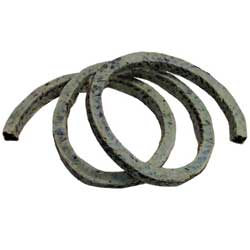
Traditional flax marine packing
Multiply the shaft diameter in inches by 14 to get the approximate number of inches of new flax packing needed for four layers. For example, a 1” shaft requires approximately 14 inches of packing material (1 × 14 = 14 inches). A 1 1/4” shaft requires approximately 17.5 inches. Four rings is the standard for most stuffing boxes, but confirm the depth of your specific box with the old packing removed.
Step-by-step packing procedure:
- With the boat in the water, loosen the lock nut and unscrew the packing nut. Do not remove the shaft. Work quickly or close the seacock on the shaft log if one is fitted.
- Insert the packing extractor into the stuffing box and screw it into the old packing material to extract it. Remove all old packing — any old packing left in the box will compress unevenly with the new material and cause leaking.
- Inspect the shaft surface inside the stuffing box. It must be smooth and round. A grooved or pitted shaft will not seal properly with new packing. If the shaft is grooved, the packing will leak immediately regardless of how tightly the nut is compressed — a worn shaft needs replacement or the stuffing box position needs adjustment to present a smooth section of shaft.
- Cut the new flax to length. Wrap each ring around the shaft at the stuffing box opening to get the exact circumference, then cut. Each ring must be exactly the right diameter to fit without a gap or overlap at the joint.
- Bend each ring into the stuffing box, pressing it firmly to the back with your finger or a blunt tool. Stagger the joints between successive rings by 90 degrees around the shaft — do not line the joints up, as this creates a direct water path through the packing.
- Reinstall the packing nut and tighten it snugly by hand plus a small additional amount with the wrench. Do not overtighten at this stage.
- Start the engine and run it in gear. Observe the drip rate from the stuffing box. Adjust the nut until the drip rate is two to three drops per minute. Retighten the lock nut to hold the adjustment.
- Check the stuffing box temperature after 20–30 minutes of operation. It should be warm but not hot to the touch. A stuffing box that is hot to the touch is too tight — back the nut off slightly, recheck the drip rate, and monitor temperature again.
Shaft Seals
The primary advantage of a shaft seal is that it eliminates the drip entirely and removes the need for periodic stuffing box adjustment. Shaft seals replace traditional stuffing boxes by using two polished surfaces — one stationary and one rotating — that form a watertight seal around the prop shaft without any flax. These seals are impervious to temperature, vibration, and corrosion, and do not require the routine adjustments that flax-packed stuffing boxes need. The tradeoff is higher initial cost and the need for periodic bellows inspection and replacement, typically every three to five years.
The Packless Sealing System
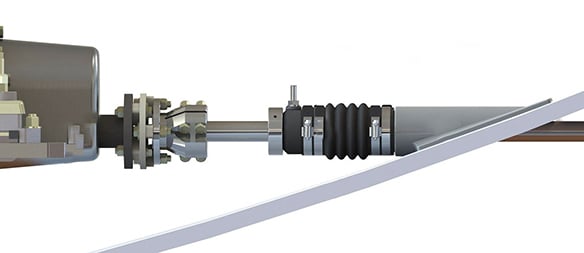
Packless Sealing System. Note the flexible shaft coupling between the transmission output flange and the shaft coupling.
West Marine offers the Packless Sealing System (P.S.S.) shaft seal by P.Y.I. The system uses a high-density carbon/graphite flange attached to the boat’s stern tube (shaft log) by a nitrile bellows that uses water pressure to create a 100% watertight seal. The seal is not affected by temperatures, saltwater, corrosion, chemical, or UV exposure. Sizes are available for all engine systems regardless of RPM. The controlling dimensions are the shaft diameter and the inner diameter of the stern tube — measure both before ordering.
Critical: Burping a Dripless Shaft Seal After Haul-Out
This step is mandatory and must not be skipped. A PSS-type dripless shaft seal requires water between the carbon flange and the stainless rotor face to lubricate the seal surfaces. When the boat is hauled out and the shaft is dry, air becomes trapped inside the bellows. If the boat is launched and the engine started without first removing this air, the seal faces run dry for the first seconds or minutes of operation and will be damaged — potentially destroyed — from the heat generated.
To “burp” the seal before launching or before starting the engine after a haul-out: with the boat in the water, pull the rubber bellows slightly away from the carbon flange at one point around its circumference. Water will flood in and displace the air. You will hear the air escape and see water replace it. Once water is flowing, release the bellows. The seal is now ready for operation. Do this every time the boat is relaunched after a haul-out, and any time the engine is started after a long period with the boat dry.
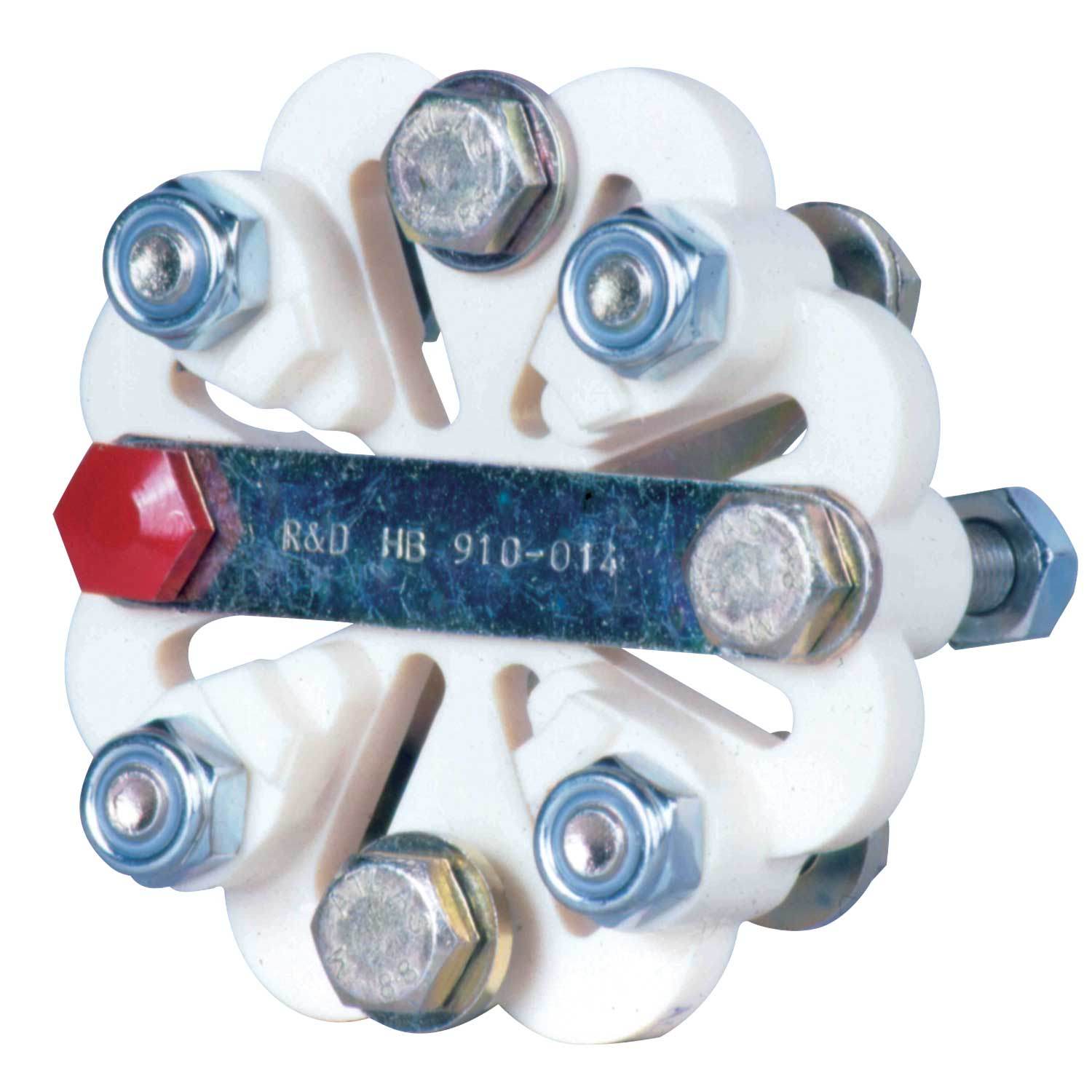
R&D Marine’s Flexible Shaft Engine Coupling
Flexible Couplings by R&D Marine
If you are planning to install a P.S.S. sealing system, consider also installing a flexible coupling by R & D Marine. This flexible coupling installs between the transmission output flange and the shaft flange to absorb shock loads resulting from gear changes or from the propeller striking a submerged object. It’s made with a polyester elastomer and a metal compression strap that keeps the coupling intact if the disc is destroyed, ensuring the drive system continues to function. R & D Marine flexible couplings come with the required installation hardware and are available for engines from 5 to 1,500hp.
How to Tell if Your Shaft Bearing is Bad
The shaft bearing — also commonly called a cutlass bearing — is a rubber-lined sleeve that mounts inside the support strut or stern tube to support the propeller shaft and provide a water-lubricated bearing surface. The nitrile rubber lining prevents vibration, allows the shaft to turn freely, and allows water to lubricate and cool the shaft as it turns. When the rubber lining wears, shaft support is compromised and vibration increases. A worn cutlass bearing is a common and easily overlooked cause of unexplained shaft vibration and a persistently leaking stuffing box — because a shaft with excess play from a worn bearing will wobble in the stuffing box and prevent the packing from sealing properly, regardless of how often you tighten the nut.
Signs of a worn cutlass bearing:
- Excessive vibration when the shaft is in gear, particularly at certain RPM ranges
- A metallic ringing or “dinner bell” sound when shifting into gear or running
- Visible shaft wobble when the boat is hauled — grab the shaft near the strut and attempt to move it up and down. More than very slight movement indicates bearing wear
- Persistent stuffing box leaking that does not respond to packing replacement or adjustment
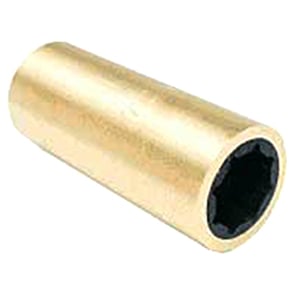
Trellex-Morse Shaft Bearing
Shaft bearings come in many sizes because of the tight tolerances necessary for a proper fit. They are specified by shaft diameter, outside diameter, and length. West Marine stocks a large selection from Trellex-Morse. The bearings use fish names that indicate inner tube diameters: Albacore, Barracuda, Cod, etc. The first letter of the name denotes the inner diameter of the bearing (A = 3/4”, B = 1”, C = 1 1/4”, and so on). Other important dimensions are the outer tube diameter and length — measure the housing bore carefully before ordering, as a bearing that is even slightly undersized will not support the shaft properly and one that is oversized will not seat correctly in the strut.
How to Install a Shaft Bearing
Cutlass bearing installation requires a haul-out — the shaft must be removed from the water to access the strut or stern tube, and bearing removal from a boat in the water is not practical. The sequence is: remove the propeller, disconnect the shaft coupler at the transmission, and withdraw the shaft aft through the strut or stern tube. With the shaft clear, the bearing can be removed and replaced.
New bearings install by gently tapping them into the strut or stern tube bore with a rubber mallet, driving from the forward end toward the aft. They are typically held in place by a set screw through the strut or a flanged lip at the aft end. Align the set screw hole before driving the bearing fully home.
Removing a worn cutlass bearing is usually more challenging than installing the replacement. If light tapping with a dowel or pin punch from the opposite end does not drive the old bearing out, use a hacksaw or reciprocating saw to make one or two lengthwise cuts through the rubber lining and brass shell, taking care not to cut into the stern tube or strut bore. Once cut, the bearing will collapse inward and can be extracted in sections. The old bearing is discarded either way, so destroying it during removal is not a concern.
Available Shaft Bearings
Below are links to four types of Trellex-Morse shaft bearings. West Marine carries many, but not all, of the bearings that Trellex-Morse makes. If your boat requires a bearing that West Marine does not stock, please contact our customer service center to place a special order.
Stuffing Box and Shaft Bearing FAQs
What is a stuffing box, and why is it important?
A stuffing box — also called a stuffing gland, packing gland, or packing box — seals the gap between the propeller shaft and the hull, allowing the shaft to rotate freely while controlling how much water enters the boat. Without it, the hull penetration around the shaft would be an open hole. It is one of the most important through-hull fittings on an inboard or sterndrive-powered boat, and its condition should be checked at every haulout and monitored throughout the season.
How does a traditional stuffing box work?
A traditional stuffing box uses a threaded sleeve and hollow nut filled with wax-impregnated flax packing material. As the nut is tightened, it compresses the flax around the prop shaft, creating a seal that allows a controlled drip of water to enter the boat. That drip — two to three drops per minute when the shaft is turning — is intentional and necessary. It lubricates the shaft and prevents the packing from running dry, which generates damaging heat.
When should I replace the flax packing in my stuffing box?
Replace the flax packing when tightening the packing nut no longer reduces the leak to two to three drops per minute, when the nut has reached the limit of its travel and cannot be tightened further, or when the extracted packing comes out as black, crumbly fluff rather than intact braided material. Many experienced boaters replace packing as a matter of routine every one to three seasons regardless of apparent condition. Inspect at every haulout.
What type of flax packing should I use?
PTFE (Teflon)-impregnated flax is the recommended upgrade over standard waxed flax for most applications. It runs cooler, lasts longer, and creates less friction against the shaft. Standard waxed flax works correctly and is the most economical option. Synthetic moldable packing (Drip-Less) is an option for boaters who want to minimize bilge water, but it is not suitable for all shaft speeds and requires conventional flax rings as retainers.
How do I know what size flax packing to use?
Packing size is determined by the cross-sectional gap between the shaft and the inside of the packing nut. Use the sizing table above: a 3/4” shaft uses 1/8” packing; a 1” shaft uses 3/16” packing; a 1 1/4” shaft uses 1/4” packing, and so on. If you can save a piece of the old packing when you extract it, measure its cross-section to confirm the correct replacement size.
What’s the difference between a stuffing box and a shaft seal?
A shaft seal (like the Packless Sealing System) is a dripless alternative to the traditional stuffing box. Instead of flax packing, it uses two polished surfaces — one fixed to the stern tube and one rotating with the shaft — held in contact by a nitrile bellows and water pressure. A PSS seal is completely watertight, requires no routine adjustment, and eliminates bilge water from the shaft log. The tradeoff is higher initial cost ($150–$400 depending on shaft size) and the requirement to inspect and replace the bellows every three to five years, plus the critical need to “burp” the seal to remove trapped air after every haul-out before starting the engine.
How can I tell if my shaft bearing (cutlass bearing) needs to be replaced?
The most reliable check is physical: with the boat hauled, grab the shaft at the strut and attempt to move it up and down. Any perceptible play — beyond the very slight movement inherent in the rubber lining — indicates a worn bearing that needs replacement. Underway signs include excessive vibration at certain RPM ranges, a metallic ringing sound when shifting into gear, and persistent stuffing box leaking that does not respond to packing replacement. A worn cutlass bearing causes the shaft to wobble inside the stuffing box, making it impossible for flax packing to seal properly regardless of how tightly the nut is adjusted.