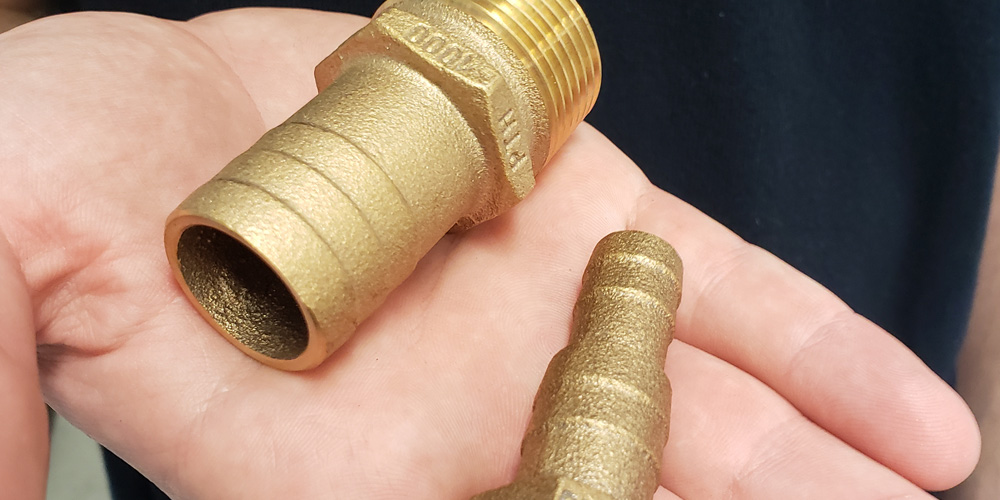
What Is a Hose Tailpiece?
A hose tailpiece, sometimes called a hose barb fitting, is a plumbing fitting designed to connect flexible marine hose to pumps, valves, thru-hulls, strainers, manifolds and other onboard plumbing components. The ridged barb section grips the inside of the hose while hose clamps secure the connection. Tailpieces are commonly made from marine-grade bronze, Marelon®, stainless steel or reinforced polymer materials depending on the application.
Choosing the correct tailpiece size is critical. A tailpiece that is too large may damage the hose during installation, while one that is too small can result in leaks, poor flow rates and hose failure.
Understanding Hose ID vs. Hose OD
Marine hose is typically sized by its Inside Diameter (ID), not its Outside Diameter (OD). The hose ID determines which fittings and tailpieces it will fit over.
- Inside Diameter (ID): The measurement across the inside opening of the hose.
- Outside Diameter (OD): The measurement across the outside of the hose including wall thickness.
- Nominal Size: The industry size designation used when selecting hose and fittings.
The hose outside diameter becomes important when selecting hose clamps. Because hose wall thickness varies between manufacturers and applications, two hoses with the same inside diameter may have different outside diameters.
How to Measure Marine Hose Correctly
If you are replacing an existing hose or fitting, follow these simple steps:
- Remove the hose from the fitting if possible.
- Measure the inside diameter of the hose using calipers or a ruler.
- Measure the outside diameter if you need replacement hose clamps.
- Confirm the tailpiece dimensions using the sizing chart below.
- Select a hose and fitting with matching nominal sizes.
For the most accurate results, use digital calipers. Measuring only the outside diameter of a hose can lead to selecting the wrong fitting.
Common Marine Hose Applications
Different onboard systems use different hose sizes and construction types. Understanding the application can help you select the proper hose and fitting combination.
- Bilge Pumps: Typically use 3/4", 1", 1-1/8" or 1-1/2" hose.
- Livewell Systems: Commonly use 3/4" or 1" hose.
- Washdown Pumps: Usually use 1/2" or 3/4" reinforced hose.
- Freshwater Plumbing: Often uses 1/2" potable water hose.
- Sanitation Systems: Frequently use 1-1/2" sanitation hose.
- Engine Cooling Systems: Require specialized reinforced cooling hose sized according to engine specifications.
How to Choose the Correct Hose Clamp
Even when the hose and fitting are sized correctly, an improperly sized clamp can result in leaks. Always select clamps based on the hose's outside diameter after it has been installed over the fitting.
For below-waterline applications, many marine professionals recommend using two all-stainless-steel marine hose clamps installed with the screw housings positioned opposite one another.
- Use 316 stainless steel marine clamps whenever possible.
- Avoid automotive clamps in marine environments.
- Inspect clamps annually for corrosion.
- Replace clamps showing rust, pitting or damaged screw threads.
Pipe Threads Explained: NPT vs. NPS
Boat owners are often surprised to discover that pipe sizes do not correspond directly to actual dimensions. Pipe fittings also use different thread standards.
- NPT (National Pipe Thread): Tapered threads that create a seal as they tighten.
- NPS (National Pipe Straight): Straight threads that require a gasket or seal to prevent leaks.
When replacing tailpieces or plumbing fittings, verify both the thread type and hose size to ensure compatibility.
Common Hose Sizing Mistakes
Avoid these common mistakes when replacing marine plumbing components:
- Measuring the outside diameter instead of the inside diameter.
- Assuming nominal pipe size equals actual dimensions.
- Using undersized hose clamps.
- Mixing NPT and NPS thread fittings.
- Installing non-reinforced hose in pressure applications.
- Forcing a hose onto an oversized tailpiece.
Taking a few extra measurements before ordering replacement parts can save time, money and frustration during installation.
Frequently Asked Questions
How are marine hoses sized?
Marine hoses are generally sized by their inside diameter (ID), which determines the compatible fitting and tailpiece size.
What is a hose tailpiece?
A hose tailpiece is a barbed fitting designed to connect flexible hose to plumbing components such as pumps, valves, strainers and thru-hulls.
Can I use a larger hose clamp on a smaller hose?
Using an oversized clamp can prevent proper sealing and increase the risk of leaks. Always choose clamps sized for the hose's outside diameter.
Why doesn't pipe size match actual measurements?
Pipe sizing is based on nominal dimensions rather than actual inside or outside diameters. This industry standard has been used for many years and can be confusing when measuring fittings.
Should I double clamp below-waterline hose connections?
Many marine technicians recommend using two marine-grade stainless steel hose clamps on critical below-waterline connections for added security.
Need More Help?
Whether you're replacing a bilge hose, installing a washdown pump or upgrading your boat's plumbing system, selecting the correct hose, fitting and clamp is critical for reliability and safety. West Marine offers a wide selection of marine hoses, tailpieces, thru-hulls, valves and plumbing accessories to help you complete the job correctly.